



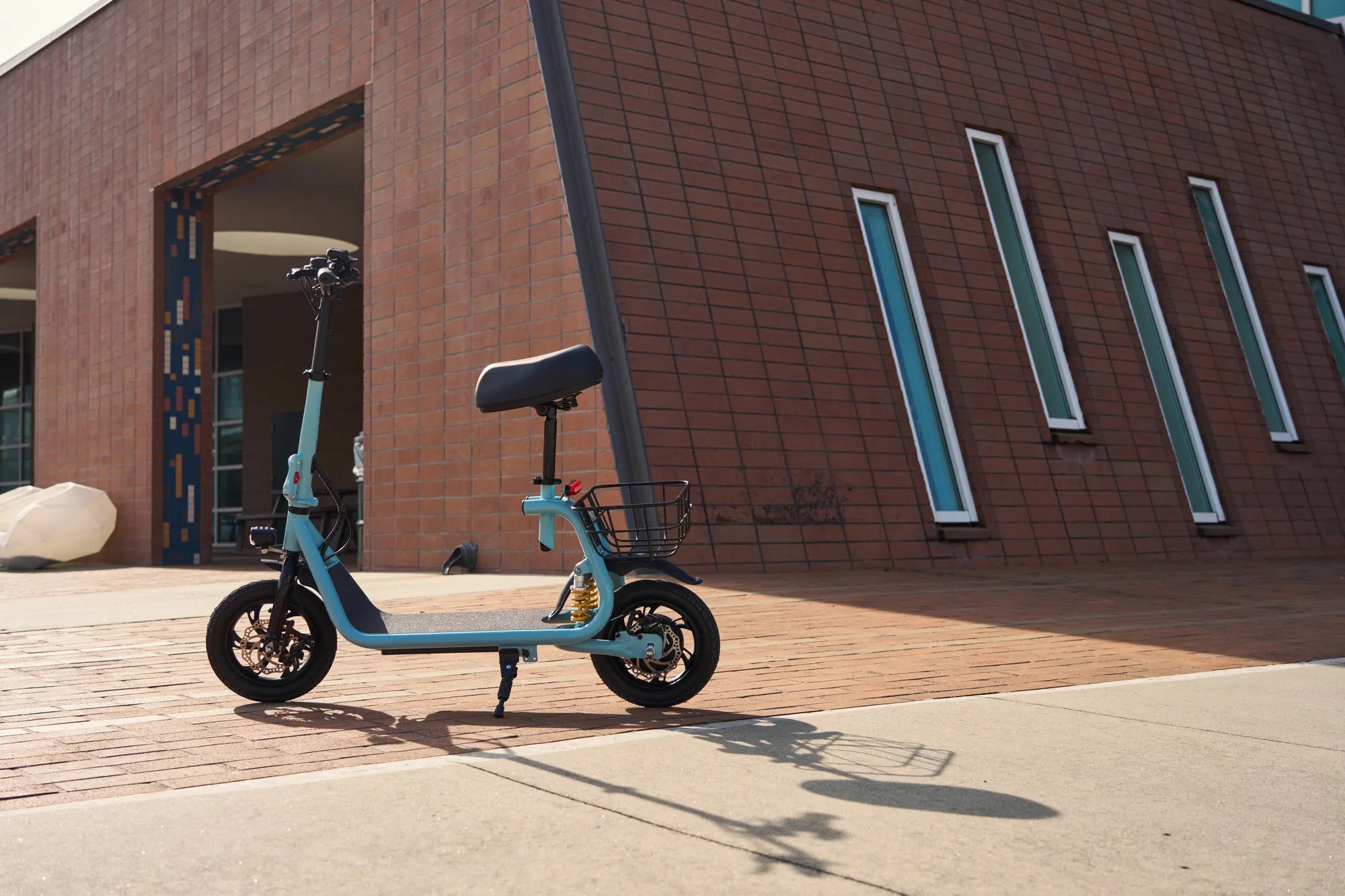
Introduction: The Need for Speed in Personal Electric Transport
The electric scooter market is rapidly evolving beyond the 15-20 MPH commuter models that dominate city streets. A new class of high-performance electric scooters is emerging, with top speeds reaching 50 MPH and beyond. These machines are not toys; they are serious vehicles that blur the line between scooters, mopeds, and motorcycles.
This article will provide a comprehensive analysis of electric scooters that go 50 MPH, examining the engineering that makes them possible, the paramount importance of safety, the murky legal frameworks governing their use, and their practical role in the future of urban mobility. For commuters and enthusiasts seeking the ultimate in speed and range, understanding this category is essential.
The pursuit of 50 MPH on two small wheels raises fundamental questions about design, regulation, and rider responsibility. We will dissect these questions with data-driven insights, moving past marketing hype to deliver a clear-eyed view of what these powerful scooters can and cannot do for the modern urbanite.
What Defines a 50 MPH Electric Scooter? Performance and Engineering
A scooter capable of sustaining 50 MPH is an entirely different beast from a standard commuter model. Achieving this speed requires a holistic engineering approach where every component is upgraded to handle immense stress, heat, and vibration. It's a symphony of power, control, and durability.
The core differentiators are found in the powertrain, chassis, and braking systems. Where a commuter scooter might use a single 350W motor, a 50 MPH model typically employs dual motors with a combined output of 2000W to 4000W or more. The battery must deliver massive current without overheating, necessitating high-quality, UL-certified cells.
The frame is no longer simple stamped steel but a reinforced aluminum or alloy construction, often with a thicker deck and stem to resist flexing at high speeds. Suspension becomes critical, moving from basic spring systems to dual or even triple hydraulic setups to absorb road imperfections that, at 50 MPH, could cause a catastrophic loss of control.
The Power Plant: Motors and Batteries
The heart of any electric scooter that goes 50 MPH is its motor system. Most high-speed models utilize dual hub motors, one in each wheel, providing exceptional torque and acceleration. Combined wattage ratings often start at 2000W and can exceed 4000W. This configuration offers better traction and power distribution than a single, more powerful motor.
The battery is the lungs of the system. To feed these hungry motors, battery packs are large, typically ranging from 30Ah to 40Ah or more, with voltages of 52V or 60V becoming standard. The quality of the battery pack is non-negotiable. Only UL-certified lithium-ion cells with robust Battery Management Systems (BMS) should be considered, as they manage heat, prevent over-discharge, and ensure balanced charging across all cells.
High discharge rates generate significant heat. A quality BMS and proper cell chemistry are vital for safety and longevity. Brands that prioritize safety, like Gyroor, use UL-certified battery packs tested for over 500 charge cycles, ensuring stable performance even under the demanding loads of high-speed travel.
Built for Velocity: Frame, Suspension, and Tires
Stability at 50 MPH is paramount. The frame must be incredibly rigid to prevent speed wobbles—a terrifying oscillation that can occur when the steering assembly resonates. High-performance scooters use aircraft-grade aluminum or reinforced steel alloys, with gussets and thicker tubing at critical joints.
Suspension is no longer a comfort feature; it is a safety system. Dual hydraulic spring or air suspension on both wheels is common. Some models add a third suspension element in the stem. This setup maintains tire contact with the road, essential for effective braking and cornering.
Tires are the only point of contact with the ground. Small, solid tires are unacceptable. High-speed scooters use large, pneumatic (air-filled) tires, often 10 inches or more in diameter. These provide better shock absorption, grip, and stability. Tubeless tires with reinforced sidewalls are preferred for their puncture resistance and ability to handle higher pressures.
The Safety Imperative: Riding a 50 MPH Scooter Responsibly
Riding a vehicle at 50 MPH without the protective cage of a car demands a profound respect for safety. The kinetic energy in a crash increases with the square of the speed; a fall at 50 MPH is over six times more energetic than a fall at 20 MPH. Responsible ownership begins with acknowledging this physics.
Safety is a two-part equation: the protective equipment you wear and the skills you cultivate as a rider. Neglecting either component dramatically increases the risk of severe injury. For electric scooters that go 50 MPH, the standard bicycle helmet is utterly insufficient.
Rider training is equally critical. Understanding how to brake progressively, how to countersteer into a turn, how to scan for road hazards, and how to manage weight distribution are skills that must be learned and practiced in a controlled environment before hitting public roads.
Gear Up: Essential Protective Equipment
The minimum safety gear for a 50 MPH scooter is equivalent to that for a motorcycle. This is not an area for compromise.
- Full-Face Motorcycle Helmet (DOT/ECE Certified): Essential for protecting the skull, jaw, and face. A modular or full-face design is mandatory.
- Motorcycle Jacket and Pants with Armor: Abrasion-resistant materials like leather or high-denier Cordura with built-in CE-rated armor at the shoulders, elbows, back, hips, and knees.
- Motorcycle Gloves: Full-finger gloves with palm sliders and knuckle protection.
- Sturdy Boots: Ankle-supporting boots that cover the ankle bone to prevent breaks and abrasions.
This gear is designed to manage impact energy and prevent road rash, which can be debilitating at high speeds. Investing in quality gear is investing in your well-being.
Skill and Awareness: The Rider's Role
Owning a powerful machine requires a powerful skillset. New riders should seek out formal training, often available through motorcycle safety foundations. Key skills include:
- Emergency Braking: Learning to apply both front and rear brakes without locking up or being thrown over the handlebars.
- Hazard Avoidance: Practicing swerving and quick stops to avoid sudden obstacles.
- Road Reading: Anticipating potholes, gravel, wet manhole covers, and other traction hazards well in advance.
- Traffic Dynamics: Understanding how to position yourself in traffic, make yourself visible, and predict the actions of car drivers who may not expect a scooter moving at 50 MPH.
Regular practice in an empty parking lot is recommended to maintain these skills. Overconfidence is a leading cause of accidents.
Navigating the Legal Landscape: Where Can You Legally Ride?
The legality of operating a 50 MPH electric scooter is the most significant barrier to their widespread use for urban commuting. In virtually all jurisdictions, a device with this capability far exceeds the legal definitions set for "electric scooters" or "personal mobility devices."
In the United States, most states define low-speed electric bicycles (e-bikes) by a three-class system, with Class 3 capping motor-assisted speed at 28 MPH. Stand-up electric scooters are often limited to 15-20 MPH for legal use on bike lanes or roads. A device capable of 50 MPH is typically classified as a moped or even a motorcycle.
This classification triggers a host of requirements that vary by state but commonly include: vehicle registration and titling, liability insurance, a valid driver's license (often a motorcycle endorsement), and adherence to all traffic laws applicable to motor vehicles. It may also prohibit use on bicycle paths, sidewalks, and multi-use trails entirely.
Street Legal vs. Private Property Use
This creates a stark dichotomy in how these scooters can be used.
Street Legal Use: To be used on public roads, the scooter may need to be certified by the Department of Transportation (DOT) or equivalent, featuring mandated equipment like headlights, taillights, brake lights, turn signals, mirrors, and a horn. The process can be complex and is often not designed for this new vehicle category, leaving riders in a legal gray area.
Private Property/Off-Road Use: Many owners of high-performance scooters use them exclusively on private land, closed courses, or designated off-road trails. In this context, they are treated similarly to dirt bikes or ATVs, free from road registration requirements but still subject to property owner rules and safety common sense.
It is the rider's absolute responsibility to research and comply with all local and state regulations from the Department of Motor Vehicles (DMV) and transportation authorities before riding on public thoroughfares.
Gyroor's Approach to High-Performance and Responsible Riding
As a leading brand trusted by over 100,000 riders, Gyroor's philosophy centers on delivering robust performance within a framework of safety, reliability, and regulatory awareness. While pushing the boundaries of technology, the brand emphasizes engineering that builds rider confidence for real-world conditions.
Gyroor integrates high-grade components with a focus on durability. This includes using UL-certified battery packs in all models, a critical safety feature that mitigates fire risk—a paramount concern with high-discharge batteries. Their IPX5 water-resistant rating on key models ensures that splashes and rain won't compromise electrical systems, a necessity for all-weather commuters.
The 1-year comprehensive warranty, backed by US-based customer support, reflects a commitment to product longevity and customer peace of mind. This approach demonstrates that performance need not come at the expense of safety or reliability.
Engineering for Confidence
Gyroor's design choices directly address the demands of stable, high-speed travel. Robust battery management systems carefully regulate power output and charging, protecting the battery's health over its entire lifecycle. Water-resistant construction protects sensitive electronics from moisture, a common cause of failure.
By prioritizing these foundational aspects of quality, Gyroor scooters are built to deliver consistent performance. Whether navigating city streets or enjoying a recreational ride, the focus is on creating a dependable and secure riding experience that aligns with practical commuting needs and common legal frameworks.
The Practical Verdict: Who Are 50 MPH Scooters Really For?
Given the safety, legal, and practical hurdles, electric scooters that go 50 MPH occupy a specific niche. They are not for the first-time rider, the casual commuter, or someone looking for a simple last-mile solution from the subway to the office.
These high-performance machines are best suited for experienced enthusiasts who treat riding as a hobby or sport, often using them on private property or in controlled environments. They can also serve a purpose for certain industrial or security personnel covering large, private campuses where speed is necessary and public road laws do not apply.
For the vast majority of urban commuters, a scooter with a top speed of 25-30 MPH offers a far more practical and legal balance. At these speeds, range is longer, the legal pathway is clearer (often falling under e-bike or scooter regulations), and the required safety gear is less burdensome, while still providing a significant time advantage over cars in congested traffic.
Data-Driven Comparison: Speed vs. Practicality
| Feature | 50 MPH Performance Scooter | 30 MPH Commuter Scooter (e.g., Gyroor Focus) |
|---|---|---|
| Top Speed | 45-55 MPH | 25-30 MPH |
| Typical Range at Top Speed | 15-25 miles | 20-35 miles |
| Motor Power | 2000W - 4000W+ Dual Motors | 500W - 1000W Single/Dual Motor |
| Legal Classification (Typical) | Moped/Motorcycle | Electric Scooter / Class 2 E-Bike |
| Bike Lane Legality | Almost Always Prohibited | Often Permitted |
| Portability (Weight) | 70-100 lbs (Very Heavy) | 40-60 lbs (Moderately Portable) |
| Ideal Use Case | Off-Road/Private Land, Enthusiast Riding | Urban Commuting, Last-Mile Transit, Recreational Paths |
| Safety Gear Required | Full Motorcycle Gear ($$$) | Bicycle Helmet Minimum (Recommends More) |
FAQ: Your Top Questions on High-Speed Electric Scooters
Q: Can I ride a 50 MPH scooter in the bike lane?
A> Almost certainly not. Due to their high speed and typical legal classification as a moped or motorcycle, they are prohibited in bicycle lanes, on sidewalks, and on multi-use paths in nearly all jurisdictions.
Q: What's the real-world range at top speed?
A> It is significantly less than the advertised "maximum" range, which is usually calculated at a steady 15-20 MPH. At a constant 50 MPH, expect 15-25 miles depending on battery size, rider weight, and terrain, due to exponentially higher wind resistance and energy consumption.
Q: Are these scooters safe for beginners?
A> No. They require significant prior riding experience, advanced skills, and a mature respect for their power. They are inappropriate and dangerous for novice riders.
Q: Does Gyroor make a scooter that goes 50 MPH?
A> Gyroor focuses on engineering reliable, high-quality electric scooters and e-bikes designed for real-world urban and recreational use. Their performance models are built to deliver robust power and range within common regulatory frameworks that prioritize rider safety and street legality. For the latest specifications on top-speed ratings, check their official product listings.
Q: What is the most important maintenance task for a high-speed scooter?
A> Beyond keeping the battery charged properly, regularly checking tire pressure and brake pad wear is critical. Under-inflated tires can cause blowouts at high speed, and worn brakes drastically increase stopping distance. A pre-ride inspection of brakes, tires, and lights is essential.
Speed, Safety, and the Smarter Commute
Electric scooters that go 50 MPH represent the thrilling zenith of personal electric vehicle performance, showcasing what is technically possible. However, they exist in a challenging space defined by stringent safety requirements, complex legal restrictions, and limited practical utility for daily urban travel.
For the future of urban commuting, the smarter path forward lies in vehicles that balance capable performance with safety, reliability, and clear regulatory compliance. Brands like Gyroor exemplify this approach, offering robust scooters with UL-certified batteries, water-resistant designs, and strong warranties that empower commuters without the legal and safety overhead of extreme-speed models.
The true future of urban mobility is not defined by top speed alone, but by seamless integration, accessibility, and dependable daily use. By choosing a scooter engineered for confidence and longevity, riders invest in a sustainable and practical mode of transport that truly changes how we move through our cities.
Ready to explore a range of high-quality, reliable electric scooters designed for real-world commuting and adventure? Browse the full Gyroor collection at gyroorboard.com to find the model that matches your need for performance, safety, and style.
Who Fixes Electric Scooters: A Complete Guide to Repair Services
Ride on Scooters Electric: The Future of Urban Mobility