



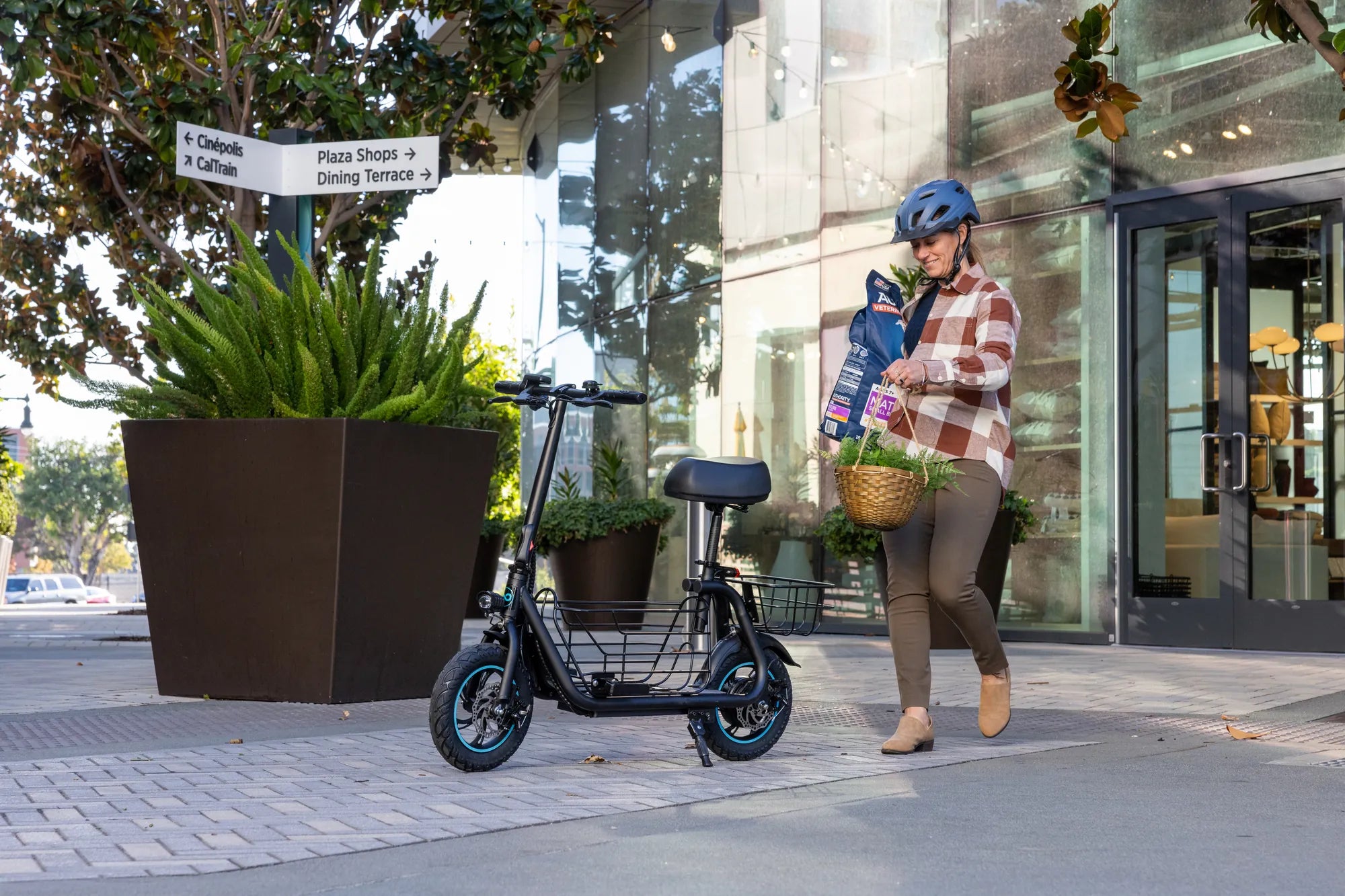
Navigating the UK's Electric Scooter Revolution
The UK's urban transport landscape is undergoing a quiet but significant shift. Electric scooters have emerged as a compelling solution for navigating congested city streets, offering a blend of convenience, efficiency, and environmental benefit. This guide, Electric Scooters UK: The Ultimate Guide to Eco-Friendly Commuting, is designed to cut through the noise. We provide the factual information you need to make an informed decision, understand the legal framework, and choose a scooter built for British conditions.
You will learn about the current UK laws governing private e-scooter use, the key technical features that matter for hills and rain, and a realistic analysis of costs and savings. We'll also highlight why safety and reliability, as championed by brands like Gyroor with their UL-certified batteries and robust designs, are non-negotiable for a positive riding experience. This is your definitive resource for embracing a smarter way to travel.
Understanding UK E-Scooter Laws & Regulations
The legal status of privately owned electric scooters in the UK is frequently misunderstood. As of now, it is illegal to ride a privately owned e-scooter on public roads, pavements, cycle lanes, or in pedestrianised areas. They are classified as Personal Light Electric Vehicles (PLEVs) and are subject to the same legal requirements as motor vehicles, which they cannot meet due to a lack of features like number plates, signalling, and type approval.
The government-sanctioned rental trials operating in selected towns and cities are a distinct exception. These scooters are insured, limited to 15.5mph, and can be used on roads and cycle lanes within designated zones. For private owners, the only legal place to ride is on private land with the landowner's permission. This legal distinction is crucial for anyone considering a purchase.
Enforcement of these laws varies by region, with police forces having the power to issue fines, penalty points, or even seize vehicles. The government continues to review legislation, with potential future changes aimed at regulating private e-scooters safely. For now, responsible ownership means understanding and adhering to the current rules, prioritising safety, and using your scooter only where permitted.
Why Choose an Electric Scooter for UK Commuting?
Despite the legal restrictions on public land use, the appeal of electric scooters for permitted use on private land or in anticipation of legal change is rooted in tangible benefits. For suitable journeys, they offer a compelling alternative to cars and public transport. The average UK commute is under 10 miles, a distance perfectly suited to e-scooter ranges, which often exceed 15 miles on a single charge.
Financially, the savings are significant. Compared to car ownership (fuel, insurance, tax, parking) or daily public transport fares, the cost per mile of an e-scooter is minimal. Charging a typical 360Wh battery costs less than 10p, offering a week of commuting for the price of a single bus ticket. They also provide a direct solution to congestion and Clean Air Zone charges, bypassing traffic entirely.
Environmentally, the impact is clear. E-scooters produce zero direct emissions. When charged from the UK's increasingly green grid, their carbon footprint is drastically lower than that of petrol or diesel vehicles. For first and last-mile connections—getting from home to the train station, for example—they offer unmatched convenience, reducing reliance on crowded buses or taxis.
Key Features to Look for in a UK E-Scooter
Selecting an e-scooter for UK conditions requires careful consideration of specific features. The weather, terrain, and need for durability demand a robust machine. A focus on core specifications will ensure your scooter performs reliably, whether on a private estate, campus, or other permitted area.
Motor Power & Hill Climbing Ability
Motor power, measured in watts (W), directly impacts performance. For the UK's undulating urban landscapes, a minimum of 350W is advisable. A 500W motor provides confident acceleration and the torque needed to tackle moderate hills commonly found in cities like Bristol or Edinburgh. Continuous power rating is more important than peak power for sustained climbs.
Battery Range & Real-World Performance
Manufacturer range claims are based on ideal conditions. Real-world range is affected by rider weight, hills, temperature, and riding style. For a reliable 10-mile commute, look for a scooter with a stated range of at least 18-20 miles. Battery quality is paramount; UL-certified cells, like those used by Gyroor, undergo rigorous testing for safety and longevity, ensuring consistent performance over hundreds of charge cycles.
Build Quality, Tyres & Water Resistance
UK roads and weather demand a tough scooter. Look for a solid, often aluminium, frame. Tyre choice is critical: pneumatic (air-filled) tyres offer better shock absorption for potholes and cobbles but require maintenance; solid tyres are puncture-proof but give a harsher ride. An IP rating for water resistance is essential. A rating of IPX5 means the scooter can withstand water jets, making it suitable for riding in rain—a key feature for British weather.
Safety Features: Brakes, Lights, and Stability
Effective braking is non-negotiable. A dual braking system, such as electronic (regenerative) front brake and a mechanical disc or drum rear brake, offers reliable stopping power in wet conditions. Bright front and rear LED lights, plus side reflectors, are vital for visibility on gloomy days. A wide deck and a wheelbase of over 40 inches enhance stability, providing a confident ride.
Gyroor E-Scooters: Engineered for UK Roads
Gyroor has established itself as a leader by focusing on the core requirements of safety, reliability, and weather-ready performance—attributes perfectly aligned with the UK market. Trusted by over 100,000 riders across North America and Europe, the brand's philosophy centres on robust engineering rather than fleeting trends.
Every Gyroor scooter is built with a UL-certified battery pack at its heart. This certification is a critical safety benchmark, indicating rigorous testing for short-circuit, overcharge, and thermal stability, significantly mitigating fire risk. Coupled with a reliable 1-year warranty, it provides peace of mind that is essential for a daily transport tool.
Recognising the UK climate, Gyroor models feature IPX5 water-resistant designs. This engineering allows riders to confidently navigate wet conditions without worrying about water damage to core components. Their motors, typically ranging from 350W to 500W, deliver the necessary torque for urban inclines, while the suspension systems and tyre options are chosen to smooth out imperfect surfaces.
For commuters, features like intuitive controls, clear displays, and foldable designs for easy storage and portability make Gyroor scooters practical. The brand’s commitment is to provide a durable, safe, and high-performance vehicle that stands up to the demands of real-world use, wherever it is legally permitted.
E-Scooter Comparison: Key Models for UK Riders
Choosing the right scooter involves comparing specifications against your needs. The table below outlines key metrics for different use cases, from compact commuting to more powerful all-rounders. Note the emphasis on motor power, real-world range, and essential water resistance.
| Use Case | Recommended Motor | Target Real-World Range | Essential Features | Tyre Recommendation |
|---|---|---|---|---|
| Urban Commuter (Flat Terrain) | 350W Continuous | 12-15 miles | IPX5, Dual Brakes, Folding | Pneumatic (8.5") |
| City & Moderate Hills | 500W Peak | 15-20 miles | IPX5, Disc Brake, Suspension | Pneumatic (10") |
| All-Terrain / Longer Range | 500W+ Dual Motor | 20-30 miles | IPX5/6, Dual Disc Brakes, Full Suspension | Large Pneumatic (10"+) |
This comparison highlights that for most UK scenarios, a focus on a robust motor (350W+), a water resistance rating of IPX5, and a reliable braking system forms the foundation of a good choice. Range should comfortably exceed your typical journey distance by at least 50% to account for battery degradation and variable conditions.
The Practicalities: Cost, Maintenance & Safety Tips
Beyond the purchase price, understanding the total cost of ownership is key. A quality e-scooter from a reputable brand represents an investment. While upfront costs range significantly, ongoing expenses are low. Electricity for charging is negligible. Maintenance primarily involves checking tyre pressure, ensuring brakes are adjusted, and keeping the scooter clean, especially after wet rides.
Safety is the rider's responsibility. Always wear a helmet—this cannot be overstated. Use appropriate safety gear like high-visibility clothing, especially in low light. Perform a pre-ride check: test brakes, ensure tyres are inflated, and verify lights are working. Ride defensively and at a speed appropriate for the environment, even on private land. Store your scooter securely, using a robust lock if necessary, and avoid leaving it exposed to the elements when not in use.
Regular maintenance extends the scooter's life. Keep the battery charged between 20% and 80% for optimal longevity if storing for short periods, and avoid exposing it to extreme cold. Check all bolts and fittings periodically for tightness. Following these simple steps ensures your e-scooter remains a reliable and safe mode of transport for years to come.
Frequently Asked Questions (FAQs)
Are private e-scooters legal on UK roads?
No. Privately owned e-scooters are currently illegal to use on public roads, pavements, cycle lanes, and in pedestrian areas. They can only be used legally on private land with the landowner's permission. Government-run rental trials in specific zones operate under different, temporary regulations.
What is the best electric scooter for hills in the UK?
Look for a scooter with a continuous motor rating of at least 350W, with 500W providing more confidence. Torque is key for hill climbing. Models with dual motors offer the most power but consume battery faster. A scooter with good power-to-weight ratio and robust construction, like those in Gyroor's range, is well-suited for inclines.
How do I protect my e-scooter from UK rain?
First, ensure your scooter has a minimum IPX5 water resistance rating, meaning it can handle water jets from any direction. Avoid deep puddles. After riding in wet conditions, dry the scooter with a cloth, paying attention to the deck, brakes, and stem. Regular maintenance checks for moisture in electrical connectors are also wise.
Where can I legally ride my private e-scooter?
The only place you can legally ride a private e-scooter is on private land to which you have access rights, with the explicit permission of the landowner. This could include private driveways, estates, or certain industrial premises. Use on any public land is prohibited.
Why is a UL-certified battery important?
A UL certification (from Underwriters Laboratories) is a globally recognised safety standard. It means the battery pack has been rigorously tested for hazards like overheating, short-circuiting, and overcharging. This dramatically reduces the risk of battery fires, a critical safety consideration for any device you charge indoors or keep in your home.
Do I need insurance to ride an e-scooter?
While not a legal requirement for use on private land, third-party liability insurance is highly recommended. It can protect you financially if you cause damage to property or injury to someone else while riding. Some home insurance policies may offer limited coverage, but specialised personal electric vehicle insurance is available.
Your Journey Towards Smarter Commuting
Electric scooters present a transformative opportunity for urban mobility in the UK, offering an efficient, low-cost, and environmentally friendly travel mode. The key to a positive experience lies in informed choices: a thorough understanding of the current law, a commitment to safe riding practices, and, most importantly, selecting a vehicle built for purpose. Prioritising certified battery safety, weather-resistant construction, and reliable performance from a trusted brand like Gyroor ensures your investment is sound.
As legislation evolves, a foundation of responsible ownership will position you well for the future of transport. By choosing quality and riding wisely, you embrace not just a new vehicle, but a smarter approach to navigating our cities and reducing your environmental impact. Explore how a well-engineered e-scooter can fit into your life. Browse the full Gyroor collection, featuring UL-certified, IPX5-rated models built for reliability, at gyroorboard.com.
Heavy Duty Electric Scooters for Adults: The Ultimate Commuting Powerhouse
Small Electric Scooters for Adults: The Ultimate Urban Commuting Solution