


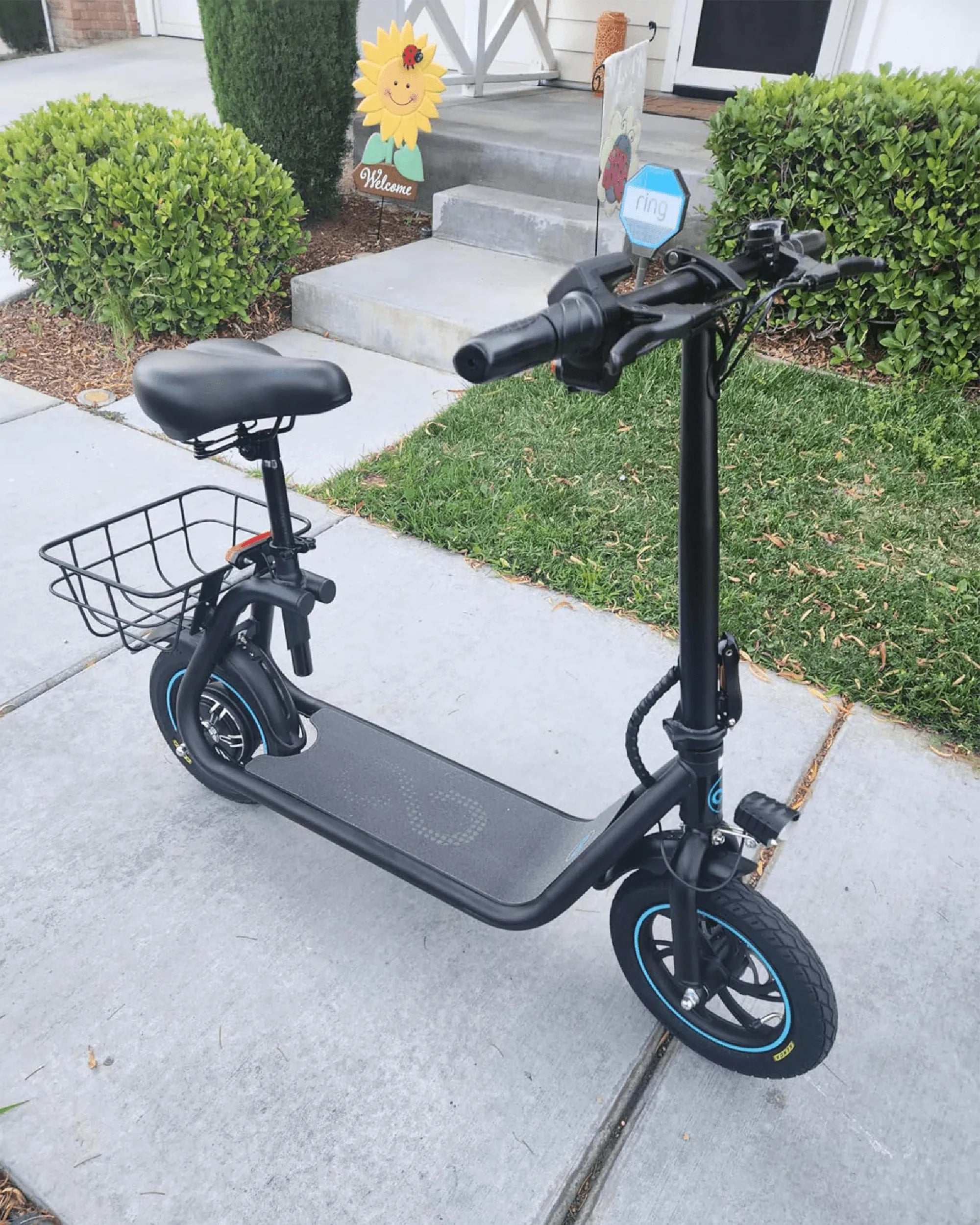
Finding a reliable electric scooter under $200 is a game-changer for budget-conscious commuters and students. This price point offers a legitimate entry into electric mobility, but it requires savvy shopping to balance cost with essential safety and performance. This comprehensive guide details what you can realistically expect, which features are non-negotiable, and who benefits most from these affordable and efficient commuting solutions. We'll provide data-driven insights and a clear checklist to help you make a smart, safe purchase.
The Rise of Affordable Electric Mobility
Urban transportation is evolving rapidly, with a clear demand for cost-effective and eco-friendly options. The market for electric scooters has expanded dramatically, creating a tier of entry-level models that bring personal electric transport within reach of millions. For students, first-time commuters, or those simply testing the waters of micro-mobility, an electric scooter under $200 represents a low-risk, high-reward investment.
This segment has matured from novelty toys to legitimate short-range transport tools. Manufacturers like Gyroor have driven this shift by applying core safety engineering, such as UL-certified batteries, to more accessible price points. The goal is no longer just to be the cheapest, but to offer the best value—durability, basic weather resistance, and reliable performance for the price.
The appeal is clear: eliminate short car trips, bypass crowded buses, and reduce commuting costs to mere pennies per mile. An electric scooter under $200 can pay for itself in a few months of saved gas or transit fares. It democratizes access to the convenience of electric scooters, making them a practical tool rather than a luxury gadget.
However, navigating this budget category requires knowledge. Understanding the inherent trade-offs between price, power, and longevity is crucial to avoiding disappointment. The following sections will equip you with that knowledge, ensuring your purchase is both affordable and efficient.
What to Realistically Expect from an Electric Scooter Under $200
Setting accurate expectations is the first step to satisfaction. In the sub-$200 category, you are purchasing a functional commuter tool for specific, short-range use cases, not a high-performance vehicle. The engineering focus is on reliability for fundamental tasks.
Typical performance specifications are modest but sufficient for their intended purpose. You can generally expect a top speed between 8 and 12 miles per hour. The motor power will typically range from 150 to 250 watts, adequate for flat terrain and light inclines. The real-world range per charge usually falls between 6 and 10 miles, depending on rider weight, terrain, and speed.
Build materials are designed for cost-effectiveness and weight savings. Frames are commonly constructed from aerospace-grade aluminum alloy, offering a good strength-to-weight ratio. Deck and stem components may incorporate high-impact plastics. The focus is on a portable design, with most models weighing between 20 and 30 pounds for easy carrying.
Feature sets are basic but functional. Expect a simple LED display or battery indicator lights, a thumb throttle or button accelerator, and often a kick-to-start mechanism for safety. Advanced features like app connectivity, turn signals, or sophisticated suspension systems are almost universally absent at this price, keeping the design simple and maintenance low.
It's vital to view these scooters as specialized tools. They excel at short, predictable trips on paved surfaces. They are an ideal solution for the "last mile" of a commute, campus travel, or leisurely rides in controlled environments. Managing expectations around their capabilities ensures they are used within their design parameters for a safe and long-lasting experience.
Key Features to Prioritize for Safety and Value
When budget is a primary constraint, prioritizing features becomes critical. Sacrificing a flashy LED light for a certified battery is a non-negotiable trade. Safety and fundamental durability must come first, even in the most affordable electric scooters under $200.
Battery Safety and Certification
The battery is the heart and most critical safety component of any e-scooter. Insist on a lithium-ion battery pack that carries reputable safety certifications such as UL, CE, or RoHS. These certifications mean the cells and battery management system (BMS) have passed rigorous tests for overcharge protection, temperature control, and short-circuit prevention.
Uncertified, off-brand batteries pose significant risks, including potential fire hazards and rapid performance degradation. A certified battery from a known manufacturer, like those used in Gyroor scooters which are tested for over 500 charge cycles, is an indicator of overall product quality. It ensures not only safety but also more consistent range and longer pack lifespan.
Build Quality and Basic Water Resistance
A sturdy frame is essential for rider safety and scooter longevity. Look for a frame constructed primarily from aluminum alloy, which resists rust and provides reliable strength. Check the welding and folding mechanisms for solidity; these are common stress points.
Basic water resistance is a must for real-world use. A minimum IPX4 rating, which protects against water splashes from any direction, is advisable for encountering wet pavement or light rain. Brands that prioritize durability, like Gyroor with its IPX5 water-resistant designs, offer greater peace of mind for everyday commuting, protecting the scooter's electrical components from common environmental hazards.
Braking System and Warranty Coverage
The braking system is your primary safety control. While some budget models rely solely on electronic or foot/fender brakes, a dedicated mechanical brake is highly preferable. A rear disc brake or drum brake provides consistent, reliable stopping power independent of battery charge or electronic systems.
Warranty terms are a direct reflection of manufacturer confidence. Any warranty is better than none. A 90-day to 1-year warranty on the frame and motor suggests the company stands behind its product. Gyroor's standard 1-year warranty serves as an industry benchmark, indicating a commitment to quality and customer support that is rare in the budget segment and adds significant value to the purchase.
Top Use Cases: Who Are These Scooters Best For?
Electric scooters under $200 are not universal vehicles. They are optimized for specific user profiles and environments. Identifying if you fit one of these primary use cases is key to a satisfying ownership experience.
The College Campus Commuter
For students navigating large campuses, these scooters are nearly perfect. They efficiently bridge the gap between distant dormitories, lecture halls, libraries, and dining commons. Their light weight makes them easy to carry up stairs or onto buses, and their low cost fits a student budget. Charging in a dorm room is simple, and the 6-10 mile range is more than sufficient for daily campus loops.
The Last-Mile Solution from Public Transit
For urban commuters, the "first-mile/last-mile" problem is a daily hassle. An affordable electric scooter solves it elegantly. Fold it and carry it on the train or bus, then deploy it for the final leg from the station to your office or home. This transforms a long walk into a quick, effortless glide, expanding your viable radius from transit hubs without the cost and parking hassles of a car or ride-share.
The Recreational Rider in Controlled Environments
These scooters are excellent for casual, low-speed recreation. They are ideal for paved park paths, boardwalks, large parking lots, or within gated communities. Parents can purchase them for teenagers under supervision, and adults can enjoy leisurely rides without the investment or complexity of a high-performance model. Their manageable speed makes them suitable for shared-use paths where safety and consideration for pedestrians are paramount.
Important Limitations and Considerations
Acknowledging the limitations of budget electric scooters is not a criticism; it's a necessary step for safe and realistic use. Understanding these constraints ensures you operate the scooter within its safe design envelope.
Weight Capacity and Terrain Suitability
Most scooters in this class have a maximum weight capacity between 220 and 265 pounds. Exceeding this limit stresses the frame, motor, and brakes, compromising safety and accelerating wear. Furthermore, they are designed for smooth, paved surfaces. Steep hills will drastically reduce speed and range, while gravel, dirt, or cracked pavement can be hazardous due to small wheels and minimal suspension.
Range and Charging Realities
Advertised range is achieved under ideal laboratory conditions. Real-world range is affected by rider weight, hills, frequent stops/starts, temperature, and riding speed. A practical rule is to deduct 20-30% from the advertised figure for planning purposes. Charging times are typically 3 to 5 hours for a full cycle. It's crucial to factor this into your daily routine and to use only the provided, manufacturer-approved charger.
Longevity and Upgrade Potential
With proper care and within its intended use, a quality budget scooter can provide 1-2 years of reliable service. However, these are largely closed systems with limited upgrade potential. You generally cannot swap in a more powerful motor or a larger battery pack. View this purchase as an excellent "starter" scooter—a low-cost way to confirm that electric scooter commuting fits your lifestyle before potentially investing in a more capable, higher-end model in the future.
Making Your Purchase: A Smart Buyer's Checklist
Before completing your purchase of an electric scooter under $200, run through this actionable checklist. It consolidates the critical advice from this guide into a simple verification process.
- Verify Battery Certification: Confirm the product description or manual specifies UL, CE, or RoHS certification for the lithium-ion battery pack.
- Check the IP Rating: Look for a stated IPX4 or higher water resistance rating for protection against splashes and light rain.
- Read Warranty Terms: Find and understand the warranty duration (aim for at least 90 days) and what components it covers.
- Confirm Weight Capacity: Ensure the scooter's maximum load rating comfortably exceeds your body weight plus any cargo (like a backpack).
- Research Real-World Reviews: Read recent user reviews focusing on real-world range, hill performance, and any recurring mechanical issues.
- Purchase from a Reputable Source: Buy from established retailers or the manufacturer's official website that offers a clear return policy and customer support.
Following these steps significantly reduces risk and increases the likelihood that your affordable scooter will be a dependable and efficient commuting solution.
Frequently Asked Questions (FAQ)
Q1: Are electric scooters under $200 safe to ride?
A1: They can be safe if they prioritize key features. Safety hinges on a certified battery (UL/CE), a reliable mechanical braking system, and a sturdy frame. Always wear a helmet and follow local traffic laws, regardless of the scooter's cost.
Q2: How far can I really go on a single charge?
A2> For most models, plan for 6-8 miles of real-world range. This accounts for variables like rider weight (up to 220 lbs), slight inclines, and normal stopping and starting. Advertised "max" ranges of 10+ miles are achieved under perfect, lightweight conditions.
Q3: Can these scooters handle hills?
A3> They are designed for flat to gently sloping terrain. A moderate hill will cause a significant drop in speed. Steep or prolonged hills may overwhelm the motor (typically 150-250W) and are not recommended, as they can overheat the system and drain the battery dangerously fast.
Q4: What maintenance do they require?
A4> Maintenance is minimal but important. Regularly check tire pressure (for air-filled tires), ensure all bolts and folding mechanisms are tight, keep the battery charged between 20-80% for long-term health when not in use, and clean the scooter with a damp cloth (never a direct hose).
Q5: Where is it legal to ride an electric scooter under $200?
A5> Laws vary widely by city, state, and country. Generally, they are allowed on bike lanes and streets with speed limits under 25-35 mph. They are often prohibited on sidewalks. It is your responsibility to check your local municipal codes regarding speed limits, helmet requirements, age restrictions, and permitted riding areas before you ride.
Comparison: Budget Scooter Features vs. Mid-Range Expectations
| Feature | Electric Scooter Under $200 (Budget Tier) | Mid-Range Scooter ($400-$700) |
|---|---|---|
| Top Speed | 8 - 12 mph | 15 - 20 mph |
| Real-World Range | 6 - 10 miles | 15 - 25 miles |
| Motor Power | 150W - 250W | 350W - 500W |
| Battery Certification | UL/CE (Priority Feature) | UL/CE (Standard) |
| Water Resistance | IPX4 (Splashproof) | IPX5/IPX6 (Weather-resistant) |
| Braking System | Electronic + Foot or Basic Disc | Dual Mechanical (Disc/Drum) |
| Suspension | Solid or Basic Spring Tires | Front/Rear Spring or Hydraulic |
| Ideal Use Case | Last-Mile, Campus, Recreation | Full Commute, Longer Errands, Mild Off-Road |
Conclusion: Your Gateway to Efficient Urban Travel
A well-chosen electric scooter under $200 is a powerful tool for transforming short, tedious journeys into quick, enjoyable, and cost-effective trips. By focusing on certified battery safety, solid construction, and a reliable brake, you secure a foundation for dependable performance. Remember that these affordable and efficient commuting solutions excel in specific roles: conquering the campus, bridging the last mile from transit, or providing casual weekend fun.
This purchase is a smart, low-barrier entry into the world of electric mobility. It allows you to experience the benefits—savings, convenience, and a smaller carbon footprint—without a major upfront investment. Brands like Gyroor demonstrate that even at accessible price points, core engineering principles like UL-certified batteries and water-resistant design are non-negotiable for rider safety and satisfaction.
Ready to find a scooter that combines true value with essential safety? Explore a range of models built with these priorities in mind. Browse the full Gyroor collection at gyroorboard.com to discover durable, reliable electric scooters and e-bikes designed for real-world commuting.
Tires for Electric Scooters: The Ultimate Guide to Performance and Safety
Best Rated Electric Scooters: Top Picks for Every Rider