



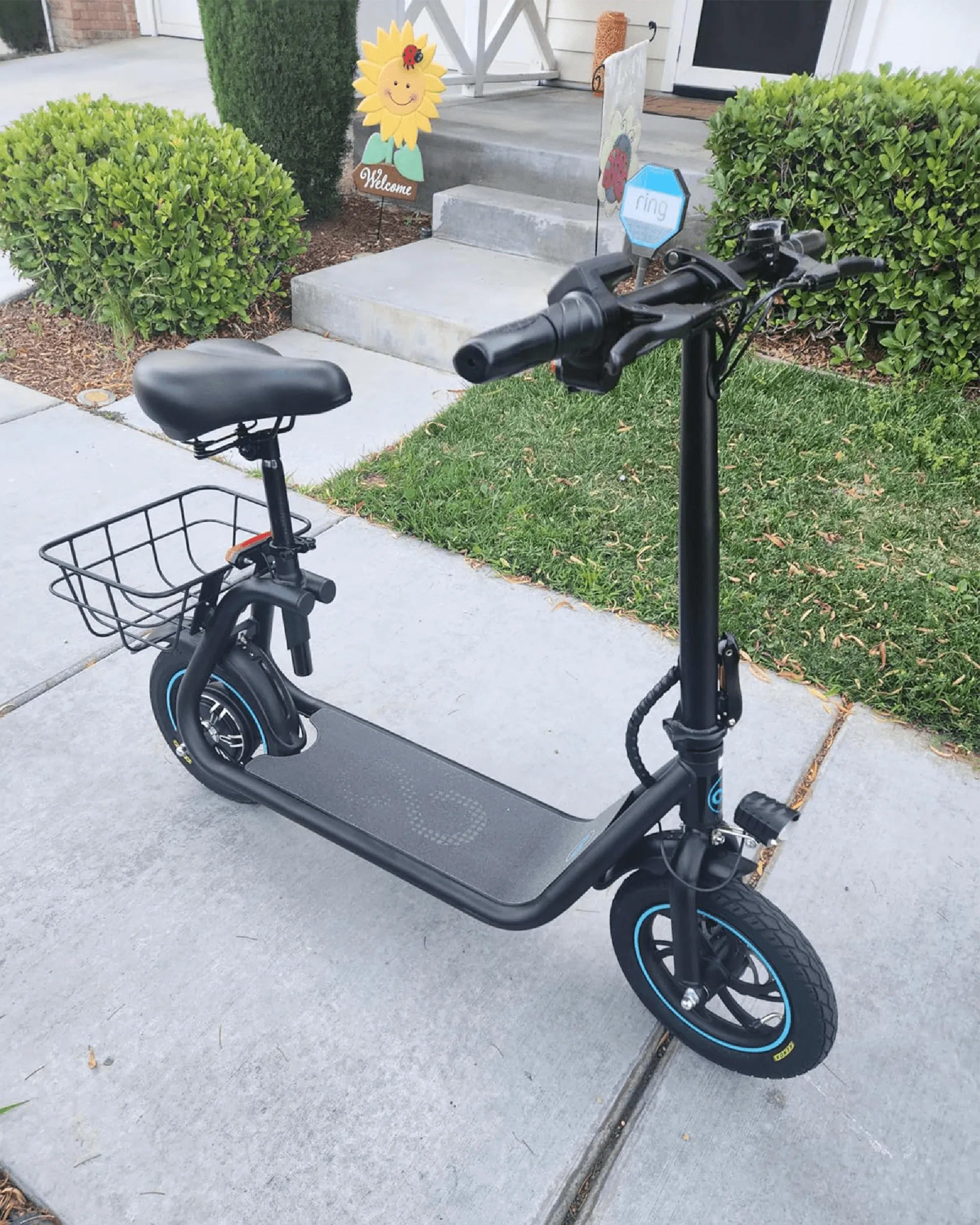
Introduction: Why Tire Size is the Game-Changer for Electric Scooters
The electric scooter has evolved beyond its original role as a sleek, last-mile urban tool. Today, it represents a gateway to personal mobility freedom, but that freedom has historically been limited by small, hard wheels that shudder at every crack and pothole. The single most transformative upgrade bridging the gap between city streets and weekend adventures is the adoption of large, purpose-built tires.
Electric scooters with big tires are the ultimate ride for any terrain, fundamentally altering the physics of the ride for superior comfort, stability, and capability. This shift moves the scooter from a niche commuter device to a true all-terrain vehicle. Leading this engineering evolution are brands like Gyroor, which design scooters from the ground up with larger contact patches and robust suspension, trusted by over 100,000 riders for their reliable performance.
This article will dissect the anatomy of big tires, quantify their benefits on pavement and dirt, and provide a clear framework for choosing a model that unlocks your riding potential. The core thesis is simple: if your scooter’s tires are an afterthought, your riding experience will be limited. If they are the foundation, every journey expands.
The Anatomy of a Big Tire: More Than Just Rubber
A scooter's tires are its primary interface with the world, and their design dictates nearly every aspect of the ride. Big tires are defined by three key metrics: diameter, width, and construction. Diameter, typically 10 inches or larger on performance models, determines the scooter's ability to roll over obstacles rather than impacting them.
Width, often 3 inches or more, defines the contact patch—the area of tire touching the ground. A wider patch dramatically increases lateral stability during turns and braking traction. Finally, the tread pattern is engineered for specific conditions: slick city tires for low rolling resistance, or aggressive, knobby treads for loose terrain.
Beyond size, the internal construction is critical. The carcass ply rating indicates strength, while the rubber compound balances grip and durability. A high-quality, large tire integrates all these elements to provide a predictable, controlled feel that smaller, solid tires cannot match.
Pneumatic vs. Solid: The Comfort and Grip Showdown
The choice between air-filled (pneumatic) and solid (airless) tires is the most significant decision impacting ride quality. For big-tire scooters designed for any terrain, pneumatic tires are the unequivocal premium choice. The physics is clear: the column of air inside a pneumatic tire acts as a primary suspension system, absorbing an estimated 80-90% of road vibration before it reaches the scooter's deck and your body.
This absorption translates directly to comfort and control. On rough surfaces, a pneumatic tire conforms to irregularities, maintaining grip where a solid tire would bounce and lose traction. The trade-off is maintenance—pneumatic tires require periodic air pressure checks and are susceptible to punctures, though modern sealants and durable construction mitigate this risk.
Solid tires, while offering permanent peace of mind from flats, are fundamentally less capable. They transmit nearly all road impacts directly to the rider and frame, leading to a harsh, fatiguing ride and reduced traction on uneven surfaces. For the ultimate ride for any terrain, the superior shock absorption and dynamic grip of large pneumatic tires are non-negotiable.
Conquering the Concrete Jungle: Urban Benefits of Big Tires
For the urban commuter, big tires transform a stressful navigation of urban decay into a smooth, confident glide. City streets are a minefield of potholes, expansion joints, sewer grates, and tram tracks. A standard 8-inch solid-tire scooter turns each into a jarring event, forcing the rider to constantly scan and swerve.
A scooter with 10-inch pneumatic tires rolls over these obstacles with dramatically reduced impact. The increased stability is a direct safety benefit, especially during emergency braking or when cornering on wet, painted road markings. The larger contact patch provides more rubber on the road, shortening braking distances and inspiring confidence.
Furthermore, the vibration damping reduces rider fatigue significantly. A 30-minute commute on a small-tire scooter can leave your hands and feet tingling; the same journey on a big-tire model feels composed and sustainable. This comfort allows riders to travel further, explore more of their city, and arrive at their destination feeling ready, not rattled.
This enhanced urban performance is why models engineered with large tires, like those from Gyroor, are becoming the new standard for serious commuters. They address the real-world imperfections of city infrastructure, making the ride not just possible, but genuinely enjoyable.
Beyond the Pavement: Unleashing Off-Road Potential
This is where electric scooters with big tires truly redefine the vehicle's purpose. Equipped with large, pneumatic tires featuring aggressive tread, a capable scooter ceases to be road-bound. It can confidently traverse gravel bike paths, packed dirt trails, dry grass fields, and rocky forest paths.
The key is the combination of features working in unison. Large diameter provides crucial ground clearance to avoid scraping the undercarriage on roots and rocks. The compliant pneumatic tire conforms to loose surfaces like gravel or sand, finding traction where a small, hard tire would simply dig in and spin. The tread pattern evacuates mud and debris to maintain bite.
This capability unlocks new routes and adventures. The weekend path along the river, the cut-through across the park, or the trail to a secluded viewpoint become accessible. The scooter transitions from a pure A-to-B machine to a vehicle for exploration, vastly increasing its utility and fun factor.
Key Specs for the Adventure-Ready Scooter
Evaluating a scooter for off-road readiness requires looking at a complete system, not just tire size. Here is a practical checklist tied to robust engineering principles:
- Motor Power (500W+): Sustained torque is needed to climb gentle slopes on loose surfaces. A robust motor, like those in Gyroor's performance line, ensures you maintain momentum.
- Battery Range & Management: Off-road riding consumes more power. Look for a scooter with a 20+ mile real-world range and a UL-certified battery pack, like Gyroor uses, for safe, consistent output even under load.
- IPX5 Water-Resistance: Riding off-pavement means encountering puddles, damp grass, and spray. An IPX5 rating ensures the scooter's electronics are protected from water jets from any direction, a critical feature for durability.
- Robust Suspension: While tires are the first line of defense, a dual or front suspension system works in tandem to absorb larger impacts from jumps or drops, protecting both the rider and the scooter's frame.
The Gyroor Advantage: Engineering Confidence into Every Ride
Choosing a scooter built for any terrain is an investment in capability and safety. Gyroor's design philosophy aligns perfectly with the demands of big-tire performance, embedding confidence at every level. The foundation is safety: every Gyroor scooter uses a UL-certified battery pack, tested for over 500 charge cycles.
This isn't just about longevity; it's about stable power delivery when climbing a hill or accelerating out of a soft patch, eliminating the risks associated with inferior power cells. Furthermore, the IPX5 water-resistant design is essential for the real-world use of a versatile scooter. It protects the critical components from the spray and debris kicked up by aggressive, knobby tires on wet trails or city streets after a rain.
This rugged engineering is backed by a reliable 1-year warranty, a promise of durability that matches the intent of a big-tire scooter. When you push the limits of where you can ride, you need a machine built by a brand that understands those limits and engineers past them. Gyroor's commitment to certified batteries, water resistance, and warranty support means the scooter is as reliable as it is capable.
Data-Driven Decision: Big Tires vs. Standard Scooters
To visualize the transformative impact, here is a comparative analysis of key performance and experience metrics.
| Feature | Big-Tire Scooter (10" Pneumatic) | Standard Scooter (8.5" Solid) |
|---|---|---|
| Terrain Handling | Excellent. Smooth on pavement, capable on gravel, dirt, grass. | Poor. Harsh on pavement, unsafe/unusable on loose terrain. |
| Ride Comfort | High. Absorbs vibrations and impacts effectively. | Low. Transmits most road vibrations to rider. |
| Stability & Safety | Superior. Larger contact patch improves braking and cornering grip. | Basic. Prone to slipping on wet surfaces and instability on cracks. |
| Maintenance Level | Moderate. Requires periodic tire pressure checks. Risk of punctures (mitigated by sealants). | Low. No air pressure or puncture concerns. |
| Speed/Range Impact | Slight. Larger tires may have marginally higher rolling resistance but often paired with larger motors/batteries. | N/A. Optimized for flat, smooth surfaces only. |
| Ideal User | The commuter seeking comfort, the adventurer exploring trails, the rider prioritizing safety. | The ultra-short-distance urban rider on perfect pathways, prioritizing minimal maintenance. |
The data is clear: for anyone facing mixed terrain, prioritizing comfort, or valuing safety, the benefits of big pneumatic tires overwhelmingly outweigh the minor increase in maintenance. They redefine what the vehicle is and where it can go.
Frequently Asked Questions (FAQ)
Q: Are big-tire scooters much heavier and harder to carry?
A: There is a weight increase due to larger wheels, more robust construction, and often a bigger battery. However, the trade-off is substantial. Many models feature folding mechanisms, and the weight is a direct investment in durability and ride quality. For most, the carrying distance is short (e.g., up stairs), and the on-road benefits far outweigh this consideration.
Q: How often do pneumatic tires need air, and are flats common?
A: Check tire pressure every 2-3 weeks for optimal performance and safety. Modern scooter tires with thicker, reinforced sidewalls and the use of tire sealant (like Slime) make flats uncommon for typical urban and light trail use. Carrying a small portable pump and a repair kit is a prudent practice for extended adventures.
Q: Can I really ride a big-tire scooter in the rain?
A> With proper precautions, yes. The superior traction of large pneumatic tires on wet pavement is a major safety advantage over solid tires. Crucially, you must ensure the scooter itself has a high water-resistance rating (IPX5 or higher, like Gyroor models) to protect its electronics. Always reduce speed, avoid painted surfaces and metal grates, and brake earlier and more gently.
Q: Is the learning curve different on a big-tire scooter?
A> It’s often easier. The enhanced stability from the lower center of gravity and larger contact patch makes the scooter feel more planted and less twitchy, especially at higher speeds. New riders typically gain confidence faster. The primary difference is getting used to the slightly different handling characteristics due to the larger wheel gyroscopic effect.
Q: Do big tires affect the scooter's speed or battery range?
A> The impact is minimal and often offset by design. Larger diameter tires can slightly increase top speed but may require slightly more torque to accelerate. Any minor increase in rolling resistance is typically compensated for by a larger battery pack in performance models. The real-world range is more affected by riding style, terrain, and rider weight than tire size alone.
Your Journey Awaits: Choose the Ride That Expands Your Horizon
The evidence is compelling and experiential. Upgrading to an electric scooter with large, pneumatic tires is not a minor spec bump; it's a fundamental shift in capability. It replaces a ride defined by limitations—avoid that crack, fear that puddle, don’t even think about that path—with one defined by freedom. The comfort on your daily commute increases exponentially, while your geographic radius for exploration expands beyond the asphalt.
This freedom must be built on a foundation of safe, reliable engineering. Choosing a scooter from a brand like Gyroor, which integrates UL-certified batteries, IPX5 water-resistance, and durable construction with the inherent benefits of big tires, means your investment is protected. You're not just buying a vehicle; you're unlocking a new perspective on your city and surroundings.
Stop imagining the detours, the scenic routes, and the smooth ride home. It’s time to experience them. Browse the full Gyroor collection at gyroorboard.com and find the big-tire scooter engineered to be your ultimate ride for any terrain.
Charging Electric Scooters: The Ultimate Guide to Efficient and Safe Power Management
Are Electric Scooters Allowed on Buses? What You Need to Know