



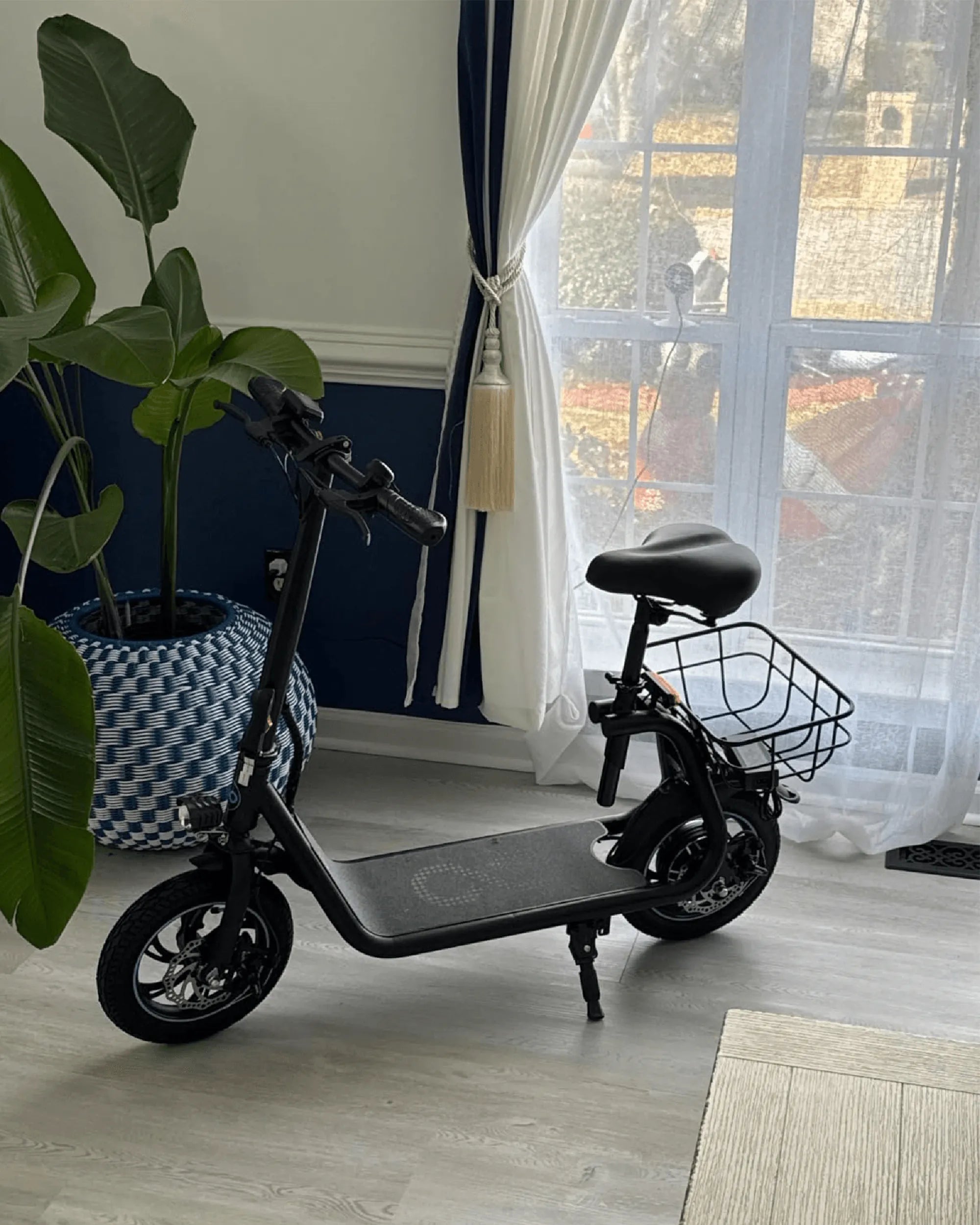
Introduction: Why Weight Capacity Matters for Electric Scooter Performance & Safety
Choosing an electric scooter when you're a heavier rider isn't just about comfort—it's fundamentally about safety, performance, and long-term value. An Electric Scooters With High Weight Capacity Quotation represents more than a simple spec; it's a promise of engineering integrity. Riders above average weight face unique challenges: significantly reduced range, excessive strain on motors and frames, compromised braking distances, and accelerated wear on tires and suspension.
This guide cuts through marketing claims to deliver a practical, data-driven framework for selection. We'll decode specifications, explain which components truly matter, and show you how to interpret a manufacturer's Electric Scooters With High Weight Capacity Quotation to ensure the scooter you choose delivers reliable performance where it counts. The goal is to match you with a vehicle that doesn't just carry you, but performs confidently under load for years.
Decoding Electric Scooter Weight Limits: More Than Just a Number
A manufacturer's stated maximum weight capacity, or Electric Scooters With High Weight Capacity Quotation, is the result of rigorous stress testing on key components. It is not merely a suggestion but a calculated limit for safe operation. Exceeding this limit can lead to catastrophic failure of the stem or deck, motor burnout, brake fade, and sudden tire blowouts. It also typically voids any warranty.
More importantly, riders must understand the difference between 'maximum load' and 'optimal performance range.' A scooter rated for 330 lbs (150 kg) will operate at that weight, but its hill-climbing ability, acceleration, and range will be severely diminished. For consistent, safe performance, experts recommend choosing a scooter with a maximum capacity at least 20-25% above your body weight. This buffer accounts for cargo, clothing, and dynamic forces encountered during riding.
Key Components That Define a Scooter's Strength
The true strength of a high-capacity scooter is determined by its weakest link. Here are the critical engineering aspects that define a robust Electric Scooters With High Weight Capacity Quotation.
Motor Wattage & Type: Continuous wattage is more important than peak wattage. A 500W continuous motor will sustain heavy loads better than a 1000W peak motor that can only deliver that power for seconds. Dual-motor configurations (e.g., 2x500W) offer superior torque and hill-climbing ability by distributing the load.
Frame & Stem Construction: Look for aircraft-grade aluminum alloys (like 6061-T6) and reinforced welding at stress points, especially where the stem meets the deck. Folding mechanisms must have robust locking pins and minimal play. A one-piece welded frame is inherently stronger than a folding design for the highest weight capacities.
Battery Quality & Management: Under heavy load, the battery discharges at a higher current. High-quality, UL-certified cells with robust Battery Management Systems (BMS) prevent overheating, voltage sag, and premature failure. This is non-negotiable for safety and longevity.
Tire & Wheel Durability: Larger, air-filled (pneumatic) tires (10 inches or more) better absorb impact and distribute weight, reducing strain on the frame. Solid tires or small wheels create higher point loads and a much harsher, less stable ride for heavier riders.
Top Features to Prioritize for Heavy Riders
When evaluating an Electric Scooters With High Weight Capacity Quotation, move beyond the headline number. This checklist details the specs and features that directly translate to safety, comfort, and durability for riders carrying more weight.
Motor Power & Hill Climbing Ability
For heavy riders, motor power is the most critical performance factor. A single 350W motor may struggle on a slight incline with a 220 lb rider. Aim for a minimum of 500W of continuous power, with 750W or 1000W being ideal for consistent acceleration and hill climbing.
Dual-motor scooters are often the best choice. They provide exceptional torque from a stop and can tackle steep grades (15-25%) even under max load. Remember, the advertised 'hill climb' angle is usually tested with a 165 lb rider; subtract 5-10 degrees for a realistic expectation under heavy load.
Frame Build Quality & Deck Dimensions
The frame is the scooter's skeleton. Inspect the deck dimensions: a longer and wider deck (e.g., 20" x 8") provides better stance stability and foot placement. The deck should be constructed from thick, reinforced aluminum and mounted low to the ground to lower the center of gravity.
Examine the stem and its connection to the deck. A wide, gusseted joint or a dual-clamp system is far stronger than a simple single-bolt hinge. Any flex or wobble in the stem at rest is a major red flag, as this movement amplifies under the dynamic forces of riding.
Braking System & Suspension Essentials
Stopping a greater mass requires more energy and generates more heat. A combination of hydraulic disc brakes (front and rear) is the gold standard, offering superior modulation, power, and heat dissipation compared to mechanical discs or drum brakes. Electronic (regenerative) brakes are a useful supplement but should not be the primary stopping system.
Suspension is not a luxury; it's a critical safety and comfort component. It maintains tire contact with the road and absorbs impacts that would otherwise be transferred to the frame and rider. A dual spring or hydraulic suspension system (front and rear) is highly recommended to handle the increased forces.
Battery Range Realities: Adjusting Expectations Under Load
Manufacturer range claims are almost always based on ideal conditions: a light rider, flat terrain, warm weather, and slow speeds. Weight has a dramatic, non-linear effect on range due to increased rolling resistance and the higher power demand for acceleration.
A practical rule of thumb: for every 50 lbs (23 kg) over the 165 lb test standard, expect a 15-20% reduction in the advertised range. Therefore, a scooter claiming a 40-mile range might only deliver 25-28 miles for a 265 lb rider. Always choose a scooter with a battery capacity (in Wh) that is 20-30% larger than you think you need.
Spotlight on Gyroor: Engineered for Durability and Confidence
With over 100,000 riders trusting their products, Gyroor has built a reputation for engineering durable personal electric vehicles. Their design philosophy directly addresses the core needs of heavier riders, focusing on the components that ensure safety and performance under load. When you see a Gyroor Electric Scooters With High Weight Capacity Quotation, it is backed by rigorous testing on these key systems.
For instance, models like the Gyroor C1 and S1 are built with reinforced frames and powerful motors specifically to deliver consistent performance for a wide range of rider weights. This focus on foundational strength, rather than just top speed, makes them a reliable choice for commuters and recreational riders who prioritize longevity.
The Safety Standard: UL-Certified Battery Packs
Gyroor's commitment to safety is exemplified by its use of UL 2271 certified battery packs across its lineup. For a heavy rider, this certification is paramount. The sustained high-current draw required to move greater mass puts immense stress on battery cells.
A UL-certified pack has undergone hundreds of tests for overcharge, short circuit, crush, and drop hazards. Its integrated Battery Management System (BMS) meticulously monitors temperature and cell balance, preventing the overheating that can lead to failure or fire. This ensures the battery not only lasts for its full 500+ charge cycles but does so safely under demanding conditions.
Built to Endure: IPX5 Water Resistance & Robust Warranty
Heavy riders are often commuters who ride in all conditions. Gyroor's IPX5 water-resistant rating means the scooter's electrical components are protected against low-pressure water jets from any direction. This guards against road spray, puddles, and light rain, preventing corrosion and electrical shorts that can strand a rider.
This durability is backed by a comprehensive 1-year warranty and accessible US-based customer support. For a rider investing in a high-capacity scooter, this warranty provides tangible peace of mind, covering potential defects in the motor, battery, and frame—the very components most stressed by heavy use.
Practical Comparison: High-Capacity vs. Standard Scooters
The table below illustrates the stark differences between scooters engineered for high weight capacity and typical commuter models. This comparison highlights why paying attention to an Electric Scooters With High Weight Capacity Quotation and its supporting specs is a critical investment.
| Feature | High-Capacity Scooter (e.g., Gyroor C1) | Standard Commuter Scooter |
|---|---|---|
| Max Weight Capacity | 330 lbs (150 kg) + | 220 lbs (100 kg) |
| Motor (Continuous) | 500W - 1000W (Single or Dual) | 250W - 350W |
| Frame Material | Reinforced 6061 Aluminum, Welded Joints | Standard Aluminum, Folding Focus |
| Braking System | Dual Hydraulic or Mechanical Disc | Single Drum or Electronic Brake |
| Suspension | Front & Rear Spring/Hydraulic | Front Only or None |
| Tire Size & Type | 10"+ Pneumatic (Air-Filled) | 8.5" Solid or Pneumatic |
| Battery Certification | UL 2271 Certified | May Lack Certification |
| Real-World Range (265 lb Rider) | 20-28 miles | 8-12 miles (with strain) |
| Primary Use Case | Daily Commuting, All-Terrain, Heavy Loads | Light Errands, Short Trips |
FAQs for Heavy Riders Considering an Electric Scooter
Q1: Is it safe to ride right at the maximum weight limit?
A1: While the scooter is engineered not to fail at its limit, performance will be at its lowest. Acceleration, hill climbing, and range will be significantly reduced, and braking distances will be longer. For optimal safety and performance, choose a scooter with a limit 20-25% above your weight.
Q2: How much will my actual range decrease compared to the advertised claim?
A2: Expect a 15-20% reduction for every 50 lbs you are over the 165 lb testing standard. Always derate the advertised range. A high-quality battery (high Wh rating) is the best defense against range anxiety.
Q3: Can I carry a backpack or groceries on top of my weight?
A3: Yes, but the combined weight of you and your cargo must not exceed the scooter's maximum weight capacity. Factor in the weight of your backpack, laptop, and any other items when making your selection.
Q4: What maintenance is more critical for heavy riders?
A4> Tire pressure checks are paramount—under-inflated tires wear quickly and risk pinch flats. Regularly inspect brake pad wear and tighten all bolts (especially stem and folding mechanisms) as vibration can loosen them faster. Listen for new creaks or groans from the frame.
Q5: Are dual-motor scooters necessary for heavy riders?
A5: Not strictly necessary, but they are highly advantageous. They provide vastly superior acceleration and hill-climbing ability, reduce strain on each individual motor, and often offer the option to use only one motor for extended range on flat ground.
Investing in Performance, Safety, and Long-Term Value
Selecting the right electric scooter as a heavier rider is a decision that prioritizes engineering over aesthetics, and substance over style. A genuine Electric Scooters With High Weight Capacity Quotation is your first clue, but the real assurance lies in the supporting specs: a powerful motor, a rigid frame, a certified battery, and robust brakes and suspension. This investment pays dividends in daily reliability, safety, and the confidence that your vehicle is built for the task.
Compromising on these core components to save money often leads to frustration, poor performance, and potentially unsafe situations. Brands like Gyroor demonstrate that a focus on these fundamental durability and safety features creates a product that delivers real value and trust for riders of all sizes. Your scooter should empower your mobility, not limit it.
Ready to explore scooters built with the strength and safety features you need? Browse the full Gyroor collection at gyroorboard.com to find a model that matches your weight, terrain, and range requirements, backed by UL-certified safety and a reliable 1-year warranty.
Are Electric Scooters Good for the Environment? A Comprehensive Impact Analysis
Do Electric Scooters Explode? The Truth Behind Battery Safety & Reliability