



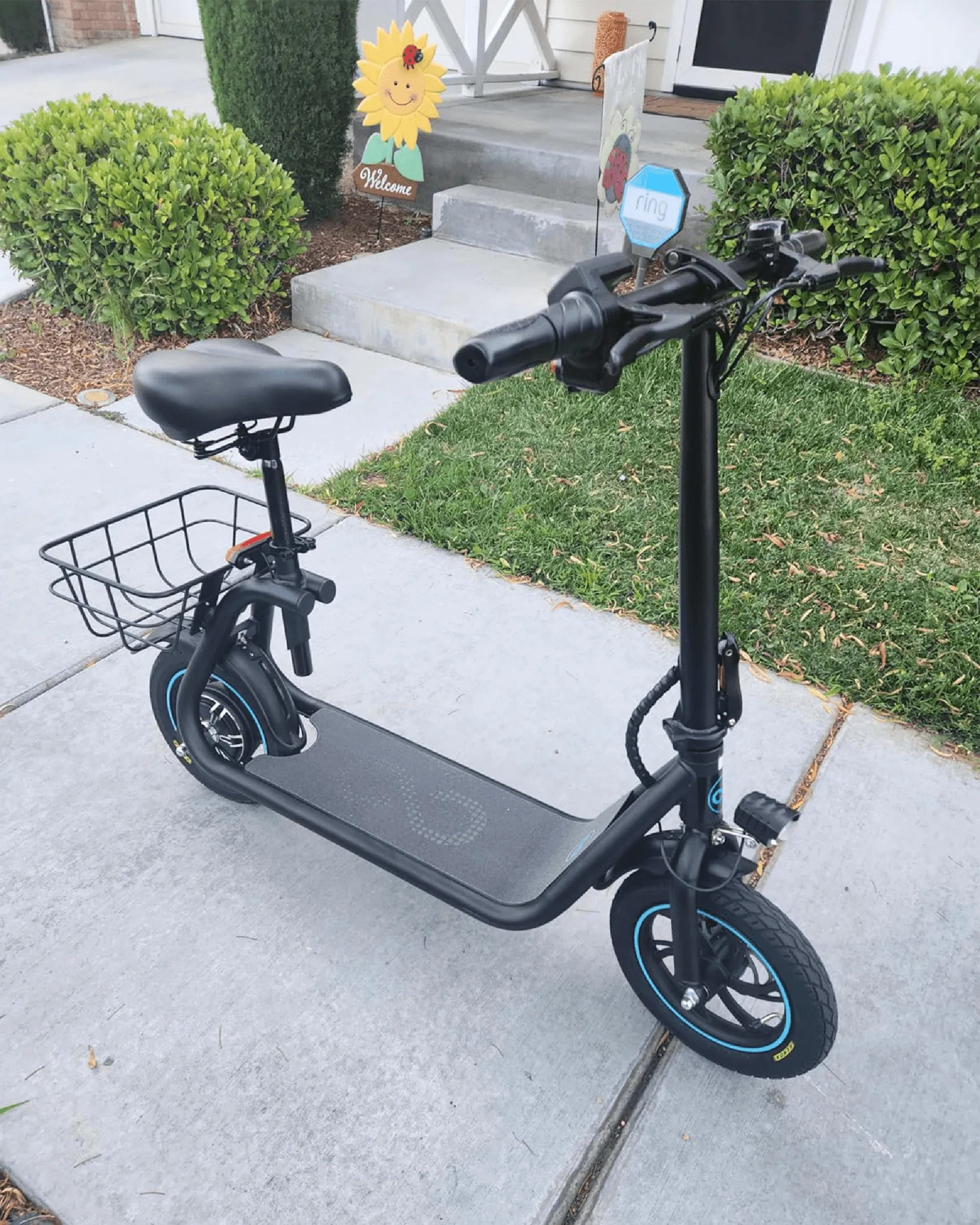
Introduction: Why Lights Are Non-Negotiable for Modern E-Scooters
Choosing an electric scooter without proper lighting is like buying a car without headlights—it’s an incomplete and unsafe vehicle. For today's commuter, lights serve a dual, critical purpose: they are fundamental safety components for visibility and increasingly sophisticated design elements that express personal style. Modern riders should never have to choose between being seen and looking good; the best electric scooters integrate both seamlessly from the factory.
This guide will illuminate every aspect of electric scooter lighting, from the technical specifications that keep you safe to the aesthetic choices that make your ride uniquely yours. We will explore how integrated lighting systems, like those engineered into Gyroor's lineup, represent a commitment to rider safety through UL-certified batteries and IPX5 water-resistant designs. The journey to a safer, more stylish commute starts with understanding the light itself.
The Safety Imperative: How Lights Protect You on the Road
The primary function of scooter lighting is unambiguous: to make you visible. In low-light conditions—be it dusk, dawn, night, or inclement weather—a scooter’s profile is small and easily missed by drivers. Effective lighting transforms you from a vague shadow into a recognized vehicle on the road. This visibility is your first and most crucial line of defense against accidents.
Data from urban safety studies consistently show that conspicuity is a leading factor in preventing vehicle-to-rider collisions. Lights ensure you are seen from a sufficient distance, giving other road users time to react. This is not merely about illumination; it's about communication. Your lights signal your presence, your direction, and your intentions to everyone around you.
Beyond passive visibility, active lighting systems directly enhance your control and reaction time. A well-lit path allows you to identify hazards like potholes, debris, or changes in road surface well in advance. This guide to safe commuting hinges on the principle that seeing and being seen are two sides of the same safety coin. Investing in a scooter with a robust, integrated lighting system is investing in your own protection.
Front Lights (Headlights): Illuminating Your Path
A front headlight's job is twofold: to light your way and to announce your approach. The key metric here is brightness, measured in lumens. For urban commuting on lit streets, 100-200 lumens may be sufficient. For darker paths or suburban roads, 300-500 lumens or more is advisable to adequately illuminate obstacles 10-15 meters ahead.
Beam pattern is equally important. A focused spot beam throws light farther down your path, while a wider flood beam illuminates more of your immediate periphery. Many modern scooters, including several Gyroor models, utilize LED arrays that offer a balanced beam, providing both distance and width for comprehensive situational awareness.
Rear Lights (Taillights & Brake Lights): Signaling Your Intentions
If the headlight says "I am here," the taillight and brake light say "I am here, and I am slowing down." A constant rear red light is vital for marking your position in traffic. However, a brake light that activates automatically upon deceleration is a critical safety upgrade. It provides an immediate, intuitive signal to vehicles behind you, dramatically reducing the risk of rear-end collisions.
This automatic functionality, often triggered by regenerative braking or a separate sensor, is a hallmark of well-engineered scooters. It ensures your braking intent is communicated instantly, without requiring you to fumble for a separate switch. This feature is a core component of a complete safety lighting suite.
Side and Ambient Lighting: 360-Degree Visibility
Front and rear lights address forward and backward visibility, but intersections and side streets demand more. Side and ambient lighting—such as under-deck glow, wheel rim lights, or side-facing LEDs—creates a 360-degree visual footprint. This makes your scooter identifiable from oblique angles, where standard lights might be obscured.
This holistic visibility is especially crucial in complex urban environments. It ensures a driver looking left at a cross-street sees the glow of your scooter before you enter their field of view. While sometimes viewed as aesthetic, this lighting serves a profound safety purpose by completing your visible profile.
Beyond Safety: Lights as a Style and Customization Statement
Once the safety box is checked, lighting becomes a powerful medium for personal expression. The daily commute transforms when your vehicle reflects your personality. Customizable lighting allows riders to distinguish their scooter in a crowd, turning a functional device into a signature accessory.
The evolution of LED technology has made this possible without compromising reliability. Riders can now choose from a spectrum of colors and dynamic patterns to match their mood or style. This trend towards personalization makes riding more enjoyable and fosters a deeper connection between rider and machine.
For brands focused on the user experience, like Gyroor, lighting design is part of the product's overall aesthetic philosophy. It’s not an afterthought but an integral part of the design sketch, ensuring lights complement the scooter's lines and contribute to a cohesive, stylish look trusted by over 100,000 riders.
Choosing Your Aesthetic: Color Temperatures and RGB Systems
The "feel" of your scooter's light is dictated by its color temperature. Cool white LEDs (5000K-6500K) offer a modern, high-tech, and very bright appearance that maximizes perceived illumination. Warm white LEDs (2700K-3500K) provide a classic, softer glow that can be less harsh to oncoming traffic.
Fully customizable RGB (Red, Green, Blue) systems represent the pinnacle of personalization. Through a mobile app or physical controller, riders can select any color in the spectrum or program dynamic patterns like fading or strobe. While fun, it's vital to ensure any colored front light maintains a white or yellow output where legally required for road use.
Integrated vs. Aftermarket: The Clean Look of Built-In Systems
The choice between integrated and aftermarket lighting is a choice between seamless design and potential compromise. Factory-integrated systems, such as those on Gyroor scooters with IPX5 ratings, are engineered for durability, weather resistance, and clean wiring. They draw power safely from the main UL-certified battery and are protected by the manufacturer's warranty.
Aftermarket add-ons, while offering flexibility, often involve external wiring, adhesive mounts, and separate battery packs. These can be vulnerable to water damage, theft, and failure. The clean, reliable, and hassle-free operation of a built-in system almost always provides greater long-term value and peace of mind for the commuter.
Key Features and Specifications to Look For
Evaluating a scooter's lighting system requires looking beyond "it has lights." Informed buyers examine specific features that determine real-world performance and durability. This checklist will help you identify a scooter where lighting is a true feature, not a checkbox.
Prioritize models where light specifications are clearly listed. Ambiguity often indicates a lower-priority component. The best manufacturers understand that lighting is a core safety feature and provide transparent data to prove its capability. This attention to detail correlates strongly with overall build quality.
Brightness (Lumens) and Beam Distance
Lumen output is the starting point. For reliable urban night riding, seek a headlight with a minimum of 200 lumens. For unlit areas, 400+ is preferable. Beam distance, often listed in meters, indicates how far the useful light reaches. A combination of high lumens and a focused beam pattern ensures you can see and react to obstacles at typical commuting speeds (15-20 mph).
Remember, a brighter light is only useful if it's properly aimed. Some scooters offer adjustable headlight angles, allowing you to tailor the beam to your riding posture and load, preventing you from blinding oncoming pedestrians or cyclists.
Water Resistance and Durability (The IP Rating)
Lights are electrical components exposed to the elements. An Ingress Protection (IP) rating for the entire scooter, specifically covering the electrical system, is non-negotiable. An IPX5 rating, common on Gyroor models, means the scooter can withstand water jets from any direction, making it safe to ride in rain and through puddles.
A light system without a good IP rating is a failure point waiting to happen. Moisture ingress can lead to flickering, dimming, or complete failure, precisely when you need them most. Always verify the IP rating covers the whole unit, not just the deck or battery compartment.
Power Source and Battery Impact
High-efficiency LED lights have a minimal impact on overall range. Integrated systems powered directly by the scooter's main battery are superior. They eliminate the need to charge separate packs and ensure your lights are always ready when the scooter is on.
Systems powered by a UL-certified battery pack, a standard for Gyroor, offer an additional layer of safety. This certification means the battery has been tested for electrical, mechanical, and environmental safety, reducing risks associated with the entire power system, including the lights it supplies.
Gyroor's Lighting Philosophy: Engineered for Assurance
For a brand like Gyroor, lighting is not an accessory; it's a fundamental pillar of the riding experience, engineered from the ground up for assurance. This philosophy ties directly to their core brand promises of safety, reliability, and user-centric design. It’s about providing riders with confidence that extends beyond daylight hours.
This approach means selecting high-output, long-life LED components, designing waterproof housings that align with the overall IPX5 rating, and integrating lighting controls intuitively into the handlebar interface. Every decision is made with the rider's real-world needs in mind, ensuring that style never comes at the expense of substance.
Built to Last: Lights Backed by a 1-Year Comprehensive Warranty
Gyroor's confidence in its lighting systems is demonstrated by its 1-year comprehensive warranty. This coverage includes the entire lighting assembly, protecting against defects in materials or workmanship. For the rider, this translates to peace of mind; a critical safety system is guaranteed, aligning the brand's interests with the rider's long-term satisfaction.
This warranty support is a key differentiator from the uncertainty of aftermarket solutions or brands with limited coverage. It ensures that your investment in a safe, well-lit scooter is protected, allowing you to commute with assurance night after night.
Safety from the Inside Out: The UL-Certified Battery Connection
The reliability of a light is only as good as the power that feeds it. Gyroor's use of UL-certified battery packs, tested for over 500 charge cycles, ensures a stable and safe power supply for all electrical components, including the lights. This certification is a rigorous third-party validation of battery safety, mitigating risks of overheating or electrical fault.
This creates a holistic safety ecosystem: a certified safe battery powers a bright, water-resistant lighting system, all covered by a strong warranty. It’s an engineered chain of assurance where every link, from the energy source to the light beam, is designed for dependable performance.
Comparison: Lighting Features Across Scooter Types
Not all scooters use lighting the same way. Your commuting needs should dictate the level of lighting sophistication you require. The table below compares typical lighting setups across different scooter categories.
| Scooter Type | Typical Use Case | Standard Lighting Features | Recommended For |
|---|---|---|---|
| Basic Commuter | Short, daytime-focused trips; backup night use | Single front LED (100-200 lumens), basic rear reflector or LED. | Riders with primarily daytime commutes in well-lit areas. |
| Advanced Urban Commuter (e.g., Gyroor C1 Series) | Daily all-weather commuting, regular night riding | Bright front headlight (300+ lumens), automatic brake light, ambient deck lighting, IPX5 water resistance. | The majority of city commuters who need reliable, all-condition visibility and style. |
| Performance / Long-Range | Extended trips, higher speeds, varied terrain | High-lumen headlight (500+), wide beam pattern, robust brake light, often additional fog lights or accent lighting. | Riders covering longer distances at higher speeds, often in less predictable environments. |
Frequently Asked Questions (FAQ)
Q: Are electric scooter lights bright enough for serious night riding?
A: Modern electric scooters from reputable brands are absolutely capable of night riding. The key is to check the lumen output (aim for 300+ for unlit areas) and the IP rating for weather resistance. Always do a test ride in a safe, familiar area after dark to assess the beam spread and your personal comfort level.
Q: Can I add aftermarket lights to a scooter that has weak or no lights?
A> Yes, but with caveats. You can add battery-powered or USB-rechargeable lights. However, for wired lights, improper installation can void your warranty or damage electrical systems. Consider the hassle of charging separate batteries and the lower durability of add-ons. Investing in a scooter with a quality integrated system from the start is often more cost-effective and reliable.
Q: Do I still need to wear reflective gear if my scooter has great lights?
A: Absolutely. Lights make your vehicle visible. Reflective gear (on your ankles, arms, and torso) makes *you* visible as a human shape, especially at intersections where your scooter's profile might be narrow. They are complementary layers of safety. Lights are your primary signal; reflective material is a crucial secondary backup.
Q: What are the legal requirements for e-scooter lights in my area?
A> Laws vary significantly by city, state, and country. As a general rule, most jurisdictions that permit nighttime scooter use require at least a white front light and a red rear light. Some may also require reflectors on the sides. It is your responsibility as a rider to know and comply with local vehicle codes. A quick search for "[Your City] micromobility lighting laws" should provide guidance.
Q: How much does using the lights affect my scooter's battery range?
A> The impact is minimal with modern LED technology. High-efficiency LEDs consume very little power. Using lights might reduce your total range by 2-5% at most. The safety benefit of being visible far outweighs this negligible range cost. Scooters with lights powered by the main battery, like Gyroor's models, are designed to handle this draw efficiently.
Conclusion: Light Your Way to a Smarter, Safer Ride
Your electric scooter's lighting system is the guardian of your night-time commutes and the signature of your style. As we've explored, true safety comes from a comprehensive approach: a bright headlight to see, an automatic brake light to communicate, and ambient lighting to be seen from every angle. These features, when integrated with water-resistant durability and powered by a certified safe battery, form an ecosystem of assurance.
Choosing a scooter where this ecosystem is a design priority, backed by a solid warranty, is the ultimate decision for a savvy commuter. It means choosing a partner for the road that doesn't fade when the sun goes down. Illuminate your path, define your style, and ride with the confidence that comes from being fully equipped. For a collection of scooters where lighting, safety, and design converge under a trusted 1-year warranty, browse the full Gyroor collection at gyroorboard.com.
Urban Scooter Electric Scooters: The Future of City Commuting
Nice Electric Scooters: The Ultimate Guide to Choosing the Perfect Ride