



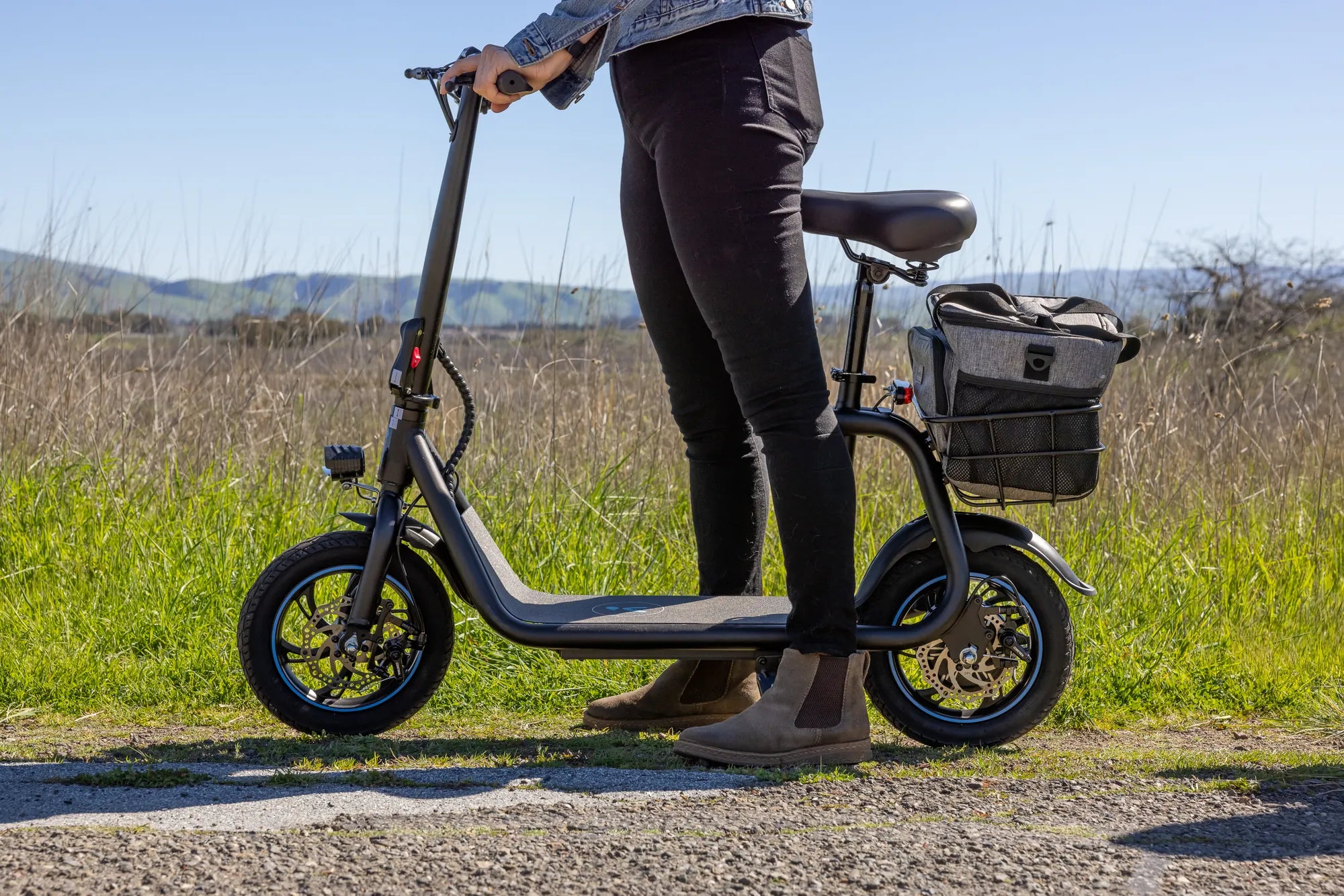
Introduction: Why Tire Choice Defines Your E-Scooter Experience
The single most critical component separating a bone-jarring commute from a smooth, enjoyable journey isn't the motor or the battery—it's the tires. For riders seeking the ultimate blend of comfort and performance, electric scooters with pneumatic tires represent the undisputed gold standard. This choice fundamentally alters how the scooter interacts with the road, absorbing impacts that would otherwise travel directly to your feet, legs, and spine.
While solid and airless options exist, pneumatic (air-filled) tires provide a dynamic cushion that solid rubber simply cannot match. This article will dissect the anatomy of this advantage, from shock absorption on cracked city streets to enhanced traction on wet roads. We'll explore how this technology unlocks better handling, can influence range, and why it's a cornerstone of premium models from trusted manufacturers. Understanding the role of electric scooters with pneumatic tires is the first step to investing in a smoother, safer, and more capable ride.
The Anatomy of Comfort: How Pneumatic Tires Transform Your Ride
Comfort on an electric scooter isn't a luxury; it's a necessity for practical, daily use. Pneumatic tires act as the primary suspension system, using compressed air to deform around obstacles. This deformation converts the kinetic energy of a bump into heat within the air and rubber, dissipating the force before it reaches the rider. The result is a dramatic reduction in vibration and impact shock.
This technology directly combats rider fatigue. A commute on solid tires requires constant micro-adjustments in posture and grip to counteract vibrations. Pneumatic tires smooth out the high-frequency chatter from rough asphalt and the larger jolts from expansion joints, allowing you to ride longer distances in greater comfort. The difference is immediately palpable, transforming the scooter from a last-mile novelty into a viable primary commuter vehicle.
The air volume within the tire is key. Larger diameter tires, like those often found on performance models, can hold more air, providing a greater cushion and an increased contact patch. This is why many high-end electric scooters with pneumatic tires opt for 10-inch or larger diameters. The pliability of the tire casing also contributes, allowing the sidewall to flex appropriately under load and during cornering.
Shock Absorption and Urban Terrain Mastery
Urban environments are a gauntlet of imperfections: potholes, sewer grates, cracked pavement, and raised curbs. A pneumatic tire doesn't just hit these obstacles; it conforms to and rolls over them. When a tire encounters a pothole, the air pressure allows it to sink in and then rebound, maintaining contact and stability. A solid tire, in contrast, transmits the full impact, potentially causing the wheel to skip or the rider to lose balance.
This mastery of terrain extends to transitions between surfaces. Rolling from asphalt to brickwork or cobblestone streets becomes a manageable change in texture rather than a jarring, teeth-rattling experience. For riders who must navigate construction zones or older city districts, this capability is not just about comfort—it's about maintaining consistent control and momentum in unpredictable conditions.
Enhanced Traction and Grip for Safety
Safety is inextricably linked to traction. The flexible contact patch of a pneumatic tire molds itself to the road surface, increasing the total area of rubber in contact with the ground. This superior grip is crucial during acceleration, braking, and cornering. Under hard braking, a pneumatic tire provides more progressive and predictable deceleration, reducing the risk of wheel lock-up or skidding compared to a harder solid tire.
Wet conditions magnify these advantages. The tread patterns on quality pneumatic tires are designed to channel water away, preventing hydroplaning and maintaining grip on slick surfaces. The compound of the rubber itself is also formulated for a balance of durability and stickiness. This combination gives riders confidence in rain or on damp morning roads, a critical factor for reliable year-round commuting.
Performance Unleashed: Speed, Efficiency, and Handling
Beyond comfort, pneumatic tires unlock a higher tier of dynamic performance. The improved traction directly translates to more confident cornering. As you lean into a turn, the tire sidewall flexes in a controlled manner, providing feedback and a predictable grip limit. This allows for higher cornering speeds and a more engaging, motorcycle-like riding experience that solid tires cannot replicate.
Handling precision is also enhanced. The compliance of the tire improves high-speed stability by allowing the scooter to absorb minor road deviations without transmitting them into a steering wobble. The rider spends less effort correcting the scooter's path and more effort enjoying the ride. This makes electric scooters with pneumatic tires feel more planted and secure, especially at their top-end speeds.
The Range Equation: Rolling Resistance Matters
The relationship between tire type and range is nuanced. High-quality, properly inflated pneumatic tires can have competitive rolling resistance. While some ultra-hard solid tires may have a slight theoretical advantage on perfectly smooth laboratory surfaces, real-world conditions tell a different story.
The constant vibration from solid tires can cause the rider to make micro-adjustments that waste energy. More importantly, the inability of a solid tire to conform to road imperfections means the entire scooter and rider must move vertically over each bump—a process that consumes significant battery power. A pneumatic tire's ability to absorb these bumps allows the scooter to maintain a more efficient, level trajectory. For brands like Gyroor that prioritize a premium, real-world riding experience, the range preservation from improved comfort and control is a key consideration alongside the raw efficiency metric.
Pneumatic vs. Solid vs. Honeycomb: A Data-Driven Tire Comparison
Choosing the right tire requires a clear understanding of the trade-offs. The market primarily offers three types: Pneumatic (air-filled), Solid (solid rubber), and Airless or Honeycomb (solid with a lattice structure). The following table breaks down their performance across critical categories.
| Feature | Pneumatic Tires | Solid Tires | Airless/Honeycomb Tires |
|---|---|---|---|
| Ride Comfort | Excellent (Active shock absorption) | Poor (High vibration transfer) | Fair to Good (Some compliance from structure) |
| Maintenance Required | Moderate (Pressure checks, puncture repair) | Very Low (No inflation, no punctures) | Low (No inflation, rare punctures) |
| Puncture Risk | Present (Mitigated with sealant, quality tubes) | None | Very Low (Can be pierced but won't deflate) |
| Wet/Dry Traction | Excellent (Conforming contact patch) | Fair (Harder compound, less grip) | Good (Better than solid, less than pneumatic) |
| Replacement Cost & Ease | Moderate (Standard tire/tube change) | Difficult & High (Often requires professional disassembly) | Difficult & Very High (Complex integrated design) |
| Impact on Range | Good (Optimal real-world efficiency) | Variable (Good on perfect pavement, poor otherwise) | Fair (Increased rolling resistance from structure) |
As the data shows, pneumatic tires offer the best balance of comfort, performance, and safety. While they require more attention than "set-and-forget" solid tires, the payoff in ride quality is immense. Honeycomb tires attempt a compromise but often fall short of pneumatic comfort while introducing higher cost and complexity.
Choosing Your Ride: Top Gyroor Models Featuring Premium Pneumatic Tires
For riders convinced of the pneumatic advantage, the next step is selecting a scooter from a brand that implements this feature correctly. Gyroor, a leader trusted by over 100,000 riders, integrates high-quality pneumatic tires across its lineup, pairing them with UL-certified batteries, IPX5 water-resistant designs, and reliable warranties for a complete premium package. This combination ensures the benefits of the tires are supported by overall vehicle safety and durability.
The brand's philosophy centers on a balanced, real-world riding experience. Their engineering prioritizes how components work together—the synergy between pneumatic tires, a well-tuned suspension (on some models), and a powerful motor creates a cohesive and confidence-inspiring ride. Choosing a Gyroor means investing in an ecosystem where comfort and performance are foundational, not an afterthought.
The Urban Commuter’s Choice: Gyroor F1 Pro
The Gyroor F1 Pro is engineered for the daily grind. It features 10-inch pneumatic tires that provide ample air volume to soak up city street imperfections. These tires work in concert with a front and rear dual suspension system, creating a layered approach to comfort that makes even longer commutes feasible. The large tire diameter also improves stability and roll-over ability for curbs and obstacles.
With a focus on practicality, the F1 Pro's pneumatic tires contribute to its confident handling in diverse urban conditions, from smooth bike lanes to patched concrete. Coupled with its UL-certified battery and IPX5 rating for weather resistance, it represents a full-spectrum commuter solution where the tire choice is a core part of its reliability and rider satisfaction.
For the Adventure-Ready Rider: Gyroor Warrior
When the pavement ends, the Gyroor Warrior begins. This model is built for exploration, featuring aggressive, knobby 10-inch pneumatic tires designed for mixed terrain. The deep tread pattern bites into loose dirt, gravel, and grass, providing the traction needed for light off-road trails while still being capable on asphalt. The large air volume is essential for absorbing the sharper impacts of uneven paths.
The Warrior’s design exemplifies the performance benefits of pneumatic tires. The enhanced grip allows for safe control on slopes and variable surfaces, while the shock absorption protects both the rider and the scooter's frame from the rigors of harder use. Its IPX5 water-resistant rating ensures that puddles and damp conditions are no obstacle, making it a truly versatile companion for the rider who doesn't want their journey limited by tire type.
Maintenance Essentials: Keeping Your Pneumatic Tires in Peak Condition
To reap the full benefits of pneumatic tires, a simple maintenance routine is essential. The most critical task is maintaining proper air pressure. Under-inflated tires increase rolling resistance (hurting range), cause poor handling, and make the tire more susceptible to pinch flats. Over-inflation reduces the contact patch and comfort, making the ride harsh. Consult your scooter's manual for the recommended PSI, typically between 40-50 PSI for most models.
Check tire pressure every 1-2 weeks for regular riders, and always before a long trip. A small digital gauge is a worthwhile investment for accuracy. Visually inspect tires before each ride for embedded debris, significant wear, or cracks in the sidewall. Look for wear indicators or balding tread, which signal it's time for a replacement.
Puncture prevention is straightforward. Using a tire sealant like Slime can automatically seal small punctures from thorns or glass shards. Avoiding debris-filled gutters and being mindful of curbs can prevent most issues. If a puncture occurs, replacement is a standard bicycle-like procedure: remove the wheel, use tire levers to access the inner tube, patch or replace it, and reassemble. Keeping a spare inner tube and basic tools can turn a roadside issue into a quick 15-minute fix.
Frequently Asked Questions (FAQ)
Q: Are pneumatic tires more prone to flats?
A: They have a puncture risk that solid tires do not, but this risk is often overstated. Using quality, thick-walled tubes, maintaining proper pressure, and adding tire sealant virtually eliminates flats from small hazards. The dramatic improvement in comfort and safety far outweighs the minimal maintenance for most riders.
Q: How often should I check the tire pressure on my electric scooter with pneumatic tires?
A: For optimal performance and safety, check the pressure every 1-2 weeks. Tires naturally lose a small amount of air over time. Always check before embarking on a longer-than-usual ride. Riding on under-inflated tires is a leading cause of premature wear and reduced battery range.
Q: Can I replace the pneumatic tires on my Gyroor scooter with solid ones to avoid flats?
A: It is strongly discouraged and will typically void the warranty. The scooter's frame, suspension (if equipped), and overall performance characteristics are engineered for pneumatic tires. Switching to solid tires will result in a harsher ride, worse traction, potential damage to the scooter from increased vibration, and a fundamentally compromised riding experience.
Q: Do I need special tools to change a pneumatic tire on an e-scooter?
A: Basic tools are sufficient: usually hex wrenches (to remove the wheel), tire levers, a wrench for the axle nut, and a pump. The process is very similar to changing a bicycle tire. Many riders find it helpful to watch a model-specific tutorial before attempting their first change.
Q: What is the typical lifespan of a pneumatic tire on an electric scooter?
A: Lifespan varies greatly based on riding style, weight, terrain, and tire quality. With normal commuting use, a rear tire (which bears more weight and provides drive traction) may last 1,000-2,000 miles. The front tire often lasts longer. Regular inspection for tread wear is the best way to determine replacement time.
Conclusion: Investing in a Smoother, Safer Journey
The evidence is clear: for riders who value a premium experience, electric scooters with pneumatic tires are the definitive choice. They transform the ride from a basic mode of transport into a comfortable, capable, and enjoyable activity. The investment in this technology pays daily dividends in reduced fatigue, increased confidence in varied conditions, and superior handling that makes every journey better.
This choice is about more than just rubber and air; it's about selecting a vehicle designed with the rider's experience as the priority. By choosing a reputable brand like Gyroor, you secure this advantage alongside foundational safety features like UL-certified batteries and robust, water-resistant construction. The ultimate ride for comfort and performance awaits—it's built on a foundation of premium pneumatic tires. Explore the full range of engineered solutions designed to elevate your ride.
Ready to experience the ultimate ride? Browse the full Gyroor collection at gyroorboard.com and discover the model that matches your journey.
Where Do You Get Electric Scooters: A Complete Guide to Finding Your Perfect Ride
History of Electric Scooters: From Patents to Pavement