



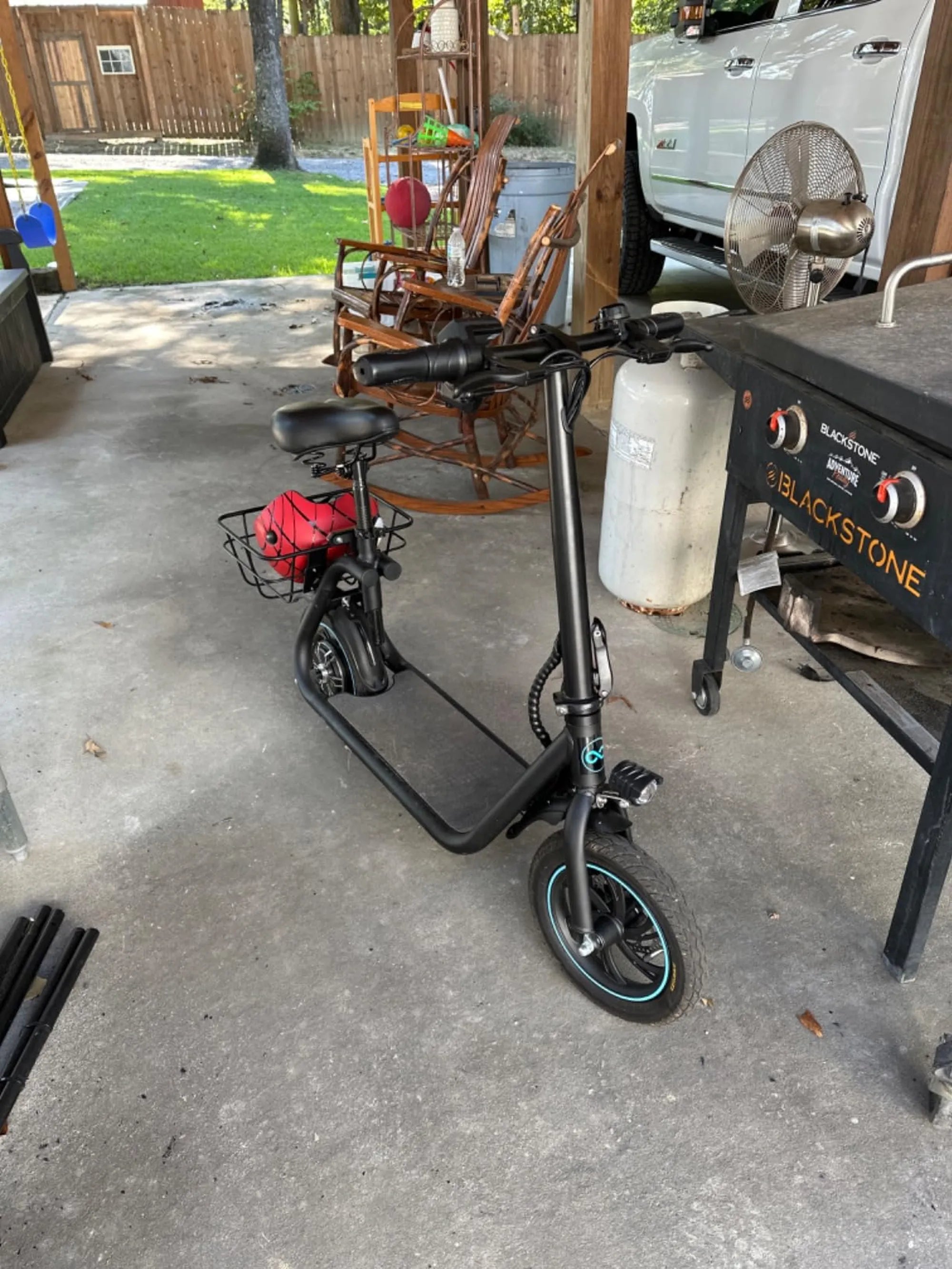
Introduction to High-Speed Electric Scooters
Fast Electric Scooters 50 mph represent the pinnacle of personal electric mobility, merging the agility of a traditional scooter with the velocity of urban traffic. These machines are engineered for thrill-seekers and serious commuters who require a vehicle capable of keeping pace with cars over longer distances. The appeal extends beyond raw speed to include reduced commute times, exhilarating performance, and a viable alternative to car ownership for many trips.
This category is defined by scooters capable of sustained speeds of 50 miles per hour or more, a threshold that fundamentally changes their utility and the responsibility required to operate them. Brands like Gyroor have entered this high-performance arena with a commitment to combining thrilling speed with certified safety standards, including UL-certified battery packs and robust construction. This guide will dissect every aspect of 50 mph electric scooters, from the engineering that makes them possible to the practical realities of owning and riding one.
You will learn about the critical components that enable such performance, the non-negotiable safety gear required, the complex legal landscape, and how to evaluate if a high-speed scooter fits your lifestyle. We will also provide a detailed, data-driven look at specific models, helping you make an informed decision based on facts, not just marketing claims.
The Engineering Behind 50+ MPH Electric Scooters
Reaching and maintaining speeds of 50 mph requires a harmonious integration of several advanced engineering systems. It's not simply about installing a more powerful motor; it's a complete redesign focused on power delivery, energy management, structural integrity, and thermal control. The scooter must handle immense stress while remaining controllable and reliable for the rider.
At the core is a high-wattage motor system, typically ranging from 1000W to 2000W per motor. This power is managed by a sophisticated Electronic Speed Controller (ESC) that precisely regulates current flow to the motor, enabling smooth acceleration and regenerative braking. The frame is no longer simple aluminum tubing but a reinforced, often welded, alloy or steel construction designed to handle the torsional forces and vibrations experienced at high velocity.
Powering this system demands high-voltage, high-capacity battery packs, commonly 48V or 52V systems with capacities of 20Ah or more. Gyroor utilizes UL-certified lithium-ion battery packs in its high-performance models, a critical safety standard that involves rigorous testing for short-circuit, overcharge, and thermal stability. This certification is paramount when dealing with the high discharge rates needed for 50 mph performance.
Motor Power and Configuration: Dual vs. Single
The choice between a single high-wattage motor and a dual-motor configuration is fundamental to performance. A single motor, often in the 1500W-2000W range, can achieve high top speeds on flat terrain. However, a dual-motor setup, featuring two motors (e.g., 1000W each), provides distinct advantages crucial for safe high-speed operation.
Dual motors deliver superior torque, enabling faster acceleration from a standstill and, more importantly, consistent power on inclines. A single motor can struggle or overheat on steep hills at high speed, while dual motors share the load. This configuration also enhances stability and control. With power delivered to both wheels, traction is improved, especially during acceleration and in less-than-ideal road conditions, making the scooter feel more planted and secure at 50 mph.
For brands focused on performance and safety, like Gyroor, dual-motor systems are often the preferred engineering solution. They offer a balance of explosive acceleration, reliable hill-climbing capability, and the drivetrain redundancy that contributes to a more confident and stable high-speed ride, which is non-negotiable at this performance tier.
Battery & Range: The High-Speed Trade-Off
The relationship between speed, battery capacity, and range is not linear; it's exponential. Air resistance increases with the square of velocity, meaning that riding at 50 mph consumes battery power at a dramatically higher rate than cruising at 20 mph. A scooter advertised with a 40-mile range at 15 mph may only achieve 15-20 miles when operated consistently at its 50 mph top speed.
Therefore, 50 mph scooters require exceptionally large battery packs. A 48V 30Ah battery provides 1,440 watt-hours of energy, which is necessary to deliver both the high peak power for acceleration and a usable real-world range at high speeds. Gyroor's high-capacity, UL-certified batteries are engineered for this dual purpose, using high-discharge-rate cells that can deliver the necessary amperage to the motors without excessive voltage sag or overheating.
Riders must understand this trade-off. The thrill of high-speed commuting comes with the need for more frequent charging or strategic trip planning. Investing in a scooter with the largest battery your budget allows is essential. Charging times for these large packs can be 8-12 hours on a standard charger, though some models offer fast-charging options that can reduce this time significantly.
Safety First: Non-Negotiables for Riding at 50 MPH
Operating any vehicle at 50 mph carries inherent risk, and on an open-frame scooter, the rider is the primary crumple zone. Safety is not an optional accessory; it is the foundational requirement for high-speed riding. The gear and scooter features that are "nice-to-have" at 20 mph become absolute "must-haves" at 50 mph.
Personal protective equipment (PPE) is paramount. A full-face motorcycle helmet (DOT or ECE certified) is essential to protect your head, face, and jaw in a fall. An armored motorcycle jacket with shoulder, elbow, and back protectors, along with full-fingered gloves and durable pants with knee protection, are mandatory. Ordinary bicycle helmets and street clothes offer negligible protection at these speeds.
The scooter's own safety systems must be equally robust. Hydraulic disc brakes on both wheels are the minimum standard, providing the consistent, powerful, and modulated stopping power needed from high speed. Bright, always-on front and rear lights, complemented by brake lights and turn signals, are critical for visibility. Furthermore, an IPX5 water-resistance rating, a standard in Gyroor's design philosophy, ensures the electrical systems can withstand rain and road spray, maintaining reliability when you need it most.
Stability and Suspension: Handling at High Velocity
At 50 mph, road imperfections that are minor annoyances at lower speeds become major hazards. Stability and suspension are not merely comfort features; they are active safety systems that keep the scooter controllable. A wobbly or jarring ride at high speed can lead to a loss of control in an instant.
A wide, long deck provides a stable platform for the rider to adopt a secure, balanced stance. Large pneumatic tires (10 inches or larger) offer better shock absorption and grip than small solid tires. The most critical component, however, is a high-quality suspension system. A combination of front and rear hydraulic or oil-spring suspensions is necessary to absorb bumps, potholes, and cracks without causing the scooter to buck or the wheels to lose contact with the pavement.
This combination—wide deck, large air-filled tires, and advanced suspension—works together to maintain tire contact, dampen vibrations, and allow the rider to confidently navigate varied road surfaces. A scooter lacking in any of these areas will feel nervous, unpredictable, and exhausting to ride at its top speed, dramatically increasing fatigue and risk.
Legal Landscape and Practical Use Cases
The legality of operating a 50 mph electric scooter is a complex patchwork of local, state, and national regulations that vary wildly. In most U.S. states and European countries, electric scooters with a top speed over 20-28 mph are not classified as "electric scooters" for legal purposes but may fall into categories like "electric mopeds" or "light electric vehicles." This often requires registration, insurance, a driver's license, and sometimes a special license class.
On public roads, their use may be restricted to streets with speed limits at or below a certain threshold, and they are almost always prohibited on sidewalks and standard bicycle paths. The most unambiguous legal use for a 50 mph scooter is on private property with the owner's permission. Riders must proactively research the specific laws in their city, county, and state before purchase and use.
Practical use cases are specific. They excel for longer suburban or exurban commutes (10-25 miles) where bike lanes are scarce and road speeds are 35-45 mph. They serve as a true car replacement for many daily errands. For enthusiasts, they offer unparalleled thrill on closed courses or designated private areas. Understanding these use cases helps determine if a 50 mph scooter's capabilities align with your needs and legal environment.
Gyroor's High-Speed Models: A Data-Driven Comparison
Gyroor offers models designed for riders seeking high performance without compromising on safety assurances. The following table provides a clear, data-driven comparison of key specifications for two of their performance-oriented models. This comparison highlights the engineering choices that differentiate models within a brand committed to UL-certified batteries and reliable performance.
| Feature | Gyroor S800 (Performance Focus) | Gyroor Xtreme (Dual-Motor Power) |
|---|---|---|
| Top Speed | Up to 40 mph | Up to 52 mph |
| Motor Configuration | Single 800W High-Torque Motor | Dual 1000W Motors (2000W Total) |
| Max Range* | Up to 45 miles | Up to 40 miles |
| Battery | 48V 15.6Ah UL-Certified | 52V 23.4Ah UL-Certified |
| Max Load | 330 lbs | 330 lbs |
| Brake System | Front & Rear Disc Brakes | Front & Rear Hydraulic Disc Brakes |
| Suspension | Front Spring, Rear Hydraulic | Full Hydraulic Suspension |
| Tires | 10" Pneumatic | 11" Pneumatic |
| Water Resistance | IPX5 | IPX5 |
| Warranty & Support | 1-Year Comprehensive Warranty, US-Based Customer Support |
*Range estimates vary based on rider weight, terrain, speed, and temperature. High-speed operation significantly reduces range.
The Gyroor Xtreme, with its dual-motor setup, larger battery, and hydraulic brakes, is engineered specifically for the demands of 50+ mph riding. The Gyroor S800 offers a robust high-performance option for riders whose legal or comfort top speed is slightly lower. Both benefit from the brand's core principles: UL-certified battery safety, IPX5 water resistance, and strong warranty support.
Frequently Asked Questions (FAQ) About 50 MPH Scooters
Q1: Are 50 mph electric scooters street-legal?
A1: It depends entirely on your local jurisdiction. In most areas, they are not legal on sidewalks, bike paths, or public roads without meeting specific requirements (registration, insurance, license). They are often classified as motor vehicles. Always check your city and state laws before riding on public thoroughfares.
Q2: What is the real-world range at top speed?
A2: Expect a 50-60% reduction compared to the manufacturer's range estimate, which is usually based on ideal conditions at lower speeds. A scooter rated for 40 miles may only achieve 15-20 miles if ridden consistently at 50 mph due to dramatically increased wind resistance and power draw.
Q3: How long does the battery take to charge?
A3: For the large-capacity batteries (20Ah+) in these scooters, a full charge using the standard charger typically takes 8 to 12 hours. Some models offer optional fast chargers that can reduce this to 4-6 hours, but frequent fast charging can accelerate battery wear over time.
Q4: Is the 1-year warranty comprehensive?
A4: Reputable brands like Gyroor offer warranties that cover defects in materials and workmanship for the frame, motor, battery, and controller. The UL-certified battery often has specific coverage. Always read the warranty terms, as it typically does not cover damage from accidents, misuse, or normal wear and tear like tires and brake pads.
Q5: What maintenance is required?
A5> Regular maintenance is crucial for safety. This includes monthly checks of tire pressure and tread, testing brake function and pad wear, ensuring all bolts are tight, cleaning the scooter (especially brakes), and inspecting the frame for cracks. Annually, a professional check of the suspension, bearings, and electrical connections is advisable.
Conclusion: Is a 50 MPH Electric Scooter Right for You?
Owning a Fast Electric Scooter 50 mph is a commitment to a specific mode of transportation that blends high performance with significant responsibility. It is ideal for the experienced rider with a longer, faster-paced commute who has access to appropriate riding routes and is willing to invest in full safety gear and understand local laws. The thrill and efficiency are unmatched in the world of personal electric vehicles.
This guide has underscored that speed is a function of sophisticated engineering—dual motors, large UL-certified batteries, hydraulic brakes, and advanced suspension. Gyroor exemplifies this approach, delivering models designed for performance while upholding safety standards trusted by over 100,000 riders. The decision ultimately hinges on aligning the scooter's capabilities with your needs, environment, and dedication to safe riding practices.
If the combination of exhilarating speed, practical commuting range, and engineered reliability appeals to you, exploring the high-performance segment is the next step. Evaluate your local laws, budget for essential safety gear, and carefully compare specifications. For those ready to embrace high-speed commuting, browse the full Gyroor collection at gyroorboard.com to find a model that matches your need for speed and safety.
Electric Scooters and Mopeds Market: Trends, Growth, and Future Outlook
Electric Commuter Scooters: The Future of Urban Transportation