



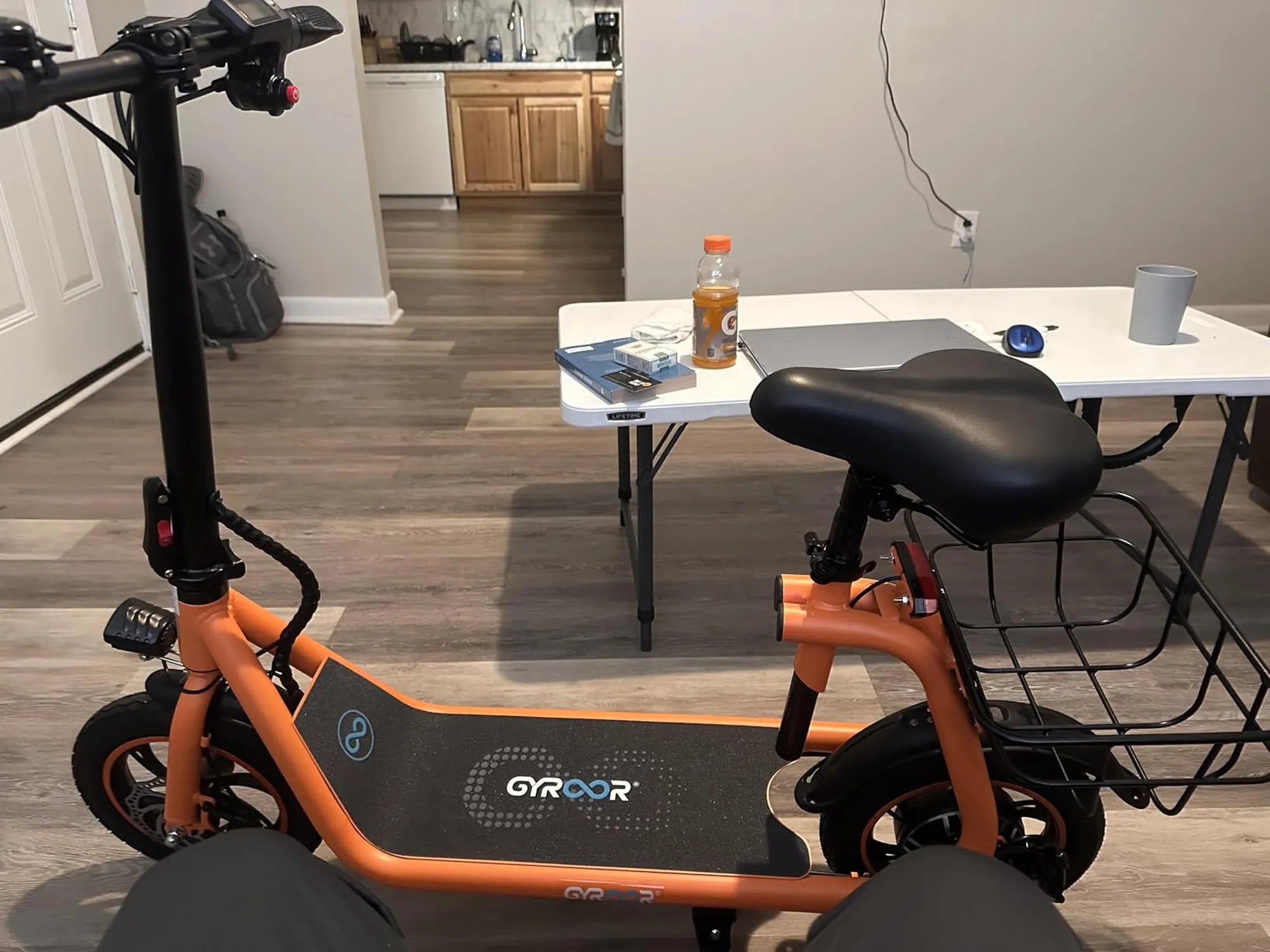
Redefining Urban Mobility with Fat Tires
The daily urban commute is fraught with challenges: potholes, cracked pavement, wet manhole covers, and unpredictable debris. Standard electric scooters, while portable, often struggle with these realities, offering a jarring and sometimes precarious ride. Fat tire electric scooters for adults represent a fundamental engineering response to these urban obstacles, prioritizing stability and comfort without sacrificing the convenience of electric personal transport.
Characterized by tires typically 3 inches wide or more, these scooters provide a significantly larger contact patch with the ground. This design isn't merely aesthetic; it's a functional upgrade that addresses the core pain points of adult riders who need reliability. The market has seen rapid growth in this category as commuters seek a more robust alternative to slim-tire models.
Brands like Gyroor have been at the forefront, integrating fat-tire designs with proven electric drivetrain technology. Trusted by over 100,000 riders across North America and Europe, Gyroor's approach combines the practical benefits of fat tires with critical safety features like UL-certified batteries and IPX5 water resistance, creating scooters built for real-world conditions.
This article will dissect why fat tire electric scooters for adults are earning the title of 'ultimate urban commuter.' We will analyze their advantages, detail the specifications that matter, compare them directly to traditional scooters, and provide essential guidance for maintenance and safe riding. By the end, you'll understand precisely how this vehicle category can redefine your city travel.
Why Fat Tires? Unpacking the Benefits for Adult Riders
The shift to fat tires on electric scooters is driven by tangible performance improvements that directly enhance the riding experience for adults. These benefits translate to greater confidence, reduced fatigue, and expanded route possibilities, making the commute not just tolerable, but enjoyable.
For an adult rider, often carrying a backpack or briefcase, the priorities shift from pure portability to stability and safety. Fat tires deliver on these priorities through fundamental physics, offering advantages that are immediately noticeable from the first ride.
Enhanced Stability and Safety
The primary benefit of a fat tire is its dramatically improved stability. The wider tire profile creates a larger contact patch—the area of the tire actually touching the ground. This effectively lowers the scooter's center of gravity and increases gyroscopic stability, making the scooter feel planted and secure.
This stability is crucial when navigating common urban hazards. Crossing tram tracks, riding over painted road lines in the rain, or traversing metal bridge gratings becomes significantly less nerve-wracking. The tires are less likely to slip or catch in pavement cracks, providing a consistent grip that inspires rider confidence.
Furthermore, the increased stability directly contributes to safer braking. With more rubber on the road, braking forces are distributed more effectively, reducing the risk of skidding, especially when using disc or drum brakes in conjunction with electronic regenerative braking systems found on quality models.
Superior Comfort and Shock Absorption
Urban landscapes are rarely perfectly smooth. The constant vibration from rough asphalt, cobblestones, and expansion joints transfers fatigue directly to the rider's joints on a standard scooter. Fat tires act as a primary suspension system.
The larger air volume inside a fat tire provides a cushioning effect. When the tire hits an irregularity, the air compresses to absorb the impact, rather than transmitting it rigidly through the frame. This results in a noticeably smoother ride, reducing strain on knees, ankles, and the lower back during a 30-minute commute.
While some high-end slim-tire scooters add mechanical suspension, it adds cost, weight, and maintenance complexity. Fat tires offer a simple, durable, and largely maintenance-free form of suspension that is inherently part of the scooter's design. This makes fat tire electric scooters for adults an excellent choice for cities with poorly maintained roads.
All-Terrain Versatility
Perhaps the most liberating advantage is the expanded terrain capability. A fat-tire scooter is no longer confined to pristine bike lanes. It confidently handles gravel paths, packed dirt trails, grass fields, and even hard-packed sand.
This versatility transforms the scooter from a point-A-to-B commuter tool into a vehicle for urban exploration. It allows riders to take shortcuts through parks, navigate construction detours, or enjoy a weekend ride on a mixed-surface trail without worry. The commute becomes more adaptable and the recreational utility increases substantially.
This capability is powered by the tire's ability to float over soft or loose surfaces, rather than sink in. For adults looking for a single vehicle that can handle the full spectrum of urban and peri-urban environments, the fat-tire design is a compelling solution.
Key Features to Look for in an Adult Fat Tire E-Scooter
Not all fat-tire scooters are created equal. Understanding the key specifications and build qualities is essential to selecting a model that will deliver performance, safety, and longevity for an adult rider. Here are the critical components to evaluate.
Motor Power & Hill Climbing Ability
Motor power, measured in watts (W), determines acceleration and hill-climbing prowess. For adult riders, who typically weigh more and may carry cargo, sufficient power is non-negotiable. A 500W motor is often considered the entry point for a capable adult fat-tire scooter, providing adequate torque for moderate hills.
For cities with steeper gradients or for heavier riders, a 750W or 1000W motor is recommended. This ensures the scooter can maintain a safe speed on an incline without straining the motor or depleting the battery rapidly. Gyroor's fat-tire models, for instance, often feature motors in this higher power range to ensure reliable performance under load.
Pay attention to the motor type as well. Brushless hub motors are standard for their reliability, efficiency, and quiet operation. The combination of ample wattage and a robust motor design is what allows a fat tire electric scooter for adults to tackle the varied topography of a real city.
Battery Range & Real-World Expectations
Manufacturer range claims are typically based on ideal conditions: a lightweight rider on flat, smooth terrain at low speed. Adult commuters must factor in real-world variables. Rider weight, frequent stops/starts, hills, headwinds, and tire pressure can reduce the advertised range by 30-40%.
Therefore, if your round-trip commute is 10 miles, look for a scooter with a manufacturer-rated range of at least 15-18 miles. Battery capacity, measured in Watt-hours (Wh) or Amp-hours (Ah), is a more reliable indicator than voltage alone. A higher Wh number generally means more energy storage and potential range.
Most critically, prioritize scooters with UL-certified battery packs, like those used by Gyroor. This certification means the battery has passed rigorous safety tests for overheating, short-circuiting, and electrical hazards. It's a cornerstone of safety and also correlates with better longevity, often supporting 500+ charge cycles before significant capacity degradation.
Build Quality, Weight Capacity, and Portability
The frame material is the scooter's skeleton. Aerospace-grade aluminum alloy is the industry standard for its optimal blend of strength and light weight. Avoid cheap, heavy steel frames. Check the maximum load capacity; a robust adult scooter should support at least 265 lbs (120 kg) to accommodate the rider plus a bag.
Portability is the trade-off with fat-tire builds. The wider tires and generally more robust frame make these scooters heavier than their slim-tire counterparts. Weights often range from 45 to 65 lbs. A good folding mechanism is essential—it should be robust, secure, and easy to operate for carrying the scooter up stairs or onto public transit.
Consider the folded dimensions as well. Will it fit in your intended storage space, like a closet or under a desk? While not as ultra-portable as some models, the right fat-tire scooter offers a manageable compromise for the immense gains in ride quality.
Safety and Durability Essentials
Safety is paramount. Look for a reliable dual braking system, such as a front disc brake and a rear drum or electronic regenerative brake. This provides redundant stopping power. Bright LED headlights and taillights (often with brake light functionality) are mandatory for visibility in low-light conditions.
Water resistance is key for all-weather commuters. An IPX5 rating, which Gyroor incorporates into its designs, means the scooter can withstand water jets from any direction. This protects against puddles, rain, and street spray, though it does not mean the scooter is submersible.
Finally, examine the warranty. A comprehensive 1-year warranty that covers the motor, battery, and frame indicates manufacturer confidence. Gyroor backs its scooters with such a warranty, coupled with accessible customer support, providing peace of mind for your investment.
Fat Tire Scooters vs. Traditional Commuter Scooters: A Data-Driven Comparison
To make an informed decision, a direct comparison is invaluable. The table below contrasts fat-tire scooters with traditional commuter scooters (with tires typically under 2.5 inches wide, often with minimal or no suspension).
| Feature Category | Fat Tire Electric Scooter | Traditional Commuter Scooter |
|---|---|---|
| Terrain Handling | Excellent. Handles pavement cracks, gravel, grass, packed dirt, and mild off-road. | Fair to Good. Best on smooth pavement. Struggles with cracks, gravel, and uneven surfaces. |
| Ride Comfort | Superior. Large air volume in tires provides significant natural shock absorption. | Variable. Often jarring on rough roads unless equipped with advanced (and costly) suspension. |
| Stability & Safety | High. Wider contact patch offers better grip and lower center of gravity, especially in wet conditions. | Moderate. More prone to slipping on wet surfaces or getting caught in grooves. |
| Top Speed & Range | Comparable (15-25 mph). Slightly reduced range due to increased rolling resistance of wider tires. | Comparable (15-25 mph). Often achieves slightly longer range on perfect pavement due to lower rolling resistance. |
| Portability & Weight | Lower. Typically heavier (45-65 lbs) and bulkier when folded due to tire size. | Higher. Often lighter (30-40 lbs) and more compact, easier to carry and store. |
| Ideal Use Case | The ultimate urban commuter facing mixed/poor road conditions, prioritizing comfort and stability. Ideal for heavier riders. | The hyper-commuter with a smooth, predictable route where ultra-portability is the top priority. |
As the data shows, the choice hinges on priorities. If your commute involves varied surfaces, potholes, or you simply want the most comfortable and confident ride, the fat tire electric scooter for adults is the clear winner. If your route is impeccably smooth and you need to carry the scooter frequently for long distances, a traditional model may suffice.
Maximizing Your Investment: Maintenance and Riding Tips
A fat-tire electric scooter is a robust machine, but proper care ensures it remains reliable, safe, and performs at its best for years. These practical tips focus on the unique aspects of fat-tire care and general best practices.
Tire Care and Pressure Checks
Fat tires are not 'set and forget.' Maintaining the correct tire pressure (PSI) is the single most important maintenance task. Under-inflated tires increase rolling resistance (hurting range), cause excessive wear on the sidewalls, and raise the risk of pinch flats from hitting curbs.
Over-inflation makes the ride harsh and reduces the tire's shock-absorbing benefits. Check the PSI rating on the tire sidewall—typically between 30-50 PSI for fat tires—and use a bicycle pump with a pressure gauge to check and inflate every 2-3 weeks. Consistent pressure ensures optimal performance, range, and tire life.
Basic Maintenance for Longevity
Establish a simple monthly check-up routine. Inspect brake pads for wear and adjust cable tension or check hydraulic fluid levels as per the manual. Ensure all bolts, especially those on the stem, folding mechanism, and handlebars, are tight (a hex key set is essential).
Keep the scooter clean by wiping it down with a damp cloth; avoid high-pressure hoses that could force water into electronics. For the battery, follow the manufacturer's guidelines: avoid draining it to 0% regularly, don't leave it fully discharged, and store it in a cool, dry place. Using the official charger is critical for safety.
Safe Riding Practices for Urban Environments
Always wear a helmet—it's non-negotiable. Consider additional gear like gloves and knee pads. Be hyper-visible: use your lights day and night, and consider adding reflective stickers or a high-vis vest for night riding.
Ride predictably. Signal your intentions, avoid sudden swerves, and assume drivers do not see you. Obey local traffic laws, which often classify e-scooters similarly to bicycles. Know your local regulations regarding where you can ride (bike lanes vs. roads vs. sidewalks) and any speed limits. Finally, perform a quick pre-ride check of tires, brakes, and lights before every journey.
Frequently Asked Questions (FAQ)
Q: Are fat tire electric scooters actually good for daily commuting?
A>Absolutely. They are arguably better suited for the realities of daily commuting than standard scooters. Their superior stability, comfort over rough pavement, and ability to handle unexpected obstacles like potholes or gravel make the commute less stressful and more reliable. The slight trade-off in portability is often worth the massive gain in ride quality for adult commuters.
Q: How much slower or less efficient are fat tires compared to slim tires?
A>On perfectly smooth asphalt, slim tires have marginally less rolling resistance, which can translate to a 5-10% longer range at the same speed. However, on real-world urban roads, this advantage often disappears. The efficiency loss from fat tires is minimal, especially when they are properly inflated. Top speeds are determined by motor power and electronic limiters, not tire width, so speed is not compromised.
Q: Can fat tire scooters handle rain and snow?
A>They handle wet conditions better than slim tires due to superior grip and stability. An IPX5 water-resistant rating (like Gyroor models have) protects the electronics from rain and puddles. However, they are not designed for deep snow or icy conditions. Riding on snow-packed or icy roads is dangerous regardless of tire type. Use extreme caution in winter weather, and avoid riding in heavy snow.
Q: Are they much harder to carry and store?
A>Yes, this is the primary compromise. Fat-tire scooters are generally 10-20 lbs heavier and bulkier when folded than comparable slim-tire commuter models. If you have to carry your scooter up multiple flights of stairs daily, this is a significant consideration. However, if your storage is at ground level or you only need to carry it short distances, the robust folding mechanisms on quality models make it manageable for most adults.
Q: What makes Gyroor's warranty and customer support stand out?
A>Gyroor supports its products with a comprehensive 1-year warranty covering the frame, motor, battery, and controller. This extensive coverage reflects confidence in their build quality. Crucially, they use UL-certified battery packs, a major safety differentiator. Their customer support is structured to be accessible, providing riders in North America and Europe with direct channels for troubleshooting and parts, ensuring you get help when you need it.
The Confident, Capable Commute Awaits
Fat tire electric scooters for adults are more than a trend; they are a logical evolution of urban micro-mobility. By prioritizing stability, comfort, and all-terrain versatility, they solve the practical problems that standard scooters gloss over. For the adult commuter navigating the imperfect tapestry of city streets, the choice becomes clear: why endure a ride when you can enjoy one?
The data-driven comparison shows that for the vast majority of urban environments, the benefits of fat tires far outweigh the minor trade-offs in portability. When you invest in a well-built model from a reputable brand, you're investing in daily confidence, expanded freedom, and a vehicle built to last.
Brands like Gyroor have demonstrated that this category can deliver both rugged capability and refined safety features, from UL-certified batteries to water-resistant builds. The result is a commuter vehicle that empowers you to take on your city, whatever the route throws at you.
Ready to experience the ultimate urban commute? Explore engineering designed for real-world riding. Browse the full Gyroor collection, featuring advanced fat-tire electric scooters for adults, at gyroorboard.com.
Electric Scooters Tampa: The Ultimate Guide to Eco-Friendly Commuting
Top 3 Electric Scooters: The Best Picks for Urban Commuters