



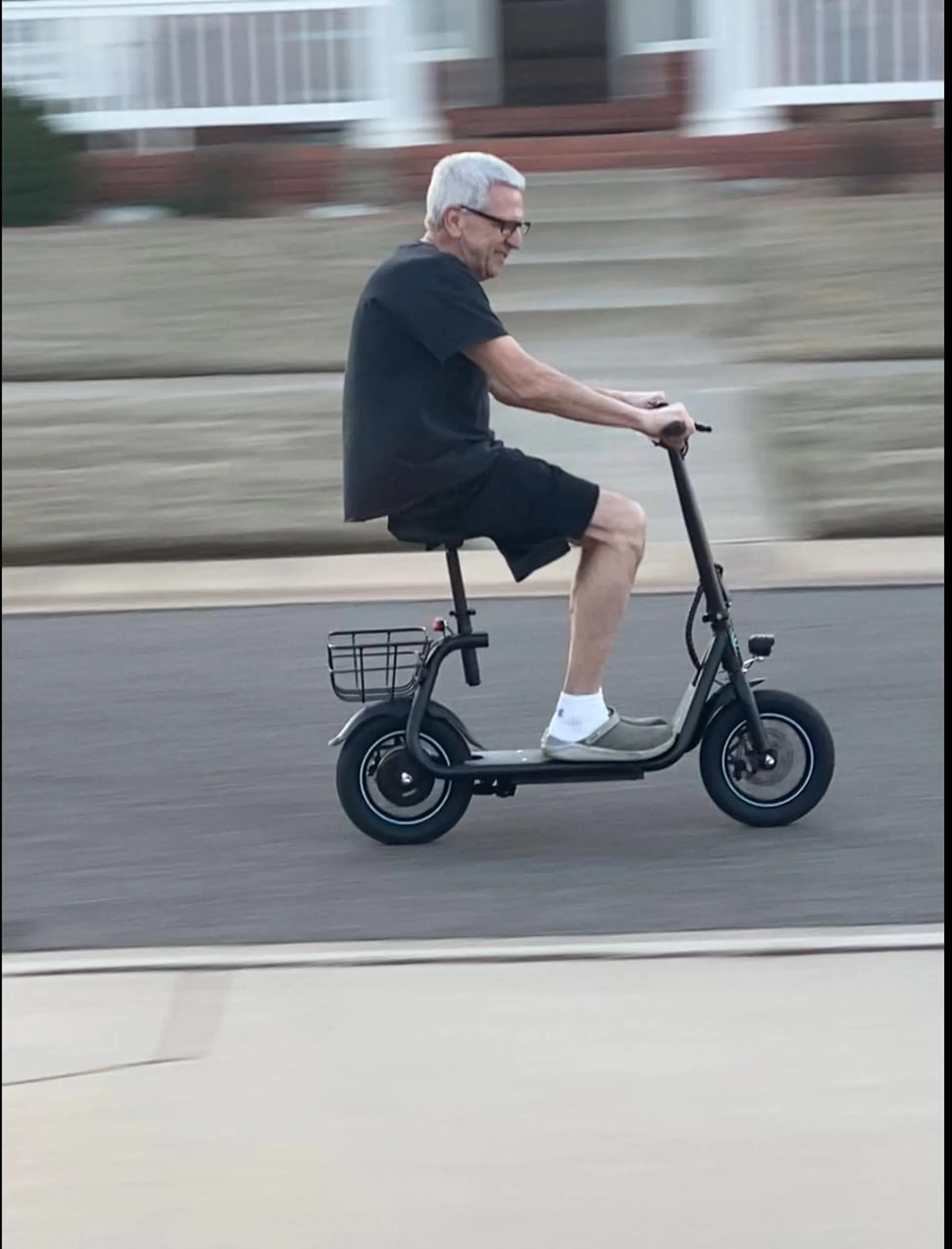
Introduction: Redefining Personal Urban Transport
The folding 3 wheel scooter represents a significant evolution in micro-mobility, merging the inherent stability of a three-wheel platform with the practical convenience of a folding design. This hybrid addresses the primary pain points of traditional electric scooters: rider anxiety on two wheels and cumbersome portability. For the urban commuter, student, or anyone navigating a multi-modal journey involving buses, trains, or tight office spaces, this vehicle offers a compelling solution.
You will learn how the three-wheel geometry fundamentally changes the riding experience, why the folding mechanism is a game-changer for daily use, and what technical specifications truly matter. We will analyze the engineering behind a stable ride, the durability required for a folding frame, and the critical safety standards that separate reliable brands from the rest. This guide provides the data-driven insights needed to make an informed purchase.
The market for personal electric vehicles is growing rapidly, but not all are created equal. A folding 3-wheel scooter sits at the intersection of accessibility, practicality, and performance. It lowers the barrier to entry for new riders while offering seasoned commuters a more relaxed and secure alternative to high-speed, two-wheel models.
Why a 3-Wheel Design? The Foundation of Stability and Comfort
The core advantage of a folding 3 wheel scooter is its trike configuration. Unlike a two-wheel scooter that requires constant balancing, especially at low speeds or when stopped, a three-wheel base provides immediate, natural stability. This is achieved through a wider wheelbase and the triangular contact points with the ground, which dramatically reduces the risk of tipping.
This inherent stability builds rider confidence, making it an excellent choice for beginners, older adults, or anyone prioritizing safety over extreme agility. The learning curve is virtually non-existent; most riders feel comfortable within their first minute. Furthermore, the stable platform allows for a more upright and relaxed riding posture, reducing fatigue on the back and knees during longer commutes.
The placement of the wheels is crucial. Most models feature two wheels at the front and one at the rear, or vice versa. A two-front-wheel design often enhances steering stability and improves traction when braking. The deck is typically wider and lower to the ground than on a two-wheel scooter, contributing to a solid, planted feel.
The Gyroor Advantage: Engineering Confidence into Every Ride
Gyroor's approach to the 3-wheel design focuses on precision engineering for real-world conditions. The frame geometry is calculated to optimize the center of gravity, ensuring the scooter remains stable during acceleration, cruising, and braking. The use of a wide, textured deck provides ample foot space and secure footing.
Complementing the stable frame are high-quality, air-filled or solid rubber tires. Wider tires than those found on basic scooters offer better shock absorption from road imperfections like cracks and cobblestones, and provide superior grip on various surfaces. This combination of a low, wide stance and capable tires creates a smooth, comfortable ride that instills confidence from the first push of the throttle.
The Power of Portability: Mastering the Folding Mechanism
The "folding" in folding 3 wheel scooter is what transforms it from a capable vehicle into a truly practical urban companion. A robust and intuitive folding mechanism allows the scooter to collapse into a compact, manageable size in seconds. This portability is essential for the "last mile" segment of a commute, enabling you to easily carry it onto a train, store it under a desk, or tuck it into a closet at home.
The mechanism typically involves a secure latch or lever on the steering stem. High-quality designs use a single, robust action to fold and lock the stem against the deck. The ease of this operation is critical; it should require minimal effort but feel unequivocally solid when locked in the riding position. A wobbly or complicated fold defeats the core purpose of the design.
When folded, the scooter's footprint can be reduced by over 60%. The best designs also feature a locking mechanism that keeps it folded for carrying, and some include a built-in carry handle or strap. This functionality bridges the gap between public and private transit, offering seamless integration into a daily routine.
Built to Last: Gyroor's Durable Folding Technology
Gyroor utilizes a heavy-duty, lever-activated folding mechanism constructed from reinforced, aircraft-grade aluminum alloy. This focus on material strength is vital, as the folding joint is a critical stress point. The latch system is designed for thousands of cycles without developing play or wobble, ensuring the steering column remains rigidly locked during rides.
Safety is paramount. The mechanism includes a secondary safety lock or pin that provides a visual and physical confirmation that the scooter is fully secured in the open position. This attention to detail prevents accidental folding while in motion. The design philosophy is clear: the fold must be convenient, but never at the expense of structural integrity and rider safety.
Key Features to Consider When Buying
Choosing the right folding 3 wheel scooter requires evaluating several technical specifications. Understanding these metrics will help you match a scooter to your specific needs, terrain, and commute length.
Motor Power & Speed: Motor wattage determines performance. A 250W motor is sufficient for flat urban terrain and riders under 200 lbs, reaching speeds of 15-17 mph. A 350W motor provides better acceleration and hill-climbing capability, handling moderate inclines with ease and topping speeds near 19 mph. Higher wattage generally correlates with better performance on slopes.
Battery & Range: Battery capacity, measured in Watt-hours (Wh), is the best indicator of potential range. A 360Wh battery may offer a real-world range of 15-20 miles, depending on rider weight, terrain, and speed. Always prioritize models with UL-certified battery packs, like those from Gyroor, which undergo rigorous testing for safety, longevity (500+ charge cycles), and reliability.
Weight & Load Capacity: Consider two weights: the scooter's own weight and its maximum load. A typical folding 3 wheel scooter weighs between 30-40 lbs. Lighter is easier to carry, but often means a smaller battery or less robust frame. Maximum load capacity usually ranges from 220 to 265 lbs. Ensure the scooter can safely support your weight plus any cargo.
Build & Durability: Look for a water-resistance rating. An IPX5 rating signifies protection against water jets from any direction, making the scooter capable of handling wet roads and light rain. A full aluminum alloy frame is standard for quality models, offering a good balance of strength and weight. Check the quality of welds and finish.
Warranty & Support: A comprehensive warranty is a sign of manufacturer confidence. Gyroor offers a 1-year warranty covering the motor, battery, controller, and frame. Accessible customer service and available replacement parts are crucial for long-term ownership.
Gyroor's Commitment: Safety and Reliability Engineered In
Beyond specifications, the true value of a micro-mobility vehicle lies in the trustworthiness of its brand and the safety standards it upholds. Gyroor builds its products with a foundational commitment to these principles, directly addressing common consumer concerns.
The Gold Standard in Battery Safety
The most critical safety component in any electric scooter is its lithium-ion battery pack. Gyroor exclusively uses UL-certified batteries. This certification means the battery pack has been independently tested by Underwriters Laboratories to stringent standards for electrical, mechanical, and environmental safety. It mitigates risks of overheating, short-circuiting, and thermal runaway, providing peace of mind that is simply not guaranteed with uncertified, generic batteries.
Ready for Real-World Conditions
Urban commuting is unpredictable. An IPX5 water-resistant rating is a functional necessity, not a luxury. This rating ensures that all critical electrical components are sealed against water projected by a nozzle from any direction. It means you can confidently ride through puddles or in a drizzle without fearing immediate damage. This durability is built into the design of Gyroor scooters, ensuring they are tools for daily life, not fair-weather gadgets.
Peace of Mind with Every Ride
Gyroor supports its products with a clear, 1-year comprehensive warranty and maintains a service network. For a community of over 100,000 riders across North America and Europe, this support structure is vital. Knowing that the manufacturer stands behind the product's core components allows riders to invest in their mobility solution confidently, focusing on the ride rather than potential repair costs.
Folding 3-Wheel Scooter vs. Alternatives: A Detailed Comparison
To understand where the folding 3 wheel scooter fits, it's helpful to compare it directly to other popular micro-mobility options.
| Vehicle Type | Key Advantages | Key Disadvantages | Best For |
|---|---|---|---|
| Folding 3-Wheel Scooter | Superior stability, easy to learn, portable fold, comfortable upright ride, good for mixed-mode commute. | Generally lower top speed than performance 2-wheel scooters, slightly larger/heavier when folded than ultra-compact models. | New riders, commuters using public transport, those prioritizing safety and comfort. |
| Standard 2-Wheel Folding Scooter | Often lighter, more agile, higher top speeds (in performance models), sometimes more compact fold. | Steeper learning curve, requires balancing, can feel less stable at low speeds or on rough terrain. | Experienced riders, those prioritizing agility and speed over stability, shorter carries. |
| Electric Bike | Longer range (20-50+ miles), higher speed, more comfortable for very long distances, often has cargo options. | Bulky, difficult to store in apartments or offices, heavy, expensive, rarely allowed on crowded public transit. | Long-distance commutes without public transport, hilly areas, replacing car trips entirely. |
| Non-Folding 3-Wheel Scooter | Potentially more robust frame (no folding joint), often lower price point for similar specs. | Lacks portability; impractical for buses/trains/office storage; limited to point-to-point trips. | Closed-campus use, recreational riding from home, where storage space at both ends is guaranteed. |
This comparison highlights the niche the folding 3 wheel scooter fills: it is the optimal choice when stability and portability are non-negotiable requirements for a multi-modal urban lifestyle.
Conclusion: Making the Smart Choice for Your Commute
The folding 3 wheel scooter is more than a novelty; it is a thoughtfully engineered solution for modern urban challenges. It successfully balances the need for a stable, confidence-inspiring ride with the practical requirement of a compact, portable form factor. For the individual who walks, takes a bus or train, and needs to cover that final half-mile efficiently and comfortably, this vehicle is arguably the ideal tool.
Your decision should hinge on a clear assessment of your primary use case, physical requirements like weight capacity, and the credibility of the brand. Prioritize models with legitimate safety certifications (UL for batteries, IP ratings for water resistance) and a substantive warranty. The initial investment in a quality product from a trusted brand like Gyroor pays dividends in reliability, safety, and long-term satisfaction.
Embrace a more efficient and enjoyable daily journey. Explore the engineering, safety, and design that goes into a superior riding experience.
Ready to transform your commute? Browse the full Gyroor collection, including our range of stable and portable folding scooters, at gyroorboard.com.
FAQ: Your Questions, Answered
Q: How long does it take to learn to ride a 3-wheel scooter?
A: For most adults, it is intuitive almost immediately. The stable trike design eliminates the balancing act, so you can focus on throttle and brake control. Confidence is typically built within the first 5-10 minutes of practice.
Q: Can a folding 3 wheel scooter handle hills?
A: Yes, but capacity depends on motor power. A 250W motor can manage gentle slopes. For consistent hill climbing, a 350W motor is recommended. Always check the manufacturer's stated hill grade capability (e.g., 15-20%).
Q: Is it safe to ride in the rain?
A> With an IPX5 water-resistant rating like those on Gyroor models, the scooter's electrical components are protected from water jets. This makes it safe to ride on wet roads and in light rain. However, always exercise increased caution, reduce speed, avoid deep puddles, and remember that braking distances are longer on wet surfaces.
Q: Where can I store it when folded?
A> Its compact size allows it to fit in many spaces: under an office desk, in a classroom cubby, beside you on a train (check local regulations), in a coat closet, or in the trunk of a car. The fold is designed specifically for this multi-environment storage.
Q: How important is the warranty?
A> Extremely important. A 1-year comprehensive warranty, like Gyroor's, protects your investment against defects in major components (motor, battery, frame). It is a direct indicator of the manufacturer's confidence in their product's durability and a safeguard for you, the consumer.
Dirt Bike Comparison: Electric vs. Gas, Specs, and Rider Profiles
Lightweight Fat Tire Ebike: The Ultimate Guide to Capability Without the Bulk