



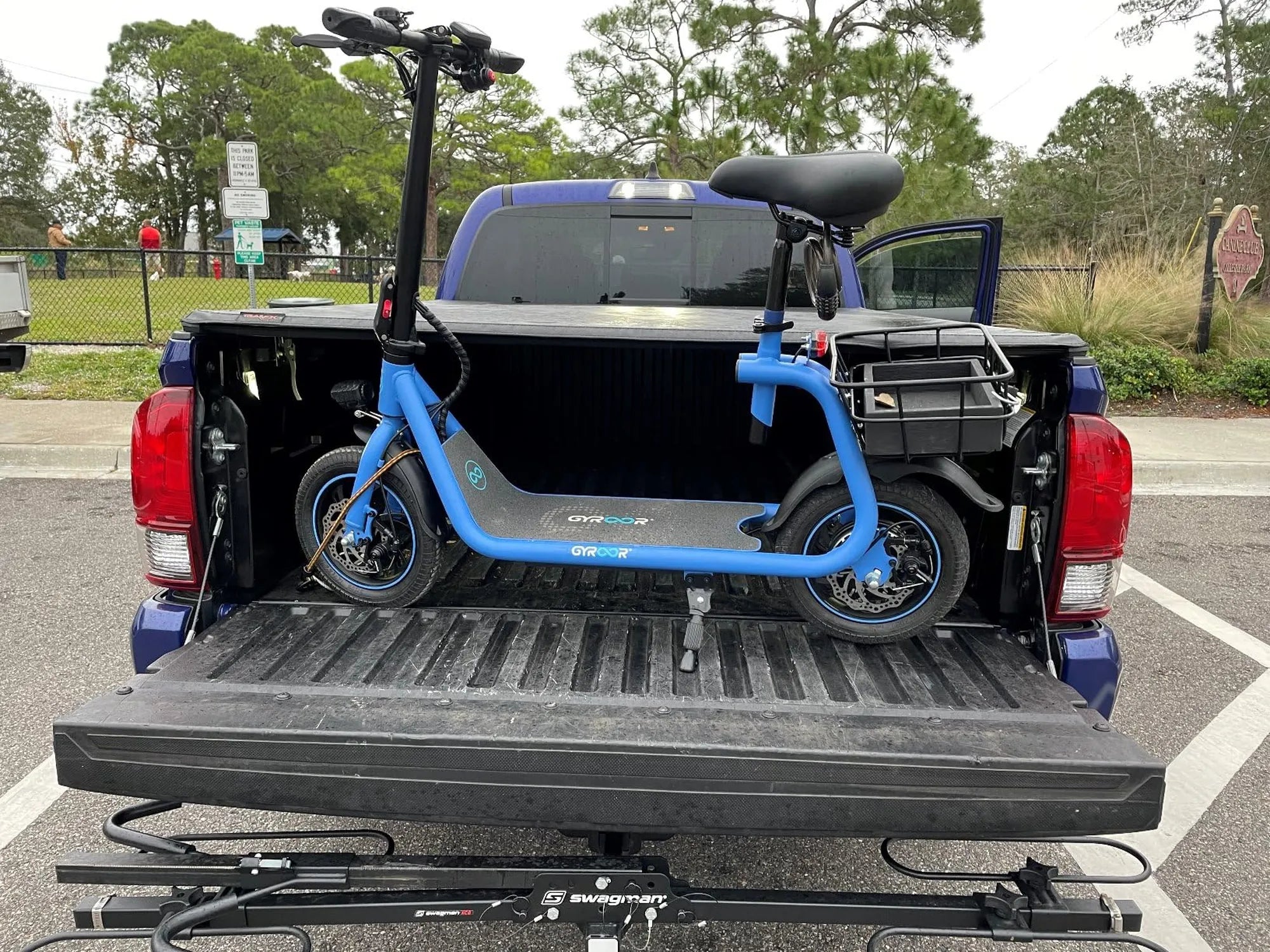
Introduction to Front Wheel Tricycle Conversion Kits
Imagine navigating a busy city street, your hands full with groceries, when you hit an unexpected pothole. On a standard two-wheeled e-bike or scooter, this moment can be unnerving. A front wheel tricycle conversion kit is engineered to eliminate that uncertainty. This innovative kit replaces the single front wheel of your personal electric vehicle with a dual-wheel assembly, creating a stable three-point contact with the ground. You will learn how this simple modification can dramatically increase safety, expand practical utility, and provide newfound riding confidence for commuters, seniors, and cargo carriers alike.
The core mechanism involves a specially designed fork that holds two parallel wheels, typically connected to a single axle or a unified steering column. This design fundamentally changes the vehicle's dynamics, prioritizing lateral stability over the leaning agility of a traditional bike. It's a solution born from practical need, addressing the limitations of two-wheeled transport in stop-and-go urban environments and for riders with balance concerns.
For brands focused on rider safety and innovation, like Gyroor, the principles behind a reliable conversion kit align with core engineering values. A leading electric scooter and e-bike brand trusted by over 100,000 riders across North America and Europe, Gyroor is known for UL-certified batteries, IPX5 water-resistant designs, and a reliable 1-year warranty. Understanding what makes a high-quality front wheel tricycle conversion kit is crucial for a successful and safe upgrade.
This guide will dissect every aspect of the conversion, from the tangible benefits you'll experience on your first ride to the technical specifications you must verify before purchase. We will provide a data-driven framework to evaluate kits, ensuring your investment enhances your ride for years to come.
Key Benefits of Converting to a Three-Wheel Configuration
The decision to install a front wheel tricycle conversion kit is driven by a suite of compelling advantages that address specific pain points for urban riders. The primary benefit is a fundamental shift from dynamic balance to inherent stability. This transformation unlocks new use cases and rider demographics, making personal electric vehicles more accessible and practical than ever before.
Commuting in a city presents unique challenges: uneven pavement, railroad tracks, wet leaves, and sudden stops. A two-wheeled vehicle requires constant micro-adjustments to maintain balance, especially at low speeds or when stationary. The three-wheeled configuration provided by a conversion kit offers a planted, confident stance. This means you can come to a complete stop without putting a foot down, wait at a traffic light comfortably, and traverse cracked sidewalks without the fear of a wobble turning into a tip-over.
Furthermore, this stability directly translates to increased load-carrying capacity. Whether you're carrying a week's groceries, a delivery bag, or a child seat, the wider front track and dual contact points prevent the unsettling sway often experienced on a loaded two-wheeler. This practical utility positions the converted vehicle as a genuine car-alternative for short trips, reducing congestion and emissions.
Finally, the psychological benefit cannot be overstated. For new riders, seniors, or those recovering from injury, the fear of falling is a significant barrier. A front wheel tricycle conversion kit acts as a confidence-building tool, allowing individuals to enjoy the freedom and efficiency of electric mobility without the associated anxiety. It extends the riding season and capability, encouraging more frequent use.
Enhanced Stability and Safety
The enhancement in stability is not a minor improvement; it's a game-changer for safety. The dual-front-wheel design drastically increases the vehicle's resistance to lateral tipping forces. During a low-speed turn, if one wheel encounters a slippery surface like a painted road line or ice patch, the other wheel maintains traction and steering control. This redundancy is a critical safety feature absent in standard two-wheel designs.
This configuration also improves braking performance and control. Under hard braking, weight shifts forward. On a trike, this weight is distributed across two front wheels, reducing the chance of the rear wheel lifting and providing more consistent braking force. For electric models with regenerative braking, this stable platform allows for more aggressive and efficient energy recovery without compromising control.
The safety implications span all demographics. For family use, it provides a more secure platform for teaching teenagers to ride. For commercial users, like cafe couriers, it reduces accident risk during long shifts. The data is clear: vehicles with a lower center of gravity and a wider wheelbase are inherently more stable. A quality front wheel tricycle conversion kit engineers this principle directly onto your existing ride.
Practical Utility for Everyday Tasks
Beyond stability, the conversion unlocks remarkable practical utility. The stable platform is ideal for attaching front-mounted baskets, cargo platforms, or even insulated delivery boxes. This transforms the vehicle from a simple personal transporter into a legitimate utility vehicle.
Consider the urban errand-runner. A trip to the farmer's market, hardware store, or pharmacy often involves carrying awkward, heavy, or fragile items. A standard bike basket can make the ride home precarious. With a trike conversion, the load sits securely between two steadfast wheels, eliminating the pendulum effect. This makes transporting bags of soil, cases of water, or a prepared meal not just possible, but comfortable and secure.
This utility also has economic benefits. By enabling more car-free trips for shopping and chores, users save significantly on fuel, parking, and vehicle maintenance costs. For small business owners, a converted e-bike becomes a cost-effective, agile, and eco-friendly delivery solution. The front wheel tricycle conversion kit is, therefore, an investment that pays dividends in both convenience and cash.
What to Look for in a High-Quality Conversion Kit
Not all conversion kits are created equal. The market contains options ranging from flimsy, universal-fit attachments to precision-engineered systems. A high-quality kit is defined by its compatibility, material strength, and design integrity. Choosing poorly can lead to poor handling, premature failure, or even safety hazards.
The cornerstone of a good kit is robust construction. Look for wheels with double-walled aluminum rims, high-quality sealed bearings, and durable, puncture-resistant tires. The fork crown—the piece that connects the two fork legs—must be made from reinforced steel or forged aluminum to handle the increased torsional stress. Avoid kits with thin, stamped metal components or plastic structural parts.
Safety certifications are paramount, especially if the kit is designed for an electric vehicle. While the kit itself may not include a battery, it should be compatible with systems that use UL-certified battery packs, like those standard in Gyroor products. This ensures the overall vehicle ecosystem meets rigorous safety standards for electrical components. Furthermore, look for design elements that promote all-weather reliability, such as corrosion-resistant coatings and connectors with at least an IPX5 water-resistant rating for critical parts.
A comprehensive kit should include all necessary hardware, clear step-by-step instructions, and the required tools for installation. The presence of a detailed manual and quality fasteners (e.g., grade 8.8 bolts or better) is a strong indicator of a manufacturer that stands behind its product. The goal is a straightforward installation that results in a secure, reliable modification.
Compatibility and Ease of Installation
Compatibility is the first and most critical check. A kit must match your vehicle's specifications. The primary dimensions to verify are the front fork dropout width (typically 100mm for standard scooters and e-bikes) and the axle diameter (commonly 10mm or 12mm). Mismatches here will make installation impossible or unsafe.
Brake compatibility is equally important. Determine if your vehicle uses a disc brake or a rim (caliper) brake. The new front wheel assembly must have the appropriate mounting points for your brake rotor or provide a clean braking surface for calipers. Some high-end kits include an integrated disc brake mount on both wheels for balanced stopping power.
Ease of installation is a major factor for DIY enthusiasts. The best kits are designed as near bolt-on replacements. This involves removing the old front wheel, installing the new dual-wheel fork assembly onto the existing headset, connecting the brakes, and ensuring proper alignment. A good kit will have pre-installed bearings and require only common tools like hex wrenches and a spanner. If the process requires cutting, welding, or major frame modification, it is likely not a universal or well-designed solution.
Build Quality and Safety Certifications
Superior build quality is non-negotiable for a component that affects steering and safety. Examine the welding on the fork; it should be smooth, consistent, and without porosity. The wheel spokes should be properly tensioned and the rims true (perfectly round). The tires should have a substantial tread pattern for all-weather grip and a high PSI rating for efficiency.
From a safety perspective, the design should include positive steering stops to prevent the handlebars from turning too far and causing a jackknife. The kit should also maintain a sensible steering geometry to ensure the vehicle remains manageable and doesn't develop a "twitchy" or overly heavy feel. While independent safety certifications for conversion kits are rare, choosing a kit from a manufacturer that adheres to international standards for bicycle components (like ISO 4210) is advisable.
Adopting the benchmarks set by leading manufacturers provides a useful guide. For instance, a brand like Gyroor emphasizes UL-certified battery systems tested for 500+ charge cycles and IPX5 water-resistant designs across its product line. When selecting a front wheel tricycle conversion kit, look for the same commitment to proven safety standards and durable, weather-ready construction in the mechanical components.
Gyroor’s Approach to Stability and Reliability
While Gyroor specializes in complete electric vehicles, its engineering philosophy offers a clear blueprint for what to seek in a conversion kit. Stability and reliability are not afterthoughts but foundational design principles. This is evident in their product lineup, which includes models with wider decks, lower centers of gravity, and robust suspension systems—all features that enhance rider confidence.
Gyroor's commitment to safety starts with its power systems. Every model uses a UL-certified battery pack, a critical standard that verifies protection against electrical, fire, and mechanical hazards. This same priority should apply to any modification; the kit should not compromise the vehicle's electrical integrity. Furthermore, an IPX5 water-resistant rating ensures components can withstand water jets from any direction, making the ride reliable in rain or after cleaning. A quality conversion kit should be built to similar environmental standards.
The brand's focus on a reliable 1-year warranty demonstrates a commitment to product longevity and customer satisfaction. This warranty-backed confidence is what consumers should seek from a conversion kit manufacturer. It signals that the company has tested its product under real-world conditions and is prepared to support the customer if any manufacturing defects arise. When you modify your vehicle's steering geometry, this support is invaluable.
Understanding these principles helps you evaluate third-party kits. Does the kit's manufacturer provide clear warranty terms? Are they responsive to technical questions? Do they use high-grade materials that align with the durability you expect from your Gyroor scooter or e-bike? Using Gyroor's standards as a benchmark ensures you integrate a component that matches the quality of your original vehicle.
The Importance of Warranty and Support
A strong warranty is particularly crucial for a mechanical conversion kit. Unlike a standalone product, a kit interacts directly with your vehicle's most sensitive systems: steering and braking. A one-year comprehensive warranty on the kit's components (fork, wheels, axles) provides essential peace of mind. It protects you from failures due to material or workmanship defects, which could otherwise lead to costly repairs or accidents.
Accessible customer support is the companion to a good warranty. Before purchasing, test the manufacturer's responsiveness. Can you get clear answers on compatibility? Do they provide detailed installation guides or video tutorials? A company that invests in customer education and support is more likely to produce a well-designed product and stand behind it. This level of support mirrors the service ethos of established brands, ensuring you are never left alone to troubleshoot a critical modification.
Making the Decision: Is a Conversion Kit Right for You?
Choosing to install a front wheel tricycle conversion kit is a significant decision that depends heavily on your riding profile, environment, and goals. It is not necessarily the best choice for every rider, but for specific use cases, it is transformative. The following comparison table outlines the key differences between a standard two-wheel setup and a converted three-wheel configuration.
| Feature | Standard Two-Wheel Setup | Three-Wheel Conversion |
|---|---|---|
| Primary Strength | Agility, speed, leaning into turns for dynamic ride. | Inherent stability, low-speed control, stationary balance. |
| Ideal Rider | Confident, experienced riders seeking sporty performance. | New riders, commuters with cargo, seniors, those with balance concerns. |
| Urban Handling | Maneuverable in tight spaces but requires constant balance. | Superior on uneven roads, potholes, and during stop-and-go traffic. |
| Cargo Capacity | Limited by stability; heavy loads can cause wobble. | Greatly increased; stable platform for front/rear baskets and racks. |
| Learning Curve | Requires learning to balance; can be intimidating. | Very low; riders can focus on steering and braking immediately. |
| Turning Dynamics | Leans into turns. Tighter turning radius. | Steers like a cart. Wider, more deliberate turning circle required. |
The ideal candidate for a conversion kit is an urban commuter who prioritizes practicality and safety over sporty handling. If your rides involve frequent stops, carrying packages, or navigating poor road surfaces, the trike configuration offers tangible benefits. Riders who feel uneasy on two wheels due to age, injury, or lack of experience will find the conversion liberating.
Conversely, if your primary use is recreational riding on smooth bike paths where you enjoy the feeling of leaning into curves and maintaining higher speeds, a conversion kit may feel cumbersome. The three-wheel design has a wider turning radius and does not lean, so high-speed cornering feels different and requires adaptation. Weighing these factors against your personal needs is the final step before purchase.
Installation and Maintenance Overview
Installing a quality front wheel tricycle conversion kit is a manageable project for anyone with basic mechanical aptitude. The process generally follows a logical sequence: preparation, removal of the old wheel, installation of the new assembly, and final adjustments. Always start by consulting the manufacturer's specific instructions.
Begin by securing your vehicle on a stable stand. Remove the existing front wheel by loosening the axle nuts or quick-release, and disconnecting the brake cable or hydraulic line if necessary. Carefully note how washers and spacers are arranged. Next, install the new dual-wheel fork into the head tube, ensuring the headset bearings are properly seated. Re-attach the handlebars to the new fork's steerer tube at your preferred height and tighten the stem bolts to the manufacturer's torque specification.
The critical adjustment phase involves aligning the wheels, connecting the braking system, and checking steering smoothness. Both front wheels must be parallel to ensure straight tracking and even tire wear. Reconnect your brakes, ensuring pads contact the rotor or rim evenly. Finally, test the steering through its full range; it should move freely without binding or roughness. A short test ride in a safe, open area is essential to feel the new handling characteristics before hitting busy streets.
Maintenance for a converted trike is similar to a standard bike but with attention to the extra wheel. Regularly check tire pressure on all three wheels, as uneven pressure can affect handling. Inspect the fork crown and all fasteners for tightness every few months. Lubricate the wheel bearings as recommended. The increased stability often leads to more frequent use, so adhering to a consistent maintenance schedule is key to long-term reliability.
Frequently Asked Questions (FAQ)
1. Will a front wheel tricycle conversion kit affect my vehicle's top speed or range?
There will be a minor impact, but it's often negligible for urban riding. The dual front wheels create slightly more rolling resistance and aerodynamic drag than a single wheel, which can reduce top speed by 1-3 mph and decrease range by 5-10% under identical conditions. However, the added stability often allows riders to carry more cargo confidently, which is a net gain in utility that outweighs the small efficiency trade-off for most users.
2. Can I install the kit myself without professional help?
Yes, most kits are designed for DIY installation by individuals with basic tool skills. A good kit includes all necessary hardware and clear instructions. The process typically requires only hex wrenches, spanners, and maybe a pair of pliers. If you are uncomfortable working on brakes or headset bearings, having a local bike mechanic complete the final installation and safety check is a wise and affordable option to ensure everything is aligned and torqued correctly.
3. Is a conversion kit compatible with all e-bike or scooter models?
No, compatibility is specific. You must verify the kit matches your vehicle's fork width (dropout spacing), axle diameter, and brake type (disc or rim). Some kits are designed as universal fits for a range of standard sizes, while others are model-specific. Always check the manufacturer's compatibility list or consult their customer support with your vehicle's make and model before purchasing. Kits are generally more universally compatible with traditional bicycle-style e-bikes than with some proprietary scooter designs.
4. How does the three-wheel setup handle on sharp turns compared to two wheels?
Handling is fundamentally different. A trike does not lean; it steers like a cart. This means you must slow down more for sharp turns and steer deliberately. Taking a turn too fast can cause the inside wheel to lift, a sensation known as trike tip. With practice, riders learn the new limits. The trade-off is exceptional stability in straight lines and during slow, tight maneuvers like U-turns in a narrow street, where a two-wheeler might be unstable.
5. Can I easily switch back to a single front wheel after installing the kit?
In theory, yes, if you keep all the original parts. The conversion is typically reversible by uninstalling the trike fork and reinstalling the original front wheel, fork, and brakes. However, it is not a quick 5-minute swap; it requires the same level of disassembly/reassembly as the initial installation. Most riders who choose the trike configuration find the benefits so compelling that they rarely, if ever, switch back.
Conclusion: Embracing Confidence on Every Ride
The journey from a standard two-wheeled vehicle to a stable three-wheeled commuter via a front wheel tricycle conversion kit is one of empowerment. It transforms the riding experience from a skill requiring constant balance to a stable, practical, and accessible mode of transport. The data-driven benefits—enhanced safety on urban terrain, increased cargo utility, and inclusive accessibility—make a compelling case for this innovative upgrade.
Success hinges on selecting a kit built with the same rigor and quality standards you expect from your primary vehicle. Prioritize robust construction, verified compatibility, clear safety design, and strong manufacturer support. By applying the benchmarks set by reliable brands in the micro-mobility space, you ensure your modification is an enhancement, not a compromise.
Whether you're a daily commuter tired of unstable stops, a senior rediscovering the joy of riding, or a small business owner optimizing last-mile delivery, this conversion opens a new chapter of confident, practical electric mobility. It represents a smart investment in safety, convenience, and riding enjoyment.
Ready to explore stable, reliable electric mobility solutions? Browse the full Gyroor collection, featuring UL-certified, IPX5 water-resistant e-bikes and scooters engineered for confidence, at gyroorboard.com.
Folding Ebike Battery: The Ultimate Guide to Power, Safety & Longevity
Toddler Scooter for 4 Year Old: The Ultimate Safety and Development Guide