



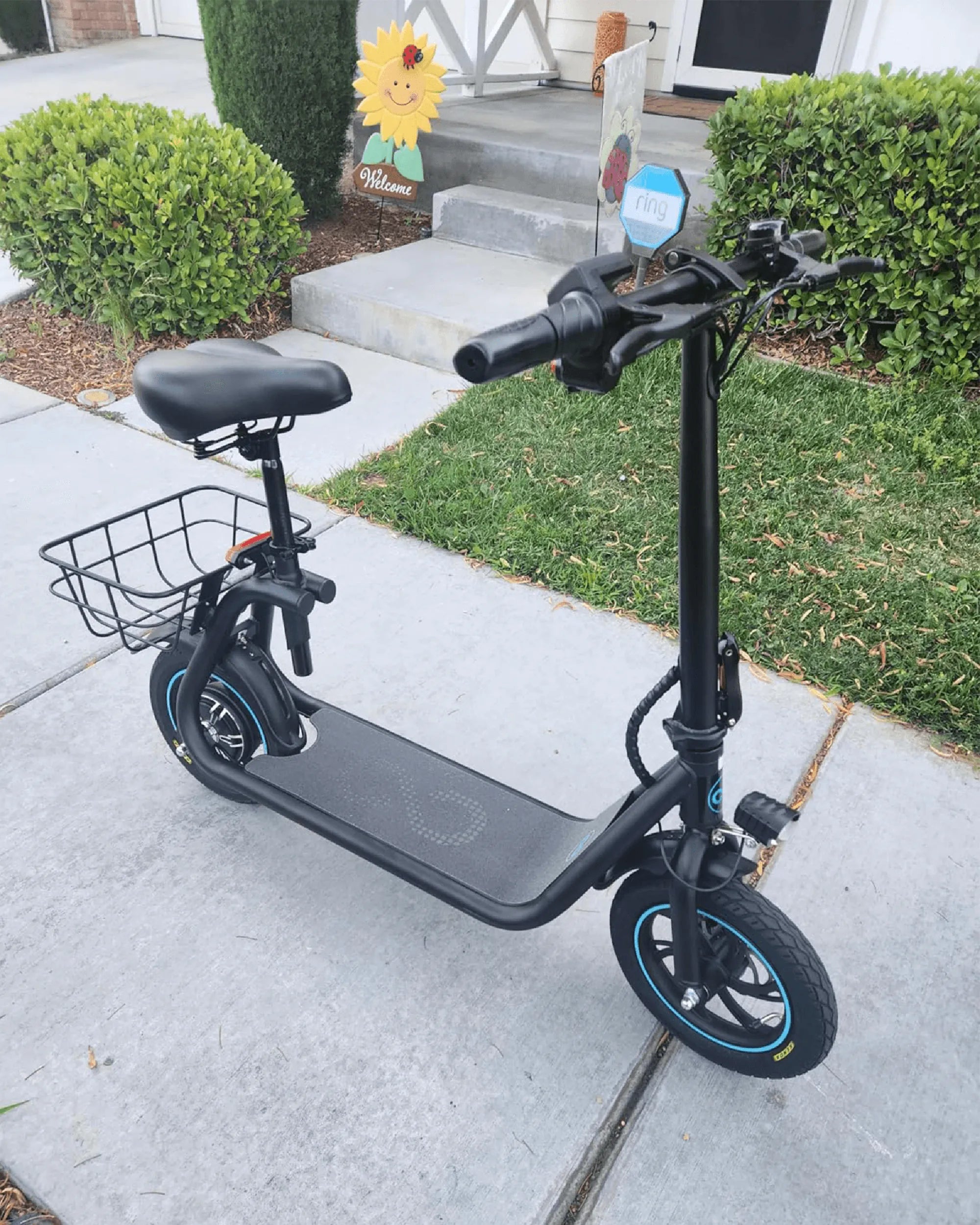
Why Germany is Shaping the Future of E-Scooters
German electric scooters are not merely vehicles; they are a manifestation of a systematic approach to urban mobility, born from a unique confluence of engineering prowess, regulatory foresight, and a deep-seated commitment to sustainability. Germany's position as a global industrial leader provides the foundation for micromobility solutions that prioritize long-term reliability over short-term trends. This philosophy is increasingly defining what consumers worldwide expect from personal electric transport: robust safety, intelligent design, and seamless integration into daily life.
The future of urban mobility hinges on solving the "last-mile" problem efficiently, safely, and sustainably. Cities like Berlin, Munich, and Hamburg have become living laboratories, where stringent product standards meet forward-thinking urban policy. The result is a generation of e-scooters engineered to withstand rigorous daily use while complying with some of the world's most comprehensive safety and operational regulations.
This environment fosters innovation focused on durability, connectivity, and user experience. German-influenced design principles—emphasizing precision, material quality, and systemic safety—are creating a new benchmark for the global e-scooter market. As cities worldwide grapple with congestion and emissions, the German model offers a proven blueprint for integrating lightweight electric vehicles into the urban fabric responsibly.
For the individual rider, this translates to scooters that are more than just fun gadgets. They are dependable daily commuters, built with components and software that ensure performance, safety, and longevity. The focus shifts from disposable consumer electronics to enduring personal mobility assets, a shift critical for the future of sustainable urban travel.
The German Engineering Edge: What Sets These E-Scooters Apart
The reputation of German engineering is built on a triad of principles: rigorous testing, premium materials, and functional innovation. Applied to electric scooters, this philosophy creates a distinct product category that stands apart from mass-market alternatives. It's an approach that values calculated performance and enduring quality over peak specifications alone.
This engineering mindset prioritizes the entire system's harmony. From the battery management software to the welding on the frame, each component is selected and integrated with the others in mind. The goal is predictable, consistent performance under a wide range of conditions, from a cold morning commute to a busy afternoon in city traffic. This holistic design thinking is a key differentiator.
Uncompromising Safety and Build Quality
Safety is the non-negotiable cornerstone. German and EU regulations (going beyond basic CE certification) mandate rigorous stress testing for frames, forks, and brakes. Manufacturers often adopt even stricter internal standards, conducting fatigue tests simulating years of use over imperfect pavement. This results in frames frequently constructed from aerospace-grade aluminum alloys, offering an optimal balance of strength and weight.
The commitment extends to critical safety components. Braking systems are engineered for consistent, fade-resistant performance, often combining electronic and mechanical (disc or drum) brakes for redundancy. Lighting is another focal point, with bright, wide-angle LED headlights, automatic activation, and comprehensive rear and side reflectors to ensure 360-degree visibility, a direct response to strict German road traffic regulations.
This build quality directly impacts durability and total cost of ownership. A scooter built to these standards resists the rattles, loose connections, and frame flex that plague cheaper models. It's an investment in a tool designed for daily utility, reducing long-term maintenance costs and safety risks associated with component failure.
Advanced Motor and Battery Technology
Performance is measured not just by top speed, but by efficiency, thermal management, and longevity. German-engineered scooters typically feature high-torque hub motors with sophisticated cooling systems to prevent overheating during sustained climbs or acceleration. This ensures consistent power delivery and protects the motor's lifespan.
The heart of the system is the battery and its Battery Management System (BMS). Using high-quality, name-brand lithium-ion cells (e.g., from LG or Samsung) is standard. The advanced BMS is the true technological guardian, meticulously monitoring each cell for voltage, temperature, and current. It prevents overcharging, deep discharge, and short circuits, which are primary causes of battery failure and safety hazards.
This focus on battery health maximizes real-world range and ensures the battery pack retains its capacity over hundreds of charge cycles. It translates to reliable performance where it matters most: knowing your scooter will deliver the expected range on your daily commute, even after months of use, without sudden degradation.
Smart Integration and Connectivity
Aligning with Germany's Industrie 4.0 ethos, these scooters are often designed as connected IoT devices. Integrated Bluetooth modules pair with dedicated smartphone apps, transforming the riding experience. These apps provide far more than basic speed and battery readings; they offer detailed diagnostics, firmware updates, and customizable performance profiles (e.g., eco, sport modes).
Advanced features include GPS-based anti-theft tracking and geofencing, allowing riders to set virtual boundaries and receive alerts. Ride analytics track routes, distance, and energy consumption, helping users optimize their travel patterns. This connectivity turns the scooter into a data-rich component of a smart mobility ecosystem, offering insights and security that basic models lack.
This smart integration also future-proofs the vehicle. The ability to receive over-the-air firmware updates means the scooter's performance, safety features, and user interface can be improved and refined long after purchase, extending its useful life and adapting to new urban mobility challenges.
Navigating the Legal Landscape: Rules for Riding in Germany & Beyond
The regulatory framework for electric scooters in Germany is one of the most defined in the world, establishing a clear precedent for safety and integration. Understanding these rules is essential not only for riding in Germany but for appreciating the design constraints that shape premium scooters. These regulations ensure e-scooters are treated as legitimate road vehicles, not toys.
Compliance is built into the product. To be approved for public road use in Germany, an e-scooter must have a general operating permit (ABE) and meet specific technical requirements, including the speed limit, lighting, and braking systems. This certification process guarantees a baseline of safety and performance that influences scooter design globally.
Speed Limits, Road Use, and Helmet Laws
For public roads, the maximum speed for approved e-scooters is strictly limited to 20 km/h (12.4 mph). This limit dictates motor and controller tuning, prioritizing smooth acceleration and efficiency at lower speeds rather than raw top-end power. On dedicated bike paths and bicycle lanes, their use is mandatory; they are only permitted on roads when such infrastructure is absent.
Sidewalks are universally prohibited for e-scooter riding. Helmet laws, while not mandatory for adults on standard 20 km/h scooters, are strongly recommended by safety authorities. For more powerful models or for riders under 18, helmets may be legally required. This legal clarity creates predictable traffic flow and enhances safety for all road users.
Insurance and Licensing Requirements
A critical legal pillar is mandatory third-party liability insurance. This is non-negotiable for riding on public roads. Typically, this insurance is obtained through a provider who issues a small license plate (eVersicherungsplakette) that must be affixed to the scooter, proving coverage in case of an accident causing damage to persons or property.
A standard driver's license (class AM or higher) is required to operate an approved e-scooter. However, no special vehicle registration or tax is needed. This framework treats e-scooters similarly to bicycles but with the added insurance requirement, acknowledging their higher speed and potential risk while keeping them accessible to most adults.
Top Considerations When Choosing Your German E-Scooter
Selecting an e-sooter built to German principles requires evaluating a different set of priorities than choosing a budget model. The focus should be on verified performance, durability certifications, and real-world usability features that support daily commuting. This checklist helps identify scooters that deliver on the promise of quality urban mobility.
Data-driven comparison is key. Look for independent test reviews that measure real-world range, braking distance, and hill-climbing ability rather than relying solely on manufacturer claims. Pay close attention to the specifications related to safety and build, as these are the hallmarks of the engineering philosophy.
Performance Metrics: Real-World Range and Hill Climb
Advertised range is often a best-case scenario. Assess real-world range by considering factors like rider weight, terrain, temperature, and average speed. A quality scooter will have a battery with a high energy density (Wh rating) and an efficient motor-controller combination to minimize energy waste. Look for user reports that confirm range under normal commuting conditions.
Hill-climb ability is determined by motor torque (in Newton-meters, Nm) and power (continuous wattage). A 350W-500W motor with high torque is typically sufficient for moderate inclines. Models designed for hilly cities may feature dual motors or motors rated at 600W or more. The scooter should maintain a stable speed on a grade without straining or overheating.
Durability for All Seasons: IP Ratings and Build
The Ingress Protection (IP) rating is crucial for a commuter vehicle. An IPX5 rating or higher (like IP54 or IP65) certifies protection against water jets from any direction, making the scooter capable of handling heavy rain and road spray. This is a common and essential feature in German-designed models, ensuring reliability in all weather.
Build quality is assessed through materials and design. Look for a one-piece or welded aluminum frame, reinforced stem folding mechanisms, and air-filled or high-quality solid tires with suspension (spring or hydraulic) to absorb vibrations. These features directly impact comfort, safety, and the scooter's ability to withstand daily urban punishment.
Portability and Daily Usability
For multi-modal commuters, the folding mechanism is critical. It should be robust, secure, and easy to operate with one hand. The folded dimensions and weight determine how easily it can be carried onto public transport or stored under a desk. A weight under 15 kg (33 lbs) is ideal for regular carrying.
Daily usability features include a clear, bright display visible in sunlight, intuitive controls, adequate deck space for foot placement, and effective cable management to prevent snagging. Integrated carrying handles, kickstands, and minimal folding play (wobble) are signs of thoughtful design that enhances the daily experience.
| Feature | Budget Scooter Typical Spec | German-Engineering-Inspired Scooter (e.g., Gyroor) | Impact on User |
|---|---|---|---|
| Frame Material | Standard aluminum/steel | Aerospace-grade aluminum alloy | Greater durability, lighter weight, higher safety margin |
| Battery Certification | Basic CE | UL 2271, UL 2842 Certified | Proven safety standard, reduced fire risk, longer lifespan |
| Water Resistance | IPX4 (splash-proof) | IPX5 (water jet resistant) | Can be ridden in rain, more reliable in wet conditions |
| Motor Power (Continuous) | 250W-350W | 350W-500W+ | Better hill climb, sustained performance, less overheating |
| Braking System | Single mechanical brake | Dual braking (E-ABS + disc/drum) | Shorter stopping distance, redundancy for safety |
| Warranty & Support | 90 days limited | 1-year comprehensive, US/EU support | Long-term peace of mind, accessible customer service |
Gyroor's Commitment to German-Level Standards
Gyroor embodies the core principles of German engineering—safety, reliability, and performance—making this standard accessible to a global audience. With a community of over 100,000 riders across North America and Europe, Gyroor has built trust by consistently applying a safety-first design philosophy and using high-grade components, mirroring the benchmarks set by leading European manufacturers.
The brand's focus is on delivering real-world utility. By prioritizing the factors that matter most for daily commuting—such as water resistance, battery safety, and durable construction—Gyroor scooters are engineered for the demands of modern urban life. This approach ensures riders receive a product that is not only feature-rich but fundamentally dependable.
Safety as a Foundation: UL-Certified Batteries and Robust Design
The cornerstone of Gyroor's commitment is its use of UL-certified lithium-ion battery packs. UL 2271 certification is a rigorous safety standard specifically for e-mobility batteries, testing for electrical, mechanical, and environmental hazards. This goes beyond basic requirements, ensuring stable power delivery, thermal management, and longevity over 500+ charge cycles, directly addressing the primary safety concern in e-scooters.
This safety-first mindset extends to the overall design. Frames are engineered for structural integrity, brakes are selected for consistent performance, and lighting systems are designed for maximum visibility. By building safety into the core architecture, Gyroor provides riders with the confidence needed for daily urban travel.
Built for the Real World: IPX5 Water Resistance and Warranty
Recognizing that commuters face all weather conditions, Gyroor equips its models with a minimum IPX5 water-resistance rating. This certification means the scooter can withstand water jets from any direction, making it a truly all-weather vehicle capable of handling rain-soaked streets without performance degradation or electrical failure, a key feature for reliable transportation.
Backing this durable construction is a comprehensive 1-year warranty and dedicated customer support. This warranty reflects a confidence in product longevity and a commitment to rider satisfaction. For a daily-use vehicle, this support network is as critical as the hardware itself, ensuring any issues are resolved promptly to keep riders moving.
Frequently Asked Questions (FAQ)
Q: Do I need insurance to ride an e-scooter in Germany?
A: Yes, it is a legal requirement. Third-party liability insurance is mandatory for using an e-scooter on public roads in Germany. This is typically verified by a small insurance sticker (eVersicherungsplakette) placed on the scooter.
Q: Are German-brand e-scooters significantly more expensive?
A: They often command a premium due to higher-grade components, advanced safety features, and rigorous manufacturing standards. However, brands like Gyroor successfully deliver this safety-focused engineering philosophy at more accessible price points, offering exceptional value.
Q: Can I take a German e-scooter on public transport?
A: Most high-quality models are designed with portability in mind, featuring reliable folding mechanisms. However, policies vary by transit authority. Always check local rules regarding folded dimensions, weight, and battery regulations before boarding.
Q: How does Gyroor's warranty support work internationally?
A: Gyroor offers a 1-year comprehensive warranty on its electric scooters. The company provides dedicated support channels for riders in North America and Europe, with efficient logistics for troubleshooting and supplying replacement parts when necessary, ensuring global customers are covered.
Q: What is the real advantage of a higher IP rating like IPX5?
A: An IPX5 rating certifies that the scooter's electrical components are protected against low-pressure water jets from any direction. This means you can confidently ride in the rain or through puddles without fear of water damage, a crucial feature for a reliable daily commuter vehicle.
Q: Is a driver's license required to ride an e-scooter in Germany?
A: Yes, you must possess at least a class AM moped license or a standard car driver's license (Class B) to operate a street-legal e-scooter in Germany. There is no separate registration or tax for the vehicle itself.
Embracing Efficient and Sustainable Urban Travel
German electric scooters represent a mature, responsible, and highly effective solution to the challenges of modern urban mobility. They prove that micromobility can be more than a fleeting trend—it can be a safe, reliable, and integrated component of a city's transportation network. The emphasis on engineering integrity, safety certifications, and all-weather durability creates a product category designed for serious daily use, not just occasional recreation.
The future they point toward is one of seamless, sustainable travel. By choosing a scooter built to these elevated standards, riders invest in their own safety, convenience, and long-term satisfaction. They contribute to reduced traffic congestion and lower urban emissions, all while enjoying a direct, efficient, and enjoyable mode of transport. The meticulous design philosophy ensures the vehicle is a dependable partner for the daily commute.
This approach, exemplified by brands that prioritize these values, makes the vision of smart, connected, and clean urban mobility a practical reality. It demonstrates that the right technology, built with rigor and foresight, can genuinely transform how we move through our cities. The journey toward sustainable urban travel is well underway, and it is being paved by principles of quality and reliability that ensure its success.
Ready to experience the difference that safety-focused engineering and reliable performance can make in your daily commute? Explore the full range of UL-certified, IPX5 water-resistant electric scooters and e-bikes designed for the real world. Browse the full Gyroor collection at gyroorboard.com and join over 100,000 riders who trust their journey to quality micromobility.
Best Electric Scooters in Hyderabad 2025: Top Picks for Eco-Friendly Commuting
Electric Scooters Low Price: Affordable and Efficient Commuting Solutions