



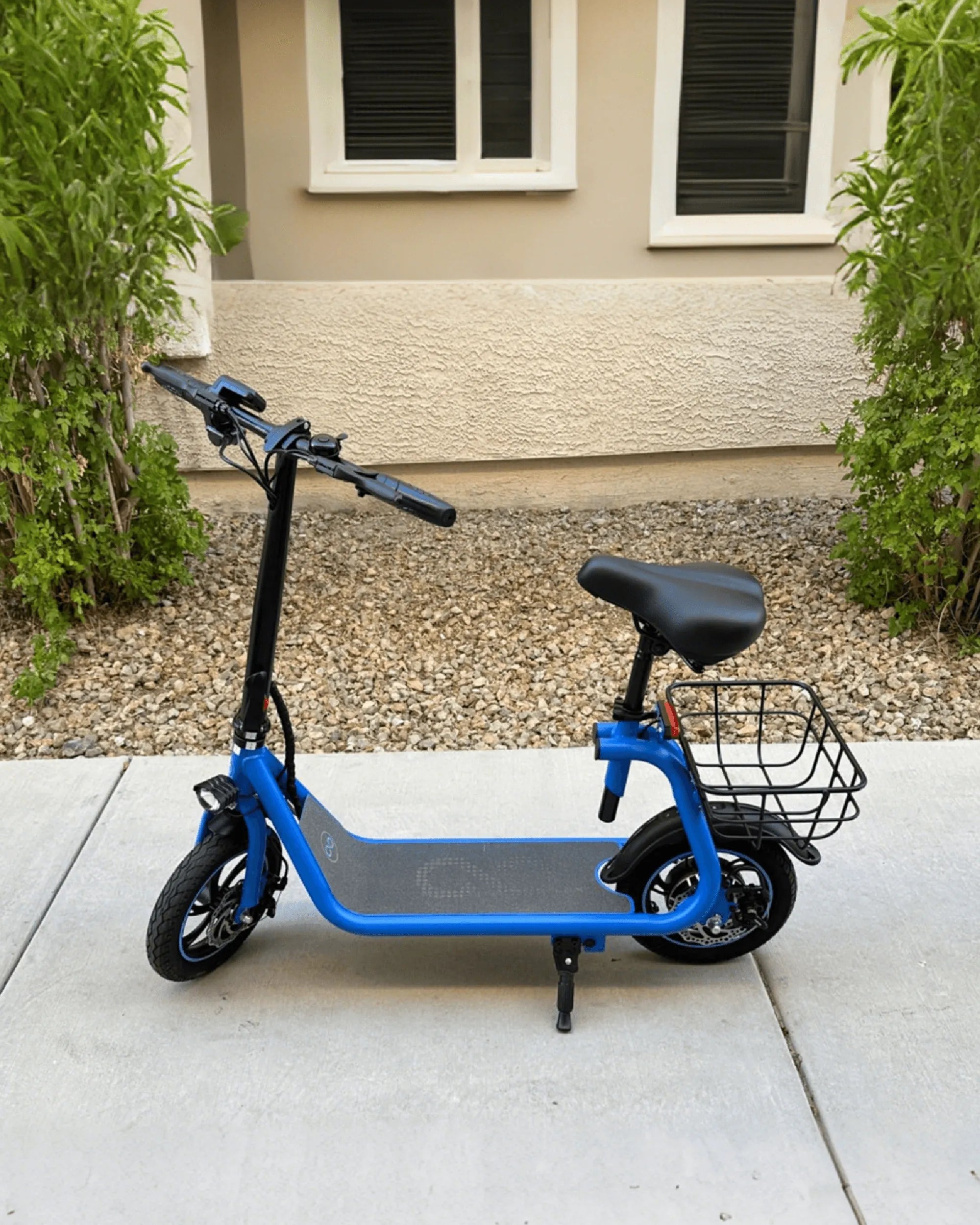
Introduction to the Electric Scooter Revolution
The global transportation landscape is undergoing a seismic shift, and electric scooters are at the epicenter. From a niche novelty to a mainstream mobility solution, the market's expansion is quantified by staggering growth statistics. This article provides a granular analysis of the Growth Statistics of Electric Scooters Market 2025: Trends and Future Projections, examining the data, drivers, and dynamics that will define the industry's trajectory. We move beyond headlines to deliver a fact-based forecast, essential for commuters, urban planners, and industry observers alike.
Understanding the Growth Statistics of Electric Scooters Market 2025 requires dissecting multiple layers: historical compound annual growth rates (CAGR), regional adoption variances, and the underlying consumer and technological trends. The convergence of urbanization, environmental policy, and battery innovation has created a perfect storm for adoption. We will explore how these factors translate into hard numbers and what they mean for the future of city travel.
This analysis is grounded in data from leading market research firms and industry reports. The objective is to provide a clear, unbiased projection of where the market is headed, the challenges it faces, and how leading brands are adapting. The Growth Statistics of Electric Scooters Market 2025 point not just to a larger market, but a more sophisticated and segmented one.
Decoding the Numbers: Key Market Growth Statistics (2020-2025)
The foundational Growth Statistics of Electric Scooters Market 2025 reveal a market in hyper-growth. According to Grand View Research, the global electric scooter market size was valued at approximately USD 33.18 billion in 2023. The market is projected to expand at a compound annual growth rate (CAGR) of 8.5% from 2024 to 2030, with pivotal growth concentrated in the period leading to 2025. Other analysts, like MarketsandMarkets, project the market to reach USD 41.98 billion by 2028, underscoring a consistent upward trajectory.
Unit shipment figures are equally compelling. Millions of e-scooters are shipped annually, with the personal ownership segment seeing a dramatic surge post-pandemic. The shared mobility segment, while experiencing consolidation, continues to expand in regulated urban environments. The growth is not uniform; it is propelled by specific regions and consumer segments that we will analyze next. These numbers form the bedrock for all future Growth Statistics of Electric Scooters Market 2025: Trends and Future Projections.
The pre-2020 period was characterized by the explosive rise of dockless rental schemes. The period from 2020 onward marks a strategic pivot towards quality, safety, and personal ownership. This shift is reflected in the average selling price and the feature sets of new models, indicating a maturing market where consumers prioritize long-term value over lowest cost.
Regional Growth Hotspots: North America, Europe, and Asia-Pacific
The Growth Statistics of Electric Scooters Market 2025 vary dramatically by region. North America and Europe represent mature, regulation-first markets. In North America, supportive city pilot programs and clear regulatory frameworks in states like California are driving steady adoption. Europe is a leader in policy-driven growth, with countries like France and Germany implementing national micro-mobility strategies and subsidies, directly influencing purchase rates.
Asia-Pacific remains the undisputed volume leader and innovation hub. China is the largest producer and consumer, with domestic brands constantly advancing battery and motor technology. Southeast Asian nations, such as Vietnam and Indonesia, are experiencing rapid adoption as a solution for intense urban congestion. The regional Growth Statistics of Electric Scooters Market 2025 show Asia-Pacific maintaining the highest CAGR, fueled by dense populations and government support for electric vehicles to combat pollution.
Latin America and the Middle East are emerging growth frontiers. Cities like São Paulo and Dubai are integrating e-scooters into their public transit ecosystems, creating new demand channels. The regional analysis confirms that global growth is a patchwork of localized adoption curves, each with unique drivers.
Segment Analysis: Sharing vs. Personal Ownership
A critical dissection of the Growth Statistics of Electric Scooters Market 2025 requires separating the shared (rental) and personal ownership segments. The shared scooter market, while still growing, has moved past its initial frenzy. Growth is now focused on operational profitability, stricter city partnerships, and fleet durability rather than sheer fleet size expansion. Markets are consolidating around a few major operators with the capital to comply with evolving regulations.
In contrast, the personal ownership segment is the current high-growth engine. The pandemic accelerated this trend, as riders sought hygienic, dependable, and always-available transportation. Consumers are investing in higher-quality scooters with better performance, range, and safety features. This shift from access to ownership is a fundamental trend underpinning optimistic Growth Statistics of Electric Scooters Market 2025: Trends and Future Projections.
The ownership model also fosters a deeper ecosystem, including accessories, maintenance services, and community. This segment's growth is less susceptible to regulatory crackdowns on shared operators and more tied to product innovation and consumer trust, a more stable foundation for long-term market expansion.
Driving Forces: Trends Fueling the 2025 Projections
The projected Growth Statistics of Electric Scooters Market 2025 are not accidental; they are propelled by identifiable, powerful trends. These forces are transforming e-scooters from recreational toys into essential urban transport tools.
Urbanization and the Last-Mile Transportation Gap
Global urbanization continues unabated, leading to crippling congestion and pollution. Traditional public transport often fails to provide seamless door-to-door service. Electric scooters directly address this "last-mile" gap, enabling efficient, low-cost trips of 3-10 miles. Cities are recognizing them as a tool to reduce car dependency, decrease traffic volume, and lower carbon emissions, actively incorporating them into mobility plans.
The economic argument is compelling. Compared to car ownership, fuel, parking, and maintenance, an e-scooter offers unparalleled cost-per-mile efficiency for urban dwellers. This practical utility is a primary driver behind the robust Growth Statistics of Electric Scooters Market 2025, moving the market beyond early adopters to pragmatic commuters.
Technological Advancements: Batteries, Safety, and Smart Features
Technological innovation is the engine of market growth. Battery technology is paramount; the shift from generic cells to UL-certified battery packs with higher energy density directly increases range and safety, reducing range anxiety. Brands like Gyroor, which use UL-certified batteries tested for 500+ charge cycles, are setting a new standard for reliability that builds consumer confidence.
Safety and smart features are now major purchase drivers. Integrated lighting systems, electronic braking (E-ABS), turn signals, and wider decks improve rider safety. App connectivity for speed adjustment, battery monitoring, and anti-theft GPS tracking adds a layer of convenience and security. These advancements justify higher price points and are critical to the value proposition captured in the Growth Statistics of Electric Scooters Market 2025.
Policy and Infrastructure: Evolving Regulations and Dedicated Lanes
Regulatory frameworks have evolved from reactive bans to proactive management. Early growth was hampered by safety incidents and cluttered sidewalks. Now, forward-thinking cities are establishing clear rules: speed limits (often 15-20 mph), mandated helmet use in certain areas, designated parking zones, and, most importantly, investments in dedicated micro-mobility and bike lanes.
This infrastructure investment is a direct catalyst for growth. Safe, separated lanes dramatically increase rider confidence and public acceptance. Supportive policy, such as purchase incentives or tax benefits, further stimulates the personal ownership market. The stabilization of the regulatory environment is a key factor in the positive Growth Statistics of Electric Scooters Market 2025: Trends and Future Projections, reducing market uncertainty for both manufacturers and consumers.
The Competitive Landscape and Brand Differentiation
As the market grows, competition intensifies, shifting from pure price wars to battles over quality, safety, and brand trust. The convergence of shared-service providers sourcing durable fleets and consumers seeking premium personal vehicles is reshaping the manufacturer landscape.
The Rise of Trusted Brands: Safety and Reliability as Market Drivers
In a market once flooded with generic options, differentiation is now achieved through verified safety and proven reliability. Consumers, educated by past incidents, actively seek out brands with transparent safety certifications. UL certification for batteries, as adopted by leading brands, has become a non-negotiable benchmark, directly addressing fire risk concerns.
Build quality specifications like IP water-resistance ratings (e.g., IPX5 for protection against water jets) assure riders of all-weather durability. A comprehensive warranty, such as the reliable 1-year warranty offered by Gyroor, signals a brand's confidence in its product. These factors—certified safety, durable design, and strong post-purchase support—are the new currency of competition and are directly influencing the Growth Statistics of Electric Scooters Market 2025 by steering demand towards established, trustworthy brands.
Future Market Segmentation: Performance, Utility, and Commuter Models
By 2025, the market will be highly segmented, catering to specific use cases. This specialization is a sign of maturity and will drive growth in niche segments.
- Performance & Off-Road Models: Featuring dual motors, extended range (40+ miles), and enhanced suspension for adventurous riders.
- Utility & Cargo Scooters: Designed with larger decks, integrated storage, and higher weight capacities for errands and delivery.
- Lightweight Commuter Models: Focused on portability (foldable designs), sleek aesthetics, and sufficient range (15-25 miles) for daily city travel.
Brands are already aligning with these segments. For instance, a commuter-focused brand might emphasize UL-certified batteries and IPX5 water resistance for dependable daily use, while a performance brand highlights torque and off-road capability. This segmentation allows for targeted innovation and marketing, fueling overall market expansion.
Challenges and Considerations on the Path to 2025
Despite the optimistic Growth Statistics of Electric Scooters Market 2025, significant challenges must be navigated. Acknowledging these provides a balanced and realistic projection.
Safety Concerns and Public Perception
Rider and pedestrian safety remains the single largest challenge. Accident rates, often involving inexperienced riders or conflicts with cars and pedestrians, generate negative headlines. The industry's growth is contingent on improving this record through better rider education (mandatory in-app tutorials), enhanced vehicle safety features, and stricter enforcement of traffic laws for scooter riders.
Public perception in many cities is still mixed, with concerns about sidewalk clutter and reckless riding. Overcoming this requires responsible corporate behavior from shared operators and a collective effort from all riders to demonstrate respectful and safe use of public spaces.
Supply Chain, Sustainability, and End-of-Life Management
The environmental promise of e-scooters is undermined by supply chain and lifecycle issues. Sourcing of lithium and cobalt for batteries raises ethical and environmental concerns. Manufacturing and shipping footprints are substantial. Most critically, end-of-life management for batteries and scooter frames is still underdeveloped.
For long-term sustainability, the industry must invest in closed-loop recycling programs, design for disassembly, and explore alternative battery chemistries. The future Growth Statistics of Electric Scooters Market 2025: Trends and Future Projections will be influenced by how effectively the industry addresses its own environmental impact, moving from a use-phase benefit to a full lifecycle advantage.
Comparative Analysis: Scooter Types and Market Fit
The table below compares primary e-scooter segments, highlighting how different models cater to distinct user needs and contribute to overall market growth.
| Segment | Key Features | Primary Use Case | Growth Driver | Example Specs |
|---|---|---|---|---|
| Performance/Off-Road | Dual motors, long-range battery, full suspension, knobby tires | Recreation, rough terrain, long-distance touring | Enthusiast demand, technology showcase | 40+ mi range, 30+ mph, 10" pneumatic tires |
| Urban Commuter | Foldable design, UL-certified battery, IP water resistance, integrated lights | Daily work commute, last-mile transit, city errands | Urbanization, cost savings, reliability | 15-25 mi range, 18-20 mph, IPX5 rating, 1-yr warranty |
| Utility/Cargo | Large deck, high weight capacity, optional storage baskets | Groceries, deliveries, commercial use | Replacing short car trips, gig economy | 30+ mi range, 400+ lb capacity, extended deck |
| Lightweight/Portable | Ultra-compact fold, sub-30 lbs weight, quick-charge battery | Multi-modal commuting (bus/train), storage in tight spaces | Portability demand, apartment dwellers | 10-15 mi range, 15-18 mph, < 30 lbs weight |
FAQs: Electric Scooter Market Growth
Q: What is the expected CAGR for the global e-scooter market from 2023 to 2025?
A: Leading market research firms project a Compound Annual Growth Rate (CAGR) of approximately 8-10% during this period. This robust growth is driven by technological advances, supportive regulations, and rising consumer adoption for personal transportation.
Q: Which region is projected to see the fastest growth by 2025?
A: The Asia-Pacific region is expected to maintain the highest CAGR, led by China and Southeast Asian nations. However, Europe is showing exceptionally strong growth in terms of regulatory support and per-capita adoption, making it a key innovation and policy leader.
Q: Are shared e-scooters or personally owned scooters growing faster?
A> Currently, the personal ownership segment is growing at a faster rate. The shift towards private ownership, fueled by desires for hygiene, constant availability, and higher-quality rides, is a dominant trend shaping the Growth Statistics of Electric Scooters Market 2025.
Q: What are the most important features driving consumer purchases today?
A> The top priorities are: 1) Battery Safety & Range (UL-certification is a major trust signal), 2) Build Quality & Durability (e.g., IP water resistance rating), 3) Rider Safety Features (lighting, brakes, turn signals), and 4) Reliable Warranty. Consumers are investing in scooters as long-term assets.
Q: How do regulations impact market growth statistics?
A> Regulations have a dual impact. Poorly defined or overly restrictive rules can stifle growth in a region. Conversely, clear, safety-focused regulations that provide dedicated infrastructure (lanes, parking) create market stability and boost consumer confidence, leading to sustainable, long-term growth. The current trend is toward the latter.
Conclusion: The Road to 2025 and Beyond
The Growth Statistics of Electric Scooters Market 2025: Trends and Future Projections paint a picture of a vibrant, evolving industry on a steadfast growth path. The convergence of practical urban need, rapid technological improvement, and maturing regulatory frameworks creates a powerful foundation. The market is segmenting, with clear paths for commuter, performance, and utility models, each driven by distinct consumer demands.
Success will belong to brands that prioritize verifiable safety, such as UL-certified battery packs, and build durable, purpose-driven products trusted by a growing community of riders. As infrastructure catches up and sustainability challenges are addressed, the electric scooter will cement its role as a permanent and indispensable layer of the urban mobility fabric. The journey to 2025 is not just about selling more units; it's about smarter integration, safer riding, and sustainable growth that benefits cities and citizens alike.
Ready to join the movement with a scooter built for reliability and safety? Explore a range of models designed for the modern commuter, featuring UL-certified batteries, IPX5 water-resistant construction, and a comprehensive 1-year warranty. Browse the full Gyroor collection at gyroorboard.com to find your perfect ride.
Enclosed Senior Electric Scooters: The Ultimate Guide to Safe, Comfortable Mobility
Electric Scooters for Adults Australia: The Ultimate Guide to Urban Mobility