

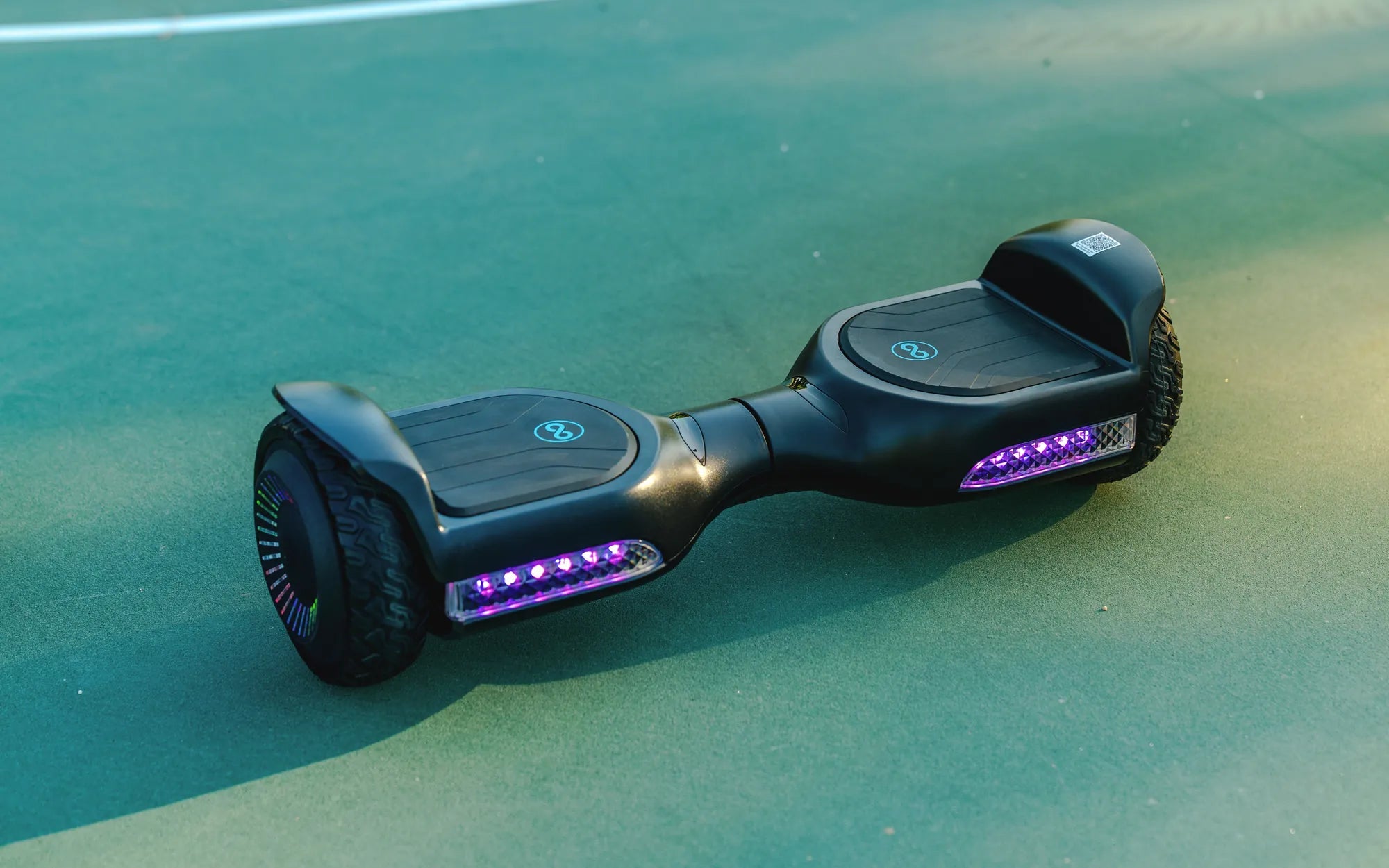
Ignoring your hoverboard's weight limit is a shortcut to poor performance, costly damage, or even injury. The hoverboard 200 weight limit is a precise engineering benchmark that defines safe operation for the majority of adult riders. This article provides the data-driven facts you need to understand why this specification matters, how it impacts your ride, and what to look for in a well-engineered model. You'll learn the mechanics of motor strain, battery stress, and structural integrity, ensuring you can make an informed purchase and ride with confidence.
Why the Hoverboard 200 Weight Limit is a Critical Safety Spec
The stated weight capacity on a hoverboard is the maximum load its core components are designed to handle reliably. It is a direct reflection of the product's engineering tolerances. Treating it as a flexible guideline compromises every safety system built into the device.
Exceeding the limit stresses the electrical and mechanical systems beyond their tested parameters. This can lead to sudden component failure during use. A hoverboard is a dynamic, self-balancing vehicle; its stability is intrinsically linked to the load it carries.
Manufacturers determine this limit through rigorous testing of the motor, battery, frame, and tires under various load conditions. A reputable brand like Gyroor sets its hoverboard 200 weight limit conservatively, building in a safety margin to ensure longevity and rider security. Choosing a board rated for your weight is the first and most important step in responsible ownership.
Understanding the 200 lb Limit: More Than Just a Number
The hoverboard 200 weight limit encompasses the total system weight. This includes the rider's body weight, clothing, and anything they are carrying, such as a backpack, groceries, or a laptop bag. A rider weighing 190 lbs with a 15 lb backpack is at the 205 lb mark, exceeding the limit.
This limit is rooted in fundamental physics and engineering. The dual hub motors must generate sufficient torque to accelerate, climb slopes, and maintain balance against the downward force of the rider. Exceeding the weight forces the motors to operate at or beyond their peak capacity, generating excess heat.
The lithium-ion battery pack must deliver high current to power those overworked motors. This accelerates voltage sag and reduces the number of effective charge cycles. The structural components—specifically the axle connecting the two wheels and the deck—are under constant bending stress. A load beyond the design point increases metal fatigue over time.
The Risks of Exceeding the Limit
Ignoring the manufacturer's specification introduces multiple, compounding risks. Performance degrades immediately: acceleration becomes sluggish, top speed may not be reachable, and the advertised range can drop by 30-40% as the battery drains rapidly under high load.
Mechanical failure risk rises sharply. The most common point of failure is the axle, which can bend or snap under excessive weight, especially when encountering bumps or curbs. Overheated motors can suffer from melted wire insulation or failed bearings, leading to a sudden loss of power in one or both wheels.
Battery systems are particularly vulnerable. Pushing a battery beyond its designed discharge rate causes overheating, which is the primary cause of lithium-ion battery degradation and, in extreme cases, thermal runaway. Furthermore, any warranty claim is almost certainly voided if the manufacturer finds evidence of overloading, leaving you solely responsible for repair costs.
Gyroor Hoverboard 200 Models: Engineered for Confidence
Gyroor designs its core adult hoverboards, like the Gyroor Warrior and S550 series, with the hoverboard 200 weight limit as a central performance parameter. These models are not minimally engineered to meet this threshold; they are built to handle it consistently throughout their lifespan. This is achieved through a focus on premium components and robust design.
The use of UL-certified battery packs is a critical differentiator. These batteries undergo independent testing for safety, including stress tests under load, ensuring stable power delivery and built-in protection circuits that guard against over-current situations common when a board is overloaded.
The motors are selected for their torque output and thermal management, not just their top speed rating. The deck is constructed from reinforced materials and designed with a geometry that distributes weight effectively toward the wheels, reducing stress on the central axle. This holistic approach ensures the stated limit is a reliable benchmark for safe operation.
How Gyroor Ensures Safety and Durability at Capacity
Gyroor's engineering philosophy prioritizes safety margins. The UL 2272 certification for the entire electrical system is a baseline. The IPX5 water-resistant rating is crucial because moisture ingress is a greater risk when components heat up under load; this protection prevents corrosion and short circuits.
The battery management system (BMS) in Gyroor's UL-certified packs actively monitors temperature, voltage, and current. If it detects an unsafe draw—such as from a motor straining under excessive weight—it can modulate power to protect the cells. The frame is often a single, solid casting or a heavily reinforced composite that resists flexing.
Tires are another key component. Gyroor models often feature 8.5-inch or larger air-filled or solid rubber tires with strong sidewalls to better handle the pressure and impact forces from a rider at the maximum limit, providing better stability and a longer service life than smaller, plastic-hub wheels.
Comparing Hoverboard Weight Limits: 200 lbs vs. Other Ranges
Understanding where a 200 lb limit fits in the market landscape helps in selecting the right product. This capacity is considered the standard for general adult use, suitable for a wide demographic. Boards with lower or higher limits serve specific niches.
| Weight Class | Typical Limit | Intended Rider | Key Features | Considerations |
|---|---|---|---|---|
| Kids & Lightweight | 120 - 160 lbs | Children, teens, smaller adults | Smaller wheels (6.5"), lower power motors, lighter frames | Unsuitable for most adults; risk of immediate overloading. |
| Standard Adult | 200 - 220 lbs | Most adult riders | 8.5"+ wheels, robust motors, UL-certified batteries | The sweet spot for performance, safety, and value. Models like Gyroor's Warrior excel here. |
| Heavy-Duty / Off-Road | 265 - 300+ lbs | Heavier riders, off-road use | All-terrain tires, dual motors with 1000W+ total power, reinforced axles | Higher cost, larger/heavier build, shorter range per charge due to immense power draw. |
For a rider weighing 180-200 lbs, a board with a 200 lb limit from a quality brand is perfectly adequate for daily commuting and recreation on paved surfaces. Riders consistently at or above 220 lbs should strongly consider a heavy-duty model to ensure safety, performance, and durability.
Practical Rider Guide: Maximizing Performance and Safety
If your weight is close to your board's maximum limit, proactive maintenance and mindful riding are essential. First, always account for carried items. Weigh yourself with your typical riding backpack to get a true total system weight.
Regular maintenance becomes non-negotiable. Check tire pressure weekly if using air-filled tires; under-inflated tires increase rolling resistance and strain on the motor. Inspect the wheels, axle, and deck for cracks or unusual wear before each ride. Keep the board clean, especially the wheel wells and charging port.
Adapt your riding style. Avoid sudden, full-power acceleration and hard braking, which place the highest instantaneous load on the motors and battery. Plan routes with smoother pavement to minimize impact shocks to the frame. When climbing slopes, build momentum gradually rather than attempting to start on a steep incline.
Be extra vigilant about battery care. Use only the provided charger and avoid draining the battery completely before recharging. Store the board in a cool, dry place. These practices help preserve battery health, which is the first component to suffer under consistent high-load conditions.
Frequently Asked Questions (FAQ)
Can I ride a hoverboard with a 200 lb limit if I weigh 210 lbs?
It is not recommended. While it may function, you are operating outside the engineered safety parameters. You will experience significantly reduced range, slower acceleration, increased component heat, and accelerated wear. Most importantly, you assume full liability for any failure or accident and will void the manufacturer's warranty.
Does the weight limit affect the hoverboard's top speed and range?
Absolutely. Weight is the primary factor in energy consumption. A rider at the 200 lb limit will achieve 20-35% less range than a 150 lb rider on the same board. Top speed may also be slightly reduced, as the motor may not have enough torque to overcome air resistance at its absolute top RPM under max load.
Is the Gyroor 1-year warranty valid if the weight limit is exceeded?
No. The warranty covers defects in materials and workmanship under normal use, which is defined as operating within the published specifications. Exceeding the hoverboard 200 weight limit constitutes misuse. Any damage traced to overloading, such as a bent axle or failed motor, would not be covered.
How do I know if my hoverboard is being damaged by too much weight?
Warning signs include: a noticeable decrease in range per charge, the board feeling sluggish or struggling on slopes it previously handled, excessive heat from the deck or wheel hubs, unusual noises (grinding, clicking) from the wheels, and visible cracks or stress marks on the plastic shell near the axle or foot pads.
Are there any hoverboards that can safely carry more than 200 lbs?
Yes. The market offers heavy-duty and off-road models specifically engineered for higher capacities, often up to 265 or 300 pounds. These models feature more powerful dual motors (1000W+ combined), reinforced steel axles, and larger, all-terrain tires. Gyroor and other reputable brands offer models in this category for heavier riders.
Conclusion: Prioritize Engineering for a Safe and Enjoyable Ride
The hoverboard 200 weight limit is a fundamental specification that dictates safety, performance, and product longevity. Choosing a hoverboard from a brand that engineers to this standard with quality components—like UL-certified batteries, robust motors, and durable frames—is an investment in reliable transportation. By respecting this limit, performing routine maintenance, and adapting your riding style, you ensure thousands of safe miles. Your hoverboard is a precision vehicle; treat its specifications with the seriousness they deserve. Explore the full range of engineered-for-safety models, including those designed for higher weight capacities, and find the perfect match for your needs.
Browse the full Gyroor collection, featuring UL-certified hoverboards engineered for safety and performance at their stated weight limits, at gyroorboard.com.
Hoverboard Under 100 Dollars: Affordable Fun for Everyone - A Realistic Guide
What Is the Best Hoverboard? A Complete Buyer’s Guide