


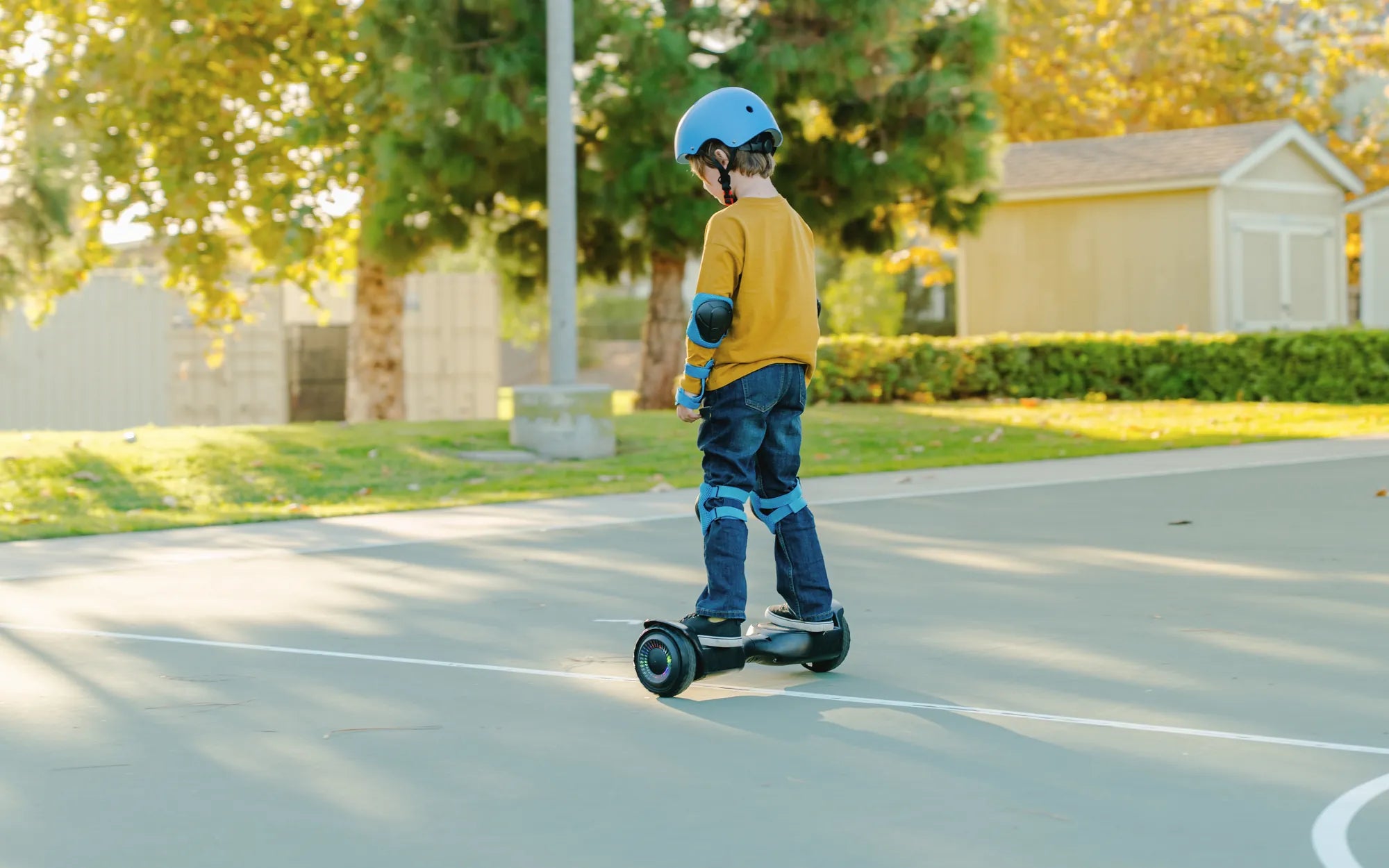
Introduction: The 25 km/h Hoverboard – Redefining Personal Commuting
The hoverboard 25 kmh represents a significant evolution in personal electric transport, perfectly balancing exhilarating performance with practical urban utility. Moving beyond the toy-like 10-15 km/h models, a board capable of sustaining 25 km/h transforms from a recreational gadget into a legitimate micro-mobility solution. This speed tier offers a tangible reduction in commute times while remaining within a controllable and often legally acceptable range for many shared pathways.
For commuters, students, or enthusiasts, a hoverboard 25 kmh model strikes the ideal balance. It is fast enough to keep pace with urban bicycle traffic and cover meaningful distances efficiently, yet it doesn't venture into the extreme, less-regulated speeds that compromise safety and legality. Brands like Gyroor have engineered specific models for this performance category, focusing on the certified safety technology and robust construction required for reliable high-speed operation.
This guide will dissect every aspect of owning and riding a hoverboard 25 kmh. We will explore the engineering that makes this speed possible and safe, outline non-negotiable safety practices, and provide a framework for comparing models. Understanding these factors is crucial for anyone looking to upgrade their ride and experience the true potential of personal electric mobility.
Why 25 km/h is the Ideal Speed for Modern Hoverboards
Twenty-five kilometers per hour is not an arbitrary number; it is a carefully considered threshold that aligns with urban mobility needs and human factors. The average cycling speed in a city environment ranges from 15 to 20 km/h. A hoverboard 25 kmh capable of 25 km/h allows a rider to integrate seamlessly with bicycle traffic, using the same lanes or paths without causing congestion. This interoperability is key for safe coexistence in shared urban spaces.
From a practical standpoint, this speed dramatically increases the effective range of a hoverboard. A 5-kilometer commute that would take 20-30 minutes on a slower board can be reduced to 12-15 minutes. This efficiency makes the device a viable alternative for the "last mile" of a commute or for running local errands, bridging the gap between walking and taking a car or public transit.
Furthermore, 25 km/h sits at the upper limit of what many local regulations permit for electric personal transport devices on bike paths and multi-use trails. While laws vary, speeds significantly above 25 km/h often push devices into a different, more restrictive classification. Choosing a hoverboard 25 kmh model, especially one with configurable speed modes, helps ensure you can ride compliantly by selecting a lower mode when required.
Psychologically and physically, this speed offers a thrilling sense of freedom and flow without overwhelming a rider's reaction time. It provides the excitement that enthusiasts seek while remaining within a realm where proper safety gear and technique can effectively manage the risks. It is the definitive performance sweet spot.
Key Technologies Powering Safe 25 km/h Performance
Achieving a stable, reliable, and safe 25 km/h top speed requires more than just powerful motors. It demands a holistic engineering approach where the battery, control systems, and structural design work in unison. Cutting corners in any of these areas at this performance level leads to instability, premature failure, or safety hazards.
Leading manufacturers invest in integrated systems where the motor controller, gyroscopes, and battery management system (BMS) communicate seamlessly. This integration allows for smooth acceleration, regenerative braking that recaptures energy, and immediate stabilization corrections. When evaluating a hoverboard 25 kmh model, the sophistication of this core "brain" is as important as raw power.
UL-Certified Battery Systems for High-Speed Reliability
The battery is the heart of a high-performance hoverboard. At 25 km/h, the dual motors draw significant current, especially during acceleration or on inclines. A UL-certified battery pack, like those used in Gyroor hoverboards, is essential. UL certification involves rigorous testing for overcharge, short circuit, crush, and impact, ensuring the battery will not fail dangerously under stress.
Beyond safety, battery quality dictates performance. High-quality lithium-ion cells with a robust BMS provide consistent voltage output. This consistency is what allows the board to maintain its top speed even as the battery charge depletes, preventing sudden power drops. A cheap, uncertified battery may claim to support 25 km/h but will likely sag in voltage quickly, reducing speed and range, while posing a fire risk.
Advanced Motor and Gyroscope Calibration
Dual motors with a combined wattage of 700W or higher are typically required to propel a rider to 25 km/h, especially those near the weight limit. However, wattage alone isn't enough. Torque is critical for maintaining speed on slight inclines and for responsive acceleration. The motors must be precisely matched and calibrated with the gyroscope sensors.
The gyroscope and tilt sensors must operate at a very high refresh rate to make micro-adjustments to motor power hundreds of times per second. This calibration ensures the board remains perfectly level and responsive at high speed, preventing the wobbling or lag that can lead to a loss of control. Premium boards undergo fine-tuned calibration for different speed modes, ensuring stability is paramount.
IPX5 Water-Resistant Design: Confidence in All Conditions
Riding at 25 km/h means you are committed to your route. Encountering a damp road, a puddle, or light rain shouldn't be a crisis. An IPX5 water-resistant rating, a standard feature on Gyroor boards, means the internal electronics are protected against low-pressure water jets from any direction. This protection is crucial for preventing short circuits in the motor controllers or battery compartment.
This feature directly contributes to safety and longevity. It allows riders to confidently commute in less-than-ideal weather and protects the board from everyday hazards like wet pavement or road spray. For a device operating at this performance level, where a sudden electrical failure could cause a crash, water resistance is a critical safety feature, not just a convenience.
Safety First: Essential Gear and Riding Practices at 25 km/h
Operating any vehicle at 25 km/h requires respect and preparation. On a hoverboard, your body is the vehicle's structure, making protective gear non-negotiable. The kinetic energy in a fall at this speed is significantly higher than at 10 km/h. Adopting the mindset of a cyclist or skateboarder is essential for safe operation.
Before attempting top speed, riders must be completely proficient at all basic maneuvers: starting, stopping, turning, and riding over small obstacles at lower speeds. Mastery of weight distribution and posture is the foundation. Only when these skills are second nature should a rider gradually increase speed in a controlled, open environment.
Mandatory Protective Gear Checklist
Every ride on a hoverboard 25 kmh should begin with gearing up. This is not optional. The minimum kit includes a certified bicycle or multi-sport helmet. Wrist guards are arguably the second most important item, as instinct leads us to break falls with our hands. Knee and elbow pads complete the set, protecting the joints most vulnerable in a sideways or forward fall.
Investing in high-quality, properly fitting gear is part of the cost of responsible high-speed riding. Additionally, consider visible clothing or reflective elements if riding in low-light conditions. At 25 km/h, you are moving quickly enough that being seen by cyclists, pedestrians, and drivers is a key component of your safety.
Advanced Riding Techniques for Higher Speeds
High-speed riding demands proactive awareness. Your scanning distance should be much farther ahead—20-30 meters—to identify cracks, debris, or changes in terrain early. Adopt a slightly more athletic stance: knees bent, core engaged, and arms out for balance. This lowers your center of gravity and prepares your body to absorb vibrations or minor bumps.
Braking must be anticipatory and gradual. Sudden backward leans at high speed can cause the board to over-react or the rider to lose balance. Practice modulating speed by easing pressure rather than making abrupt movements. Finally, always respect your environment. Avoid top speed on crowded paths, near pedestrians, or on unfamiliar terrain where surface hazards are unknown.
Performance Comparison: What to Look for in a 25 km/h Hoverboard
When shopping for a hoverboard 25 kmh model, the advertised top speed is just one data point. True performance is defined by how well the board delivers across a range of metrics under real-world conditions. A serious comparison requires looking at the specifications that impact the actual riding experience.
Brand reputation and user reviews are invaluable. Look for consistent feedback on reliability, customer service responsiveness, and whether the board delivers on its promised specs over time. A brand like Gyroor, with over 100,000 riders and a focus on certified components, typically offers greater transparency and reliability than generic brands.
Beyond Top Speed: Range, Weight Limit, and Incline Grade
Always check the real-world range, not just the maximum. The range at 25 km/h will be 25-40% lower than the "up to" range figure, which is usually achieved at a steady, slow pace. A board with a 25 km range claim might deliver 15-18 km at full throttle, which is crucial for trip planning.
The maximum rider weight limit directly affects performance. A board with a 120 kg limit will maintain speed and climb hills more effectively for a 100 kg rider than a board with a 100 kg limit. Similarly, the advertised incline grade (e.g., 30°) indicates the motor's torque. A higher grade capability means the board won't slow down drastically on hills, maintaining the utility of your commute.
The Importance of Warranty and After-Sales Support
A comprehensive warranty is a manufacturer's vote of confidence in its product. For a high-performance device, a 1-year warranty covering the battery, motors, and frame, like Gyroor's standard offering, is a minimum. It protects your investment and indicates the use of durable components. Be wary of warranties shorter than 6 months or those that exclude the battery.
After-sales support is equally critical. Access to a knowledgeable support team, available replacement parts, and clear repair policies are essential. A brand with a strong presence in your region (like Gyroor in North America and Europe) can provide faster and more reliable support than an overseas vendor with no local infrastructure, saving you time and frustration.
Hoverboard 25 km/h vs. Other Personal Transport Devices
Understanding where a 25 km/h hoverboard fits in the broader micro-mobility landscape helps in making an informed choice. The table below compares key attributes across common device types.
| Feature | Hoverboard (25 km/h) | Electric Scooter (Entry-Level) | Electric Bike (Entry-Level) |
|---|---|---|---|
| Top Speed | 25 km/h | 25-30 km/h | 25-32 km/h (assist) |
| Learning Curve | Moderate to Steep | Very Easy | Easy (if you can bike) |
| Portability | High (compact, carryable) | Moderate (folding) | Low |
| Terrain Handling | Good on pavement; varies with wheel size | Good on pavement | Excellent on various terrain |
| Primary Use Case | Fun, short commutes, last-mile | Practical commuting | Longer commutes, exercise |
| Physical Engagement | High (balance, core) | Low (mostly standing) | Moderate to High (pedaling) |
The hoverboard 25 kmh excels in portability and fun factor. It offers a more engaging, full-body riding experience compared to a stand-on scooter. While an e-scooter may be more practical for some, the hoverboard's compact form when not in use is a major advantage for mixed-mode commuting (e.g., taking it on a bus or storing it under a desk).
Maintenance and Care for Optimal 25 km/h Performance
Regular maintenance is key to preserving the safety, performance, and lifespan of your high-speed hoverboard. A simple, consistent routine can prevent most common issues. Always power off the board and disconnect the charger before performing any maintenance.
Start with tire care. For air-filled (pneumatic) tires, check pressure weekly and keep them inflated to the manufacturer's recommended PSI. Proper inflation ensures optimal range, comfort, and traction at speed. For solid rubber tires, regularly inspect them for deep cuts, embedded debris, or uneven wear that could affect balance.
Keep the board clean. Wipe down the frame with a damp cloth to remove dirt and grime. Avoid high-pressure hoses. Pay attention to the wheel wells and the area around the foot pads, where pebbles and dirt can accumulate and interfere with the wheel rotation or sensors. Ensure the charging port is free of dust and debris.
Battery care is paramount. Avoid draining the battery to 0% regularly. Try to recharge when it drops to 20-30%. Use only the manufacturer-provided charger. Store the board in a cool, dry place, and if not using it for an extended period, store it with a 50-60% charge. Periodically check all screws and housing parts for tightness, as vibrations from high-speed riding can loosen them over time.
Frequently Asked Questions (FAQ) About 25 km/h Hoverboards
Are 25 km/h hoverboards legal on bike paths or sidewalks?
Laws vary significantly by country, state, and even municipality. As a general rule, hoverboard 25 kmh devices are typically prohibited on sidewalks due to their speed posing a risk to pedestrians. Their legality on bike paths or multi-use trails is more common, but many regions have speed limits for such paths (often 15-25 km/h). It is the rider's absolute responsibility to research and comply with local regulations for "Electric Personal Assistive Mobility Devices" (EPAMDs) or similar classifications.
How does speed affect battery life and overall range?
Speed has a direct and inverse relationship with range. Aerodynamic drag increases with the square of speed, meaning pushing to 25 km/h requires significantly more power than cruising at 15 km/h. You can expect the actual range at a consistent top speed to be 25-40% lower than the manufacturer's maximum range estimate. For trip planning, assume a range based on riding at your intended pace, not the optimal slow-speed test condition.
Is a 25 km/h hoverboard suitable for beginners?
It can be, but with caution. We strongly recommend that complete beginners start on a model with a beginner/speed-limit mode (often capping speed at 8-12 km/h) or practice extensively on a slower board first. Mastering balance, starting, stopping, and turning at low speeds is fundamental. Once these skills are muscle memory, you can gradually increase the speed limit in a safe, open area. Jumping directly onto a 25 km/h board as a first-time rider is not advisable.
What is the typical weight limit for these boards, and why does it matter?
Quality 25 km/h hoverboards typically have weight limits between 100 kg and 120 kg. This limit is crucial for safety and performance. Exceeding it strains the motors and battery, leading to reduced speed, poor hill climbing, shorter range, and potential overheating or premature failure of components. Always choose a board with a weight limit safely above your own weight.
Can I ride a 25 km/h hoverboard in the rain?
This depends entirely on the board's IP rating. A board with an IPX5 rating (like Gyroor models) is protected against water jets and can safely handle wet pavement, puddles, and light rain. However, no consumer hoverboard is designed for submersion or heavy downpours. Avoid deep puddles where water could reach the charging port or central seam. If your board lacks a clear water-resistance rating, do not ride it on wet surfaces.
Conclusion: Embracing Speed with Responsibility and the Right Technology
The hoverboard 25 kmh category unlocks a new level of utility and excitement in personal transport. It represents a mature segment of the market where performance is matched by a focus on safety engineering and reliable components. The thrill of a smooth, swift ride is undeniable, but it must be paired with an unwavering commitment to safe practices and proper equipment.
Choosing the right board is the first critical step. Prioritize models from reputable brands that invest in UL-certified batteries, robust motor systems, and water-resistant construction. These are not luxury features but fundamental requirements for safe high-speed operation. A strong warranty and accessible customer support provide long-term peace of mind for your investment.
Ultimately, mastering a 25 km/h hoverboard is rewarding. It offers an efficient, compact, and enjoyable way to navigate urban environments. By respecting the speed, wearing your gear, and maintaining your board, you ensure every ride is as safe as it is thrilling. Experience the perfect blend of performance and innovation engineered for the real world.
Ready to explore high-performance, safety-focused hoverboards? Browse the full Gyroor collection, featuring UL-certified, IPX5-rated models designed for confident riding, at gyroorboard.com.
Light Pink Hoverboard: The Ultimate Guide to Style and Performance
Christmas Gift Ideas for 18 Year Old Girls: Unique and Thoughtful Presents