

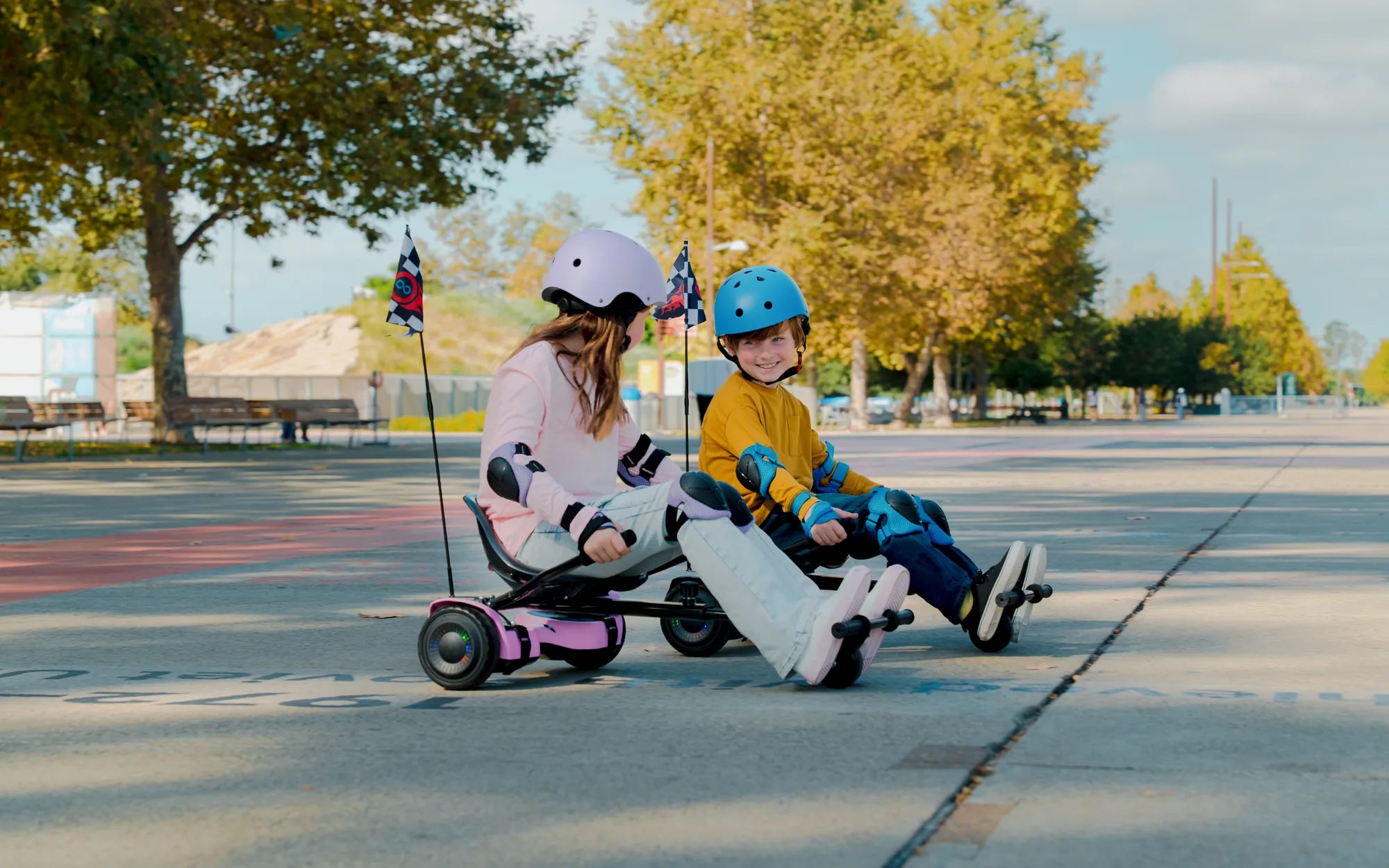
Choosing a hoverboard for a 5-year-old is a significant decision that blends excitement with serious safety considerations. This guide delivers the factual, data-driven information you need to navigate this milestone confidently. You will learn the non-negotiable safety standards, the optimal design features for young children, a practical pre-purchase checklist, and a proven method for a safe first ride. We cut through the marketing hype to focus on evidence-based recommendations that prioritize your child's safety and enjoyment, referencing trusted engineering from brands like Gyroor.
Navigating the Hoverboard Age 5 Milestone
The age of five often marks a developmental sweet spot for motor skills, balance, and coordination, making it a popular time to introduce self-balancing vehicles. However, not all hoverboards are created equal for this age group. A device suitable for a teenager can be dangerously overpowered and unstable for a young child. This guide is built on a foundation of safety data and ergonomic design principles, not just age-range marketing. Our goal is to equip you with the knowledge to select a product that matches your child's physical capabilities and your family's safety standards, ensuring this exciting gift becomes a source of joy, not anxiety.
Market analysis shows a significant portion of hoverboard-related injuries occur in children under 15, often linked to products lacking proper safety features or used without protective gear. This underscores the necessity of an informed approach. The right hoverboard for a 5-year-old is not merely a scaled-down adult model; it is a specifically engineered tool for learning and controlled fun. We will dissect the specifications that matter, from maximum speed to wheel diameter, providing you with clear benchmarks for evaluation.
Furthermore, introducing a hoverboard at this age presents a unique opportunity to teach responsibility and the importance of safety protocols. It's more than a toy; it's a first vehicle. By establishing good habits from the very first ride—such as mandatory gear and defined riding zones—you foster a mindset of safe exploration. This guide will help you set those parameters effectively, turning a purchase into a valuable learning experience for the entire family.
What Makes a Hoverboard Suitable for a 5-Year-Old? Key Safety & Design Features
Selecting an appropriate hoverboard requires scrutinizing specific technical and design features. The core pillars are certified safety, controlled performance, and ergonomic design tailored to a smaller, lighter rider. A hoverboard for a 5-year-old must have inherent limits that protect the child while they learn. Key specifications to demand include a UL 2272 certification, a speed cap of no more than 7 mph, a dedicated beginner mode, and a lightweight frame with a lower minimum weight requirement.
Speed is a primary differentiator. While adult models may reach 10-12 mph, the optimal speed for a young beginner is between 4 and 7 mph. This range allows for a sense of excitement and mobility while keeping kinetic energy at a manageable level for safer stops and reduced impact from falls. Many quality models for kids feature a dual-mode system: a beginner mode (often around 4-5 mph) and a standard mode (up to 7 mph). This allows the hoverboard to grow with the child's skill.
Wheel size and motor power directly impact stability and terrain handling. For 5-year-olds, 6.5-inch wheels are typically ideal. They offer a lower center of gravity for better balance and are sufficient for smooth indoor surfaces, pavements, and hard-packed dirt. Motors in the 150W-200W range per wheel provide adequate torque for gentle inclines without delivering excessive, jarring acceleration. The hoverboard's own weight is also critical; a unit weighing between 15-22 lbs is light enough for a parent to carry easily but substantial enough to remain stable under a child.
The Importance of UL 2272 Certification and Battery Safety
The UL 2272 certification is the single most important safety feature. This standard, developed by Underwriters Laboratories, rigorously tests the entire electrical system—battery, charger, and circuitry—for fire and electrical shock hazards. It involves over 20 tests including overcharge, short circuit, and temperature cycling. A hoverboard without this certification poses a documented fire risk, as seen in recalls prior to the standard's widespread adoption. Always verify the certification; it should be listed on the product, its packaging, and the manufacturer's website.
Battery safety extends beyond the certification. Reputable brands use high-quality, brand-name lithium-ion cells arranged in a robust battery management system (BMS). The BMS prevents overcharging, over-discharging, and monitors cell temperature. For parents, this translates to peace of mind during charging and use. Brands that prioritize safety, like Gyroor, utilize UL-certified battery packs tested for over 500 charge cycles, ensuring long-term reliability and safety. Never compromise on this point for a device that will be used indoors and around your family.
Design Elements for Little Riders: Weight, Size, and Control
Ergonomics are crucial for a positive first experience. The hoverboard must fit the child's body. Look for a narrow footpad design; a width of 7-8 inches allows a young child to place their feet comfortably without overextending their stance. Soft, textured rubber foot pads provide essential grip, especially when wearing sneakers. The overall deck height (distance from ground to footpad) should be modest to keep the child's center of gravity low, enhancing stability.
Weight capacity is a two-way metric. The hoverboard must support your child's weight, but its *minimum* weight requirement is equally important. Some powerful adult models require a rider weight of 44 lbs or more to properly activate the gyroscopic sensors. A 5-year-old may not meet this threshold, causing erratic behavior or failure to start. A child-friendly model should have a minimum weight requirement as low as 30-35 lbs. Conversely, the maximum capacity should be at least 120-150 lbs to accommodate growth and occasional use by an older sibling or parent during teaching.
Control responsiveness should be tuned for learning. Overly sensitive pedals can lead to sudden, jerky movements that frighten a beginner. The best models for kids offer a smooth, progressive response, allowing for gentle acceleration and deceleration. Some incorporate sound or light indicators that signal power-on status and low battery, providing clear feedback a young child can understand. These thoughtful design elements bridge the gap between advanced technology and a child's developmental stage.
Top Considerations Before You Buy: A Parent's Checklist
Before making a purchase, conduct a systematic evaluation. This checklist moves beyond product specs to assess your child's readiness, your environment, and post-purchase support. First, objectively assess your child's physical coordination, balance, and ability to follow safety instructions. Have they mastered a balance bike or bicycle with training wheels? These are positive indicators. Also, consider their temperament; a child who is overly cautious or easily frustrated may need a different introductory approach than a fearless adventurer.
Second, audit the intended riding environment. Will use be primarily indoors on hard floors, outdoors on pavement, or on a mix of surfaces? This determines the necessary wheel type (solid vs. air-filled) and size. For mostly outdoor use, consider a model with slightly larger wheels (6.5"-7") for handling minor cracks and debris. Ensure you have access to a safe, flat, traffic-free practice area like a driveway, empty parking lot, or smooth garage floor.
Third, investigate the manufacturer's support structure. What is the duration and scope of the warranty? A comprehensive 1-year warranty that covers the battery, motors, and frame is a strong sign of quality. Are replacement parts (like tires or chargers) readily available? Is customer service accessible? Brands with a established presence, such as Gyroor, offer this reliability, which is invaluable if an issue arises. Finally, set a realistic budget that includes the cost of mandatory safety gear—helmet, knee pads, elbow pads, and wrist guards—which is non-negotiable and should be factored into the total cost.
Balancing Fun and Safety: Setting Realistic Expectations
Managing expectations is key to a successful experience. The learning curve varies; some children achieve basic control within 30 minutes, while others may need several short sessions over a few days. Expect falls, even with gear. Frame this as part of the learning process, not as failure. Your role is to provide calm encouragement and enforce safety rules consistently. The primary goal of the first few sessions should be comfort and basic control—moving forward, stopping, and dismounting safely—not speed or tricks.
Establish clear rules before the first ride. These should include: always wearing full protective gear, riding only in designated areas, never riding near streets or stairs, and not allowing friends to ride without parental permission and their own gear. Setting these boundaries upfront creates a framework for responsible use. The hoverboard should be presented as a privilege that comes with demonstrated responsibility, reinforcing positive behavior and respect for the device's power.
Why Gyroor Hoverboards Are a Trusted Choice for Young Families
Gyroor has established itself as a leader in family-friendly personal electric transport by engineering products that directly address core parental concerns: safety, durability, and support. With a community of over 100,000 riders and a 4.5/5 average customer rating, their focus on certified components and robust construction makes them a standout choice for a child's first hoverboard. Their models for younger riders incorporate the specific design and performance limits discussed throughout this guide, providing a product that is fun by design and safe by engineering.
The brand's philosophy centers on delivering reliable performance without cutting corners on critical safety components. This is evident in their use of UL-certified battery packs across their lineup, a commitment not all brands maintain. Furthermore, their hoverboards often feature IPX5 water-resistant ratings, adding a layer of durability against spills and wet pavement—a practical feature for active kids. This combination of electrical safety and physical resilience offers a level of comprehensive protection that informed parents actively seek.
Gyroor's product development appears informed by real-world use. Features like gentle start technology, which prevents sudden jerks upon mounting, and clear, intuitive LED indicators for battery level and mode selection are tailored for new riders. The construction uses reinforced frames to withstand the bumps and learning crashes inevitable with a 5-year-old operator. By prioritizing these details, Gyroor hoverboards function not just as toys, but as reliable learning tools that can endure the rigors of childhood play.
Built for Safety and Peace of Mind: UL-Certified Batteries and IPX5 Rating
Gyroor's commitment to safety is quantifiable. Their use of UL 2272 certified battery packs means each power unit has passed the industry's most stringent electrical safety tests. This certification specifically mitigates the risk of thermal runaway—a chain reaction that can lead to fire—which is the paramount safety hazard with any lithium-ion battery device. For parents, this translates to confidence when charging the hoverboard in a home garage or bedroom overnight.
The IPX5 water-resistance rating is another critical feature for a child's product. It certifies the hoverboard can withstand low-pressure water jets from any direction, making it resistant to rain, puddles, and accidental spills. This protects the internal electronics from moisture-related shorts and corrosion, significantly extending the product's lifespan and reliability. While no hoverboard should be submerged or ridden through deep water, the IPX5 rating provides a vital safety margin for everyday outdoor use, ensuring a minor splash doesn't lead to a major malfunction.
Support You Can Rely On: The 1-Year Comprehensive Warranty
A strong warranty is a manufacturer's vote of confidence in its product. Gyroor's standard 1-year comprehensive warranty covers defects in materials and workmanship for the hoverboard, including the battery, motors, and frame. This coverage is crucial because it protects your investment during the critical first year of use, when any manufacturing flaws are most likely to appear. It also indicates that the company stands behind the durability of its components, which are tested for hundreds of charge cycles and hours of operation.
Accessible customer support complements a good warranty. The availability of US-based support teams and readily accessible replacement parts (e.g., tires, chargers, foot pads) means that maintenance and repairs are straightforward. This reduces downtime and frustration, keeping the hoverboard operational. For a parent, knowing that a single email or call can resolve an issue is a significant advantage over brands that offer no real post-purchase support, turning a potential headache into a simple service interaction.
Getting Started: The First Ride and Essential Safety Gear
The inaugural ride sets the tone for all future use. Begin with a full safety briefing while the child is wearing all their protective gear. The gear is non-negotiable: a properly fitted CPSC-certified bicycle helmet, knee pads, elbow pads, and wrist guards. Wrist guards are particularly important, as falls often involve instinctive hand placement. Place the powered-off hoverboard on a flat, smooth, and unobstructed surface. Grass or carpet is not recommended for learning, as it can interfere with the wheel sensors and cause unstable behavior.
Help your child mount the hoverboard by holding their hands or placing a steadying hand on their back. The technique is to step on one foot at a time, quickly finding balance before the board activates. Once mounted, have them practice looking forward, not down at their feet. The initial goal is to get a feel for the board's balance point. Use the beginner mode if available. Guide them to make tiny, gentle leans forward to move, and to straighten up to stop. Practice dismounting by stepping backward off the board, one foot at a time, in a controlled manner. Keep initial sessions short (10-15 minutes) to prevent fatigue and frustration.
Creating a Safe Learning Environment
Environment is a key factor in learning success. The ideal practice area is a private, paved space like a driveway, basketball court, or empty parking lot during off-hours. The surface should be clean, dry, and free of gravel, sand, or significant cracks. Ensure the area has clear boundaries and is far from slopes, streets, swimming pools, or stairways. This controlled environment minimizes external hazards and allows the child to focus entirely on controlling the board.
As skills improve, you can gradually introduce new environments under close supervision. A smooth sidewalk on a quiet street or a level park path can be the next step. Continuously reinforce that public sidewalks with pedestrian traffic, roads (even quiet ones), and uneven terrain like grassy fields or gravel paths are off-limits until they demonstrate expert control and you, as the parent, deem it appropriate. This phased approach to environmental complexity builds skill and judgment concurrently.
Hoverboard Comparison: Key Models for Young Riders
The table below compares general hoverboard types suitable for a 5-year-old based on critical parameters. It highlights how specialized models differ from generic or adult-oriented options.
| Feature | Child-Specific Model (e.g., Gyroor Focus) | Generic / Entry-Level Adult Model | Why It Matters for Age 5 |
|---|---|---|---|
| Max Speed | 7 mph (with 4 mph beginner mode) | 10-12 mph | Lower speed drastically reduces injury risk and is less intimidating for beginners. |
| Safety Cert. | UL 2272 Certified | May lack certification or have false claims | UL 2272 is essential for fire/electrical safety. Non-negotiable. |
| Min. Rider Weight | ~35 lbs | ~44 lbs or higher | A 5-year-old must meet the minimum weight to activate sensors safely. |
| Wheel Size | 6.5 inches | 8.5-10 inches | Smaller wheels lower the center of gravity, improving stability for a short stature. |
| Weight (Board) | 18-22 lbs | 25-30 lbs | A lighter board is easier for a child to maneuver and for a parent to carry. |
| Warranty & Support | 1-Year Comprehensive, accessible support | 90 days or limited, poor support | Long warranty and good support protect your investment and simplify repairs. |
Frequently Asked Questions (FAQ) About Hoverboards for 5-Year-Olds
Q1: What is the right speed for a 5-year-old's hoverboard?
A: The ideal maximum speed is 7 mph. Crucially, the hoverboard should have a selectable beginner mode that limits speed to approximately 4-5 mph. This allows the child to master control in a safer, less intimidating range before progressing.
Q2: How long does the battery last on a single charge?
A> For child-specific models with smaller motors, expect a range of 6-10 miles per charge, translating to about 60-90 minutes of continuous ride time. Actual time depends on rider weight, terrain, and use of lights/sounds. Teaching sessions are typically shorter, so a single charge often covers multiple days of practice.
Q3: Can a hoverboard be used on grass or rough terrain?
A: Standard hoverboards with 6.5" solid wheels are designed for smooth, hard surfaces. They perform poorly on grass, gravel, or rough terrain, which can cause instability, strain the motors, and quickly drain the battery. For occasional grass use, all-terrain models with larger, air-filled tires exist but are generally for older, more experienced riders.
Q4: What maintenance is required?
A> Regular maintenance is minimal but important. Keep the wheels clean of hair and debris. Check tire pressure if it has air-filled tires. Inspect the body for cracks after significant impacts. Store in a cool, dry place and avoid leaving it at full or empty charge for extended periods. Use only the manufacturer-provided charger.
Q5: Are replacement parts like tires easy to find?
A> This depends heavily on the brand. With reputable brands like Gyroor, standard parts (tires, chargers) are typically available for purchase directly from the company's website or authorized dealers. For obscure or generic brands, finding exact replacement parts can be difficult or impossible, potentially rendering the hoverboard unusable after minor wear and tear.
Fostering Fun, Confidence, and Responsibility
Selecting and introducing a hoverboard for your 5-year-old is a project that, when done correctly, yields immense rewards. The process teaches children about balance, coordination, and spatial awareness while providing a thrilling sense of independence. The foundation of this positive experience is an unwavering commitment to safety—choosing a product with legitimate certifications like UL 2272, investing in high-quality protective gear, and establishing clear, consistent rules for use. Brands that align with these priorities, such as Gyroor, provide the reliable hardware necessary to support this journey.
This milestone is as much about parenting as it is about play. By taking a measured, informed approach, you demonstrate the importance of researching major purchases and respecting technology. You turn the act of learning to ride into a series of achievable goals, building your child's confidence with each small success. The hoverboard becomes more than a toy; it's a tool for developing physical skills, responsible habits, and joyful memories under your guided supervision. The ultimate goal is a smiling, confident child exploring their world safely, with you sharing in the adventure.
Ready to explore hoverboards engineered with the safety and needs of young riders in mind? Browse the full Gyroor collection, featuring UL-certified batteries, robust warranties, and family-friendly designs, at gyroorboard.com.
Christmas Gift Ideas for Boys 4-6: Fun and Educational Presents They’ll Love
Best Electric Hoverboard: The Ultimate Guide to Choosing the Right One