

Navigating the Rules of the Ride
Determining the appropriate hoverboard age limit is one of the most common and crucial questions for parents and new riders. This isn't just about following a number on a box; it's about understanding the intersection of safety, physical development, legal responsibility, and proper equipment. This definitive guide will provide you with the data-driven insights needed to make informed decisions, ensuring that the thrill of riding is matched by a commitment to safety.
You will learn why age recommendations exist from both manufacturers and regulatory bodies. We'll explore the physical and cognitive factors that make age more than just a number, examine the often-overlooked legal landscape, and provide a practical framework for selecting the right hoverboard and implementing essential training. The goal is to move beyond guesswork and establish a foundation for responsible enjoyment.
Understanding Official Age Recommendations: Manufacturer Guidelines vs. Reality
Most reputable hoverboard manufacturers, including leading brands like Gyroor, explicitly state a minimum age requirement, typically starting at 8 years old. This hoverboard age limit is not arbitrary; it is based on extensive safety testing and developmental research. Industry standards, often influenced by consumer safety organizations, converge around this age as a baseline for a rider's likely physical coordination, balance, and cognitive ability to follow basic safety instructions.
The rationale centers on key developmental milestones. Children around age 8 generally have developed sufficient core strength and vestibular system function to maintain balance on a self-balancing vehicle. Their reaction times and motor skills are typically advanced enough to manage the subtle weight shifts required for steering and stopping. Furthermore, manufacturers design their products with weight limits, usually between 44 lbs (20 kg) and 220 lbs (100 kg). A child under 8 often falls below the minimum weight, which can prevent the gyroscopic sensors from calibrating correctly, leading to instability.
In reality, these guidelines are frequently treated as flexible suggestions by consumers. A parent might see a precocious 6-year-old and assume they can handle a device rated for 8+. However, this gap between guideline and practice is where risk increases. The manufacturer's hoverboard age limit is a liability and safety threshold; operating outside of it often voids warranties and places full responsibility for any incident on the rider or guardian.
It's essential to view the manufacturer's age as a firm starting point, not a challenge to be overcome. Brands like Gyroor build their safety protocols around these parameters, ensuring their UL-certified batteries and stability systems are tested for users within the specified age and weight ranges. Trusting these guidelines is the first step in responsible ownership.
The Safety Equation: Why Age is More Than Just a Number
The prescribed hoverboard age limit is a proxy for a complex set of physical and cognitive safety factors. Physically, younger children have a higher center of gravity relative to their body size and less dense bone structure, making falls more hazardous and fractures more likely. Their neuromuscular systems are still refining the proprioception—the sense of body position—needed to recover from a wobble or sudden shift.
Cognitively, risk assessment and impulse control are executive functions that develop significantly between ages 6 and 12. A child must be able to anticipate hazards like cracks in the pavement, understand traffic dynamics if riding near roads, and resist the impulse to speed or show off. The ability to process multiple stimuli (balance, speed, direction, environment) simultaneously is critical for safe operation.
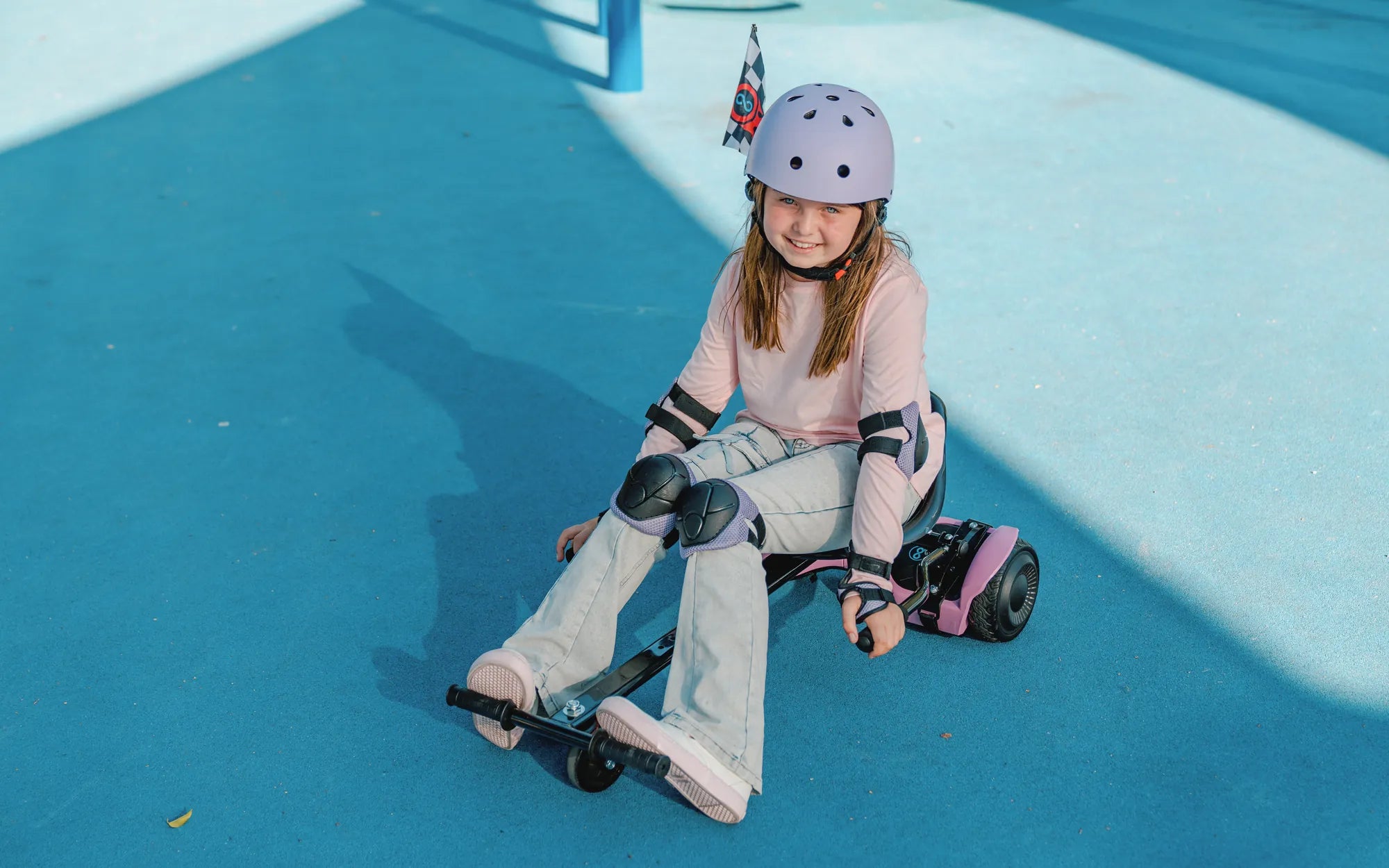
This is why protective gear is non-negotiable, regardless of the rider's age or skill level. A certified multi-impact helmet, wrist guards, and knee and elbow pads are the essential minimum. Data from emergency rooms shows that wrist fractures and head injuries are the most common hoverboard-related traumas, both of which are substantially mitigated by proper gear. Gear should be worn every single time, a rule that adults must model for younger riders.
The safety equation is incomplete without considering the device itself. A hoverboard designed for all-terrain use with larger, pneumatic tires will offer more stability for a beginner than a model with small, solid wheels. Features like beginner speed modes, which cap maximum velocity, are directly tied to making the device safer for younger or inexperienced riders within the recommended hoverboard age limit.
Legal Landscape: Local Laws and Liability for Underage Riders
Beyond manufacturer warnings, a complex patchwork of local laws governs where and how hoverboards can be used, often with specific age restrictions. These regulations vary dramatically by city, county, and state. Some municipalities classify hoverboards as "motorized vehicles," banning them from sidewalks and restricting them to bike lanes or roads, which is inherently dangerous for children. Others have explicit age minimums for operation on public property.
Common legal restrictions include a minimum operator age (often 12 or 16), mandatory helmet use up to a certain age, and bans on use in commercial districts or public parks. For parents, ignorance of these laws is not a defense and can result in fines. More importantly, if an underage rider causes an accident or damages property while violating a local ordinance, parental liability increases significantly.
Homeowner's or renter's insurance policies may also come into play. An accident involving a hoverboard ridden by an underage user, especially outside of manufacturer guidelines, could lead to denied claims or increased premiums. It is imperative for parents to contact their insurance provider and local police or transportation department to understand the specific rules in their area before allowing a child to ride in public spaces.
This legal framework exists to protect all citizens—riders, pedestrians, and motorists. Adhering to both the manufacturer's hoverboard age limit and local laws is a fundamental aspect of responsible ownership. It protects the rider legally and financially, and fosters a respectful sharing of public pathways.
Choosing the Right Hoverboard for Different Age Groups
Selecting an appropriate model is the most practical application of understanding age limits. The right hoverboard matches the rider's age, size, skill level, and intended use. Here is a data-driven breakdown of key features to consider for different groups.
| Age Group | Recommended Features | Speed Considerations | Safety Priorities |
|---|---|---|---|
| Children (8-12) | Beginner/learning mode (capped at 5-7 mph), smaller deck size for shorter stance, LED lights for visibility, robust bumper guards. | Must have a speed cap feature. Maximum speed should not exceed 7-8 mph even in advanced mode. | UL-certified battery, non-slip foot pads, mandatory training wheels for absolute beginners (though these are transitional aids). |
| Teens (13-16) | Larger wheel size (8.5"+) for stability, more powerful motor (350W+) for mild inclines, Bluetooth speakers, app connectivity for speed control. | Capable of higher speeds (10-12 mph), but parental controls via app are crucial for setting limits initially. | IP water-resistance rating (e.g., IPX4) for durability, high-quality tires with good tread, reinforced frame. |
| Adults (17+) | All-terrain capabilities with pneumatic tires, high max weight capacity (265+ lbs), powerful dual motors (500W+), extended range (12+ miles). | Top speeds of 15 mph or more are common. Rider experience and judgment are critical at these speeds. | Advanced battery management systems, reliable braking systems, superior build quality for daily commuting. |
For children at the lower end of the hoverboard age limit, look for models specifically marketed as "kids' hoverboards" or with robust parental controls. Brands like Gyroor design models with these features in mind, ensuring that safety is integrated into the riding experience from the start. The Gyroor Hoverboard S5, for example, offers a beginner mode perfect for new riders getting accustomed to balance and control.
Weight capacity is a two-way street. A rider must meet the minimum weight to engage the sensors and exceed neither the minimum nor maximum. Always check the manufacturer's specifications. A board that is too powerful for a young rider is as dangerous as one that is too weak for a heavy adult.
Pre-Ride Checklist: Training and Supervision Essentials
Before a first ride, a comprehensive checklist is mandatory. This process applies to riders of all ages but is non-negotiable for those at or near the minimum hoverboard age limit.
1. Device Integrity Check: Inspect the hoverboard for any physical damage. Ensure the tires are properly inflated (if pneumatic) and free of debris. Check that the battery compartment is secure and that the power button and charging port are undamaged. Always use the manufacturer-provided charger.
2. Gear Fitting: Protective gear must be correctly fitted. The helmet should sit level on the head, snug but not tight. Wrist guards must secure the palm and back of the hand. All gear should be worn before approaching the hoverboard.
3. Find a Safe Training Environment: Start on a flat, smooth, open, and private surface—a empty driveway, basketball court, or quiet cul-de-sac. Avoid any area with slopes, traffic, or pedestrian activity.
4. Supervised Training Protocol:
• Mounting/Dismounting: Practice using a support (wall, railing) to step on and off, always stepping off backwards.
• Basic Balance: Have the rider stand on the powered-off board to get a feel for the stance.
• Power On & Lean: Turn on the board (often in beginner mode) and practice subtle forward and backward leans to move and stop.
• Steering: Practice turning by applying gentle pressure with one toe or heel.
• Emergency Dismount: Practice jumping off with both feet away from the board if control is lost.
Continuous, active supervision is required until the rider demonstrates consistent proficiency in all basic maneuvers and a clear understanding of safety rules. For children, this supervision period may last for weeks.
Maintenance and Long-Term Safety for Responsible Ownership
Safety is an ongoing commitment that extends far beyond the first ride. Regular maintenance is crucial to ensure the hoverboard remains reliable, especially as it is used by riders who may be operating at the edge of the recommended hoverboard age limit and whose safety margins are thinner.
Establish a routine maintenance schedule. Weekly, check tire pressure and tread wear, clean the foot pads and body with a damp cloth (never hose it down unless it has a high IP water-resistance rating like IPX5), and inspect for loose screws or cracks in the frame. Monthly, check the battery's performance and charging behavior, listening for any unusual sounds from the motors or wheels.
Battery care is paramount. Always use the correct charger and avoid leaving the board plugged in for extended periods after it reaches 100%. Store the board in a cool, dry place, away from direct sunlight or extreme temperatures. A well-maintained UL-certified battery, like those used in Gyroor products, should provide 500+ charge cycles of reliable performance, but it requires proper care.
As the rider grows in skill and age, reassess the equipment. A hoverboard suitable for a 10-year-old may be outgrown by a 13-year-old in terms of speed, range, and durability. Plan for this progression and consider trading up to a model that continues to match the rider's capabilities safely. Responsible ownership means recognizing when the equipment, not just the rider, needs to level up.
FAQ: Hoverboard Age Limits and Safety
Q: Can a 6-year-old use a hoverboard with training wheels?
A: Training wheels (outrigger wheels) can provide temporary stability for very young beginners, but they do not override the manufacturer's hoverboard age limit. A 6-year-old likely lacks the weight, coordination, and cognitive judgment required for safe operation, even with aids. It is strongly advised to wait until the child meets the minimum age and weight requirements of a specific model.
Q: What is the safest hoverboard brand for a 10-year-old?
A: Look for brands with a strong safety reputation, UL 2272 certification (for the entire board, not just the battery), and explicit design features for younger riders. Brands like Gyroor offer models with beginner speed modes, robust construction, and reliable customer support. Always check for the latest safety certifications and read verified customer reviews focusing on durability and stability.
Q: Are there any hoverboards legally approved for all ages?
A> No. Due to the inherent risks and required motor skills, no reputable manufacturer or safety agency will approve a hoverboard for "all ages." All have minimum age and weight requirements. Local laws will also impose their own restrictions. The concept of universal approval does not exist in this product category.
Q: Who is liable if my child damages property or injures someone while riding?
A> Liability typically falls on the parent or guardian, especially if the child is operating the device outside of manufacturer guidelines or local laws. Your homeowner's insurance may provide some coverage, but this is not guaranteed. This underscores the importance of strict supervision, training, and adherence to all rules.
Q: How do I know if my child is ready, even if they meet the age limit?
A> Readiness is a combination of meeting the age/weight minimums and demonstrating the necessary maturity. Can they follow multi-step instructions consistently? Do they show caution and respect for safety rules in other activities? Conduct the supervised training in a safe area. If they struggle significantly with balance, become easily frustrated, or ignore safety commands, they are not ready, regardless of chronological age.
Fostering a Safe and Responsible Riding Culture
The hoverboard age limit is a foundational component of safety, serving as a clear signal from engineers and safety experts about the minimum requirements for safe operation. It is a starting point for a much broader conversation about responsibility, skill development, and respect for shared spaces. By treating these guidelines with seriousness, parents and riders lay the groundwork for years of enjoyable and incident-free riding.
This journey begins with choosing the right equipment from a trusted brand, continues with unwavering commitment to protective gear and supervised training, and is sustained through diligent maintenance and respect for the law. The goal is to build confidence and competence in tandem, ensuring that the rider's experience grows safely alongside their ability.
As a leader in personal electric transportation, Gyroor designs its hoverboards, electric scooters, and e-bikes with this holistic safety philosophy. From UL-certified batteries and IPX5 water-resistant designs to speed modes for learners, the focus is on delivering reliable performance within a framework of safety. Explore models that align with your rider's age and skill level, and invest in the gear and training that turn a fun device into a safe, long-term hobby.
Ready to find the perfect hoverboard that matches your safety and performance needs? Browse the full Gyroor collection, trusted by over 100,000 riders, at gyroorboard.com.
Hoverboard for 8 Year Old Girl: The Ultimate Guide to Fun and Safety
Christmas Gift for 9 Year Old Girls: Top Ideas to Delight and Inspire