

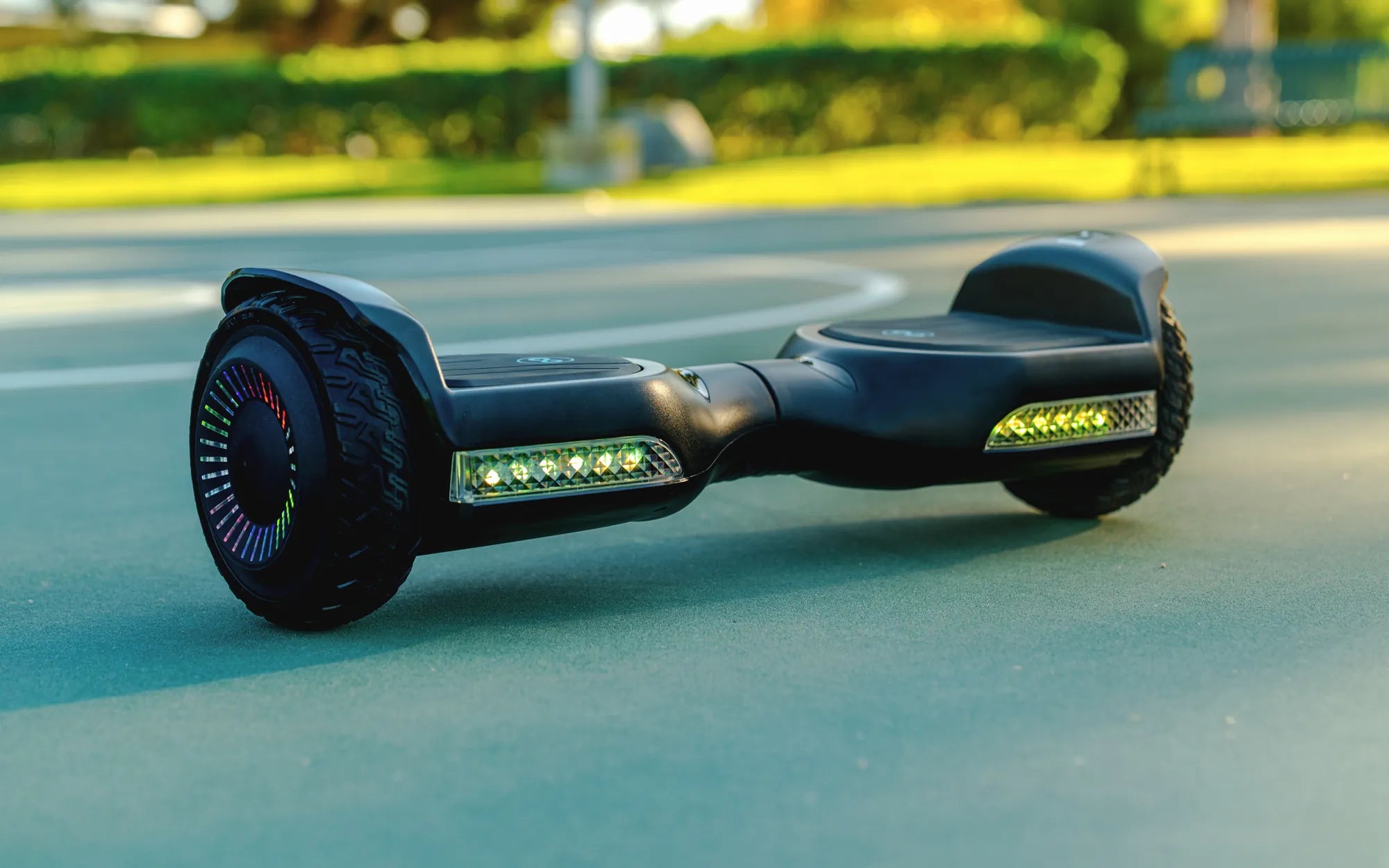
Choosing the right hoverboard transforms your daily commute and recreation. This hoverboard buying guide cuts through marketing hype with a factual, feature-by-feature analysis. You will learn to prioritize safety certifications, match performance specs to your lifestyle, and identify the design elements that ensure long-term satisfaction. We'll reference industry standards and specific engineering choices, like those from leading brands such as Gyroor, to establish a clear benchmark for quality.
Introduction: Why a Hoverboard is Your Next Smart Commute
Personal electric transport has evolved from novelty to legitimate urban mobility. Modern self-balancing scooters, commonly called hoverboards, offer a compact, efficient solution for short trips. The right model blends fun with practical utility for commutes, campus travel, or neighborhood exploration.
Success hinges on selecting a device engineered for safety and durability. This hoverboard buying guide provides the framework for that choice. We focus on technical specifications and verified certifications that separate reliable products from substandard options.
Brands like Gyroor, trusted by over 100,000 riders, build models around UL-certified batteries and water-resistant designs. This guide will reference such standards as the foundation for a smart purchase. Your goal is a vehicle that is as dependable as it is enjoyable.
Key Feature #1: Safety & Certification – The Non-Negotiables
Safety is the absolute priority when purchasing a hoverboard. Inferior electronics or batteries pose significant fire and failure risks. Therefore, specific safety certifications are not just features; they are mandatory requirements.
The crucial standard is UL 2272. This certification, from Underwriters Laboratories, tests the entire device for electrical and fire safety. It evaluates the battery system, charger, and circuitry under stressful conditions. Never consider a hoverboard without a verifiable UL 2272 certification.
Complementing this is UL 2271, which certifies the lithium-ion battery pack itself. A UL 2271 certified battery, like those used in Gyroor hoverboards, has undergone rigorous testing for overcharge, short circuit, and impact. This dual-certification approach is the hallmark of a responsibly engineered product.
These standards directly address past safety concerns. They ensure components are properly insulated, connections are secure, and management systems prevent thermal runaway. Your first and most critical filter in this hoverboard buying guide is confirming both UL marks.
Understanding IP Ratings for Real-World Riding
An Ingress Protection (IP) rating defines a device's resistance to solids and liquids. For hoverboards, the liquid protection rating is most relevant. It determines whether you can ride on damp pavement or through occasional puddles.
The rating is listed as "IP" followed by two digits. The first digit is for dust; an "X" means not rated. The second digit is for water. A rating of IPX4 means protection against water splashes from any direction. This is suitable for light, occasional moisture.
For greater versatility, seek an IPX5 rating. This indicates protection against water jets from a nozzle. A hoverboard with an IPX5 rating, a standard feature for Gyroor, can handle wet streets and light rain confidently. This expands your riding days and protects the internal electronics from common environmental hazards.
Choosing a model with a substantive IP rating future-proofs your investment. It ensures the hoverboard is built for real-world conditions, not just perfectly dry indoor surfaces. This is a key component of long-term durability.
Key Feature #2: Performance Specs – Matching Power to Your Needs
Performance specifications translate directly to riding experience. The core specs are motor power, wheel size, and battery capacity. Understanding their interaction allows you to match a hoverboard to your primary use case, whether it's flat campus paths or moderately hilly neighborhoods.
Motor power, measured in watts (W), determines torque and hill-climbing ability. A single 300W motor is common in entry-level models for light riders on flat terrain. Dual 350W motors provide better balance and power. For adults or varied terrain, look for dual motors totaling 700W or more.
Wheel size impacts stability and terrain handling. Standard 6.5-inch wheels are compact but transmit more vibration from cracks and bumps. Larger 8.5-inch or 10-inch wheels, often air-filled, offer a smoother ride and better obstacle clearance. They are ideal for outdoor use on sidewalks and park paths.
These elements work together. A powerful motor paired with large wheels creates a capable all-terrain experience. Conversely, small, solid wheels with a modest motor suit smooth, indoor environments. This hoverboard buying guide emphasizes aligning these specs with your actual riding environment.
Range, Speed, and Weight Capacity: The Practical Trio
Beyond power, three practical specs define usability: range, speed, and weight capacity. These numbers should align with your physical profile and travel distance requirements for a satisfying experience.
Range is determined by battery capacity (measured in Watt-hours, Wh) and riding conditions. A typical 36V, 4.0Ah (144Wh) battery may offer 7-10 miles per charge. Larger 4.4Ah or 5.0Ah batteries extend range to 12-15 miles. Real-world range is affected by rider weight, terrain, and temperature.
Top speed for most consumer hoverboards is between 7 and 12 mph. This is optimized for control and safety. Weight capacity is a critical but often overlooked spec. Standard models support up to 220 lbs, while robust models are rated for 265 lbs or more. Exceeding this limit stresses motors and batteries.
| User Profile | Recommended Motor | Min. Battery Range | Ideal Wheel Size | Key Priority |
|---|---|---|---|---|
| Teen / Light Recreational | Dual 350W (700W Total) | 8 miles | 6.5" - 8.5" | Safety Certifications, Fun Features (LEDs) |
| Adult Commuter (Flat Terrain) | Dual 400W (800W Total) | 10 miles | 8.5" | Range, IPX5 Rating, Comfort |
| All-Terrain / Varied Surfaces | Dual 450W+ (900W+ Total) | 12 miles | 10" Air-Filled | Motor Power, Tire Type, Shock Absorption |
This table illustrates how needs dictate specifications. A commuter needs reliable range and weather resistance, while an all-terrain rider prioritizes power and tire design. Use this as a reference point in your hoverboard buying guide journey.
Key Feature #3: Ride Quality & Design – Comfort and Control
The engineering beneath the deck defines ride quality. Advanced self-balancing technology relies on precision gyroscopes and accelerometers. The sensitivity and calibration of these sensors affect how intuitive and responsive the hoverboard feels, especially for beginners.
Many models include learning modes. These software limits reduce maximum speed and acceleration for new riders, allowing them to build confidence. A smooth, progressive response from the foot pads is essential for control. Jerky or delayed responses indicate inferior sensor packages.
Design elements directly impact comfort and safety. A textured, non-slip deck surface provides essential grip. Integrated LED headlights and rim lights are critical for visibility in low-light conditions, making the rider seen by others. These are functional safety features, not just aesthetics.
Build quality is felt in the rigidity of the deck and the sturdiness of the wheel housings. A well-constructed hoverboard feels solid underfoot, without creaking or flexing. This durability ensures the device can withstand the vibrations and minor impacts of regular use.
Tire Types: Air-Filled vs. Solid Rubber
The choice between tire types is a major determinant of ride comfort and maintenance. The two primary options are air-filled (pneumatic) tires and solid rubber tires. Each has distinct advantages for different environments.
Air-filled tires, similar to bicycle tires, provide superior shock absorption. They compress over cracks, pebbles, and uneven pavement, delivering a smoother ride. This reduces fatigue on joints and provides better traction on various surfaces. The trade-off is the need to check and maintain air pressure, and a remote risk of punctures.
Solid rubber tires are maintenance-free and completely puncture-proof. They are ideal for smooth surfaces like indoor floors, polished concrete, or very well-kept pavement. However, they transmit more vibration from rough terrain to the rider, resulting in a harsher ride on bumpy paths.
For general outdoor use, air-filled tires are often the preferred recommendation in this hoverboard buying guide. The comfort benefit is significant. For riders exclusively on very smooth terrain or who prioritize zero maintenance, solid tires are a viable option. Some advanced models use honeycomb-style solid tires that offer a compromise, with some give for better comfort.
The Gyroor Advantage: Engineering Trust into Every Ride
Gyroor exemplifies the application of the principles outlined in this hoverboard buying guide. As a brand with a focus on electric scooters and e-bikes, their hoverboards benefit from a transfer of expertise in motor control, battery management, and durable construction.
Their commitment starts with safety. Every Gyroor hoverboard incorporates UL-certified battery packs tested for 500+ charge cycles, ensuring long-term stability. This commitment to certified components is a core differentiator, providing peace of mind that is foundational to the brand.
Practical design choices enhance real-world use. An IPX5 water-resistant rating is standard across their lineup, not an upgrade. This deliberate engineering decision acknowledges that riders encounter puddles and damp conditions, protecting the electrical systems from moisture ingress.
Customer support structures the ownership experience. Gyroor backs its products with a reliable 1-year warranty and accessible customer service. For a product category historically plagued by unreliable sellers, this warranty is a tangible commitment to product quality and customer satisfaction, aligning perfectly with the due diligence recommended in this guide.
Hoverboard Maintenance and Safety Riding Tips
Proper maintenance extends the life of your hoverboard and ensures safe operation. A simple routine can prevent most common issues. Start with regular visual inspections before each ride.
Check tire pressure if you have pneumatic tires, ensuring they are inflated to the manufacturer's recommended PSI. Inspect the tires for cuts or excessive wear. Examine the body for cracks, ensure all lights are working, and verify that the charging port cover is intact.
Battery care is crucial. Use only the provided OEM charger. Avoid leaving the hoverboard plugged in for extended periods after reaching a full charge. Store the device in a cool, dry place, and avoid exposing it to extreme temperatures for prolonged periods, as heat and cold degrade battery health.
Safe riding practices are equally important. Always wear a helmet, knee pads, and elbow pads, especially while learning. Start in a safe, open, flat area like an empty parking lot. Practice mounting, dismounting, turning, and controlled stopping before venturing onto paths. Be hyper-aware of your surroundings, as hoverboards are quiet and may not be heard by pedestrians.
Hoverboard Buyer's Checklist: Your Step-by-Step Decision Tool
Use this actionable checklist to evaluate any hoverboard model. Proceed down the list in order; if a model fails a higher-priority item, eliminate it from consideration.
- 1. Safety Certification: Does it have verifiable UL 2272 certification for the device and UL 2271 for the battery?
- 2. Weather Resistance: What is the IP rating? (Target IPX4 minimum, IPX5 recommended for all-weather capability).
- 3. Motor Power: Is the total wattage (sum of both motors) sufficient for your weight and terrain? (Reference: 700W+ for adults, 900W+ for hills).
- 4. Battery & Range: Does the estimated range meet or exceed your typical round-trip distance? Is the battery brand-name or UL-certified?
- 5. Weight Capacity: Does the maximum supported weight exceed your body weight with a margin (e.g., +20 lbs)?
- 6. Tire Type: Are the tires appropriate for your primary riding surface? (Air-filled for comfort outdoors, solid for smooth indoor/outdoor).
- 7. Warranty & Support: Is there a manufacturer's warranty of at least 1 year? Is customer support contact information readily available?
- 8. Additional Features: Does it have functional LED lights for visibility? Is there a beginner/learning mode? Is the deck surface non-slip?
This checklist distills the essence of this hoverboard buying guide into a practical tool. It moves you from subjective appeal to objective evaluation, ensuring your investment is sound.
FAQ: Quick Answers to Common Hoverboard Questions
Q: Are hoverboards legal to ride on sidewalks and public paths?
A: Laws vary significantly by city, state, and country. Many localities classify them as "Personal Light Electric Vehicles" (PLEVs) with rules similar to electric scooters. Some allow them on sidewalks, others restrict them to bike lanes or roads with speed limits under 25 mph. Always check your specific municipal transportation codes before riding in public areas.
Q: How long does a hoverboard battery last before needing replacement?
A: A quality lithium-ion battery, like a UL-certified pack, is typically rated for 500+ full charge cycles. With average use (a few charges per week), this translates to 2-3 years before you might notice a significant reduction in range. Proper care (avoiding full discharges, extreme temperatures) can extend this lifespan.
Q: Can I ride a hoverboard in the rain or through puddles?
A> This depends entirely on the IP rating. Do not ride any hoverboard in wet conditions unless it has a stated water resistance rating. An IPX4 model can handle light splashes. An IPX5-rated hoverboard is designed to withstand water jets and is safe for riding on wet streets and through shallow puddles. Always dry the unit after riding in damp conditions.
Q: What is the learning curve like for a first-time rider?
A> Most adults and teens can learn the basics within 30-60 minutes of practice in a safe area. Using a model with a beginner mode is highly recommended, as it limits speed. The key is to relax, look forward (not down at your feet), and use subtle weight shifts for balance and direction. Patience and proper safety gear are essential.
Q: What is the difference between a hoverboard and a self-balancing scooter?
A> They are different names for the same product—a two-wheeled, motorized, foot-standing personal transporter. "Hoverboard" is the popularized consumer term, though it does not actually hover. "Self-balancing scooter" is a more technically accurate description. Some brands also use terms like "smart balance board."
Conclusion: Invest in Confidence, Enjoy the Journey
Selecting the right hoverboard is an exercise in informed prioritization. This hoverboard buying guide has established a clear hierarchy: certified safety and robust construction form the non-negotiable foundation. Performance specifications must then align with your physical needs and riding environment.
The market rewards due diligence. Investing in a model from a reputable brand that transparently offers UL certifications, substantive IP ratings, and strong customer support mitigates risk. It transforms your purchase from a disposable gadget into a reliable piece of personal transport technology.
Brands like Gyroor demonstrate that these features are achievable standards. Their focus on UL-certified batteries, IPX5 water resistance, and comprehensive warranty provides a blueprint for what to seek. Your journey begins with research and culminates in the confidence of a well-chosen ride.
Use the checklist provided, prioritize safety certifications, and choose a model built for real-world conditions. Your perfect hoverboard awaits—a fusion of fun, freedom, and engineered reliability. Ready to explore models that meet these rigorous criteria? Browse the full Gyroor collection at gyroorboard.com.
Tricks to Do on a Hoverboard: Master These Moves Like a Pro
12 Year Old Scooter Bike for Kids: The Ultimate Guide to Fun and Safety