

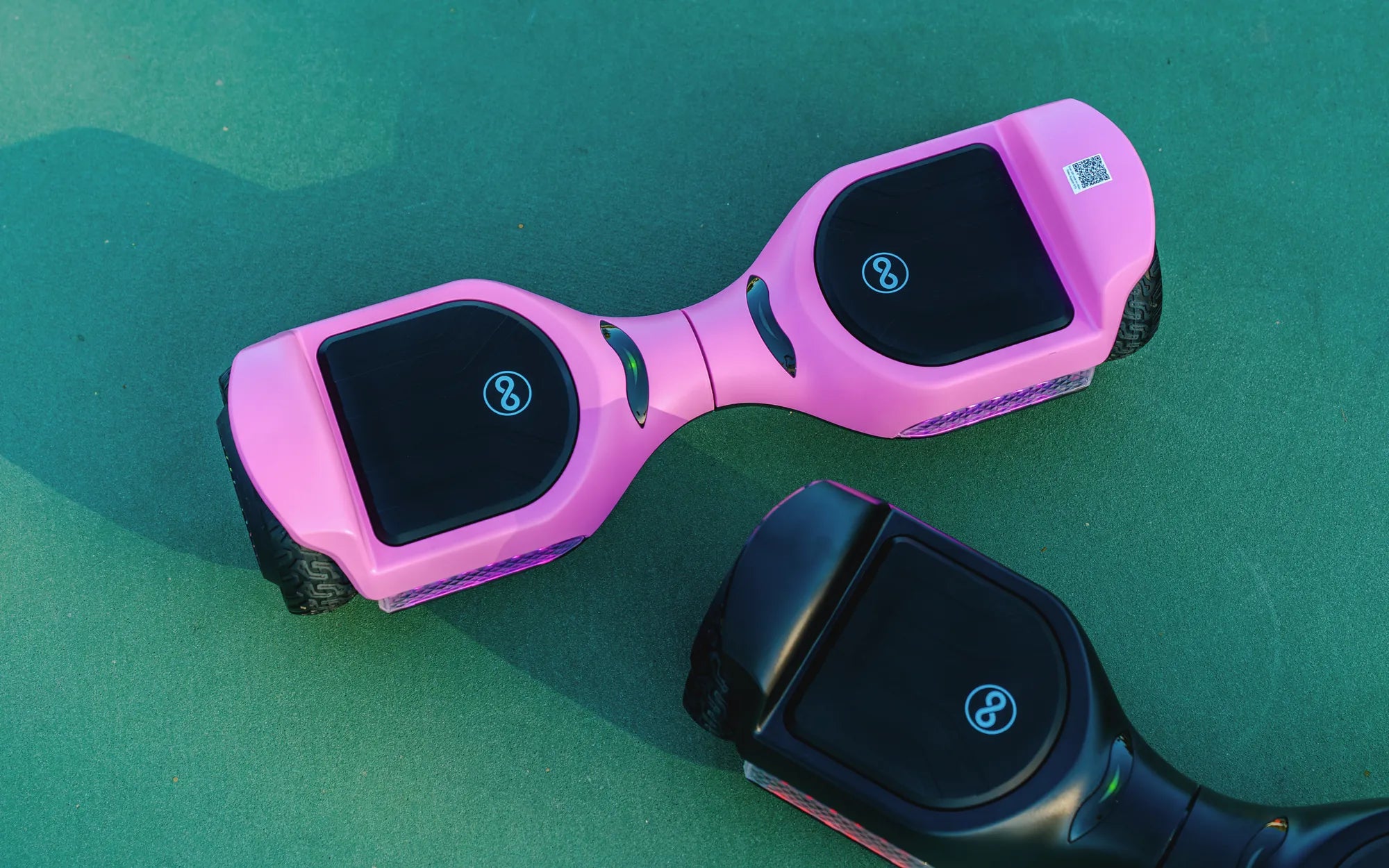
Introduction: Redefining Personal Mobility for Heavier Riders
Finding a reliable hoverboard for 300 lbs can feel like a search for a unicorn. Standard models often sputter, strain, or fail under heavier loads, leaving riders frustrated and sidelined. The good news is that personal mobility technology has evolved dramatically. Today, specifically engineered heavy-duty hoverboards offer a safe, powerful, and genuinely fun transportation solution for riders of all sizes.
This guide cuts through the marketing hype to deliver the engineering facts. You will learn exactly what makes a hoverboard capable of supporting 300+ pounds, how to identify the right model for your needs, and crucial safety practices for heavier riders. Brands like Gyroor, a leading electric scooter and e-bike manufacturer trusted by over 100,000 riders, now design models with reinforced frames and high-torque motors to meet this demand, proving that robust personal mobility is accessible to everyone.
Why Standard Hoverboards Fail at 300+ lbs: The Engineering Breakdown
Standard consumer hoverboards are typically engineered for a maximum weight capacity of 220-250 pounds. When a 300+ lbs rider uses one, several critical components are pushed beyond their design limits, leading to performance issues and potential failure. Understanding this breakdown is key to appreciating what makes a true heavy-duty model.
The first point of failure is the motor system. Most standard boards use dual 250W motors. Under a heavy load, these motors lack the necessary torque to accelerate smoothly, maintain speed on inclines, or even self-balance effectively. They overheat quickly, which can trigger safety cut-offs or cause permanent damage to the motor windings.
Next is structural integrity. The axle—the solid metal rod connecting the two wheels—bears the brunt of the rider's weight. In cheaper models, this axle can bend or snap under constant high stress. Similarly, the footpad decks and internal frame, often made with thinner-gauge steel or excessive plastic, can flex or crack, compromising stability and safety.
Finally, the battery and tires suffer. A standard 4.0Ah battery depletes rapidly under high load, delivering a fraction of the advertised range. Small, solid rubber tires (typically 6.5” or 8”) provide minimal shock absorption, making for an uncomfortable ride and offering poor traction, which is a significant safety risk for a heavier rider.
Key Features of a True Heavy-Duty Hoverboard
To safely and effectively support 300+ lbs, a hoverboard must be built from the ground up with reinforced components. These are the non-negotiable specifications you must look for.
Motor Power & Dual-Drive Systems: Power is paramount. Look for a combined motor wattage of 700W or higher, typically configured as dual 350W or 400W motors. This high-wattage provides the essential torque for confident acceleration, hill-climbing ability, and stable balance. The dual independent motors ensure each wheel can respond powerfully to leaning inputs, even under maximum load.
Battery Capacity & Quality: High weight demands high energy. A minimum of a 36V battery with a capacity of 4.4Ah or greater is recommended. More critically, the battery cells must be high-quality from reputable brands (like Samsung or LG) and the entire pack should be UL 2272 certified. This certification, which Gyroor utilizes across its lineup, ensures rigorous testing for electrical and fire safety—a non-negotiable for any high-capacity device.
Frame & Build Material: The skeleton of the board must be ultra-robust. Seek out models with a reinforced alloy steel frame and axle. Thick, solid foot pads made of durable ABS plastic or reinforced rubber provide a stable platform. Avoid any model that feels flimsy or uses excessive plastic in its core structure.
Wheel Size & Tire Type: For a 300 lbs rider, wheel size directly impacts comfort and control. 8.5-inch or 10-inch wheels are the standard for heavy-duty models. More important than size is the tire type: air-filled (pneumatic) tires are vastly superior to solid rubber. They provide crucial shock absorption for joints and the board itself, offer better traction on varied surfaces, and help distribute the rider's weight more effectively.
Top Considerations When Choosing Your Heavy-Duty Hoverboard
Beyond raw specifications, practical considerations determine how well a hoverboard will fit into your life. This buyer's guide focuses on real-world performance and reliability factors.
Verified Weight Capacity & Safety Certifications: Never rely on marketing claims alone. The manufacturer must explicitly state a maximum weight capacity (e.g., 330 lbs) in the product specifications. This is your legal and safety baseline. Alongside this, the UL 2272 certification for the electrical system is the benchmark for fire safety. Some robust models may also have IP ratings for water resistance, with IPX4 or IPX5 (like Gyroor's designs) offering protection against splashes and light rain.
Ride Performance: Speed, Range & Terrain: Set realistic expectations. A board advertised for 12 mph and 12 miles for a 180 lb rider will perform differently for you. At 300+ lbs, expect a top speed of 8-10 mph and a practical range of 6-9 miles on a single charge. Terrain capability is tied to wheel size and motor power. Models with 10” all-terrain pneumatic tires can handle grass, gravel, and uneven pavement, while those with solid tires are strictly for smooth surfaces.
Durability & Warranty: A heavy-duty hoverboard is an investment. A strong warranty is a signal of the manufacturer's confidence in their product. Look for a comprehensive 1-year warranty that covers the motor, battery, and frame. Gyroor, for instance, offers a 1-year warranty backed by US-based customer support. This support is crucial for addressing any concerns with a complex piece of personal electronics.
Rider Comfort & Features: Enhanced features improve the experience. A precise, responsive self-balancing system is critical for initial learning and ongoing stability. Integrated LED headlights and taillights are essential for visibility. Bluetooth speakers and app connectivity for speed mode adjustment are valuable conveniences, but they should not be prioritized over core performance and safety specs.
Heavy-Duty Hoverboard vs. Electric Scooter: Choosing Your Ride
For a rider weighing 300 lbs, a robust electric scooter is often a viable alternative. This comparison highlights the objective pros and cons of each to help you decide based on your primary needs.
| Feature | Heavy-Duty Hoverboard | Heavy-Duty Electric Scooter |
|---|---|---|
| Learning Curve | Steeper; requires core balance & practice | Easier; intuitive like a bicycle |
| Portability | Excellent; compact, no handlebars | Moderate; often foldable but larger footprint |
| Stability at Speed | Good (with practice); relies on rider posture | Excellent; inherent stability from handlebars |
| Terrain Handling | Good with all-terrain tires | Very Good with large pneumatic tires |
| Maneuverability | Superior; 360-degree turning, agile | Good; requires more space for turns |
| Fun & Experience | Unique, immersive “floating” feel | Practical, commanding riding position |
| Typical Max Load | Up to 330-350 lbs | Up to 300-330 lbs (varies widely) |
The choice often comes down to priority. If portability, a small storage footprint, and a uniquely agile, fun ride are key, a heavy-duty hoverboard excels. If you prioritize an easier learning process, maximum stability, and often longer range from a larger battery, a heavy-duty electric scooter from a brand like Gyroor may be the better fit. Many riders find value in owning both for different types of trips.
Safety First: Essential Riding Tips for Heavier Riders
Operating any personal transporter requires respect for the device and your environment. For riders at the upper limit of a device's capacity, these safety practices are not just recommendations—they are essential for preventing accidents and ensuring longevity of your board.
Protective Gear is Non-Negotiable: This is the most important rule. Always wear a CPSC-certified helmet. Wrist guards are critical for protecting your hands during a fall. Knee and elbow pads are highly recommended, especially during the learning phase. Your safety gear is your primary defense.
Mastering Mounting, Dismounting, and Posture: Use a support (wall, chair, railing) to mount and dismount until you are fully confident. Step on one foot at a time, ensuring the board is level before putting your full weight on it. While riding, maintain a slight bend in your knees, keep your core engaged, and look forward—not down at your feet. A centered, athletic posture is key to balance.
Starting Slow & Understanding Limits: Begin in a wide-open, flat, and smooth area like an empty parking lot. Use the beginner speed mode. Understand that your weight will reduce the board's performance envelope. Avoid attempting the maximum speed until you are completely comfortable. Be acutely aware that battery range will be less than advertised, and always plan your trips with a significant power buffer.
Regular Maintenance Checks: Before each ride, perform a quick inspection. Check the air pressure in pneumatic tires. Look for any cracks or stress marks on the foot pads and frame. Ensure the charging port cover is sealed. Listen for any unusual grinding or clicking noises from the wheel hubs. Proper care, including storing the board in a cool, dry place and not overcharging the battery, will extend its life significantly.
Frequently Asked Questions (FAQ)
Q: Can a hoverboard really hold 300 lbs safely?
A: Yes, but only models specifically engineered and rated for that capacity. They must have robust motors (700W+), a reinforced steel frame, a high-capacity UL-certified battery, and explicitly state a maximum weight limit of 300 lbs or more. Never exceed the manufacturer's stated limit.
Q: How does my weight affect the battery life and speed?
A: The impact is significant due to basic physics. A rider at 300 lbs will experience a shorter range (often 25-40% less than the advertised maximum) and may not reach the top speed listed for a lighter rider. This is a normal characteristic of electric vehicles and not a defect.
Q: Are these hoverboards suitable for riding on grass or uphill?
A: Models equipped with all-terrain pneumatic tires and high-torque motors (350W per wheel or more) can handle mild grass, packed dirt, and moderate inclines (up to about 15 degrees). However, steep hills, loose sand, and deep mud remain challenging and can strain the motor system excessively.
Q: What is the most important feature to look for?
A: The two most critical specs are the verified maximum weight capacity and the total motor power. These are the foundational elements of safety and performance. All other features are secondary to these.
Q: How long does the battery last, and how do I maintain it?
A: A quality battery in a heavy-duty hoverboard is rated for 500+ charge cycles. To maximize lifespan, avoid draining the battery completely before recharging, don't leave it on the charger for days at a time, and store the board with a 50-80% charge in a cool, dry environment.
Conclusion: Embracing Confidence on Two Wheels
The era of being excluded from personal mobility due to size is over. By understanding the critical engineering behind a true hoverboard for 300 lbs, you can make an informed purchase that prioritizes safety, durability, and performance. The freedom and joy of gliding effortlessly are now accessible, provided you choose a tool built for the task.
Success lies in selecting a model with verified specs from a reputable brand, respecting its operational limits, and committing to safe riding practices. Whether for commuting, recreation, or simply the thrill of the ride, a properly engineered heavy-duty hoverboard offers a unique and empowering experience. Explore engineering-focused brands that build for all riders.
Ready to find your perfect heavy-duty ride? Browse the full Gyroor collection, featuring UL-certified, robustly engineered personal transporters, at gyroorboard.com.
Cool Christmas Gift for Kids: The Ultimate Guide to Delightful Presents
Christmas Gift Ideas for 17 Year Old Girls: Unique and Thoughtful Picks