


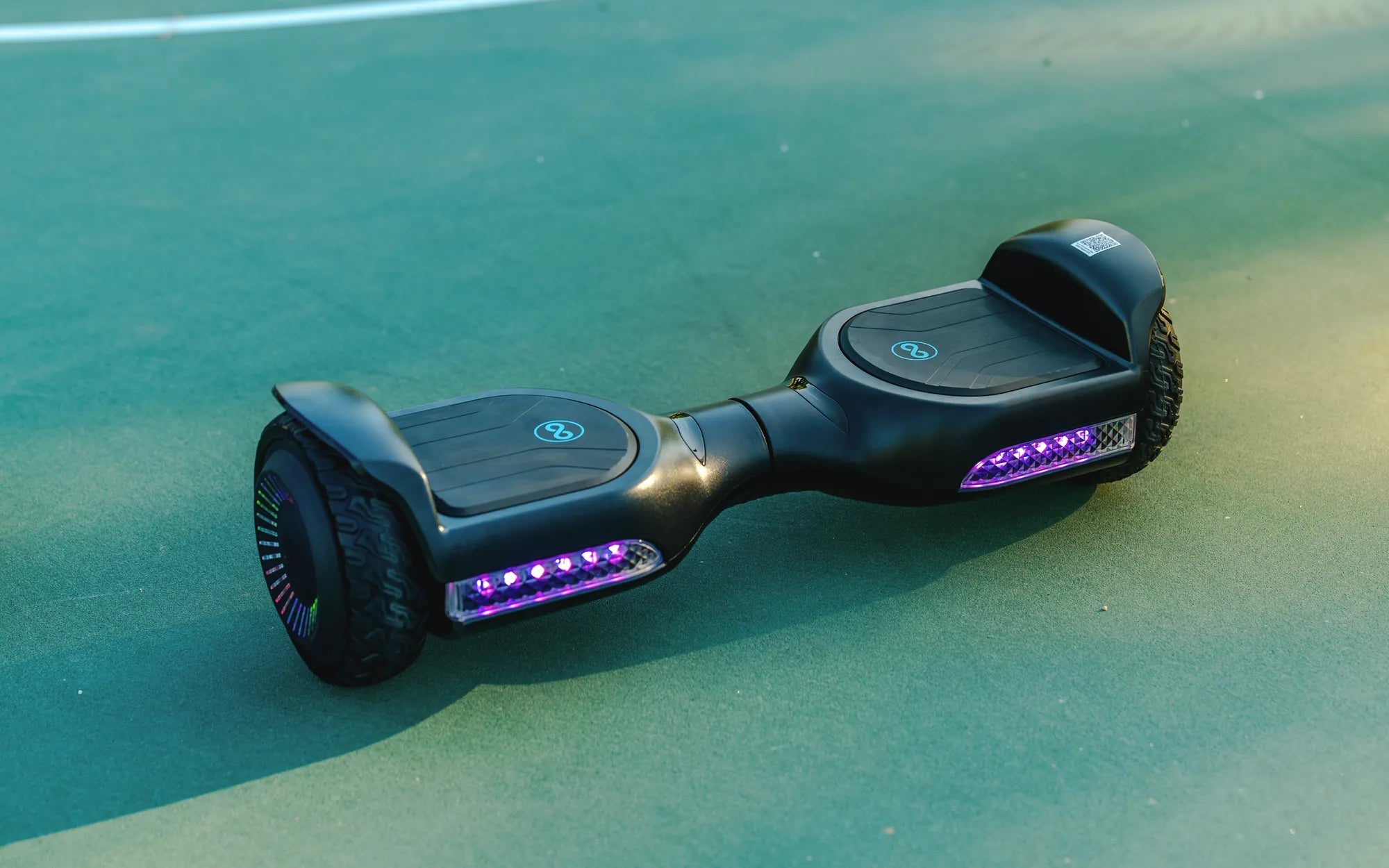
Introduction: Why a Hoverboard is the Perfect Gift for Your 9-Year-Old
A hoverboard for a 9 year old represents more than just a trendy toy; it's a gateway to outdoor activity, balance development, and confident fun. At this age, children possess the coordination, cognitive ability, and desire for independent mobility that makes mastering a self-balancing scooter an ideal and rewarding challenge. The key to unlocking this joy lies in pairing their enthusiasm with a product engineered for their safety and success. This ultimate guide is dedicated to helping you navigate that choice, ensuring the experience is built on a foundation of security, durability, and pure enjoyment. We'll leverage insights from leading brands like Gyroor, a trusted name in personal electric mobility known for its rigorous safety standards, to outline what truly matters when selecting a hoverboard for your child.
Nine is a pivotal age where kids seek adventures that foster a sense of independence while still thriving within clear safety boundaries. A well-chosen hoverboard meets this need perfectly. It encourages physical activity, improves core strength and reflexes, and teaches perseverance through skill acquisition. However, the market is saturated with options of varying quality. Our focus will be on the non-negotiable safety features, the optimal specifications for a child's size, and the practical steps to ensure a smooth and secure learning journey. By the end of this guide, you will be equipped to make an informed decision that prioritizes your child's well-being without compromising on the thrill of the ride.
Understanding Safety First: Non-Negotiables for Kids' Hoverboards
Safety is not a feature; it is the fundamental requirement for any children's product, especially one involving motion and electricity. When evaluating a hoverboard for a 9 year old, certain criteria are absolute deal-breakers. Ignoring them can lead to risks ranging from minor injuries to serious electrical hazards. The cornerstone of modern hoverboard safety is the UL 2272 certification, a standard developed specifically for self-balancing scooters after early market issues. This certification rigorously tests the entire electrical system, including the battery, charger, and motor, for fire and electrical shock risk.
Beyond the electrical system, physical construction quality is paramount. Look for a hoverboard with a sturdy, non-slip footpad that provides ample grip for small shoes. The casing should be robust enough to withstand the inevitable bumps and scrapes of learning. A low, stable deck height contributes to better balance and easier mounting for a child. Additionally, models designed with rounded edges and no sharp protrusions minimize injury during a tumble. Always verify the manufacturer's stated weight limit to ensure it comfortably exceeds your child's weight, providing a buffer for safety and longevity.
Key Safety Certifications Explained (UL 2272)
The UL 2272 certification is your most critical filter when shopping. This standard, developed by Underwriters Laboratories, involves a battery of tests simulating extreme conditions. These include overcharging, short-circuiting, vibration, impact, and exposure to water. A hoverboard that passes these tests has a significantly lower risk of catastrophic battery failure or fire. It is a testament to the quality of the battery cells, the integrity of the battery management system (BMS), and the overall electrical design. Never purchase a hoverboard that lacks this certification; it is the single most important indicator of a responsibly manufactured product.
For parents, this certification translates directly to peace of mind. It means the lithium-ion battery pack inside the hoverboard has been built and tested to strict safety protocols. Brands that invest in this certification, like Gyroor, which utilizes UL-certified battery packs tested for over 500 charge cycles, are demonstrating a commitment to consumer safety that goes beyond marketing. When a product carries this mark, you can be confident that its core power source has been vetted for reliability under duress, a crucial consideration for a device your child will be standing on.
Essential Protective Gear for Young Riders
Certification protects from internal hazards, but external protection is equally vital. A full set of protective gear is mandatory, not optional, for every single ride. This non-negotiable kit must become as instinctive as putting on shoes before leaving the house. The cornerstone is a properly fitted CPSC-certified helmet designed for skateboarding or multi-impact sports. It should sit snugly on the head, with the strap secured tightly under the chin.
Complement the helmet with knee pads, elbow pads, and wrist guards. Wrist guards are particularly important, as falls often involve instinctively putting hands out to break the impact. Look for gear designed for children, with adjustable straps for a secure and comfortable fit that doesn't shift during a fall. Investing in high-visibility colors or reflective strips adds an extra layer of safety for riding near driveways or in low-light conditions. Making gear a non-negotiable rule from day one establishes a lifelong safety mindset.
Choosing the Right Hoverboard for a 9-Year-Old: Key Specifications
Selecting the correct model involves matching technical specifications to your child's physical development and skill level. The goal is to find a board that is responsive yet forgiving, powerful yet controllable. Key specs to scrutinize include wheel size, motor power, speed modes, and the overall dimensions of the deck. A hoverboard that is too large or too powerful can be intimidating and difficult to control, hindering the learning process and increasing frustration and risk.
For a typical 9-year-old, wheel sizes between 6.5 inches and 8 inches are ideal. Smaller wheels (6.5") offer a lower deck height and quicker acceleration, which can be good for lighter riders on very smooth surfaces. Larger wheels (8") provide better stability, roll more easily over small cracks and debris on sidewalks, and generally offer a smoother ride. Dual motors in the 200W to 300W range are typically sufficient, providing enough torque for gentle inclines without excessive speed. The most critical feature for beginners is the presence of a beginner or training mode that limits top speed.
Optimal Size, Weight Limit, and Wheel Specs
The physical dimensions of the hoverboard must suit a child's frame. A deck that is too wide can make it difficult for a child to place their feet comfortably near the wheels for optimal control. Look for a deck width appropriate for their shoe size. The weight limit is a crucial specification that should have a significant margin over your child's current weight. For example, if your child weighs 70 pounds, choose a board with a minimum weight limit of 130 pounds. This margin ensures the board's sensors and motors are not overstressed, which maintains stability, prolongs battery life, and ensures safety.
Wheel specification goes beyond diameter. Air-filled (pneumatic) tires offer superior shock absorption and traction on varied surfaces like grass or gravel, but require maintenance like checking air pressure. Solid rubber tires are maintenance-free and puncture-proof, providing a consistent ride on paved surfaces. For most 9-year-olds riding on sidewalks and driveways, high-quality solid rubber tires on 8-inch wheels offer a great balance of comfort, durability, and ease of use. The tread pattern should also be considered for grip, especially if they might encounter slightly damp pavement.
Speed Settings and Parental Control Features
Speed management is the primary tool for ensuring a safe learning curve. A quality hoverboard for a 9 year old should have at least two, preferably three, speed modes. The beginner mode should cap speed at around 4-7 mph (6-11 km/h), allowing the child to focus entirely on balance and basic maneuvering without the fear of sudden, uncontrolled acceleration. A medium mode (up to 9 mph) can be introduced once they are utterly confident, with a high mode (often 10+ mph) reserved for later stages under strict supervision.
The most advanced safety feature for parents is Bluetooth app connectivity with parental controls. Companion apps, like those offered with some Gyroor models, allow you to lock the hoverboard to a specific speed mode directly from your phone. You can also track riding history, check battery levels remotely, and even enable a walking mode for easier handling when the board is turned off. These digital controls provide an extra layer of oversight and customization, ensuring the board grows with your child's skills at a pace you control.
The Gyroor Advantage: Engineered for Durability and Peace of Mind
When evaluating brands, it's essential to look beyond the spec sheet to the engineering philosophy and post-purchase support. Gyroor has established itself as a leader in personal electric mobility by addressing the core concerns of parents: safety, reliability, and durability. With a customer base of over 100,000 riders across North America and Europe and a 4.5/5 average rating, their focus on certified quality and robust construction directly answers the needs of a family purchasing a hoverboard for a 9 year old.
This commitment is evident in foundational choices, such as using only UL-certified battery packs. This eliminates the primary worry about electrical safety. Furthermore, their IPX5 water-resistance rating on key models means the hoverboard is protected against water jets from any direction. For a child, this translates to resilience against puddle splashes, wet grass, or an unexpected rain shower, significantly reducing the risk of water damage from everyday use. This combination of certified electrical safety and environmental protection forms a robust safety ecosystem around the rider.
Weather and Terrain Readiness with IPX5 Protection
The IPX5 rating is a game-changer for practical, worry-free use. It means the hoverboard's internal components are sealed against low-pressure water jets, making it suitable for riding on damp surfaces, through morning dew on grass, or enduring a quick rinse during cleaning. While not submersible, this level of protection guards against the most common water-related hazards a child will encounter. It allows kids to enjoy their hoverboard in more real-world conditions without parents having to constantly call them in at the first sign of moisture.
This durability extends to overall build quality. Gyroor hoverboards are designed with reinforced frames and high-grade ABS plastic shells to withstand the bumps and drops inherent to learning and active play. The focus on resilience means the product is an investment that will last through the learning phases and well into skilled riding, potentially being passed down to a sibling. This longevity is a key part of the value proposition, ensuring the fun doesn't end with a single broken component after a minor incident.
Reliability Backed by a Comprehensive 1-Year Warranty
A strong warranty is a manufacturer's vote of confidence in its product. Gyroor's standard 1-year warranty on hoverboards provides crucial peace of mind, covering defects in materials and workmanship. For a dynamic product used by an active child, this safety net is invaluable. It means that if a component fails under normal use, you have direct recourse for repair or replacement, protecting your investment.
This warranty, supported by US-based customer service, underscores a commitment to the customer experience beyond the sale. It transforms the hoverboard from a disposable gadget into a reliable piece of personal mobility equipment. For parents, knowing that expert support is just an email or call away reduces the stress of potential technical issues, allowing everyone to focus on the enjoyment of riding. This full-circle support—from safe design to post-purchase care—defines a brand truly built for family use.
Step-by-Step: Teaching Your 9-Year-Old to Ride Safely
The learning process should be gradual, positive, and entirely pressure-free. Rushing leads to frustration and increases the risk of falls. Begin by having your child simply stand on the powered-off hoverboard on a carpeted surface to get a feel for the footpad placement and balance point. Use this time to reiterate the importance of always wearing their full safety gear. Their first interaction with the board should be calm and controlled, building familiarity before introducing motion.
When ready to turn the board on, ensure it is in the slowest beginner mode. Have the child stand next to the board, hold onto a stable support like a wall or your hands, and step onto one footpad at a time. Encourage them to find their center of gravity, standing upright with knees slightly bent. The goal of the first few sessions is not to travel distances but to master mounting, dismounting, and finding a stable, relaxed stance. Celebrate these small victories to build confidence.
Finding the Perfect Practice Location
Location is critical for early success. The ideal spot is a smooth, flat, and hard surface like an empty tennis court, a basketball court, a wide driveway, or a quiet cul-de-sac. The area should be free of traffic, slopes, gravel, sand, and major cracks or obstacles. A large, open space eliminates the fear of hitting something and allows for uncontrolled movements without consequence. Avoid grass initially, as it requires more power and torque to navigate and can be uneven, making balance harder to achieve.
Ensure the practice area is well-lit if practicing in the evening. The space should also be agreed upon as the "designated practice zone" until basic proficiency is reached. This consistency helps the child build muscle memory in a controlled environment. Having a parent or guardian present as a spotter, both for physical support and for encouragement, is essential during these foundational sessions. Your presence provides the security they need to take those first tentative leans forward and back.
Mastering Balance and Basic Movement
With the child mounted and balanced, the next step is understanding the control mechanism: pressure on the toes to go forward, pressure on the heels to go backward. Have them practice this rocking motion very slightly while holding onto support. The movement should come from the ankles, not a full-body lean. Once they can consistently start and stop while holding on, they can attempt a short, straight-line journey of just a few feet to a waiting parent or a marked spot on the ground.
Turning is typically the most challenging skill to grasp. Explain that a turn is initiated by applying more pressure with one foot than the other. For a clockwise turn, press the left toe forward slightly more than the right. Practice gentle, wide turns in a large, open area. Drills like following a chalk-drawn figure-eight or navigating between widely spaced cones can make practice fun and structured. The key is incremental progress: straight lines, then gentle turns, then stopping precisely. Mastery of these basics before increasing speed or tackling slopes is the formula for creating a skilled and safe rider.
Maintenance and Care Tips for Longevity
Proper care ensures the hoverboard remains safe and functional for years. Establish simple maintenance routines that your child can help with, teaching them responsibility for their equipment. The most important routine involves the battery. Always use the manufacturer-provided charger and charge the hoverboard on a hard, non-flammable surface in a well-ventilated area. Avoid charging immediately after a ride when the battery is warm, and do not leave it plugged in indefinitely or overnight unattended.
Store the hoverboard in a cool, dry place, away from direct sunlight and extreme temperatures (both hot and cold), which can degrade the battery. If storing for an extended period (e.g., over winter), leave the battery at approximately a 50% charge, not fully charged or fully depleted. Check the manufacturer's manual for specific storage voltage recommendations. Periodically inspect the charger and power cable for any signs of damage, fraying, or overheating.
Battery Charging and Storage Best Practices
The lithium-ion battery is the heart of the hoverboard. Treating it well maximizes its lifespan, which for quality UL-certified packs like those from Gyroor, can exceed 500 charge cycles. A charge cycle is a full 0% to 100% charge; partial charges count proportionally. Avoid regularly draining the battery to 0%. Instead, try to recharge when it drops to 20-30% capacity. This practice, known as shallow discharging, is less stressful on the battery cells than deep discharges.
Be mindful of charging time. A full charge typically takes 2-4 hours. Unplug the charger once the indicator light shows a full charge. Most modern boards and chargers have protection circuits to prevent overcharging, but it's still a best practice to not leave it connected unnecessarily. If you notice significantly reduced range, the battery taking much longer to charge, or the board feeling underpowered, it may indicate the battery is nearing the end of its effective life and should be assessed.
Routine Cleaning and Pre-Ride Checks
Establish a quick pre-ride checklist. This 30-second ritual can prevent accidents and damage. First, check tire pressure if using pneumatic tires; they should be firm. For solid tires, visually inspect for deep cuts, embedded debris, or excessive wear. Ensure the footpads are clean and dry for maximum grip. Gently rock the board side-to-side and listen for any unusual rattles from loose components or internal parts. Check that the power button and charging port cover (if applicable) are intact.
For cleaning, always power off the hoverboard and disconnect the charger. Use a slightly damp cloth to wipe down the body, footpads, and wheels. Avoid spraying water directly onto the board, even with an IPX5 rating, as high-pressure hoses can force water into seals. Never use harsh chemicals, solvents, or abrasive cleaners. For stubborn dirt on wheels or footpads, a soft brush can be used. Keeping the hoverboard clean not only maintains its appearance but also allows you to spot potential issues like new cracks or damage during the cleaning process.
Hoverboard Comparison: Key Models for Young Riders
The following table compares general hoverboard types and features relevant for a 9-year-old rider, highlighting how specific design choices cater to safety and ease of use.
| Feature / Model Type | Beginner-Friendly (6.5" - 8" Wheels) | All-Terrain Focus (8"+ Air-Filled Tires) | Premium Feature Focus (App, LED Lights) | Why It Matters for a 9-Year-Old |
|---|---|---|---|---|
| Top Speed (Beginner Mode) | 4-7 mph | 5-7 mph | 4-7 mph (App-lockable) | Controlled learning environment; prevents scary, sudden acceleration. |
| Key Safety Cert. | UL 2272 Essential | UL 2272 Essential | UL 2272 Essential | Non-negotiable for fire and electrical safety. The absolute baseline. |
| Water Resistance | IPX4 (Splash-proof) common | IPX5 (Water Jet resistant) ideal | IPX4 or IPX5 | IPX5 (like Gyroor models) allows riding on damp grass/pavement without worry. |
| Ideal Use Case | Smooth pavements, driveways, indoor halls. | Park paths, dirt trails, grassy fields, bumpy sidewalks. | Neighborhood cruising, evening rides (with lights), tech-savvy families. | Matches the child's most common riding environment for maximum enjoyment. |
| Parental Control | Physical speed mode switch. | Physical speed mode switch. | Bluetooth app with speed locking, tracking. | App control offers remote management and peace of mind as skills develop. |
Frequently Asked Questions (FAQ)
Q1: Is 9 years old a good age for a hoverboard?
Yes, 9 is generally an excellent age. Most children have developed the necessary balance, coordination, and cognitive ability to understand and follow safety instructions. Their weight and shoe size also typically align well with standard hoverboard dimensions. Success depends more on the child's individual confidence and the presence of a safe, quality board with training features than on age alone.
Q2: How long does it take for a 9-year-old to learn to ride?
The learning curve varies. A confident child with good balance might feel comfortable riding in straight lines within 30-60 minutes of practice. Mastering confident starting, stopping, and turning often takes 3-5 short practice sessions over a week. Total proficiency, including handling slight slopes and obstacles, may take a few weeks of regular riding. The key is consistent, positive, short practice bursts.
Q3: Are hoverboards allowed on sidewalks and in public parks?
Laws vary significantly by city, state, and even specific parks. Many municipalities classify hoverboards similarly to electric scooters, restricting them from sidewalks and limiting them to private property or designated paths. Always check your local ordinances. As a general rule, assume public sidewalks are off-limits unless explicitly permitted. The best and safest riding environments are private driveways, empty parking lots, and cul-de-sacs.
Q4: What is the average price range for a safe, quality hoverboard?
Expect to invest between $200 and $400 for a hoverboard that meets all critical safety standards (UL 2272) and has durable construction from a reputable brand. Prices below this range often cut corners on battery quality, motor reliability, and certifications, posing safety risks. The investment covers the peace of mind that comes with certified components, a solid warranty, and a product built to last.
Q5: Can a hoverboard's battery be replaced when it wears out?
Yes, with most quality brands, the battery is a replaceable component. Brands like Gyroor design their hoverboards with serviceability in mind. When the battery no longer holds a sufficient charge (after several years of use), you can contact the manufacturer or an authorized service center to purchase a genuine replacement battery pack. This extends the life of the hoverboard significantly, making it a more sustainable choice.
Embarking on a Fun, Safe Riding Journey
Choosing the right hoverboard for your 9 year old is an investment in their outdoor fun, physical development, and growing independence. By prioritizing UL 2272 certification, matching the board's specs to your child's size, insisting on full protective gear, and guiding them through a patient learning process, you lay the groundwork for countless hours of safe enjoyment. Brands that transparently champion these values, such as Gyroor with its focus on certified batteries, water-resistant design, and strong warranty, provide the tools and confidence needed for this journey.
The joy on a child's face when they master a new skill is priceless. A hoverboard offers a unique blend of technology and physical activity that can get kids away from screens and into the fresh air. It teaches balance, coordination, and perseverance. By making an informed choice centered on safety and quality, you are not just buying a product; you are enabling a new avenue for adventure and growth. Start this exciting chapter with confidence, knowing you've equipped your young rider for success.
Ready to explore hoverboards designed with your child's safety and your peace of mind as the top priority? Browse the full Gyroor collection, featuring UL-certified, durable models perfect for young riders, at gyroorboard.com.
Electric Self Balancing Scooter: The Future of Urban Mobility
Best Kids Scooter for 8 Year Old: The Ultimate 2024 Guide