

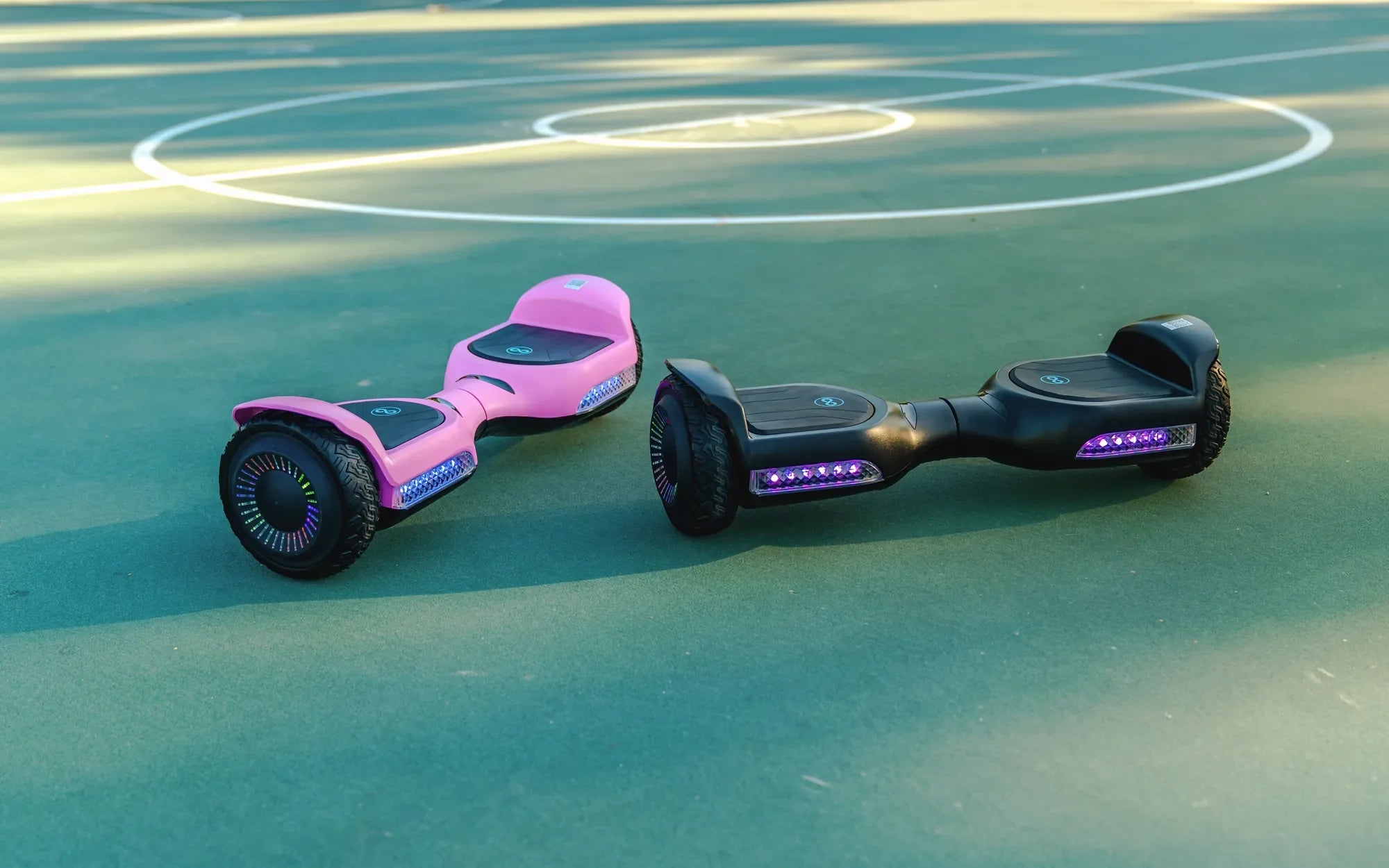
Understanding Hoverboard Range: The Critical Metric for Every Rider
Hoverboard range, measured in miles or kilometers on a single charge, is the most important practical specification for most buyers. It determines whether your board is suitable for a quick neighborhood cruise, a daily commute, or an extended adventure. The question of hoverboard range: how far can you go on a single charge? doesn't have a single answer, but a range of possibilities influenced by a clear set of variables.
This article provides a data-driven analysis of those variables. We'll move beyond manufacturer maximums to establish realistic expectations based on battery capacity, rider profile, terrain, and riding style. Understanding these factors empowers you to choose the right model for your needs and get the most out of every charge.
As a leading brand trusted by over 100,000 riders, Gyroor designs its electric scooters and hoverboards with transparent performance metrics. Our focus on UL-certified batteries and durable construction ensures that the range you expect is the range you experience, ride after ride.
The Core Factors That Dictate Your Hoverboard's Distance
The advertised maximum range is a best-case scenario achieved under laboratory conditions. Your real-world distance is determined by the interplay of four primary factors: the energy source (battery), the load (rider and terrain), the control (riding style), and the machine's efficiency (engineering). Ignoring any one of these gives an incomplete picture.
Think of your hoverboard as a system. The battery provides the total available energy. The motors, controlled by your weight and commands, consume that energy to create motion. External forces like hills and surface friction demand more energy to overcome. The system's design dictates how efficiently it converts stored electricity into travel distance.
By examining each component, you can accurately predict performance. This knowledge is crucial whether you're comparing models or trying to extend your current board's range. The following sections break down each factor with specific, actionable data.
Battery Capacity: Your Energy Fuel Tank (Voltage & Amp-Hours)
The battery is the heart of your hoverboard's range. Its capacity is typically listed in Watt-hours (Wh), which is calculated by multiplying Voltage (V) by Amp-hours (Ah). A common configuration is a 36V, 4.0Ah battery, which equals 144Wh. A higher Wh number generally indicates a larger "fuel tank" and the potential for greater range.
Voltage (V) influences the power available to the motors, affecting torque and hill-climbing ability. Amp-hours (Ah) represent the battery's energy storage capacity. It's a measure of how many amps the battery can deliver for one hour before being depleted. For consistent performance and safety, it's critical to use a battery pack designed for high discharge rates and durability.
Gyroor utilizes UL-certified lithium-ion battery packs in all models. This certification is not just a safety stamp; it signifies rigorous testing for consistent voltage output and cycle life (often 500+ charges with minimal degradation). A high-quality, certified battery maintains its advertised capacity far longer than uncertified alternatives, protecting your investment and your expected hoverboard range: how far can you go on a single charge? over time.
Rider Weight and Terrain: The System's Demand
Physics plays a direct role. Heavier riders require more energy to accelerate and maintain speed. Most manufacturers list a maximum weight limit (often 220-265 lbs), but efficiency drops as you approach that limit. A rider weighing 150 lbs will typically achieve 20-30% more range than a rider at 220 lbs on the same board under identical conditions.
Terrain is the second major demand factor. Riding on smooth, flat pavement is the most efficient use of battery power. In contrast, grass, dirt, gravel, or any incline significantly increases resistance. Conquering a hill can consume battery power at 3-5 times the rate of cruising on flat ground. The motors must work harder, drawing more current from the battery.
This is why all-terrain hoverboards with larger, air-filled tires often have larger batteries. They need the extra capacity to compensate for the increased power demand of off-road surfaces. When estimating your range, honestly assess your typical riding environment. A 10-mile claim for a pavement model might translate to only 5-6 miles on grassy fields or gentle trails.
Riding Style and Speed: Efficiency vs. Thrills
How you ride is as important as what you ride. Aggressive acceleration from a standstill, frequent hard stops, and consistently riding at top speed are the quickest ways to deplete a battery. These actions create high current draws (amps) from the battery, which is less efficient than a steady, moderate draw.
Think of it like a car's fuel economy. Jackrabbit starts and highway speeding kill gas mileage. Similarly, maintaining a smooth, steady pace of 7-9 mph will yield the maximum possible range. Constantly pushing to the board's top speed (often 10-12 mph) can reduce total distance by 25% or more. Using a board's beginner or eco-mode, if available, limits top speed and acceleration to conserve power.
For maximum distance, practice gradual acceleration, use gentle leans to maintain speed, and anticipate stops to allow for regenerative braking (which recaptures a small amount of energy on some models). A calm, efficient riding style can often add 1-3 extra miles to your journey compared to a spirited ride.
Model-Specific Engineering: Motor Power and Tire Design
The hoverboard's design directly impacts its efficiency. Dual motor wattage (e.g., 2x300W vs. 2x400W) defines its power. While more powerful motors provide better torque for hills and heavier riders, they can also consume more energy if used aggressively. Efficient motor controllers that deliver power smoothly can optimize range.
Tire choice is critical. Smaller solid rubber tires (e.g., 6.5" or 8.5") have less rolling resistance on pavement, aiding range. Larger air-filled tires (8.5", 10", or even 11") provide comfort and off-road capability but have higher rolling resistance. However, proper tire inflation is key for air-filled tires; under-inflated tires can dramatically increase resistance and sap range.
Overall weight and aerodynamics of the board itself are minor but present factors. A lighter board uses slightly less energy to move itself. More importantly, a well-built board with quality bearings and properly aligned motors minimizes energy loss to friction, ensuring more battery power is dedicated to propelling you forward.
Real-World Range Expectations: From Pavement to Trail
Let's translate specifications into practical estimates. The following table provides a realistic framework for what different classes of hoverboards can achieve for an average rider (approx. 170-180 lbs) under defined conditions. Treat manufacturer maximums as the absolute upper limit for a light rider under ideal circumstances.
| Hoverboard Type | Typical Battery | Ideal Terrain | Realistic Range Estimate | Best For |
|---|---|---|---|---|
| Standard/Urban (8.5" Solid Tires) | 36V, 4.0Ah (144Wh) | Flat, Smooth Pavement | 8 - 12 Miles | Neighborhood rides, short commutes, campus travel |
| All-Terrain (10" Air-Filled Tires) | 36V, 4.4Ah (158Wh) or larger | Mixed: Pavement, Grass, Dirt Paths | 7 - 10 Miles | Park exploration, light trails, suburban areas |
| High-Capacity/Performance | 36V, 5.0Ah+ (180Wh+) | Flat Pavement | 12 - 18 Miles | Longer commutes, extended recreational tours |
| Off-Road Focused (Large Tires, High Torque) | Higher Voltage (e.g., 42V+) & Large Ah | Dirt Trails, Hills, Rough Terrain | 6 - 9 Miles (Highly variable) | Adventure riding, rugged terrain (range drops sharply on challenging hills) |
For example, a Gyroor urban commuter model with a 36V, 4.0Ah battery will reliably provide 9-11 miles for a 180 lb rider on sidewalks. The same rider on a Gyroor all-terrain model with 10" tires might see 8-9 miles on pavement, but that range could drop to 6 miles if the ride includes significant grass or gravel sections.
Your personal range will fall somewhere within these bands. If you are lighter than average, ride slowly on perfect pavement, and keep tires fully inflated, you may touch the higher end. If you are heavier, love speed, and tackle hills, plan for the lower end. This framework helps set practical expectations for your hoverboard range: how far can you go on a single charge?
Actionable Strategies to Maximize Your Hoverboard's Range
You can actively influence your hoverboard's efficiency. These tips are proven to extend your riding distance, ensuring you get the most from every charge.
Maintain Optimal Tire Pressure: For models with air-filled tires, this is the single most effective action. Check pressure regularly with a gauge. Under-inflated tires increase rolling resistance dramatically, forcing the motors to work harder and cutting range by 20% or more. Inflate to the PSI rating on the tire sidewall.
Adopt a Smooth Riding Style: Avoid stop-and-go patterns. Accelerate gradually from a standstill. Use a steady, moderate cruising speed instead of top speed. Anticipate stops to coast and use gentle braking. If your board has different speed modes, use the beginner or eco-mode for maximum distance.
Mind the Temperature: Lithium-ion batteries operate most efficiently at room temperature (approx. 68°F / 20°C). Avoid riding in extreme cold (below 40°F / 4°C), as chemical reactions within the battery slow down, temporarily reducing capacity and range by 20-40%. Store and charge your board in a cool, dry place, away from direct sunlight or freezing conditions.
Reduce Unnecessary Weight: While your body weight is the main factor, avoid carrying a heavy backpack if maximum range is your goal for a particular journey. Every extra pound requires a bit more energy to move.
Follow Proper Charging Practices: Use only the manufacturer-provided charger. Avoid consistently draining the battery to 0% or leaving it at 100% charge for weeks on end. For long-term storage, charge the battery to about 50-60%. This preserves long-term battery health, which is essential for maintaining its original capacity and range over years of use.
Gyroor's Engineering for Reliable and Predictable Range
At Gyroor, we believe advertised performance should match real-world experience. Our design and manufacturing philosophy is built around delivering consistent, reliable range that riders can trust for their daily commutes and adventures.
The Foundation: UL-Certified Battery Packs
Every Gyroor hoverboard is powered by a UL 2272 certified battery pack. This goes beyond basic safety. The certification process tests for consistent performance, cycle life, and resilience. Our batteries are engineered to deliver stable voltage throughout the discharge cycle, which means power doesn't drop off abruptly. This results in more predictable performance and protects the battery's capacity over hundreds of charge cycles, ensuring the hoverboard range: how far can you go on a single charge? remains consistent for longer.
Durability for Consistent Performance: IPX5 Water-Resistance
Range reliability isn't just about the battery. A hoverboard must withstand real-world elements. Gyroor models feature IPX5 water-resistant construction. This means they are protected against water jets from any direction, making them safe to ride on wet pavement or through puddles. This protection prevents moisture ingress that can corrode electrical connections, damage motors, or compromise the battery management system—all of which can lead to erratic performance and reduced efficiency over time.
Commitment Backed by a 1-Year Comprehensive Warranty
Confidence in your hoverboard's performance is paramount. Gyroor supports every product with a robust 1-year warranty covering the battery, motors, and core components. This warranty is our promise that your hoverboard is built to last and perform as specified. If a component does not meet our high standards, we ensure a prompt resolution. This peace of mind is integral to the ownership experience, allowing you to focus on your ride, not on potential performance issues.
Frequently Asked Questions (FAQ)
Q: Can I replace my hoverboard battery with a higher-capacity one to get more range?
A: Possibly, but with major caveats. The battery must be specifically designed for your exact model, with the same voltage and compatible physical dimensions/connectors. Using an incorrect or non-certified battery is a serious fire hazard and can damage the board's electronics. For safety and reliability, only use manufacturer-approved replacement batteries. Some brands may offer official extended-range battery upgrades for specific models.
Q: How does cold weather actually affect my hoverboard's range?
A: Cold temperatures (below 40°F/4°C) temporarily reduce the efficiency of lithium-ion chemistry. Ions move more slowly, increasing internal resistance and decreasing the battery's ability to deliver its full stored capacity. You may experience a 20-40% reduction in range on a cold day. The effect is usually temporary; range should return to normal when the battery warms up. Store your board indoors and avoid charging it when it's very cold.
Q: Is the "max range" advertised by manufacturers a lie?
A: It's not a lie, but it is a specific benchmark. The maximum range is typically achieved in a controlled test with a very light rider (e.g., 120 lbs), on a perfectly smooth, flat surface, at a constant low speed, with a new battery at optimal temperature. It represents the physical upper limit of the hardware. Savvy consumers should use it for comparison between models but rely on "real-world range" estimates (like those in this article) for practical planning.
Q: How long does it take to fully charge a hoverboard, and does partial charging harm the battery?
A> Charge times vary by battery capacity but typically range from 2 to 5 hours for a full charge from empty. Modern lithium-ion batteries have no "memory effect," so partial charging (e.g., from 30% to 80%) does not harm them. In fact, for long-term battery health, it's better to avoid consistently draining to 0% or leaving it plugged in at 100% for extended periods. A partial charge is perfectly fine for daily use.
Q: My hoverboard's range has decreased significantly over the past year. Is this normal?
A> Some gradual capacity loss is normal for all lithium-ion batteries, typically around 2-3% per year with proper care. A significant drop (e.g., 30% or more) could indicate a failing battery cell, a problem with the battery management system, or mechanical issues like under-inflated tires or dragging brakes. First, ensure tire pressure is correct and that the wheels spin freely. If the problem persists, contact the manufacturer. A quality battery under warranty, like those from Gyroor, should not degrade severely under normal use.
Selecting the Perfect Hoverboard for Your Distance Needs
Choosing the right hoverboard is about aligning its capabilities with your personal requirements. Start by defining your primary use case. Are you a student needing a 3-mile round-trip across campus? A suburban parent wanting to accompany kids on bike rides around the neighborhood? An adventurer seeking to explore park trails? Your answer dictates the necessary range and model type.
Be realistic about the factors you control: your weight and your most common terrain. Use the real-world range table as your guide, not the marketing maximum. If your daily need is 6 miles, choose a model whose realistic estimate is 8-10 miles. This buffer accounts for battery aging, less-than-ideal conditions, and the occasional detour.
Ultimately, reliability is key. A hoverboard with a certified battery, durable construction, and a strong warranty from a reputable brand is an investment in predictable performance. It ensures that the answer to hoverboard range: how far can you go on a single charge? remains consistent and trustworthy, empowering every journey you take.
Ready to find a hoverboard with the reliable range you need? Explore the full collection of high-performance, UL-certified electric scooters and hoverboards engineered for real-world adventures. Browse the full Gyroor collection at gyroorboard.com and ride with confidence.
Scooter Accessories for Kids: Essential Gear for Safe and Fun Riding
How to Turn Off Hoverboard: A Step-by-Step Guide for Safe Shutdown