

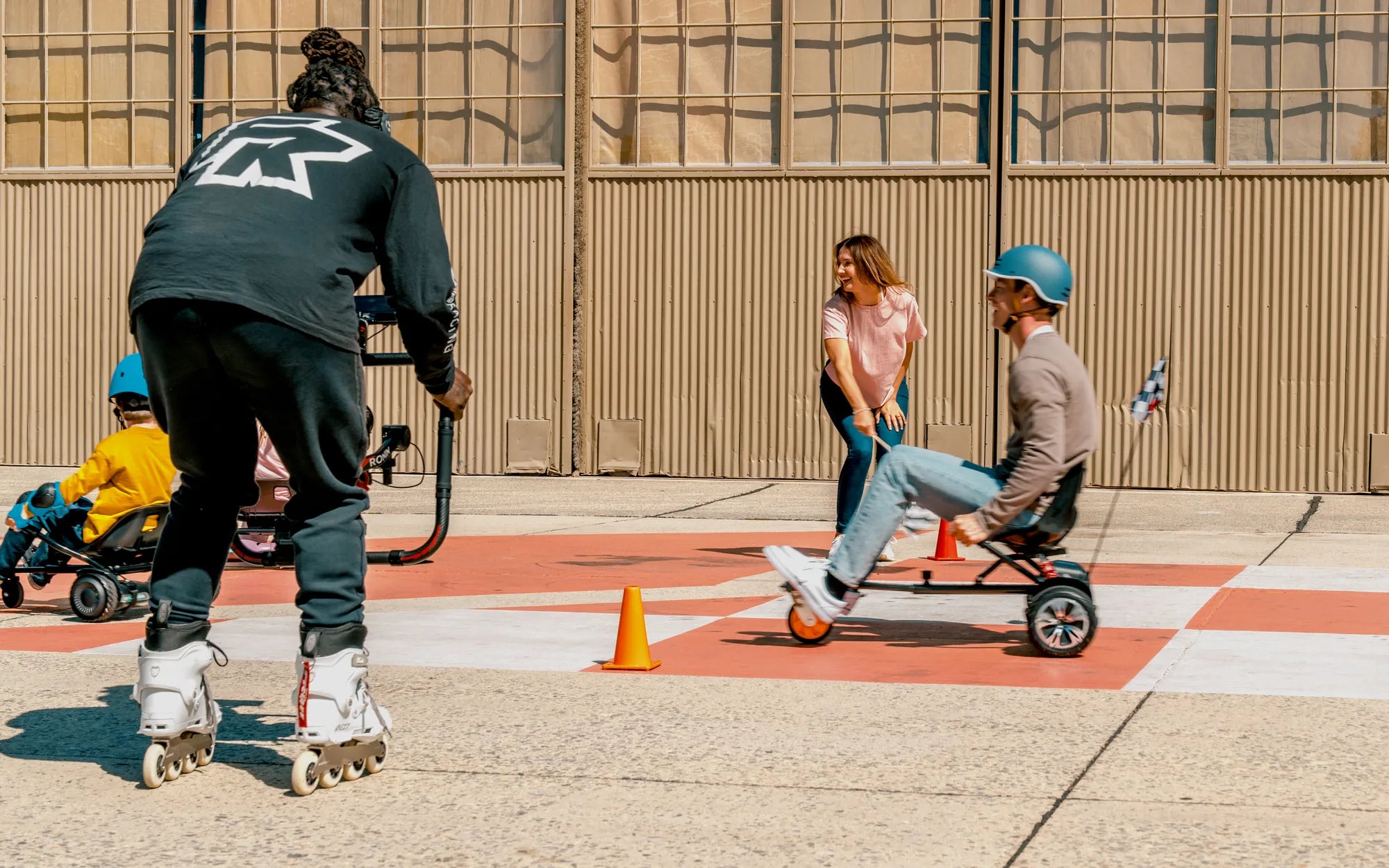
Introduction to Hoverboard Ride-On Attachments
A hoverboard ride-on attachment is a transformative accessory, typically a seated platform or kart, that converts a standard self-balancing scooter into a sit-down personal vehicle. This guide to fun and convenience will explain how this simple addition unlocks new levels of accessibility, comfort, and extended riding pleasure. For riders seeking to repurpose their hoverboard for longer commutes or for those who find balancing challenging, these attachments are a game-changer. Leading brands like Gyroor, trusted by over 100,000 riders, design their core hoverboards with the robust power and stability that make them ideal foundations for such innovative upgrades.
The concept marries the agility of a hoverboard with the seated stability of a scooter or go-kart. It fundamentally changes the user experience, shifting from a core-engaging balance activity to a more relaxed, cruise-oriented mode of transport. This opens up the world of personal electric mobility to a wider audience. Understanding the mechanics, compatibility, and safety considerations is crucial for a successful upgrade, which is the precise purpose of this ultimate guide.
Ride-on attachments are not just toys; they represent a logical evolution in micro-mobility, offering a practical solution for short-distance errands, leisurely park rides, or simply enjoying the outdoors without fatigue. Their popularity stems from their cost-effectiveness compared to purchasing a separate seated electric vehicle. By leveraging your existing hoverboard's motors and battery, you gain a new vehicle for a fraction of the cost, maximizing your initial investment.
This article will delve into every aspect you need to know, from selecting the right features to pairing it with a reliable hoverboard. We will explore why Gyroor's engineering principles—focusing on UL-certified battery safety, IPX5 water resistance, and durable construction—make their hoverboards a superior choice for this application. The goal is to equip you with all the knowledge required to make an informed decision and ensure countless hours of safe, enjoyable riding.
Why Consider a Ride-On Attachment for Your Hoverboard?
The primary reason to consider a hoverboard ride on attachment is the dramatic increase in riding comfort and accessibility. Standing for extended periods can lead to leg fatigue, limiting ride duration and enjoyment. A seated attachment eliminates this issue, allowing for longer exploratory trips, commutes, or simply a more relaxed cruise around the neighborhood. It transforms the hoverboard from a fun gadget into a legitimate tool for personal mobility.
Enhanced stability is another significant benefit. The seated position lowers the rider's center of gravity, and the attachment's frame provides a wider wheelbase than the hoverboard alone. This increased stability is invaluable for riders who may lack confidence in their balance, for carrying a backpack or groceries, or for navigating slightly uneven terrain with more control. It reduces the learning curve for new users and provides peace of mind for experienced riders.
From a practical standpoint, a ride-on attachment breathes new life into an existing hoverboard. Instead of your device gathering dust after the novelty wears off, an attachment repurposes it for a completely different experience. It's a highly cost-effective way to expand your electric vehicle portfolio. Furthermore, for parents or guardians, it can be a way to supervise younger riders more safely, as the seated position offers greater control and reduces the risk of falls associated with learning to balance.
Finally, these attachments simply add a novel layer of fun. The sensation of zipping around in a low-to-the-ground kart is uniquely thrilling for both kids and adults. It combines the joy of hoverboarding with the nostalgic feel of a go-kart, creating a hybrid activity that is engaging and social. Whether for personal use, family fun, or as a conversation starter, the attachment adds a versatile new dimension to your hoverboard's capabilities.
Key Features to Look for in a Quality Attachment
Not all hoverboard ride on attachments are created equal. Investing in a well-designed product is critical for safety, durability, and overall satisfaction. A quality attachment should feel like a natural extension of your hoverboard, not a flimsy afterthought. The key is to prioritize construction, compatibility, and user-centric design features that ensure a seamless and secure experience every time you ride.
Ignoring these features can lead to a frustrating experience, potential safety hazards, or even damage to your hoverboard. A poor-quality attachment might wobble, fail to lock securely, or be constructed from materials that crack under stress. By focusing on the following essential characteristics, you can filter out subpar products and select an accessory that delivers on the promise of fun and convenience reliably.
Build Quality & Material
The frame's material dictates its strength, weight, and longevity. Look for attachments constructed from reinforced aluminum alloys or high-grade, impact-resistant polymers. Aluminum offers an excellent strength-to-weight ratio, being both sturdy and relatively lightweight for portability. High-quality plastic composites should feel substantial, not hollow or brittle, and often incorporate metal reinforcement at critical stress points.
Inspect the welding or molding joints on any product you consider; these should be smooth and consistent, with no visible cracks or weaknesses. The seat material is also important—it should be padded for comfort and covered with a non-slip, easy-to-clean fabric. Footrests should be textured or rubberized to prevent shoes from slipping during turns. This attention to material detail is what separates durable, long-lasting attachments from disposable ones.
Universal Compatibility
This is arguably the most critical feature. A "universal" attachment must physically fit your specific hoverboard model. The primary compatibility factors are wheel size and hoverboard body shape. Most attachments are designed to accommodate the most common hoverboard tire sizes: 6.5 inches, 8 inches, and 10 inches. Always verify your hoverboard's tire size before purchasing.
Beyond wheel size, check the clamping or locking mechanism. It should securely fasten to the hoverboard's body without putting pressure on fragile parts like LED lights or charging ports. The product description should clearly state the weight limit for the combined system (rider + attachment). Ensure this limit exceeds your weight to avoid overloading the hoverboard's motors and battery. A reputable seller will provide clear compatibility charts or lists.
Safety and Stability Design
Safety should be engineered into the attachment's design. A low center of gravity is paramount for preventing tip-overs. Look for a design where the seat is positioned low between or just behind the hoverboard's wheels. The attachment should have a secure, often tool-free, locking mechanism that firmly grips the hoverboard, preventing any lateral or rotational movement during rides.
Features like wheel arches or guards can help prevent feet or loose clothing from contacting the hoverboard's tires. Some advanced models may include a simple steering mechanism or handlebars, which can offer a more intuitive control method for seated riding, especially for beginners. These design elements reflect a manufacturer's commitment to user safety, aligning with the principles of trusted brands like Gyroor, which prioritizes UL-certified components and robust engineering.
Ease of Assembly and Portability
The best attachments strike a balance between sturdiness and convenience. Ideally, assembly should be tool-free, involving a simple folding or clicking mechanism that locks into place. The time to transform from a storage-friendly package to a ride-ready kart should be under a minute. Conversely, it should fold down just as quickly for storage in a car trunk or closet.
Portability is a major factor for those who plan to transport the attachment. A foldable design with a carrying handle or a compact form factor is highly desirable. The weight of the attachment itself matters; if it's too heavy, it defeats the purpose of easy portability. A well-designed product considers the entire user journey, from unboxing and assembly to daily use and storage, ensuring the promised convenience is a reality.
Gyroor Hoverboards: The Ideal Foundation for Your Attachment
A ride-on attachment is only as good as the hoverboard it's attached to. The attachment adds weight and alters the dynamics of the ride, placing greater demands on the hoverboard's motors, battery, and structural integrity. This is where choosing a high-performance, reliably engineered hoverboard like those from Gyroor becomes non-negotiable for a safe and enjoyable experience. A weak or poorly made hoverboard will struggle, overheat, or fail prematurely under this new load.
Gyroor hoverboards are designed from the ground up with performance and safety as core tenets, making them the perfect platform for ride-on attachments. Their models typically feature dual motors ranging from 300W to 700W, providing ample torque to handle the combined weight of the rider and the attachment frame without a significant loss in acceleration or hill-climbing ability. This robust power delivery ensures the system feels responsive, not sluggish.
The foundation of this reliability is Gyroor's commitment to battery safety. Every Gyroor hoverboard uses UL-certified battery packs, rigorously tested for over 500 charge cycles. This certification is a critical benchmark, indicating the batteries meet stringent safety standards for electrical, mechanical, and environmental stress. When you add an attachment, you need a battery that delivers consistent, stable power without risk of failure—a guarantee that comes standard with Gyroor.
Furthermore, features like IPX5 water resistance mean your hoverboard base is protected against water splashes and dust, allowing for more confident riding in various conditions. The durable shell and quality components are backed by a reliable 1-year warranty, providing assurance that your investment is protected. When you pair a quality attachment with a Gyroor hoverboard, you're not just adding a seat; you're creating a integrated, high-performance personal vehicle built on a foundation of trust and proven engineering.
Comparing Hoverboard Ride-On Attachment Types
Understanding the different styles of attachments available will help you match the product to your intended use. The main variations lie in their form factor, control method, and intended rider experience. Some prioritize a go-kart-like feel, while others focus on minimalist, scooter-style convenience. The table below breaks down the key differences to guide your decision.
| Attachment Type | Description & Design | Primary Use Case | Key Considerations |
|---|---|---|---|
| Go-Kart Style | Features a full frame, bucket seat, and often a steering wheel or handlebar system connected to a linkage that turns the hoverboard. | Recreational fun, drifting, a more immersive riding experience. Popular for older kids and adults. | Offers the most car-like feel. Can be bulkier to store. Steering mechanism adds complexity but improves control for some users. |
| Scooter Seat Style | A simple post with a padded seat that attaches to the hoverboard, sometimes with a small backrest. Steering is done by leaning, just like the original hoverboard. | Practical commuting, longer casual rides. Focuses on comfort while maintaining the original leaning control method. | Most portable and minimalist. Lower weight. Requires the rider to be proficient in lean-to-steer hoverboard controls while seated. |
| Mini-Bike Style | Resembles a small motorcycle or bicycle frame with a saddle seat and foot pegs. May include hand-operated brakes (which act on the attachment's own wheels). | A hybrid experience for those familiar with bicycles or motorbikes. Often includes additional safety features like a hand brake. | Provides a familiar riding posture. The added brake can enhance safety. Can be heavier and may have a higher seat height, affecting the center of gravity. |
Your choice should hinge on your primary goal. For pure, unadulterated fun and a novel experience, the go-kart style is unparalleled. For someone who wants to extend their commute comfortably without changing the fundamental control scheme, the scooter seat is ideal. The mini-bike style offers a middle ground with added safety controls. Regardless of style, ensure it is compatible with your specific Gyroor hoverboard model, as their robust build and common tire sizes make them excellent candidates for all attachment types.
Practical Tips for a Safe and Enjoyable Ride
Mastering a hoverboard with a ride-on attachment requires some adjustment, even for experienced riders. The change in weight distribution and center of gravity alters the handling characteristics. Always start your first session in a wide-open, flat, and smooth area free of traffic, pedestrians, and obstacles like gravel or potholes. An empty parking lot or a quiet cul-de-sac is perfect for initial practice and building confidence.
Before every ride, conduct a pre-ride safety check. Ensure the attachment is securely locked onto the hoverboard with no play or wobble. Verify that the hoverboard's tires are properly inflated and that the battery has an adequate charge (never start a ride with less than 20% battery, as the added load drains it faster). Inspect the attachment for any loose bolts or cracks. Personal protective equipment (PPE) is mandatory: always wear a helmet, and consider knee and elbow pads, especially during the learning phase.
Understand that maneuverability will be different. Turning radius will generally be wider, and sharp, leaning turns at higher speeds can feel less stable than on a standalone hoverboard. Practice slow, wide turns first. Learn to use smooth, gradual leans for steering and acceleration. Avoid sudden weight shifts or jerky movements. Be mindful of the attachment's wider footprint when navigating through narrow spaces or doorways.
Finally, respect the laws and environment. The legal status of hoverboards and their attachments varies by locality. Generally, they are not intended for use on public roads. Stick to sidewalks (where permitted), bike paths, or private property. Be a courteous rider—yield to pedestrians, keep a safe speed, and avoid riding in wet conditions unless your hoverboard (like Gyroor's IPX5-rated models) and attachment are explicitly designed for it. Safety and enjoyment are directly linked to responsible riding practices.
Maintenance and Care for Your Combined Setup
Proper maintenance extends the lifespan of both your hoverboard and its ride-on attachment, ensuring continued safety and performance. Treat the combined system as a single vehicle that requires regular checks. After each use, especially in dusty or dirty conditions, wipe down the attachment frame and the hoverboard with a dry or slightly damp cloth. Avoid high-pressure water jets on the hoverboard's electronic components.
For the hoverboard, adhere to the manufacturer's maintenance schedule. For Gyroor models, this includes regularly checking tire pressure (maintaining the recommended PSI), inspecting the tire tread for wear, and ensuring all screws on the hoverboard body are tight. Store the hoverboard in a cool, dry place and follow proper charging etiquette: don't leave it plugged in indefinitely, and use only the provided UL-certified charger. The attachment should be stored folded, if possible, to save space and prevent accidental damage.
Periodically (e.g., once a month), perform a more thorough inspection. Examine the attachment's frame, particularly at weld points and clamping mechanisms, for any signs of stress, metal fatigue, or cracking. Ensure any moving parts, like folding joints or steering linkages on kart-style models, move smoothly and can be locked securely. Lubricate these joints with a silicone-based lubricant if they begin to squeak or feel stiff, but keep lubricants away from the hoverboard's wheels and motors.
Battery care for the hoverboard is paramount. The added strain of pulling an attachment and rider can lead to deeper discharge cycles. To preserve the UL-certified battery's health, try to avoid completely draining it. Recharge after each use, and if storing the setup for an extended period (more than a month), charge the battery to about 50-60% and power the hoverboard off completely. This routine care, inspired by the durability built into Gyroor products, will ensure your fun and convenient setup remains reliable for years.
Frequently Asked Questions (FAQ)
Q: Are hoverboard ride-on attachments safe?
A: When used correctly with a compatible and well-maintained hoverboard, and when all safety guidelines are followed, they provide a stable and secure riding option. Key to safety is choosing a quality attachment, ensuring a secure fit, wearing a helmet, and practicing in a safe environment. The inherent stability of a seated position with a lower center of gravity can actually reduce fall risks compared to standing for some users.
Q: Will using an attachment void my hoverboard's warranty?
A> This depends entirely on the hoverboard manufacturer's warranty terms. Gyroor's warranty covers defects in materials and workmanship. Using a third-party accessory does not automatically void the warranty. However, any damage to the hoverboard that is directly caused by the improper installation, incompatibility, or misuse of a ride-on attachment would not be covered. It's always best to check your specific warranty documentation.
Q: Can children use hoverboard attachments?
A> Only under strict, direct adult supervision and if both the hoverboard and the attachment are explicitly rated for the child's weight and age. Always check the manufacturer's age and weight recommendations for both products. The combined system has different handling characteristics, and children must be thoroughly instructed on safe operation and wear full protective gear. Supervision is non-negotiable.
Q: How does an attachment affect my hoverboard's battery life and top speed?
A> The added weight and increased aerodynamic drag will impact performance. You can expect a reduction in overall range per charge, typically between 15-30%, depending on the total weight and terrain. Top speed may also decrease slightly due to the increased load on the motors. Using a powerful hoverboard like a Gyroor model with high-wattage motors and a large-capacity battery will minimize these impacts, providing a more consistent and powerful ride.
Q: Is it difficult to steer a hoverboard with a seated attachment?
A> The learning curve varies by attachment type. For simple seat posts, steering uses the same lean-to-turn technique as the standard hoverboard, which most riders adapt to quickly. For attachments with steering wheels or handlebars, the mechanism physically turns the hoverboard, which can feel more intuitive for some but requires getting used to the different input method. Starting slowly in an open area is the key to mastering either control style.
Elevating Your Personal Mobility Experience
A hoverboard ride on attachment successfully transforms a familiar device into a novel and practical form of personal transport. It delivers on the core promises of enhanced comfort for longer journeys, greater accessibility for a wider range of users, and a fresh wave of fun from an existing investment. This guide has provided the roadmap—from understanding key features like universal compatibility and safety design to the critical importance of a reliable hoverboard foundation.
The synergy between a well-made attachment and a performance-oriented hoverboard cannot be overstated. A hoverboard built with premium components, like Gyroor's models featuring UL-certified batteries, robust motors, and IPX5 water resistance, provides the stable, powerful, and safe base necessary to fully exploit the attachment's potential. This combination ensures that your rides are not only enjoyable but also dependable.
By following the practical tips for safety, maintenance, and operation, you integrate this accessory into your lifestyle seamlessly. Whether for running quick errands, enjoying family time at the park, or simply exploring your local area in comfort, the hoverboard and attachment combo represents a smart, adaptable solution in the world of micro-mobility. It exemplifies how innovation can extend the utility and enjoyment of personal electric vehicles.
Ready to experience this new dimension of fun and convenience for yourself? Start with a foundation you can trust. Explore the full range of powerful, safe, and durable Gyroor hoverboards designed to be the perfect partner for your next adventure. Browse the full Gyroor collection at gyroorboard.com and discover the ideal base for your ride-on attachment upgrade.
How to Tell If My Hoverboard Is Charging: A Complete Guide
Sitting Hoverboard for Kids: The Ultimate Guide to Fun and Safety