



Introduction to Hoverboard Safety
Hoverboards offer an exhilarating blend of personal mobility and fun, but their unique self-balancing mechanics demand a dedicated focus on safety. Every year, emergency rooms treat thousands of injuries related to these devices, ranging from fractures and sprains to more serious head trauma. This reality makes a proactive approach to Hoverboard Safety: Essential Tips to Prevent Accidents and Injuries not just advisable but critical. The goal is to transform the riding experience from potentially hazardous to confidently secure.
Safety is a product of both the equipment's integrity and the rider's knowledge. Brands like Gyroor engineer safety into their products from the ground up, utilizing UL-certified battery packs, robust frames, and IPX5 water-resistant designs to mitigate inherent risks. However, the rider's role is equally important. This guide synthesizes the latest safety data, expert recommendations, and practical wisdom into a single, actionable resource. We will cover everything from your first step onto the board to long-term maintenance, ensuring you have the knowledge to ride safely.
Understanding the mechanics is the first step. Hoverboards use gyroscopic sensors and electric motors to respond to your body's subtle shifts in weight. This requires a learning curve where balance and control are paramount. Without proper preparation, riders can easily be thrown off by sudden stops, uneven terrain, or simple loss of balance. The following sections are designed to systematically build your competency and awareness, layer by layer.
Our exploration of Hoverboard Safety: Essential Tips to Prevent Accidents and Injuries will be comprehensive. We will begin with the foundational steps you must take before every ride, move into mastering control and technique, analyze environmental threats, and establish a routine for maintenance. By the end, you will possess a complete framework for safe operation, empowering you to enjoy the freedom of riding while minimizing risk to yourself and others.
Pre-Ride Safety: Inspection and Preparation
Safety is not an on-the-fly consideration; it is a ritual that begins before you power on the board. A thorough pre-ride inspection can identify potential mechanical failures that could lead to a catastrophic accident mid-ride. This process, which should take less than two minutes, is your first and most effective line of defense. Treating it with consistency is a hallmark of a responsible rider.
Neglecting this step is a primary contributor to avoidable incidents. A loose footpad, under-inflated tire, or compromised battery connection might not be obvious until the board behaves unpredictably. By then, it is often too late to prevent a fall. Establishing a checklist habit ensures your equipment is in optimal condition, allowing you to focus entirely on your riding environment and technique.
The Pre-Ride Checklist
Conduct this visual and physical inspection before every single ride. Start with the power system: ensure the board is adequately charged (avoid riding on a critically low battery) and that the charger port is clean and undamaged. Press the power button to confirm it engages smoothly and that all indicator lights function correctly. This verifies basic electronic integrity.
Next, examine the physical structure. Gently rock the board side-to-side and front-to-back, listening for any unusual rattles or feeling for loose components. Check that all screws, especially those on the footpads and around the wheel axles, are tight. For models with air-filled tires, use a pressure gauge to ensure they are inflated to the manufacturer's recommended PSI; proper inflation is crucial for stability and control.
Finally, inspect the wheels and shell. Spin each wheel freely to ensure they rotate smoothly without grinding or catching. Look for significant wear on the tire tread and check the shell for any new cracks or deep scratches that could indicate structural weakness. A board that fails any part of this checklist should not be ridden until professionally serviced.
Essential Safety Gear
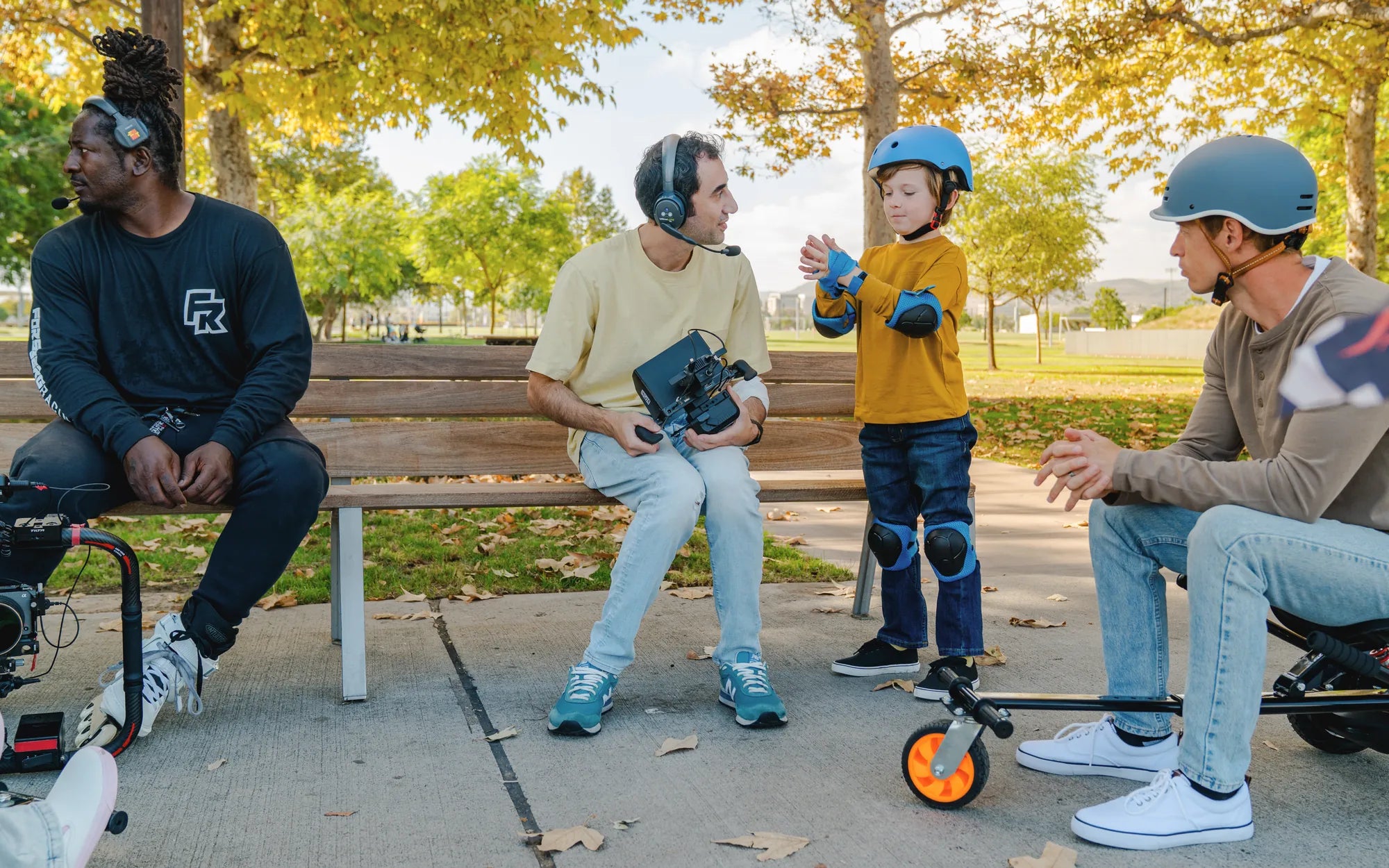
Protective gear is non-negotiable, regardless of skill level. Data from the Consumer Product Safety Commission (CPSC) consistently shows that the vast majority of severe hoverboard-related injuries involve the head, wrists, and elbows. The right gear dramatically reduces both the likelihood and severity of these injuries. Think of it as an integral part of the vehicle, not an optional accessory.
A certified helmet is the single most important piece of safety equipment. Look for certifications like CPSC (U.S.) or ASTM F1492, which indicate it has passed rigorous impact testing. It should fit snugly without wobbling. Wrist guards are equally critical, as instinct leads us to break falls with our hands, making wrist fractures and scaphoid injuries exceedingly common. Guards with splints can prevent hyperextension.
Knee and elbow pads complete the essential kit. High-quality pads with hard plastic caps and comfortable padding absorb impact and prevent painful abrasions or joint injuries. For beginners, consider additional padding like padded shorts or gloves. Investing in high-visibility clothing or reflective strips is also a wise addition for any riding done near dusk or in areas with other path users.
Mastering Safe Riding Techniques
Technique separates a controlled rider from a passenger on an unpredictable device. Mastering fundamental skills in a safe, controlled environment builds the muscle memory and confidence needed to handle real-world variables. Rushing this process is a direct path to accidents. Dedicate time to deliberate practice in an empty, open space like a basketball court or unused parking lot.
The core principle is smooth, deliberate movement. Hoverboards amplify your input; jerky, nervous motions cause the board to overcorrect, leading to a loss of balance. The goal is to achieve a state where controlling the board becomes intuitive, freeing your mental capacity to scan for environmental hazards. This section breaks down the progression from first mount to basic navigation.
Finding Your Balance and Starting Out
Begin by placing the board on a flat, smooth surface. Use a wall, fence, or sturdy chair for support. Mount the board one foot at a time, placing your dominant foot first and finding your balance before carefully lifting your other foot. Keep your feet positioned symmetrically, near the wheel arches, for optimal control. Your posture should be athletic: knees slightly bent, back straight, and gaze forward, not down at your feet.
Practice finding the "neutral point" where the board remains stationary. Gently lean forward from your ankles (not your waist) to move forward, and lean back slightly to reverse. The key is micro-movements. Start with short, slow travels in a straight line, using your support to dismount safely. Repeat until mounting, a short straight-line movement, and dismounting feel comfortable and controlled without external support.
Once straight-line movement is secure, practice stopping. To decelerate, gradually return to the neutral stance. To come to a complete stop, lean back just enough to halt motion before stepping off backwards, one foot at a time, with control. Never jump off a moving board, as this can send it shooting unpredictably and cause you to land awkwardly.
Navigating Turns, Stops, and Obstacles
Turning is achieved by applying differential pressure with your toes or heels. To turn right, press gently with your left toes or your right heel. The movement should come from a subtle ankle pivot, not a dramatic upper-body lean. Practice wide, gradual turns before attempting tighter ones. Always look in the direction of your turn; your body will naturally follow.
For controlled stops on inclines or at higher speeds, plan your deceleration early. Gradually reduce speed by leaning back to the neutral point well before your intended stopping place. Avoid the instinct to "jump" the board to a stop by leaning back aggressively, as this can cause the tail to dip and throw you forward.
Small obstacles like pavement cracks, twigs, or minor inclines require a specific technique. Approach them straight on, not at an angle. Slightly bend your knees to absorb the impact and maintain a steady, confident speed—slowing down too much can cause the board to stall on the obstacle. For anything taller than an inch, it is safer to dismount and carry the board over. Mastering these techniques is fundamental to Hoverboard Safety: Essential Tips to Prevent Accidents and Injuries.
Understanding and Mitigating Environmental Hazards
The environment is a dynamic and often unforgiving variable in hoverboard safety. A board that performs flawlessly on a smooth gym floor can become dangerously unstable on wet grass or gravel. A critical component of safe riding is continuously reading the terrain and weather, anticipating hazards before they become emergencies. Your riding style must adapt to the conditions, not the other way around.
Environmental risks are multiplicative. A slight incline becomes significantly more dangerous on a wet surface. A familiar path at dawn can be treacherous at dusk due to reduced visibility. This section will categorize common hazards and provide clear protocols for navigating or avoiding them. The principle is simple: when in doubt, dismount and walk.
Terrain Matters: Where to Ride and Where to Avoid
Ideal terrain is dry, smooth, and level. This includes concrete bike paths, smooth asphalt, indoor flooring, and tennis courts. These surfaces provide the consistent traction and lack of obstructions that hoverboard motors and gyros are designed for. Always yield to pedestrians and be hyper-aware of your surroundings when on shared paths.
Certain terrains should be strictly avoided. Public roads with vehicle traffic are illegal and extremely dangerous for hoverboard riders due to low visibility and high-speed impacts. Gravel, sand, and dirt are highly unstable; they can cause wheels to slip or seize, leading to immediate falls. Similarly, surfaces with loose debris like leaves or mulch should be avoided.
Inclines present a specific challenge. Most consumer hoverboards have a maximum safe incline grade of about 15 degrees. Exceeding this can overtax the motors, leading to overheating, sudden shutdowns, or an inability to brake effectively. Always descend hills in a controlled, slow manner, and avoid hills altogether if the surface is anything but perfectly dry pavement.
The Impact of Weather
Water is a hoverboard's enemy. Riding in rain, on wet pavement, through puddles, or on morning dew dramatically increases the risk of slipping. Furthermore, water ingress can cause catastrophic short circuits in the electronics and battery compartment, even on water-resistant models. While a rating like Gyroor's IPX5 protects against light splashes from puddles, it is not a license to ride in the rain.
Temperature extremes also affect performance and safety. Very cold temperatures can reduce battery efficiency and tire pliability, while extreme heat can lead to motor or battery overheating. Store and charge your board in a climate-controlled environment. If you must ride in cold weather, be aware that battery life will be shorter, and plan your route accordingly to avoid being stranded with a dead board.
Wind is an often-overlooked hazard. Strong gusts can destabilize a rider, especially when making turns or riding in open areas. In windy conditions, reduce your speed, adopt a lower stance with bent knees for stability, and avoid exposed ridges or paths. Visibility is another key factor; never ride at night without proper illumination on both yourself and your board, as obstacles become impossible to see in time.
Hoverboard Maintenance for Long-Term Safety
Regular maintenance is preventive safety. A well-maintained hoverboard is a predictable and reliable one. Wear and tear are inevitable, and components like tires, batteries, and fasteners degrade over time. A systematic maintenance schedule catches small issues—a slightly loose screw, a tire losing tread—before they escalate into major failures during a ride. This proactive approach is central to sustained Hoverboard Safety: Essential Tips to Prevent Accidents and Injuries.
Adhering to a maintenance routine also protects your investment and ensures you remain covered under warranties, like Gyroor's comprehensive 1-year warranty. It demonstrates responsible ownership and allows you to enjoy your board for years to come. The following routines are simple, require minimal tools, and have a profound impact on operational safety.
Battery Care and Charging Best Practices
The battery is the heart of your hoverboard and, if mishandled, its greatest potential hazard. Always use the official charger provided by the manufacturer. Third-party chargers may not have the correct voltage or safety cut-offs, posing a fire risk. Charge the board on a hard, non-flammable surface in a well-ventilated area, away from direct sunlight or heat sources.
Avoid the habit of leaving the board plugged in indefinitely or overnight. While modern smart chargers and UL-certified packs (like those used by Gyroor) have overcharge protection, it is a best practice to unplug once the indicator shows a full charge. For long-term storage (over a month), charge the battery to approximately 50-60% and store in a cool, dry place. Recharge it to this level every few months to prevent deep discharge, which can permanently damage cells.
Monitor battery performance. A significant, sudden drop in range or power output can indicate a failing cell or BMS (Battery Management System) issue. If the board feels excessively hot near the battery compartment during or after charging, discontinue use and contact the manufacturer. Never attempt to open or modify the battery pack yourself.
Regular Mechanical Checks
Establish a weekly or bi-weekly check beyond the pre-ride inspection. Use the appropriate screwdriver to go over all visible screws and fasteners, tightening any that have loosened from vibration. Pay special attention to footpad screws and wheel axle bolts. Inspect the entire frame and shell for hairline cracks, especially around stress points like the central hinge.
Clean your board regularly with a dry or slightly damp cloth to remove dirt and grime that can work its way into moving parts. Avoid high-pressure water sprays. For air-filled tires, check pressure weekly and top up as needed. Inspect tire tread for even wear; uneven wear can indicate an alignment issue or a problem with the wheel bearing.
Listen to your board. Familiarize yourself with its normal sounds. A new grinding noise from a wheel could indicate a damaged bearing or debris caught in the motor. A clicking sound when turning might point to a loose internal component. Address unusual sounds promptly by consulting the user manual or contacting customer support. Proactive care is the hallmark of a safe rider.
Comparative Safety: Hoverboards vs. Other Personal Electric Transport
Understanding where hoverboards fit within the broader spectrum of Personal Electric Transport (PET) devices can clarify their unique risk profile and appropriate use cases. Each device has distinct safety considerations based on its design, speed, stability, and intended environment. The table below provides a data-driven comparison to inform your choice.
| Device Type | Key Safety Features | Primary Risk Factors | Ideal Use Case | Skill Floor |
|---|---|---|---|---|
| Hoverboard (Self-Balancing Scooter) | Gyroscopic stabilization, low center of gravity, LED lights. Premium models feature UL-certified batteries & IP water resistance. | Falls from loss of balance, terrain hazards (cracks, gravel), low-speed collisions, battery fires (in non-certified models). | Recreational riding on smooth, paved paths; short-distance personal mobility in controlled environments (campuses, parks). | Moderate. Requires balance and practice to master basic controls. |
| Electric Kick Scooter | Handlebars for stability, hand brakes, larger pneumatic tires, often with suspension. Many have electronic braking & lighting systems. | Higher-speed falls, collisions with vehicles or obstacles, brake failure, getting thrown by front-wheel obstacles. | Urban commuting, longer-distance travel on bike lanes and paved roads, running errands. | Low to Moderate. Easier initial balance but requires learning brake modulation at higher speeds. |
| Electric Skateboard | Handheld remote for control, often with regenerative braking. Longboard decks offer stability. | High-speed wobbles, remote disconnection/failure, inability to brake manually (foot braking skill required), terrain sensitivity. | Experienced riders seeking thrill and efficiency on very smooth pavement; commuting for skilled users. | High. Requires significant skateboarding skill for safety, especially at higher speeds. |
| Electric Bike (E-Bike) | Bicycle geometry (stable), standard bicycle brakes (disc/rim), full lighting kits, helmets strongly advised. Class-based speed limits. | Vehicle traffic collisions, higher impact speeds, mechanical failure of bicycle components (brakes, tires). | Replacing car trips, hilly terrain commuting, long-distance recreational riding, carrying cargo. | Low (if you can ride a bike). Familiar controls but higher speeds demand greater road awareness. |
This comparison highlights that hoverboards, while fun and compact, have a specific niche. Their lack of handlebars makes them inherently less stable at initiation than e-scooters or e-bikes, placing a greater emphasis on rider skill and terrain selection. For families or those seeking stable, beginner-friendly options, a brand like Gyroor offers a range of electric scooters and e-bikes that may present a lower initial risk profile while still providing electric fun and utility.
FAQ: Answering Common Hoverboard Safety Questions
Q1: What is the appropriate age for a hoverboard rider?
Most manufacturers and safety advocates, including the CPSC, recommend hoverboards for riders aged 8 and above. However, age is less important than maturity, coordination, and size. The rider must be heavy enough to properly activate the sensors (typically over 44 lbs) and tall enough to maintain a stable stance. Crucially, they must have the judgment to follow safety rules. For any child, close adult supervision, mandatory full safety gear, and restricted practice areas are essential.
Q2: How do I know if my hoverboard's battery is safe? (Hint: UL Certification)
The single most important indicator is UL 2272 certification. This stringent standard, developed after early hoverboard fire incidents, tests the entire electrical system—battery, charger, and circuitry—for safety under various stress conditions. Always purchase from reputable brands that explicitly state their products are UL 2272 certified, like Gyroor. Avoid no-name boards from unknown marketplaces, as they often use substandard, uncertified battery cells that pose a significant fire risk.
Q3: Can I ride my hoverboard at night? If so, what precautions are necessary?
Riding at night is highly discouraged due to drastically reduced visibility for both the rider and others. If you must ride in low-light conditions, it is non-negotiable to equip yourself and your board. The hoverboard must have bright, functioning front and rear LED lights. The rider should wear reflective clothing, ankle/arm bands, and a helmet with a built-in or attached light. Even with these, ride at walking speed, stick to extremely well-lit, familiar, and obstacle-free paths, and be hyper-vigilant.
Q4: What should I do immediately if my hoverboard starts to smoke or catch fire?
Act with extreme urgency. First, get yourself and others away from the device immediately. Do not attempt to extinguish a lithium battery fire with water. If possible and safe to do so, use a Class D fire extinguisher (for metal fires) or a large amount of sand or dirt to smother it. Call the fire department immediately. Lithium battery fires can reignite. Once cool, place the damaged device in a metal container away from any structures or flammable materials. Report the incident to the manufacturer and the CPSC at SaferProducts.gov.
Q5: Is it safe to carry a backpack or items while riding?
It can be, but with strict caveats. A lightweight, well-secured backpack that sits snugly against your back is generally acceptable for experienced riders. However, it will slightly alter your center of balance. Never carry items in your hands, as this compromises your ability to balance and break a fall. Avoid carrying heavy or unbalanced loads, and never carry loose items that could swing and cause instability. For beginners, it is safest to master riding completely unencumbered before adding any carried weight.
Conclusion: Building a Culture of Safe Riding
Hoverboard Safety: Essential Tips to Prevent Accidents and Injuries hinges on a simple, four-pillar philosophy: Prepare, Practice, Perceive, and Preserve. Preparing with proper gear and pre-ride checks sets a safe foundation. Practicing fundamental techniques in a controlled environment builds the competence for real-world riding. Perceiving environmental hazards—from wet leaves to steep driveways—allows for proactive risk avoidance. Preserving your board through diligent maintenance ensures its mechanical reliability ride after ride.
This holistic approach transforms riding from a passive activity into an engaged skill. It empowers you to confidently navigate your environment while respecting the inherent limitations of the technology. The joy and utility of a hoverboard are immense, but they are best accessed through a lens of responsibility and awareness. Safety is not a restriction on fun; it is the foundation that makes sustained, worry-free fun possible.
Choosing a board from a safety-committed brand is the first critical decision in this journey. Brands like Gyroor, with their UL-certified battery systems, robust build quality, IPX5 water resistance, and accessible customer support, engineer a significant portion of the risk out of the equation before you even step on. This allows you to focus entirely on developing your skills and situational awareness.
Embrace the freedom of movement that hoverboards offer, but never at the expense of your well-being or that of others. Share these principles with fellow riders, especially new ones, to foster a community that values safety as much as enjoyment. For a closer look at electric mobility options built with this safety-first engineering philosophy from the ground up, browse the full Gyroor collection at gyroorboard.com. Ride smart, ride safe, and enjoy the journey.
Hoverboard Attachment: The Ultimate Guide to Enhancing Your Ride
How Long Does a Hoverboard Last Fully Charged: A Complete Guide