



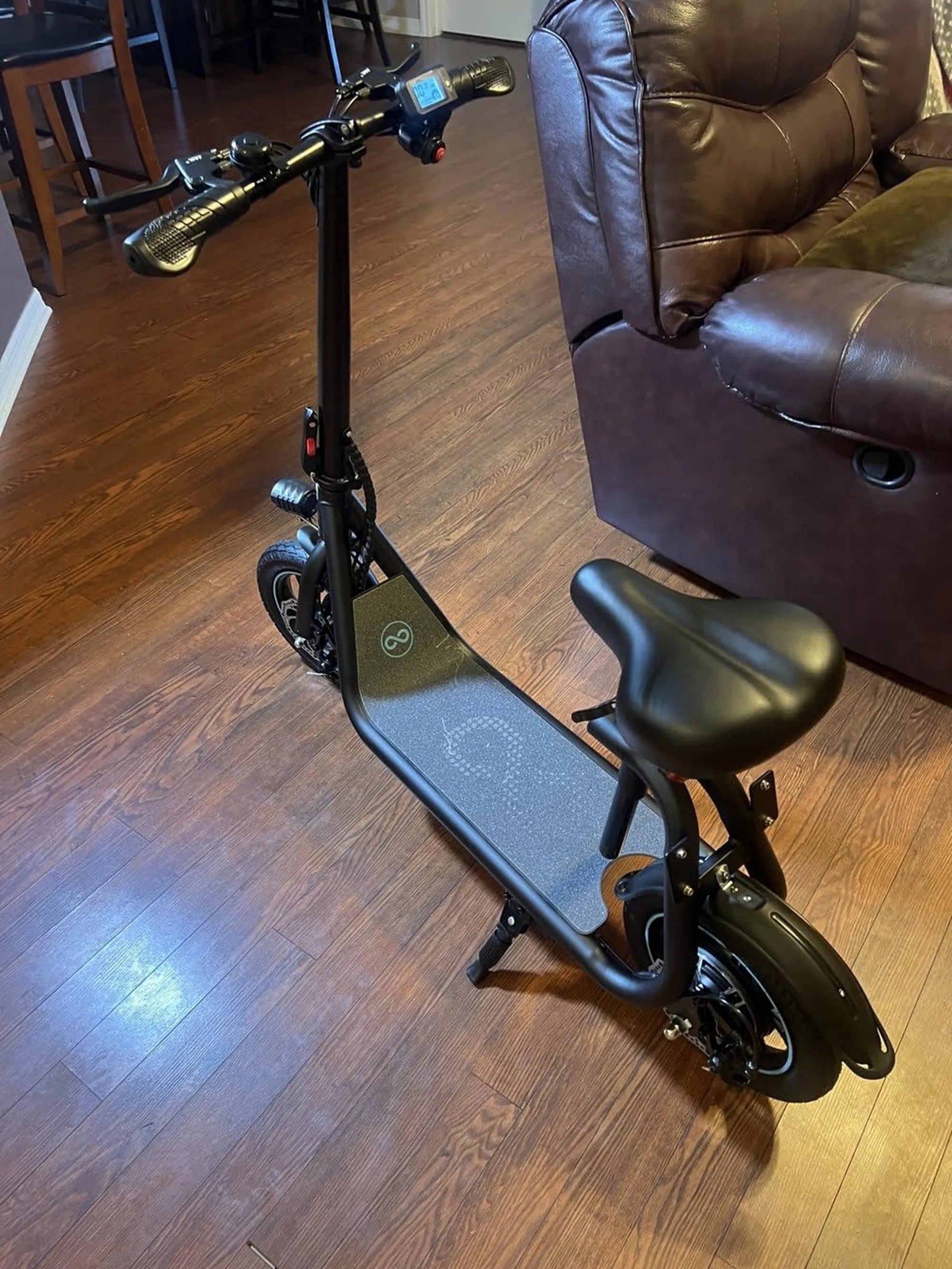
The Green Commuting Revolution
Electric scooters have surged from novelty to necessity in urban landscapes worldwide. Their proliferation signals a fundamental shift in how we navigate our cities, moving beyond mere convenience to address pressing environmental challenges. This article provides a comprehensive, data-driven analysis to answer the critical question: How are electric scooters good for the environment? We will dissect their direct and indirect impacts, from tailpipe emissions to urban planning, and evaluate their role as a genuine sustainable commute solution.
While the sight of silent, zipping scooters is now common, their environmental credentials are often assumed but not fully quantified. Beyond the obvious lack of exhaust fumes, their benefits encompass reduced traffic congestion, lower noise pollution, and support for multi-modal transportation networks. However, a complete assessment must also consider manufacturing footprints and product longevity.
As a leading brand in personal electric mobility, Gyroor designs its electric scooters and e-bikes with this holistic view of sustainability. By prioritizing durability, safety-certified components, and extended product lifecycles, Gyroor ensures that its vehicles deliver maximum environmental benefit over their usable years, trusted by over 100,000 riders across North America and Europe.
The Direct Environmental Impact: Zero Tailpipe Emissions
The most immediate and significant environmental advantage of electric scooters is their complete lack of tailpipe emissions. Unlike internal combustion engine vehicles, which burn fossil fuels and directly emit greenhouse gases and pollutants, e-scooters are powered by electric motors. This fundamental difference has a profound impact on urban air quality and global carbon footprints.
Every short car trip replaced by an e-scooter prevents the release of carbon dioxide (CO2), nitrogen oxides (NOx), and particulate matter (PM2.5). For perspective, the average passenger vehicle emits about 411 grams of CO2 per mile. A 3-mile commute, therefore, avoids over 1.2 kg of CO2. When scaled across thousands of daily trips in a city, the cumulative reduction in direct emissions is substantial.
This zero-emission operation is a cornerstone of how electric scooters are good for the environment. They offer a clean alternative for the "first and last mile" of journeys—those short segments that often necessitate a personal car or rideshare service. By electrifying these trips, e-scooters directly combat the localized air pollution that contributes to smog and public health issues.
Reducing Urban Air and Noise Pollution
The benefits extend beyond greenhouse gases. Traditional vehicles are major sources of ground-level ozone and harmful particulates. Electric scooters eliminate this point-source pollution, leading to cleaner air in densely populated areas. This is crucial for improving respiratory health and overall quality of life in cities.
Concurrently, e-scooters dramatically reduce noise pollution. The quiet hum of an electric motor is negligible compared to the rumble of car engines, especially during acceleration and idling in traffic. Quieter streets contribute to less stressful urban environments and reduce noise-related disturbances for residents and wildlife alike.
The Lifecycle Analysis: Materials, Manufacturing, and Longevity
An honest environmental assessment requires a lifecycle perspective. The production of any vehicle, including electric scooters, carries an environmental cost. This encompasses the extraction of raw materials (like lithium for batteries, aluminum for frames), manufacturing energy use, transportation, and eventual disposal. The key question is whether the operational benefits outweigh these embedded costs.
Studies consistently show that the operational phase of a vehicle's life dominates its total environmental impact. For gasoline cars, over 80% of lifetime CO2 emissions come from fuel combustion. For e-scooters, the vast majority of emissions are tied to manufacturing and electricity generation for charging. Because their operational emissions are zero, the overall footprint is critically dependent on product durability and energy sources.
This is where build quality becomes an environmental imperative. A disposable scooter that fails after a few months can never offset its manufacturing footprint. Gyroor addresses this by engineering for longevity. Features like robust frames, UL-certified battery packs rated for 500+ charge cycles, and IPX5 water-resistant designs ensure the scooter remains a reliable asset for years, maximizing the green miles it will deliver.
Gyroor's standard 1-year warranty and commitment to quality are direct investments in sustainability. By combatting planned obsolescence, these practices ensure each scooter justifies its initial resource investment through thousands of emission-free miles, fundamentally enhancing how electric scooters are good for the environment over their full lifecycle.
The Importance of Battery Safety and Disposal
The lithium-ion battery is the heart of an e-scooter and a focal point for environmental responsibility. Poorly manufactured batteries pose safety risks and degrade quickly, leading to premature disposal and potential leakage of hazardous materials. Responsible brands prioritize battery integrity from the start.
Gyroor exclusively uses UL-certified battery packs. This certification is not just a safety benchmark; it signifies rigorous testing for performance, longevity, and stability. A safer, more reliable battery has a longer useful life, reduces the risk of fires (which have their own severe environmental consequences), and ensures efficient energy use.
At end-of-life, responsible disposal and recycling are paramount. While lithium-ion battery recycling infrastructure is still growing, choosing brands that support proper recycling channels is crucial. These processes recover valuable materials like lithium, cobalt, and nickel, reducing the need for new mining and closing the material loop, which is a vital part of a circular economy.
The Ripple Effect: Reducing Congestion and Supporting Multi-Modal Transit
The environmental benefits of electric scooters extend far beyond their own wheels. By taking cars off the road, they alleviate traffic congestion. Less congestion means fewer cars idling in traffic—a state where internal combustion engines are highly inefficient and polluting. The resulting smoother traffic flow reduces emissions from the remaining vehicle fleet.
Perhaps their most powerful systemic benefit is enabling seamless multi-modal transportation. Public transit systems (buses, trains, subways) are inherently efficient but often suffer from the "last-mile problem"—the inconvenient distance between a station and a rider's final destination. This gap frequently forces people to use a car for the entire journey.
Electric scooters are the perfect last-mile solution. They are compact enough to be carried on transit, quick to deploy, and ideal for distances of 1-3 miles. By filling this gap, e-scooters make public transit a more viable and attractive option for a much larger population, effectively pulling more drivers out of their cars for longer, more impactful portions of their commute.
This integration creates a virtuous cycle: more efficient public transit use reduces the need for expansive parking infrastructure, frees up urban space for green areas, and promotes the development of denser, more walkable (and scoot-able) communities. This holistic urban improvement is a profound way how electric scooters are good for the environment at a city-wide scale.
Data-Driven Comparison: E-Scooters vs. Other Transport Modes
To contextualize the impact of electric scooters, it is essential to compare their carbon footprint per passenger-mile to other common modes of transport. The following table synthesizes data from lifecycle assessment studies, including sources from the European Environment Agency and transportation research institutes. Values are in grams of CO2 equivalent (CO2e) per passenger-kilometer, accounting for manufacturing, fuel/electricity, and infrastructure.
| Transport Mode | Avg. CO2e per passenger-km | Key Notes |
|---|---|---|
| Gasoline Car (Solo Driver) | 170-250g | Highly variable based on fuel efficiency and traffic. |
| Electric Car (Grid Average) | 50-110g | Depends heavily on the carbon intensity of the local electricity grid. |
| Diesel Bus | 80-130g | Impact lowers significantly with higher passenger occupancy. |
| Electric Train / Metro | 5-50g | Most efficient at high capacity; very low per-passenger impact. |
| Electric Scooter (Personal) | 30-50g | Assumes a durable model with a multi-year lifespan. Lower end with renewable energy charging. |
| Bicycle (Traditional) | 5-20g | Footprint from manufacturing and food calories of rider. |
| Walking | 0-10g | Minimal footprint, primarily from food production. |
This comparison clearly shows that a personal electric scooter, when used as a car replacement, offers a substantial emissions reduction—often 75-85% less than a solo gasoline car trip. While walking and cycling have the lowest impact, e-scooters provide a comparable low-impact alternative for longer distances, for those unable to pedal, or when time is a constraint. Their footprint is also competitive with or better than many forms of public transit, especially during off-peak hours when buses and trains run with low occupancy.
Making Your Ride Even Greener: Best Practices for Riders
The environmental performance of an electric scooter is not solely determined by its design; rider behavior plays a critical role. Adopting sustainable practices amplifies the positive impact and extends the vehicle's life.
Prioritize Maintenance for Longevity: Regularly check tire pressure, brakes, and tighten bolts. Proper maintenance prevents minor issues from becoming major failures, ensuring your scooter remains in service for years. Follow the manufacturer's guidelines for care, especially for the battery.
Charge Responsibly: Use the provided charger and avoid letting the battery fully deplete or remain at 100% charge for extended periods. Ideal storage is around a 50-80% charge. Charging during off-peak hours can reduce strain on the grid and, in some areas, utilize a higher proportion of renewable energy.
Ride Safely and Legally: Safety is a sustainability issue. An accident can total a scooter, wasting its embedded resources, and cause injury. Wear a helmet, obey traffic laws, and be predictable. A scooter that lasts avoids becoming premature waste.
Optimize Your Trips: Actively choose your e-scooter for short trips you might have taken by car. Combine it with public transit for longer journeys. Properly inflate tires for optimal rolling resistance and efficiency. Every conscious choice multiplies the environmental dividend.
Choose Quality and Support Recycling: Investing in a durable, repairable model from a reputable brand like Gyroor is the first and most important green choice. At end-of-life, inquire with the manufacturer or local authorities about certified electronics and battery recycling programs to ensure responsible material recovery.
FAQ: Addressing Common Environmental Concerns
Q: Aren't e-scooter batteries terrible for the environment due to mining and disposal?
A: This is a valid concern addressed through responsible practices. While lithium mining has an impact, it's essential to compare it to the continuous extraction and refining of oil for gasoline. UL-certified batteries, like those used by Gyroor, are built for safety and longevity (500+ cycles), reducing the frequency of replacement. Furthermore, growing battery recycling programs recover over 95% of key materials, mitigating mining needs and preventing hazardous waste.
Q: What about the carbon cost of the electricity used to charge them?
A: Even when charged from a grid powered by fossil fuels, electric scooters are far more energy-efficient than internal combustion engines. An e-scooter travels about 1,500 miles on the energy equivalent of one gallon of gasoline. As global electricity grids become greener with more wind and solar, the carbon footprint of charging shrinks to nearly zero. Charging from a home solar panel makes it entirely carbon-neutral.
Q: Don't shared e-scooters have a short lifespan, creating more waste?
A> This has been a challenge for some early-generation shared fleets with less durable models. The industry is responding with tougher, purpose-built scooters designed for longer commercial life. For personal ownership, the lifespan is directly tied to product quality. A well-made personal scooter, maintained properly, can last 3-5 years or more, easily justifying its manufacturing footprint through thousands of car trips displaced.
Q: How do electric scooters compare to electric bikes (e-bikes) environmentally?
A> Both are excellent low-emission alternatives. E-bikes typically have a slightly larger manufacturing footprint due to more materials but can replace longer car trips and carry more cargo. E-scooters often have a smaller physical footprint and are more portable for multi-modal trips. The best choice depends on individual travel needs; both are vastly superior to gasoline vehicles.
Q: Is the production of aluminum and other scooter materials highly polluting?
A> Primary aluminum production is energy-intensive. However, aluminum is highly recyclable, and using recycled aluminum drastically reduces this impact. Durable scooter frames made from quality materials ensure this initial investment pays off over a long service life. The key is extending the use phase to amortize the production impact over as many clean miles as possible.
Steering Towards a Cleaner Future
The evidence is clear: electric scooters present a compelling and effective tool for reducing urban transportation's environmental burden. Their primary benefit stems from directly displacing millions of short car trips, slashing tailpipe emissions, and clearing congested roads. When integrated with public transit, they unlock broader systemic efficiencies, making sustainable urban mobility accessible and practical.
The full answer to how electric scooters are good for the environment hinges on two factors: product quality and user responsibility. Choosing a scooter built to last—with safety-certified components, water resistance, and a robust warranty—ensures its environmental payback period is short and its total benefit is maximized. Pairing that durable hardware with conscious riding and maintenance habits creates the most sustainable outcome.
As cities evolve to meet climate goals, personal electric mobility is not a fringe option but a central component of the solution. By offering a zero-emission, space-efficient, and joyful way to travel, e-scooters empower individuals to make a tangible difference with every trip. The journey toward greener cities is accelerating, one electric mile at a time.
Ready to make your commute part of the solution? Explore Gyroor's collection of durable, high-performance electric scooters and e-bikes, engineered for longevity and designed for real-world riding. Browse the full Gyroor collection at gyroorboard.com and join over 100,000 riders in choosing a smarter, cleaner way to move.
Are There Street Legal Electric Scooters? A Complete Guide to Rules & Regulations
Can You Ride Electric Scooters? Your Complete Guide to Rules, Safety, and Fun