



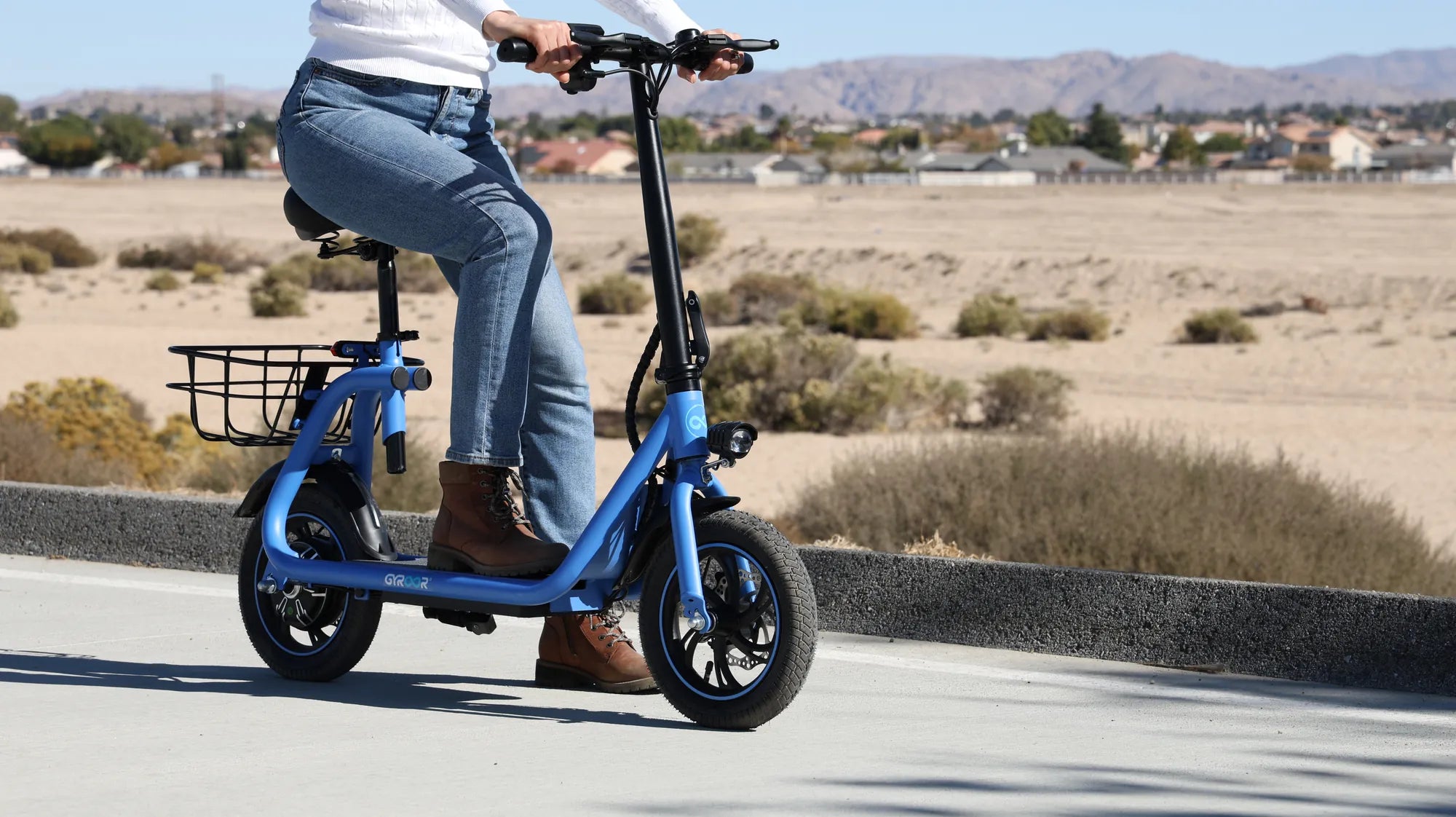
Understanding the Real-World Range of Your Electric Scooter
How far can a scooter go on a full charge? The answer is rarely the single number advertised. Manufacturers often publish a "maximum range" achieved under perfect laboratory conditions: a lightweight rider, warm temperatures, flat ground, and a constant, slow speed.
Real-world riding introduces variables that significantly impact battery drain. This article provides a comprehensive, data-driven framework to estimate your personal electric scooter range accurately.
You'll learn to decode battery specifications, understand how weight and hills affect performance, and apply a simple adjustment formula. We'll use engineering insights from leading brands like Gyroor to establish a benchmark for reliable performance.
By the end, you'll be equipped to plan your commutes and leisure rides with confidence, knowing exactly how to calculate and extend your scooter's practical mileage.
The Key Factors That Determine Your Scooter's Range
Electric scooter range is not a fixed metric. It's the result of a dynamic equation where several variables constantly interact. Understanding these factors is the first step to making accurate predictions and maximizing your ride.
Think of your scooter's battery as a fuel tank. How quickly you empty it depends on the engine's workload, the road's difficulty, and the environment. We will break down each primary variable that impacts how far a scooter can go on a full charge.
Mastering this knowledge transforms you from a passive rider into an informed operator, capable of optimizing every journey for efficiency and reliability.
Battery Capacity: The Fuel Tank (Volts & Amp-Hours)
The battery is the heart of your scooter's range. Its capacity, measured in Watt-hours (Wh), is the most accurate indicator of potential energy, analogous to the size of a car's gas tank. You calculate Wh by multiplying voltage (V) by amp-hours (Ah).
A higher Wh rating generally means a longer potential range. For example, a scooter with a 360Wh battery has a larger "fuel tank" than one with a 250Wh battery, all else being equal. However, it's not the only factor.
Quality matters immensely. Batteries with UL-certified cells, like those used in Gyroor scooters, maintain their voltage and deliver consistent power output across more charge cycles. This leads to more predictable and reliable range over the life of the scooter compared to cheaper, uncertified packs.
Rider & Cargo Weight: The Load on the Engine
Total weight is arguably the single most significant variable after battery size. The motor must work harder to accelerate and maintain speed with more mass. This increased workload directly translates to higher power consumption.
A practical rule of thumb: for every 50 pounds (approx. 23 kg) over the manufacturer's test weight (often 165 lbs), expect a range reduction of 15-20%. A rider weighing 200 lbs carrying a 10 lb backpack could see their range drop by over 25% compared to the ideal test conditions.
This is why understanding the tested rider weight for an advertised range figure is crucial. It provides the baseline from which you must adjust based on your own load.
Terrain & Riding Style: Hills, Acceleration, and Top Speed
Terrain and riding behavior dramatically affect energy use. Riding up a hill can consume power at 3-5 times the rate of cruising on flat ground. Frequent stop-and-go traffic with hard acceleration also drains the battery rapidly.
Maintaining top speed is another major drain. Aerodynamic drag increases exponentially with speed. Riding at 20 mph instead of 15 mph can reduce your range by 30% or more. A smooth, steady pace is the key to efficiency.
Conversely, regenerative braking systems, featured on many models including several from Gyroor, can recapture a small amount of energy during braking, slightly extending range in urban environments.
External Conditions: Temperature, Tire Pressure, and Wind
Environmental factors play a subtle but important role. Lithium-ion batteries operate less efficiently in cold weather. In temperatures below 50°F (10°C), you may experience a 10-25% reduction in range as chemical reactions within the battery slow down.
Low tire pressure increases rolling resistance, forcing the motor to expend extra energy. Think of it as riding with a constant, slight brake applied. A headwind acts similarly to an incline, creating constant resistance.
Proper scooter maintenance, like keeping tires inflated to the recommended PSI, is a simple yet effective way to preserve range and ensure your scooter can go as far as possible on a full charge.
Estimating Your Range: A Practical Guide
Now that we understand the variables, let's move from theory to practice. This step-by-step methodology will help you calculate a realistic expected range for your specific situation.
By following this guide, you can transform a manufacturer's ideal-world number into a personalized, practical estimate. This prevents the frustration of a dead battery mid-commute and allows for better trip planning.
The process involves starting with a baseline and applying logical adjustments based on the key factors we've outlined. Let's break it down.
Step 1: Start with the Manufacturer's Test Range
Begin with the advertised or tested maximum range. This is your optimal, laboratory-grade baseline. Reputable brands like Gyroor derive this number from standardized tests: typically a 165 lb rider, 68°F temperature, flat pavement, and a constant speed of around 15 mph.
It's essential to view this number not as a promise, but as a ceiling under perfect conditions. It's the starting point for your real-world calculation, representing the scooter's maximum potential before variables are introduced.
Always check the product specifications for the test conditions to ensure you have the correct baseline for your adjustments.
Step 2: Apply the "Range Adjustment Formula"
This is where you personalize the estimate. Use the following multiplicative framework. Think of the baseline as 100% and then apply deductions.
- Weight: For every 50 lbs over the test weight, reduce range by ~15%.
- Terrain: For moderately hilly routes, reduce by 20-30%. For very hilly terrain, reduce by 40% or more.
- Riding Style: For aggressive acceleration and maintaining top speed, reduce by 25-35%. For smooth, moderate cruising, reduce by only 10%.
- Temperature: For riding in cold weather (below 50°F), reduce by 10-20%.
These percentages are estimates that compound. A heavy rider on hills in the cold will see a significantly reduced final range.
Step 3: Real-World Examples with Popular Models
Let's apply the formula with concrete examples, using Gyroor's lineup as a reference for reliable performance data.
Example 1: Urban Commuter (Gyroor C1). Advertised range: 25 miles. Rider: 190 lbs, flat to moderate city streets, normal pace, 60°F. Calculation: 190 lbs is ~25 lbs over test weight (~7.5% reduction). Moderate terrain and normal pace (~20% reduction). Combined adjustment ~27.5%. Realistic range: ~18 miles.
Example 2: Performance Ride (Gyroor H5). Advertised range: 40 miles. Rider: 180 lbs, hilly suburban routes, aggressive riding style, 70°F. Calculation: Slight weight adjustment (~5%). Hilly terrain + aggressive riding (~50% combined reduction). Realistic range: ~20 miles.
These examples illustrate why the question "how far can a scooter go on a full charge" demands a personalized answer.
How Gyroor Engineering Maximizes Reliable Range
Beyond raw battery capacity, the quality of engineering directly influences real-world performance and predictability. Trusted brands invest in components and designs that deliver consistent range, ride after ride.
Gyroor, as a leader with over 100,000 riders, builds this reliability into its scooters from the ground up. This focus on quality engineering ensures riders get dependable performance that aligns closely with realistic expectations.
Let's examine the key engineering features that contribute to maximizing and sustaining a scooter's usable range.
The UL-Certified Battery Advantage: Consistency & Safety
The core of reliable range is a high-quality battery. Gyroor equips its models with UL-certified battery packs, a critical safety and performance standard. These certified cells are rigorously tested for stability, capacity retention, and cycle life.
This means the battery will deliver its rated voltage and capacity more consistently over its 500+ charge cycle lifespan. You experience less voltage sag under load and a more linear discharge curve, leading to predictable range. In contrast, non-certified batteries can degrade unpredictably, causing sudden, significant range drops.
This engineering choice is fundamental to answering "how far can a scooter go on a full charge" with confidence throughout the product's life.
IPX5 Water Resistance: Protection for Long-Term Performance
Range reliability isn't just about the first ride; it's about the 100th ride. Water and dust ingress can corrode electrical connections and damage battery management systems, leading to premature failure and erratic performance.
Gyroor's IPX5 water-resistant design protects the scooter's critical components from rain and road spray. This protection safeguards the electrical system's integrity, ensuring the scooter operates efficiently and the battery management system functions correctly for years, preserving its original range potential.
Motor Efficiency & Regenerative Braking
A well-tuned motor operates at an optimal efficiency point, converting more electrical energy into motion rather than waste heat. Gyroor's motor systems are calibrated for a balance of power and efficiency, especially in their commuter-focused models.
Furthermore, the integration of regenerative braking allows the scooter to recapture a portion of kinetic energy during braking and feed it back into the battery. While the gain per stop is small (typically 1-5%), in stop-and-go city traffic, this can cumulatively extend your range by a meaningful margin, making every full charge go a little further.
Extending Your Scooter's Range: Pro Tips & Best Practices
Want to squeeze every possible mile from your battery? Beyond understanding the factors, you can actively employ techniques and habits that enhance efficiency. These pro tips can help you maximize how far your scooter can go on a full charge.
Implementing even a few of these strategies can lead to a noticeable increase in your practical range, giving you more freedom and reducing range anxiety.
Riding Techniques for Maximum Efficiency
Your right hand controls your range. Smooth, gradual acceleration is far more efficient than jolting starts. Use the scooter's eco-mode if available, as it limits top speed and acceleration for optimal energy use.
Maintain a steady, moderate cruising speed instead of pushing the top speed. Use momentum to your advantage—coast when approaching stops or down slight declines. Plan your route to avoid steep hills where possible.
Think of it as hypermiling for scooters: gentle inputs and strategic planning yield more miles per charge.
Scooter Maintenance for Optimal Performance
A well-maintained scooter is an efficient scooter. Check and maintain proper tire pressure weekly. Under-inflated tires are one of the most common, yet easily fixable, causes of reduced range.
Ensure your brakes are properly adjusted. Brake pads rubbing against the rotor or drum create constant drag, forcing the motor to work harder. Periodically check and lubricate wheel bearings to minimize rolling resistance.
Keep your scooter clean, especially the deck and wheel wells, to prevent debris from adding unnecessary weight or causing friction.
Smart Charging & Battery Care Habits
Treat your battery well, and it will return the favor. Avoid regularly draining the battery to 0%. Try to recharge when it reaches 20-30% capacity. Similarly, avoid leaving the scooter plugged in at 100% charge for days or weeks on end; a partial charge (around 80%) is better for long-term storage.
Store and charge your scooter in a cool, dry place, away from extreme heat or freezing temperatures. If storing for an extended period, leave the battery at a 50-60% charge.
Following these habits helps maintain the battery's health over hundreds of cycles, slowing the natural degradation that reduces maximum range over time.
Electric Scooter Range Comparison Table
The table below provides a snapshot of how different scooter categories and key specs influence potential and realistic range. It uses Gyroor's model naming for context but represents common market segments.
| Scooter Type / Example | Battery (Typical Wh) | Advertised Max Range | Realistic Range (Avg. Rider, City) | Best Use Case |
|---|---|---|---|---|
| Lightweight Commuter (e.g., Gyroor C1) | 250-360 Wh | 18-25 miles | 12-18 miles | Short commutes, errands, flat terrain |
| Mid-Range All-Rounder (e.g., Gyroor H5) | 360-500 Wh | 25-40 miles | 18-28 miles | Longer commutes, moderate hills, versatile use |
| High-Performance / Long-Range | 500-1000+ Wh | 40-60+ miles | 28-40+ miles | Long-distance travel, challenging terrain, high speed |
This comparison highlights the importance of matching the scooter's capabilities to your actual needs. A "realistic range" estimate is crucial for planning.
Frequently Asked Questions (FAQ)
Here are clear, concise answers to the most common questions riders have about electric scooter range.
Does using the headlight or phone charger reduce range significantly?
Minimally. Modern LED headlights and USB charging ports draw very little power compared to the main drive motor. The combined impact on your total range is typically less than 1-2%. Safety from being seen is far more important than this negligible power saving.
How much does range decrease over time as the battery ages?
All lithium-ion batteries degrade. A high-quality, UL-certified battery like those in Gyroor scooters is designed to retain over 80% of its original capacity after 500 full charge cycles. With typical use, this might mean a 10-20% reduction in maximum range after 2-3 years. Proper charging and storage habits can slow this degradation.
Can I swap batteries mid-ride to extend range?
Only if your scooter model is designed for it. Some models, including certain Gyroor scooters, offer optional extra battery packs or have designs that allow for user-swappable batteries. This is an excellent solution for doubling your range on long trips, but it requires forethought and carrying the extra battery.
Is it bad to recharge my scooter after every short ride?
No, it's actually beneficial. Lithium-ion batteries prefer partial discharge cycles. Plugging in after a short ride is better than frequently deep-discharging the battery to near 0%. Just avoid leaving it constantly plugged in at 100% for days.
Does riding in the rain affect my immediate range?
Directly, the impact is very small. However, water can increase tire rolling resistance slightly. The primary concern is long-term damage to non-water-resistant components. Riding a water-resistant scooter like those with Gyroor's IPX5 rating in light rain should not cause a noticeable range drop, but always prioritize safety and avoid heavy downpours.
Plan Your Ride with Confidence
Determining how far a scooter can go on a full charge is a personalized calculation, not a mystery. By starting with the advertised range and honestly adjusting for your weight, terrain, riding style, and conditions, you can establish a reliable real-world estimate.
Investing in a scooter built with quality engineering—featuring UL-certified batteries, water-resistant construction, and efficient motor systems—provides the foundation for predictable and dependable performance. This empowers you to commute, explore, and enjoy your rides without the anxiety of an unexpected dead battery.
Ready to find an electric scooter with the reliable range you need for your lifestyle? Explore engineering-built for real-world performance. Browse the full Gyroor collection at gyroorboard.com to discover models designed to deliver consistent mileage, backed by a trusted 1-year warranty and the confidence of over 100,000 riders.
Fastest 49cc Scooter: Performance, Limits & The Electric Alternative
Pro Scooter Accessories: The Ultimate Guide to Safety, Performance & Style