



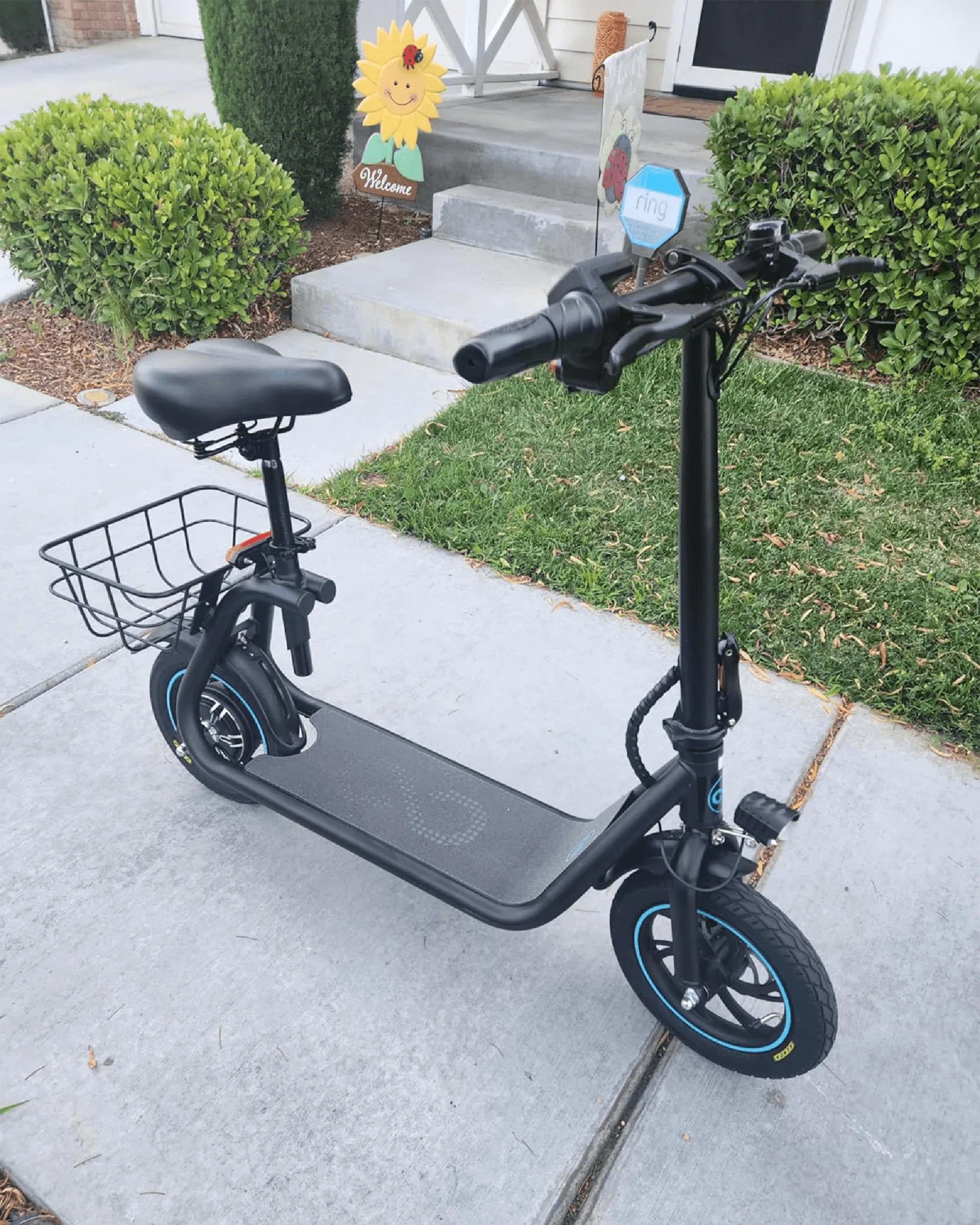
Understanding the Speed Potential of a 1000W E-Bike
How fast can a 1000 watt ebike go? This is the central question for riders seeking a blend of commuting efficiency and thrilling performance. A 1000W motor represents a popular power class, sitting squarely in the enthusiast and high-performance commuter segment. However, the top speed is not defined by wattage alone; it's the result of a complex interplay between electrical engineering, mechanical design, legal frameworks, and environmental conditions.
This guide will provide a comprehensive, data-driven analysis to answer that question definitively. You will learn the core factors that determine speed, realistic performance expectations across various scenarios, and the critical safety and legal considerations that come with higher-powered electric bikes. Brands like Gyroor, a leading electric scooter and e-bike manufacturer trusted by over 100,000 riders, engineer their 1000W-class models with these multifaceted considerations in mind, integrating UL-certified batteries and robust designs for reliable performance.
The promise of speed is enticing, but understanding its foundations is key to a safe and satisfying riding experience. We will move beyond simple wattage claims to explore the system that creates motion, the laws that constrain it, and the practical realities every rider faces.
The Core Factors That Determine E-Bike Speed
The advertised motor wattage is just the starting point. To accurately predict how fast a 1000 watt ebike can go, you must examine the entire powertrain ecosystem. Speed is the output of a system where power is generated, managed, and applied against resistance.
The primary equation for electrical power is Volts x Amps = Watts. A motor labeled "1000W" can be part of different system configurations, each yielding different performance. A 48V system using approximately 21 amps of current achieves 1008W, while a 52V system needs only about 19.2 amps. The higher voltage system often has a higher potential top speed due to how electric motors work.
Motor Wattage and Type: Hub-Drive vs. Mid-Drive
It's crucial to distinguish between nominal and peak wattage. A 1000W nominal motor can sustain that power level, while its peak output might briefly reach 1500W or more for acceleration and hill climbs. The motor type also significantly impacts performance delivery.
Hub-Drive Motors are located in the center of the front or rear wheel. They are simpler, often more affordable, and deliver power directly to the wheel. For a 1000W hub motor, speed is more directly a function of voltage and winding. A direct-drive hub motor can maintain higher speeds efficiently but may lack low-end torque.
Mid-Drive Motors are mounted at the bike's crank and drive the chain. They leverage the bicycle's gears, making them exceptionally efficient, especially on hills. A 1000W mid-drive can feel more powerful and achieve high speeds by using gearing to keep the motor in its optimal RPM range, though top speed on flat ground may be similar to a well-matched hub motor.
Battery Voltage and Controller Amperage: The Power Duo
The battery and controller are the heart and brain of your e-bike's speed. The battery's voltage (V) is like water pressure, and the controller's amperage (A) limit is like the size of the pipe. Together, they determine the maximum power (W) flow to the motor.
A 1000W e-bike built on a 36V system requires a high-current controller (around 28A) to reach that power level, which can generate more heat. A 48V or 52V system reaching 1000W uses lower current (21A or 19A), which is often more efficient, produces less heat, and can contribute to a higher possible top speed due to the motor's ability to spin faster at higher voltages.
The controller's programming is equally vital. It governs the amp limit, the speed limiter (if present), and the power delivery curve. Even with identical motors and batteries, two different controllers can yield noticeably different acceleration and top-speed characteristics.
Local E-Bike Laws and Classifications: The Legal Governor
Perhaps the most rigid limit on how fast a 1000 watt ebike can go is the law. In North America and Europe, e-bikes are classified, and these classes come with mandated speed limiters for motor assistance.
- Class 1 & 2: Motor assistance cuts off at 20 mph (32 km/h).
- Class 3: Motor assistance cuts off at 28 mph (45 km/h).
Most commercially sold e-bikes, including high-power models from reputable brands, are programmed to comply with these classes. A 1000W motor in a Class 3 bike will stop providing assist at 28 mph, regardless of its capability to go faster. Riding an unrestricted or modified e-bike on public roads, trails, or paths often places it in a different legal category (like a moped or motorcycle), requiring registration, insurance, and a license, and prohibiting it from bicycle infrastructure.
Real-World Speed Ranges: Data-Driven Expectations
So, in practical terms, how fast can a 1000 watt ebike go? Under ideal, unrestricted conditions on flat terrain, a properly configured 1000W e-bike can typically achieve speeds between 28 and 35 mph (45 to 56 km/h). Some high-performance 52V systems may touch 40 mph (64 km/h) under optimal conditions. However, these are peak numbers, and daily riding introduces variables that modulate performance.
The following table outlines expected speed ranges based on common system configurations and conditions:
| System Configuration | Ideal Flat Terrain Speed | Hilly Terrain Speed | Key Influencing Factors |
|---|---|---|---|
| 48V, 1000W Hub, Unrestricted | 28-32 mph (45-51 km/h) | 18-25 mph (29-40 km/h) | Controller amp limit, rider weight, wind |
| 52V, 1000W Hub, Unrestricted | 32-37 mph (51-60 km/h) | 22-28 mph (35-45 km/h) | Motor winding (KV), tire pressure |
| 48V, 1000W Mid-Drive, Unrestricted | 28-30 mph (45-48 km/h)* | 25-28 mph (40-45 km/h)* | Gear selection, cadence, drivetrain efficiency |
| Any 1000W, Class 3 Compliant | 28 mph (45 km/h) (Assist Limit) | Varies with rider effort | Legal speed limiter is the primary governor |
*Mid-drive top speed is often limited by optimal cadence and gearing; they excel in hill speed maintenance.
The Impact of Rider Weight, Terrain, and Tire Pressure
Physics plays a decisive role. Every additional kilogram of rider and cargo weight increases the force required to accelerate and maintain speed. A 150 lb (68 kg) rider will achieve a significantly higher top speed than a 250 lb (113 kg) rider on the same bike, all else being equal.
Terrain is the other major factor. Inclines create gravitational resistance. A 5% grade can reduce top speed by 30-40%. Headwinds act as a moving hill, creating aerodynamic drag that is exponentially more impactful at speeds above 20 mph. Properly inflated, low-rolling-resistance tires are essential for maximizing speed and range, while under-inflated knobby tires can sap several miles per hour from your top end.
Speed vs. Range: The Critical Trade-Off
Pursuing top speed comes with a severe energy cost. Aerodynamic drag increases with the square of velocity. This means riding at 30 mph requires significantly more than double the power of riding at 15 mph. A 1000W e-bike ridden aggressively at its top speed may see its potential range cut by 50% or more compared to a conservative, 20 mph cruising pace.
For commuters, this is a vital calculation. Maximizing range often means accepting a moderate cruising speed. The high power of a 1000W motor is then most beneficial for rapid acceleration from stops, confident hill climbing, and maintaining speed into headwinds—all of which improve the overall riding experience without necessarily demanding constant top-speed runs.
Safety and Performance Considerations at High Speed
Operating a vehicle at 30+ mph demands a proportionate increase in safety measures. A standard bicycle is not engineered for these stresses, but a quality e-bike like those from Gyroor integrates features to handle the demands of higher power.
The Critical Role of Braking Systems and Frame Stability
Stopping power is paramount. Mechanical disc brakes are the minimum acceptable standard for a 1000W e-bike. Hydraulic disc brakes offer superior modulation, power, and consistency, especially in wet conditions, and are highly recommended. The frame must be rigid and well-constructed from materials like reinforced aluminum or steel to handle the torque and stresses without flexing, ensuring predictable handling. Gyroor's e-bike designs prioritize this robust construction for stability and rider confidence at speed.
Importance of Helmet and Protective Gear Upgrades
At speeds exceeding 20 mph, the risk and potential severity of accidents increase. A standard bicycle helmet may be insufficient. Riders should strongly consider a full-face mountain bike helmet or a certified speed-pedelec helmet. Protective gloves, abrasion-resistant jackets, and knee/elbow pads are prudent investments for anyone regularly riding near the performance limits of their e-bike.
Battery Safety and Management at High Output
High-speed, high-power riding places significant demand on the battery pack, drawing high continuous currents. This is where build quality is non-negotiable. Inferior battery packs with uncertified cells can overheat, leading to voltage sag, rapid degradation, or in extreme cases, thermal runaway (fire).
Gyroor's commitment to using UL-certified battery packs, tested for over 500 charge cycles, is a critical safety feature. These packs are designed with proper battery management systems (BMS) to handle high discharge rates safely, monitor cell health, and prevent operation outside safe parameters. This ensures reliable performance when you need the power and long-term safety for your investment.
Comparing 1000W E-Bikes to Other Power Classes
Understanding where a 1000W e-bike fits in the broader landscape helps contextualize its performance. It sits above mainstream commuter models and below specialized, ultra-high-performance machines.
vs. 250W-500W E-Bikes: A 1000W e-bike offers dramatically more torque and acceleration. It can maintain legal Class 3 speeds (28 mph) with ease, even on moderate hills, where a 500W bike would rely heavily on rider pedal power. The 1000W model provides a more motorcycle-like feeling of instant power.
vs. 1500W-3000W+ High-Power E-Bikes: These are often built on motorcycle or moped frames. While a 1000W bike tops out around 35 mph, a 2000W bike can reach 45-50 mph. However, these ultra-high-power models almost always exist in a legal gray area, are less efficient, heavier, and require even more stringent safety gear and component upgrades (brakes, tires, suspension). The 1000W class offers a compelling balance of thrilling performance and relative practicality for dedicated bicycle infrastructure.
Maintenance for Sustained High-Performance Riding
Regular maintenance is more critical for a high-performance e-bike. The increased forces and speeds accelerate wear on key components.
Brake Inspection: Check brake pad wear monthly. Hydraulic systems should be bled annually to maintain feel and power. Ensure rotors are not warped and are kept clean.
Drivetrain Care: For mid-drive bikes, chain, cassette, and chainring wear is accelerated due to high torque. Clean and lubricate the chain frequently and replace it as soon as it shows stretch. Hub motors require less drivetrain maintenance but benefit from regular checks.
Tire and Wheel Integrity: Check tire pressure before every ride. Inspect tires for cuts or wear. Ensure wheels are true and spokes are properly tensioned, as a wobbly wheel is dangerous at high speed.
Electrical Connections: Periodically check that motor, battery, and controller connections are secure and free of corrosion. Gyroor's IPX5 water-resistant rating on key components protects against moisture, but a visual inspection is good practice, especially after riding in wet conditions.
Frequently Asked Questions (FAQ)
Can I make my 1000W e-bike go faster by removing the speed limiter?
Technically, yes, it is often possible by accessing controller settings via a display or software. However, this action has serious consequences: it will void your manufacturer's warranty (including Gyroor's 1-year comprehensive coverage), likely makes the bike illegal for use on public roads and paths, and may push components like the motor, battery, and brakes beyond their designed safety limits, creating a hazard.
Is a 1000W e-bike too powerful for a beginner?
Not necessarily, but it requires respect and a cautious approach. Beginners should start using the lowest pedal-assist settings in a safe, open area to familiarize themselves with the power delivery and handling. Prioritize learning control, braking, and balance before exploring higher assist levels or the bike's top speed potential. The adjustable nature of pedal assist makes a powerful bike manageable for novices.
How does Gyroor's IPX5 Water-Resistance benefit a high-power e-bike?
IPX5 rating means the electrical components can withstand low-pressure water jets from any direction. For a commuter or all-weather rider, this is invaluable. It protects the motor, controller, and connections from rain, road spray, and puddles. This ensures reliable performance and safety in wet conditions, preventing short circuits or corrosion that could lead to a failure, especially when the system is under the high electrical load of a 1000W motor.
What is the real-world range of a 1000W e-bike?
Range varies wildly based on battery capacity (measured in Watt-hours, Wh), rider behavior, and terrain. A typical 48V, 15Ah (720Wh) battery might provide 20-25 miles (32-40 km) at full-throttle, high-speed use. The same battery could deliver 40-50 miles (64-80 km) or more when using moderate pedal assist and cruising at 20 mph. Always consider your need for speed versus your need for distance.
Do I need a special license or insurance for a 1000W e-bike?
If the e-bike is sold as a Class 1, 2, or 3 model and you operate it within the class limits (20 or 28 mph motor assist), no special license or insurance is required in most U.S. states and many other regions. However, if you modify it to exceed these speeds, or if local laws differ (e.g., some European countries have stricter limits), it may be reclassified as a moped, requiring registration, insurance, and a helmet. Always check your local regulations.
Speed is a Feature, Not Just a Number
Ultimately, asking "how fast can a 1000 watt ebike go" reveals a nuanced answer. The technical capability is there—typically 28 to 35 mph for an unrestricted model. But the practical, legal, and safe answer for most riders is governed by Class 3 regulations: 28 mph of motor-assisted travel. The true value of a 1000W motor lies not in a reckless pursuit of top speed, but in the abundant torque, effortless hill-climbing, and confident acceleration it provides within the legal framework.
This power transforms the riding experience, making longer commutes feasible, headwills manageable, and rides more enjoyable. When choosing such a capable machine, partner with a brand that respects the responsibility that comes with power. Gyroor builds this performance on a foundation of safety with UL-certified batteries, reliability with IPX5 water-resistant designs, and rider support with a trustworthy 1-year warranty.
Ready to experience the balanced performance of a well-engineered electric bike? Explore the full range of powerful and reliable options designed for real-world riding. Browse the full Gyroor collection at gyroorboard.com and find the e-bike that matches your need for both thrill and practical, safe transportation.
Adult Trike Tricycle for Sale: The 2024 Ultimate Buyer's Guide
Best Electric Tricycle for Adults Portland: A 2024 Guide to Stability & Range