



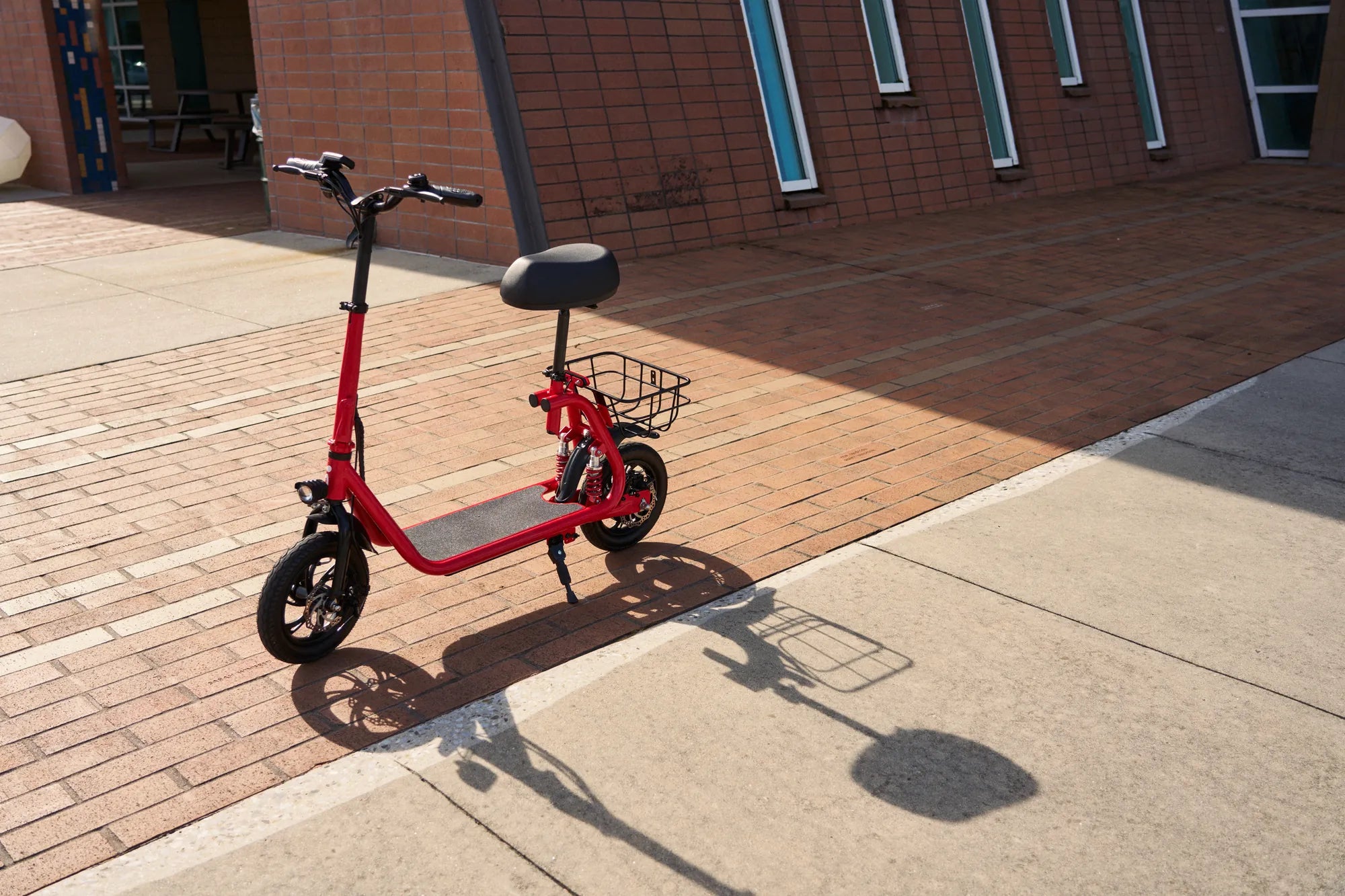
Understanding How Long to Charge Ebike: The Complete Reality Check
Knowing how long to charge ebike batteries isn't just about convenience—it's essential for trip planning, battery health, and maximizing your electric bike's lifespan. The answer varies dramatically based on your specific equipment, but typically ranges from 3 to 8 hours for a full charge. As a leading electric scooter and e-bike brand trusted by over 100,000 riders across North America and Europe, Gyroor designs its charging systems for predictable performance and safety. This guide will provide you with precise calculations, real-world scenarios, and manufacturer insights to eliminate the guesswork.
We'll break down the exact factors that determine your charging duration, from battery chemistry to environmental conditions. You'll learn why a 10Ah battery charges faster than a 15Ah unit, how charger amperage affects your wait time, and what percentage of charge actually matters for daily use. More importantly, we'll explain how proper charging habits can double your battery's effective lifespan, saving you significant replacement costs over time.
The question of how long to charge ebike systems involves both simple mathematics and complex battery science. Modern lithium-ion batteries, like those in Gyroor's UL-certified packs, require specific care to maintain their 500+ charge cycle rating. This isn't just about plugging in overnight; it's about understanding the relationship between time, energy, and longevity. By the end of this guide, you'll be able to calculate your exact charging needs and implement practices that professional riders use.
Let's start with the fundamental truth: charging time equals battery capacity divided by charger output, with adjustments for efficiency losses and charging stages. A 504Wh battery with a 2-amp charger requires approximately 7 hours, while the same battery with a 4-amp fast charger might take just 3.5 hours. But these numbers tell only part of the story—the complete picture requires examining multiple technical and practical factors we'll explore in detail.
The Science Behind E-Bike Charging: Core Technical Factors
Four primary variables directly determine how long to charge ebike batteries: capacity, charger output, depletion level, and environmental conditions. Understanding each component helps predict charging times accurately and explains why different e-bikes require different charging durations. These factors interact in predictable ways, allowing you to calculate estimates before even purchasing a new e-bike or charger.
Battery Capacity (Watt-Hours - Wh): This is the total energy storage measurement, calculated as Voltage (V) × Amp-Hours (Ah). A higher Wh rating means a larger "fuel tank" that takes longer to fill. For example, Gyroor's 36V 14Ah battery has 504Wh capacity (36 × 14), while a 36V 10Ah battery has 360Wh. The 504Wh battery typically requires 40% more charging time than the 360Wh unit when using the same charger, assuming similar efficiency.
Charger Output (Amps/Watts): The charger acts as the "faucet" filling your battery "tank." Standard e-bike chargers typically output 2 amps (about 72W for 36V systems), while fast chargers might provide 4 or 5 amps (144-180W). Output wattage equals Volts × Amps, so a 36V 2A charger delivers 72W. Doubling the amperage essentially halves the charging time, though battery management systems may limit maximum safe charging rates.
State of Charge (Depletion Level): Lithium-ion batteries charge in three phases: bulk (fast), absorption (slowing), and trickle (very slow). The first 80% charges relatively quickly, while the final 20% takes disproportionately longer as the battery management system carefully balances cells. Charging from 20% to 80% might take 3 hours, while completing the final 20% could require another 2 hours. This nonlinear charging profile significantly affects how long to charge ebike batteries for daily versus complete charging.
Battery Health & Temperature: Older batteries with diminished capacity may charge slightly faster but store less energy, reducing your riding range more than charging time. Extreme temperatures dramatically affect charging efficiency—charging below 32°F (0°C) can damage cells, while charging above 95°F (35°C) accelerates degradation. Optimal charging occurs at room temperature (68-77°F or 20-25°C), where chemical reactions proceed at designed rates.
Gyroor's Charging Technology: Engineered for Safety and Longevity
Gyroor implements specific engineering solutions that optimize both charging speed and battery lifespan. Their approach focuses on balanced performance rather than maximum speed alone, recognizing that sustainable battery health creates better long-term ownership experiences. This philosophy manifests in several key technologies that distinguish their charging systems from generic alternatives.
UL-Certified Battery Packs with Advanced BMS: Every Gyroor battery undergoes rigorous UL certification, ensuring the battery management system (BMS) regulates charge cycles with precision. The BMS monitors individual cell voltages, temperatures, and overall pack health during charging, preventing overcharging even if left connected longer than necessary. This intelligent regulation extends battery life while maintaining safety, a critical consideration when determining how long to charge ebike systems safely.
Multi-Stage Charging Algorithms: Gyroor chargers implement optimized bulk-absorption-trickle charging profiles tailored to their specific battery chemistry. During bulk charging (0-80%), the charger delivers maximum safe current. The absorption phase (80-95%) reduces current as voltage peaks, while trickle charging (95-100%) applies minimal current to balance cells without stress. This staged approach maximizes both speed and longevity, unlike simple constant-current chargers that can degrade batteries faster.
IPX5 Water-Resistant Battery Construction: While chargers themselves must remain dry, Gyroor's IPX5-rated battery housings protect against water ingress from any direction. This durability ensures consistent performance across varied conditions and prevents moisture-related issues that could affect charging reliability over time. The sealed construction maintains optimal internal environments for the lithium-ion cells throughout their lifespan.
Thermal Management Systems: Quality batteries like Gyroor's incorporate temperature sensors that communicate with the BMS to adjust charging parameters. If the pack exceeds safe temperatures during charging, the system automatically reduces current or pauses until optimal conditions return. This protection prevents the accelerated degradation that occurs when charging overheated batteries, a common issue with poorly designed systems.
Calculating Your Exact Charging Time: Formulas and Examples
You can calculate precisely how long to charge ebike batteries using straightforward formulas. These calculations provide realistic estimates that help plan your charging schedule, especially important for daily commuters or riders with limited charging windows. Remember that actual times may vary by 10-15% due to efficiency losses, BMS management, and environmental factors.
The Fundamental Formula: Charging Time (hours) = Battery Capacity (Wh) ÷ Charger Output (W) × 1.1 (efficiency factor). For example, a 504Wh Gyroor battery with a standard 2A 36V charger (72W output): 504 ÷ 72 = 7 hours × 1.1 = approximately 7.7 hours from completely empty to 100%. The 1.1 multiplier accounts for the approximately 90% efficiency of AC/DC conversion and battery chemistry losses during charging.
Partial Charge Calculations: For partial charging, adjust the formula: Charging Time = (Target % - Current %) × Capacity ÷ Charger Output × 1.1. Charging a 504Wh battery from 30% to 80% (a 50% charge) with a 72W charger: (0.5 × 504) = 252Wh needed ÷ 72W = 3.5 hours × 1.1 = approximately 3.85 hours. This calculation explains why partial daily charging often fits conveniently into evening routines.
Fast Charger Impact: Using Gyroor's optional 4A fast charger (144W output) with the same 504Wh battery: 504 ÷ 144 = 3.5 hours × 1.1 = approximately 3.85 hours for a full charge—essentially cutting standard charging time in half. The table below compares common scenarios:
| Battery Capacity | Charger Type | 0-100% Time | 20-80% Time |
|---|---|---|---|
| 360Wh (36V 10Ah) | Standard 2A (72W) | 5.5 hours | 3.3 hours |
| 360Wh (36V 10Ah) | Fast 4A (144W) | 2.75 hours | 1.65 hours |
| 504Wh (36V 14Ah) | Standard 2A (72W) | 7.7 hours | 4.6 hours |
| 504Wh (36V 14Ah) | Fast 4A (144W) | 3.85 hours | 2.3 hours |
| 720Wh (48V 15Ah) | Standard 2A (96W) | 8.25 hours | 4.95 hours |
Real-World Adjustments: These calculations assume optimal conditions. In practice, charging slows during the final 15% due to the trickle phase, adding approximately 20-30% to the calculated time for full charges. Charging in cold garages (50°F/10°C) can increase times by 25%, while very warm conditions might reduce times slightly but accelerate battery wear. Always factor in these real-world variables when planning.
Optimal Charging Strategies for Battery Longevity
How you charge affects battery lifespan more dramatically than how long to charge ebike batteries. Proper techniques can extend battery life to 800+ cycles instead of the minimum 500, effectively adding years of service. These strategies balance convenience with preservation, ensuring your investment delivers maximum value over time.
The 80% Rule for Daily Use: For regular commuting or frequent riding, charging to only 80-90% significantly reduces stress on lithium-ion cells. The high-voltage state at 100% charge creates internal pressure that accelerates capacity loss. By stopping at 80%, you might sacrifice 10-15% range but can potentially double the number of cycles before reaching 80% original capacity. Many Gyroor riders charge to 80% overnight, then complete to 100% only before longer weekend rides.
Storage Guidelines (40-60% Charge): When storing your e-bike for weeks or months—especially during winter—maintain a 40-60% charge. Full storage accelerates degradation, while empty storage risks the battery dropping below safe minimum voltages (which can permanently damage cells). Check monthly and recharge to 50% if voltage drops significantly. Gyroor's BMS includes storage protection circuits, but maintaining proper levels provides additional safety.
Temperature Management: Never charge below freezing (32°F/0°C) or above 95°F (35°C). Cold charging causes lithium plating that permanently reduces capacity, while heat accelerates chemical breakdown. If your e-bike has been in cold conditions, warm it to room temperature before charging. Avoid charging immediately after hard rides when the battery is warm; allow 30-60 minutes for cooling. Garage charging in temperature-controlled environments is ideal.
Using Only Manufacturer-Approved Chargers: Gyroor's 1-year comprehensive warranty requires using their provided or approved chargers. Third-party chargers may deliver incorrect voltages or lack proper safety certifications, potentially causing fires or permanent battery damage. The charger and BMS communicate to optimize charging profiles—generic chargers lack this communication capability, leading to inefficient or dangerous charging.
Comparing Charging Systems Across E-Bike Categories
Charging times vary significantly between e-bike types due to different battery capacities and intended uses. Understanding these differences helps set realistic expectations when considering various e-bike categories. The following comparison highlights how design priorities affect charging requirements across the spectrum of electric bicycles.
Commuter/Hybrid E-Bikes: These typically feature 400-600Wh batteries designed for 20-50 mile ranges. Charging times average 4-7 hours with standard chargers, perfectly suited for overnight charging. Many commuter models, including several in Gyroor's lineup, offer optional fast charging that reduces times to 2-4 hours for midday top-ups. The emphasis balances capacity with reasonable charging duration for daily use patterns.
Electric Mountain Bikes (E-MTBs): With larger 500-750Wh batteries to handle demanding terrain, e-MTBs require longer charging—typically 5-9 hours with standard chargers. Their higher-capacity systems benefit most from fast charging options, reducing downtime between rides. Many manufacturers design these batteries for easy removal, allowing charging indoors while the bike remains in garages or vehicles.
Folding/City E-Bikes: Compact designs often use smaller 250-400Wh batteries that charge in just 3-5 hours. Their portability frequently includes removable batteries for convenient indoor charging. Gyroor's folding models emphasize this convenience with quick-charge capabilities that reach 80% in under 2 hours using compatible fast chargers, ideal for urban dwellers with limited space.
Long-Range/Touring E-Bikes: Featuring massive 600-1000Wh dual-battery systems, these require 8-14 hours for full charges with standard equipment. Most owners use overnight charging exclusively and often invest in faster 4-6A chargers that cut times in half. The substantial capacity supports 100+ mile ranges but demands careful charging planning for multi-day tours.
Advanced Charging Considerations and Future Technologies
Beyond basic calculations, several advanced factors influence how long to charge ebike batteries and how technology continues evolving. Understanding these elements helps informed decision-making about equipment upgrades and future purchases. The charging landscape continues advancing with innovations that promise faster, safer, and more convenient experiences.
Battery Chemistry Developments: While most current e-bikes use lithium-ion NMC or NCA chemistry, emerging technologies like LFP (Lithium Iron Phosphate) offer different charging characteristics. LFP batteries typically charge slightly slower but tolerate faster charging better and last 2-3 times more cycles. They also maintain more consistent charging times throughout their lifespan compared to NMC's gradual slowdown as capacity diminishes.
Smart Charging Integration: Next-generation systems incorporate Wi-Fi/Bluetooth connectivity that allows scheduling charging during off-peak electricity hours, monitoring charging history, and receiving maintenance alerts. Some premium systems automatically adjust charging rates based on battery age and usage patterns, optimizing both speed and longevity without user intervention.
Portable Charging Solutions: Solar-compatible chargers and portable power stations enable off-grid charging for adventure riders. These systems typically charge slower (10-20 hours from solar) but provide essential flexibility for extended tours. Their emergence addresses the growing demand for e-bike charging independence beyond traditional electrical outlets.
Ultra-Fast Charging Limitations: While technology theoretically supports 30-minute full charges, practical limitations include battery heat generation, infrastructure requirements (specialized high-amperage outlets), and accelerated degradation. Most manufacturers balance these factors, offering "fast" rather than "ultra-fast" options that provide reasonable speed without excessive trade-offs. Gyroor's fast charging solutions maintain this balanced approach within proven safety parameters.
FAQs: Your E-Bike Charging Questions Answered
Q: Can I leave my e-bike plugged in overnight regularly?
A: While Gyroor's intelligent BMS prevents dangerous overcharging, consistently leaving batteries at 100% for extended periods accelerates capacity loss. For daily use, charging overnight to 80-90% is ideal. If you need 100% for a morning ride, consider using a timer or smart plug to complete charging just before departure rather than leaving at full charge all night.
Q: Does using a fast charger damage my battery over time?
A: Manufacturer-approved fast chargers like Gyroor's optional 4A model are engineered to be safe, but physics dictates that faster charging creates more heat and stress. Occasional fast charging causes minimal impact, but daily use may reduce overall lifespan by 10-20% compared to standard charging. For optimal longevity, use standard charging for routine needs and fast charging only when necessary.
Q: How long will my e-bike battery last before needing replacement?
A> With proper care following the guidelines above, quality batteries like Gyroor's UL-certified packs typically deliver 500-800 full charge cycles before capacity reduces to about 80% of original. For a commuter charging twice weekly, this translates to 5-8 years of service. Many batteries remain usable at reduced capacity for years beyond this point, though range noticeably decreases.
Q: Can I charge my e-bike in the rain or immediately after riding in wet conditions?
A> Never charge in wet conditions. While Gyroor batteries feature IPX5 water resistance, the charger connections are not waterproof. Moisture can cause short circuits, electric shocks, or permanent damage. After riding in rain, dry the battery contacts and allow the entire system to reach room temperature in a dry environment before charging. Always charge indoors or in completely sheltered locations.
Q: Why does my e-bike sometimes charge faster than other times?
A> Several factors cause variation: ambient temperature (warmer = slightly faster), initial charge level (20-80% charges faster than 0-100%), battery age (older batteries may charge faster but hold less energy), and charger condition (failing chargers may deliver inconsistent power). Variations under 15% are normal, but consistent significant changes warrant checking with Gyroor's US-based support team.
Implementing Your Optimal Charging Routine
Now that you understand exactly how long to charge ebike systems and why, implementing an optimal routine maximizes both convenience and battery investment. Start by calculating your specific needs based on your battery capacity and charger specifications, then build habits around your riding patterns. Most riders find success with a combination of partial daily charges and occasional full charges before longer rides.
Invest in proper charging infrastructure: a dedicated outlet with surge protection, adequate ventilation, and a stable surface. Consider smart plugs for scheduling or fast chargers for times when speed matters. Document your charging patterns and battery performance monthly to identify any degradation early. This proactive approach allows addressing potential issues before they affect your riding experience.
Remember that charging represents just one aspect of battery care. Proper storage, regular cleaning of contacts, and avoiding complete discharges contribute equally to longevity. Gyroor's 1-year comprehensive warranty supports your efforts with technical assistance and protection against manufacturing defects, but your daily practices determine long-term performance.
The most successful e-bike owners treat their batteries as partners rather than consumables. By understanding the relationship between charging time, depth of charge, and battery health, you can enjoy years of reliable performance. The few extra minutes spent implementing proper techniques pay dividends through extended range consistency and delayed replacement costs.
Smart Charging for Maximum Riding Enjoyment
Mastering how long to charge ebike batteries transforms from uncertainty to predictable routine. With Gyroor's UL-certified technology and the guidelines above, you can charge confidently knowing you're optimizing both time and battery lifespan. The key takeaways are straightforward: match charging time to your needs using the provided formulas, prioritize partial charges for daily use, maintain proper storage levels, and always use manufacturer-approved equipment.
Your charging approach should reflect your riding patterns—commuters benefit from daily 80% charges, while adventure riders need full charges with planning for remote opportunities. Regardless of your style, temperature management and proper equipment remain non-negotiable for safety and performance. These practices ensure your e-bike remains ready when you are, with consistent range that makes every journey enjoyable.
Gyroor's commitment to UL-certified batteries, IPX5 water-resistant designs, and reliable 1-year warranty provides the foundation for worry-free ownership. Their engineering prioritizes balanced performance that delivers both immediate satisfaction and long-term value. When combined with informed charging habits, this approach maximizes your investment across thousands of miles of riding.
Ready to experience e-biking with predictable, efficient charging? Browse the full Gyroor collection at gyroorboard.com to discover models featuring the advanced charging technology and battery systems discussed throughout this guide. Their range of electric bikes and scooters offers solutions for every rider, each backed by safety certifications and support that let you focus on the ride ahead.
Moped Trike 50cc: The Ultimate Guide to Stable & Efficient Urban Transport
What Is the Fastest 2 Stroke Dirt Bike? Legends, Tech & Top Speed