



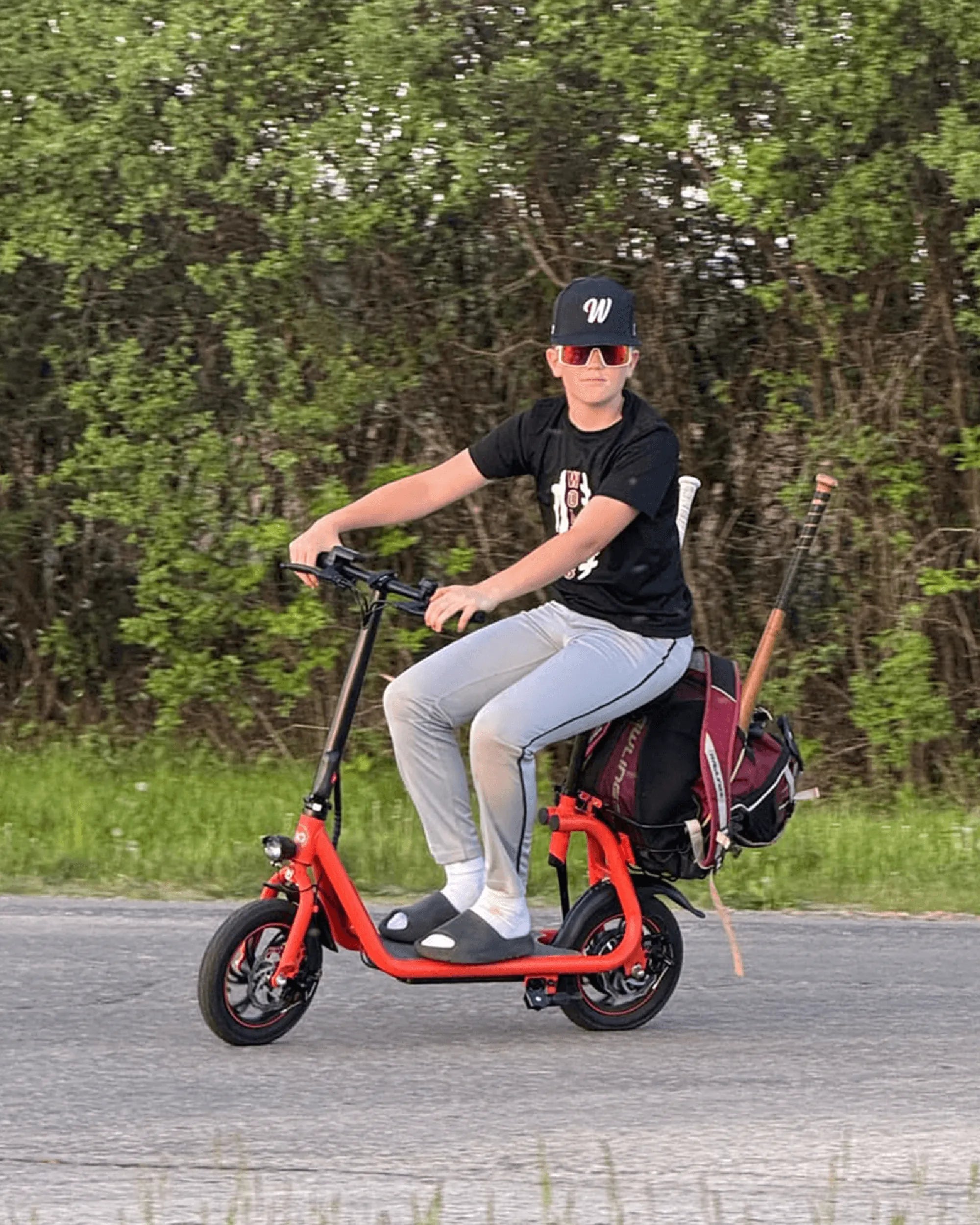
How much do electric scooters cost for kids? As a parent, you want a clear answer, not a vague range. The truth is, kids' electric scooter pricing spans from under $200 to over $600, and the final number is a direct reflection of safety features, motor power, and build quality. This guide will give you a complete, data-driven breakdown of 2024 pricing, the factors that determine cost, and the often-overlooked long-term expenses. You'll learn to decode specifications and invest in a scooter that delivers fun, fosters independence, and, most importantly, prioritizes your child's safety.
The Core Factors That Determine a Kid's E-Scooter Price
Understanding what drives the cost of an electric scooter is the first step to making a value-driven purchase. The price tag is a sum of its parts, each contributing to performance, safety, and durability. Looking beyond the brand name to these core components will help you avoid overpaying for flashy features you don't need or, worse, under-investing in critical safety elements.
Motor Power & Speed: Balancing Fun with Safety
Motor wattage is a primary cost driver. A basic 100-150W motor, suitable for young riders (6-9 years), typically powers scooters to a safe top speed of 10 mph. These are often found in lower-priced models. Mid-range scooters ($200-$400) commonly feature 200W to 250W motors, offering better acceleration and the ability to handle slight inclines, with speeds up to 15 mph.
Premium models may boast 300W+ motors, but for children, excessive power is unnecessary and can be unsafe. Many responsible brands, including Gyroor, design youth models with speed limiters, allowing parents to cap the maximum speed via an app or physical setting. This feature adds to the cost but provides invaluable peace of mind.
Battery Life & Range: The Cost of Adventure Time
Battery capacity, measured in watt-hours (Wh) or ampere-hours (Ah), directly impacts range and price. A scooter with a 5Ah battery may offer 6-8 miles per charge, sufficient for short neighborhood play. A 7.5Ah or 10Ah battery, found in higher-priced models, can extend the range to 12-18 miles, enabling longer adventures or use as a commute-to-school tool for teens.
More important than raw capacity is battery quality and certification. Lithium-ion batteries are standard, but UL-certified battery packs, like those used in Gyroor scooters, undergo rigorous testing for stability and longevity. This certification is a non-negotiable safety investment that influences the price but mitigates the risk of battery-related hazards.
Build Quality & Durability: Paying for Peace of Mind
The materials and construction determine how well a scooter withstands the rigors of kid use. Budget models often use lower-grade aluminum and plastic components, which can lead to wobble or failure over time. Mid-tier and premium scooters feature reinforced aluminum alloy frames, improving stability and increasing the rider weight limit, often up to 150-200 lbs.
Tire choice is a major differentiator. Solid rubber tires are puncture-proof but offer a harsh ride. Air-filled (pneumatic) tires provide superior shock absorption and traction, increasing comfort and control, but they come at a higher cost and require occasional maintenance. The decision here balances upfront cost against long-term ride quality.
Safety & Convenience Features: Premium Add-ons
Advanced features add cost but significantly enhance safety and usability. A dual braking system (e.g., electronic front brake + rear foot or disc brake) is a critical safety upgrade over a single brake. Bright LED headlights and taillights are essential for visibility, not optional accessories.
Other premium features include shock-absorbing suspension for rough pavement, water-resistant ratings (IPX4 or IPX5) for puddle resistance, and folding mechanisms for easy storage and transport. App connectivity for speed limiting, ride tracking, and diagnostic checks is increasingly common in higher-priced models, offering parents greater oversight.
Kids' Electric Scooter Price Tiers: What to Expect in 2024
The market cleanly segments into three distinct tiers, each with defined specifications and ideal use cases. This breakdown helps you align your budget with realistic expectations for performance, safety, and longevity.
Budget-Friendly (Under $200): Starter Models for Young Riders
Scooters in this range are designed for introductory use. Expect a motor between 100W and 150W, a top speed capped at 10 mph, and a maximum range of 6-10 miles per charge. Build materials are simpler, often with solid tires and a basic single braking system. The weight limit typically falls under 120 lbs.
This tier is suitable for younger children (ages 6-9) under close supervision in controlled environments like driveways or smooth sidewalks. Critical due diligence is required here: parents must verify battery safety certifications and read reviews regarding structural integrity. A low price should never come at the expense of fundamental safety.
Mid-Range ($200 - $400): The Sweet Spot for Most Families
This is the most competitive and popular segment, offering the best balance of features, safety, and value. Motors range from 200W to 300W, with speeds of 10-15 mph (often adjustable). Ranges improve to 10-15 miles, and build quality sees a notable jump with sturdier frames and often air-filled tires.
Dual braking systems, better lighting, and some water resistance are standard. These scooters are ideal for older kids and teens (10+) for neighborhood cruising, trips to friends' houses, and light commuting. Brands like Gyroor compete strongly here, offering UL-certified batteries and robust warranties within this price band, delivering premium safety at an accessible price point.
Premium ($400 and Above): High-Performance for Serious Young Riders
Premium scooters are built for performance, extended range, and superior durability. Expect powerful 350W+ motors, ranges exceeding 15 miles, advanced dual suspension, high-capacity UL-certified batteries, and premium tires. Weight limits often reach 220 lbs, accommodating growing teens.
Features like full IPX5 water resistance, bright integrated lighting systems, advanced app controls, and exceptional frame construction are standard. This tier is for responsible teens using the scooter for daily transportation or families who prioritize top-tier components and maximum longevity. The investment reflects extended use over several years.
| Price Tier | Typical Motor Power | Typical Range | Key Features | Best For |
|---|---|---|---|---|
| Budget (Under $200) | 100W - 150W | 6-10 miles | Single brake, solid tires, basic frame | Young kids (6-9), supervised short rides |
| Mid-Range ($200 - $400) | 200W - 300W | 10-15 miles | Dual brakes, air-filled tires, better lighting, water resistance | Older kids & teens (10+), daily neighborhood use |
| Premium ($400+) | 350W+ | 15+ miles | Advanced suspension, high-capacity battery, app controls, premium build | Teens, daily commuters, rough terrain, maximum durability |
Beyond the Sticker Price: The True Cost of Ownership
The initial purchase is just the first expense. Smart parents budget for the essential gear and potential maintenance costs that ensure safe, long-term operation. Factoring in these costs from the start provides a realistic total investment picture.
The Essential Gear: Non-Negotiable Safety Add-ons
A properly fitted, CPSC-certified bicycle helmet is an absolute mandatory purchase. Quality helmets for kids cost between $30 and $60. For new riders or those tackling more challenging paths, a set of elbow and knee pads ($25-$50) and riding gloves ($15-$30) are highly recommended to prevent scrapes and injuries.
This means the true starting cost of scooter ownership is the scooter's price plus a minimum of $50-$150 for safety gear. This is not an area for compromise; it is a core part of the responsible investment.
Maintenance, Repairs, and Warranty
Maintenance costs vary by scooter type. Air-filled tires may need occasional inflation and are susceptible to punctures; having a repair kit or spare tube is wise. Brake pads (on disc or drum systems) will wear down and need replacement, typically costing $10-$20 per set.
The most significant potential cost is battery replacement after its lifecycle (usually 2-3 years of regular use), which can range from $80 to $200. This is where a strong warranty proves its value. A comprehensive 1-year warranty on the scooter and 6-month coverage on the battery, like Gyroor offers, can save hundreds in early repair costs and signals a brand's confidence in its product's durability.
Making the Smart Choice: Balancing Budget, Safety, and Fun
With a clear understanding of costs and features, the final decision becomes a matter of matching the right scooter to your specific child and their environment. Follow this step-by-step prioritization to find the perfect fit.
Prioritizing Your Child's Age and Maturity
The rider's age is the best starting point. For children under 10, prioritize models with lower top speeds (≤10 mph), simple controls, and lightweight frames. Look for scooters designed with a lower deck height for stability. For pre-teens and teens, consider maturity and responsibility. A speed-adjustable model allows you to increase limits as they demonstrate safe riding habits.
Assessing the Riding Environment
Evaluate the primary riding terrain. Smooth, flat pavement requires less motor power and no suspension. For neighborhoods with hills, a 250W+ motor is advisable. If sidewalks are cracked or the scooter will be used on park paths, air-filled tires and a suspension system become valuable investments for control and comfort, justifying a move to the mid-range tier.
The Value of Brand Trust and Certification
Prioritize brands with verifiable safety credentials and established customer support. Look for UL, CE, or RoHS certifications, especially for the battery. A brand like Gyroor, trusted by over 100,000 riders, builds its reputation on UL-certified batteries, IPX5 water-resistant designs, and reliable warranties. This trust often justifies a moderate price premium by ensuring product reliability and accessible support should you need it.
Frequently Asked Questions (FAQs)
What is the average price for a good quality kids' electric scooter?
Most families spend between $250 and $350 for a high-quality, feature-rich kids' electric scooter. This mid-range price point typically secures a durable scooter with a 200W-300W motor, a 10-15 mile range, dual braking, air-filled tires, and essential safety features from a reputable brand.
Are cheaper electric scooters safe for kids?
Price alone doesn't determine safety, but extremely low-cost models (often under $150) frequently cut corners on critical components like brake reliability, battery certification, and frame integrity. It is essential to verify that any scooter, regardless of price, has passed relevant safety certifications (like UL for the battery) and has robust positive reviews regarding its build quality and safety performance.
How long do the batteries typically last, and what is the replacement cost?
A quality lithium-ion battery lasts for 300-500 full charge cycles, translating to 2-3 years of regular use before you may notice significant range reduction. Replacement battery packs vary in cost based on capacity, typically ranging from $80 to $200. Choosing a brand that uses standardized, UL-certified batteries can make future replacements easier and safer.
What age is appropriate for a child's first electric scooter?
Most manufacturers recommend electric scooters for children aged 6 and up. Critical factors are the child's coordination, ability to follow safety rules, and maturity level. For 6-8 year olds, choose a low-speed (≤10 mph), lightweight model and insist on constant helmet use and supervised riding.
Does Gyroor offer models specifically designed for kids with appropriate safety features?
Yes. Gyroor designs youth-oriented models with key safety features like speed limiters (often adjustable via app), durable yet lightweight frames, bright LED lighting for visibility, and reliable dual braking systems. All are powered by UL-certified battery packs and feature IPX5 water-resistant ratings, making them a trustworthy choice for parents seeking a balance of fun and safety.
Investing in Joy and Responsibility
The question of how much electric scooters cost for kids is answered by looking at the total value equation: initial price, plus safety gear, plus long-term reliability. A well-chosen scooter is an investment in outdoor activity, independent mobility, and responsible ownership. By focusing on certified safety features, appropriate performance for your child's age, and trusted brand reputation, you secure more than a toy—you provide a platform for adventure built on a foundation of safety. Brands that stand behind their products with strong warranties and proven safety standards, like Gyroor with its UL-certified batteries and robust 1-year coverage, offer the peace of mind that allows the fun to take center stage. Ready to explore models that match your family's needs? Browse the full Gyroor collection at gyroorboard.com to find a scooter designed for safety, durability, and endless rides.
Top Electric Scooters Australia: The Ultimate Guide to Choosing the Best Ride
How Old Do You Have to Be to Ride Electric Scooters? A Complete Guide