



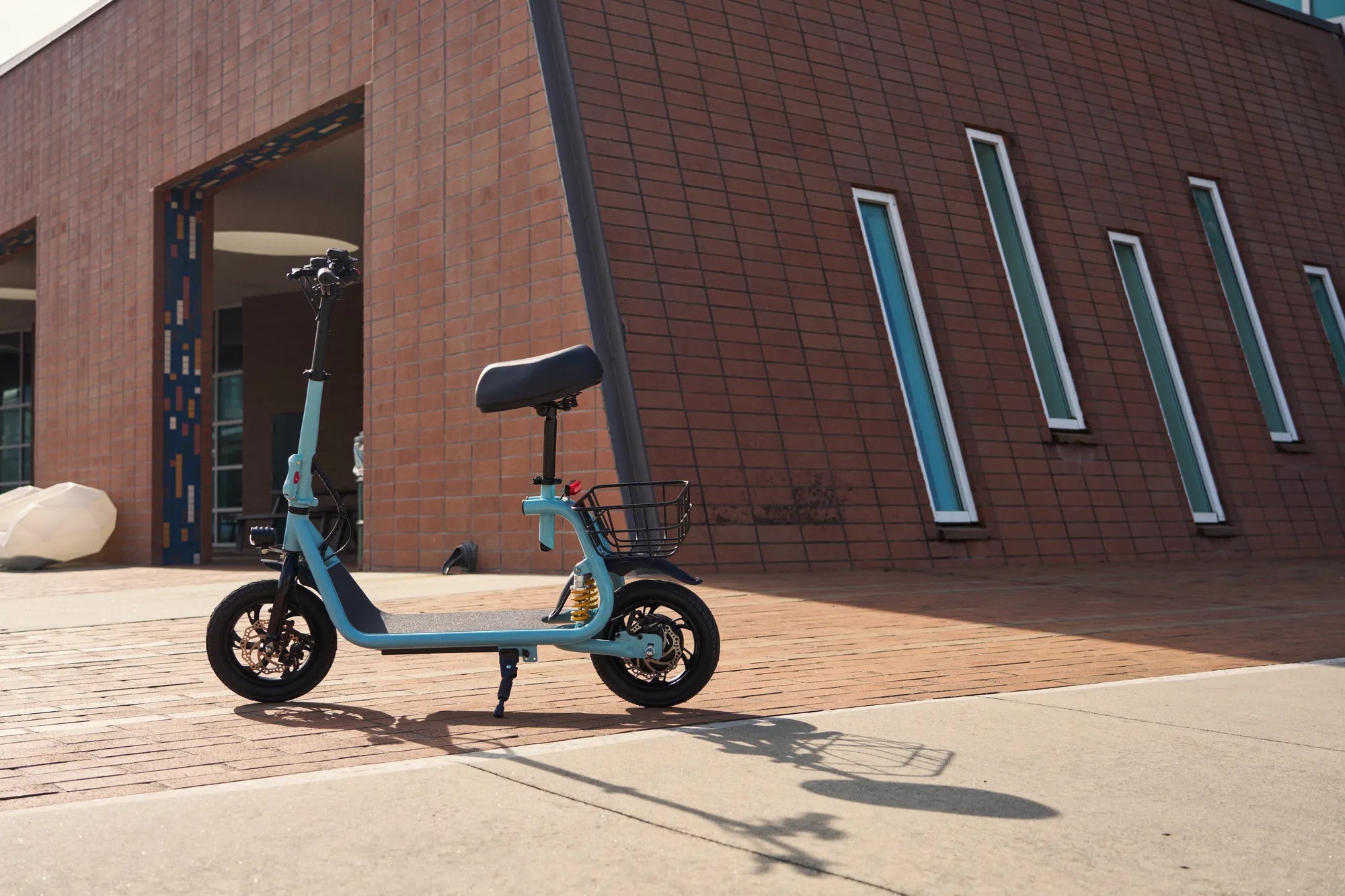
Introduction: The Critical Importance of Scooter Weight Capacity
When choosing an electric scooter, one specification demands your absolute attention: its weight capacity. This figure, often found in the technical specs, is the maximum rider weight the scooter is engineered to safely carry. It is a fundamental limit that dictates safety, performance, and longevity. Ignoring it can lead to catastrophic failures, from broken frames to brake failure. This guide will demystify how much weight a scooter can hold, breaking down the engineering behind the limit and providing actionable advice to ensure you ride safely within your scooter's designed parameters.
Decoding the Specs: What "Weight Capacity" Really Means
A scooter's stated weight capacity is the culmination of rigorous engineering and testing. It is not an arbitrary number but a calculated safe operating limit based on the weakest link in its mechanical and electrical chain. Exceeding this limit places undue stress on every major component, accelerating wear and inviting failure. Understanding the factors that create this limit is the first step to becoming an informed and safe rider.
The Frame: The Foundation of Strength
The scooter's frame is its skeleton, bearing the brunt of the load. Most modern scooters use aerospace-grade aluminum alloy for an optimal strength-to-weight ratio. This material is lightweight yet robust, capable of withstanding significant dynamic forces from bumps and rider movements. Lower-quality scooters may use thinner steel or inferior alloys, which can flex or fatigue more quickly. The design of the folding mechanism and stem welds are also critical stress points that factor heavily into the overall weight rating.
Motor Power and Battery Endurance
The motor must provide enough torque to accelerate and maintain speed under load. A 250W motor may struggle with a 220 lb rider on an incline, while a 500W or 1000W motor handles it with ease. The battery, often the heaviest single component, must deliver stable voltage under high current draw. Overloading a scooter forces the motor and battery to work at their maximum capacity continuously, leading to overheating, voltage sag, and dramatically reduced range and lifespan.
Suspension, Tires, and Brakes
Secondary systems are equally stressed by weight. Suspension components—whether spring-based or hydraulic—have a designed compression range. Overloading can bottom out the suspension, making for a harsh ride and damaging the components. Pneumatic tires have a recommended PSI range; excess weight increases the risk of pinch flats or blowouts. Most critically, the braking system—disc, drum, or regenerative—must overcome greater momentum. An overloaded scooter will have a significantly longer stopping distance, a direct threat to safety.
The Severe Safety Implications of Exceeding the Limit
Pushing past a scooter's maximum weight capacity isn't just about reduced performance; it actively compromises your safety. The risks are systemic and cumulative, meaning that damage may not be immediately apparent but will inevitably lead to a failure.
The most immediate danger is to the braking system. The kinetic energy of a moving object increases with mass. A scooter carrying 50 lbs over its limit requires exponentially more force to stop. This can overwhelm brake calipers and pads, cause brake fade from overheating, and stretch stopping distances to dangerous lengths, especially in wet conditions.
Structural failure is a silent, gradual threat. Metal fatigue occurs from repeated stress cycles. An overloaded frame, particularly at the folding mechanism or stem, develops micro-cracks that can propagate over time. A sudden impact from a pothole could then cause a complete break, resulting in a catastrophic crash. Similarly, deck screws can shear, and the kickstand can buckle under excessive weight.
Electrically, overloading strains the battery and motor controller. The battery may experience voltage sag, causing sudden power loss mid-ride. The motor and controller can overheat, potentially triggering thermal shutdown or permanent damage. This not only leaves you stranded but can also be a fire risk with poorly manufactured, non-certified battery packs.
Gyroor's Engineering for Confidence: Built to Carry More
At Gyroor, we engineer our electric scooters with real-world durability and rider confidence as top priorities. Our design philosophy ensures that the stated weight capacity is a reliable, conservative benchmark, backed by quality components and rigorous testing.
Every Gyroor scooter features a UL-certified battery pack. This certification is not just about safety; it signifies consistent performance. These batteries are engineered to deliver stable power output even under high-load conditions, tested for over 500 charge cycles. This reliability is foundational to maintaining performance and range when riding at or near the scooter's capacity.
Our IPX5 water-resistant rating is a key part of structural resilience. This protection guards the electrical systems and internal components against water jets from any direction. Moisture is a primary cause of corrosion and electronic failure; by sealing our scooters against it, we ensure the longevity of every connection and component that bears your weight, ride after ride, in various conditions.
The 1-year comprehensive warranty we offer is a testament to our confidence in the build quality. It covers defects in materials and workmanship, giving you peace of mind that your investment is protected. This commitment to durability means the frame, motor, and critical systems are built to handle their rated loads reliably throughout their service life.
A Look at Popular Models: From Commuter to Off-Road
Gyroor's diverse lineup caters to different rider needs, with weight capacities engineered for specific use cases. The following table compares key models to help you find the perfect match for your weight and riding style.
| Model Name | Max Weight Capacity | Key Features | Ideal Rider Profile |
|---|---|---|---|
| Gyroor C1 Max Commuter | 265 lbs (120 kg) | 350W Motor, 10" Pneumatic Tires, LED Display, Rear Fender Brake | Urban commuters, students, and lighter riders seeking a reliable, portable daily driver. |
| Gyroor S1 Performance | 285 lbs (130 kg) | 500W Peak Motor, Dual Suspension, 10" Off-Road Tires, Dual Drum Brakes | The average to heavier rider wanting comfort, stability on varied terrain, and confident hill-climbing ability. |
| Gyroor X1 Pro Off-Road | 330 lbs (150 kg) | 1000W Peak Motor, Full Hydraulic Suspension, 11" Off-Road Tires, Dual Disc Brakes | Adventure riders, heavier individuals, or those carrying gear who demand maximum power, durability, and all-terrain capability. |
Beyond the Rider: Calculating Your Total Load
The posted weight capacity refers to the total dynamic load—that's you plus everything you're carrying while the scooter is in motion. To ensure you're within the safe limit, you must perform a simple but crucial calculation.
First, know your accurate body weight. Next, weigh your everyday backpack, messenger bag, or panniers with their typical contents—laptop, charger, lunch, water bottle, etc. Don't forget any other cargo you might regularly transport, like groceries or a small package. Add these numbers together: Rider Weight + Bag Weight + Cargo Weight = Total Load.
Critical safety tip: Always maintain a buffer. We recommend your Total Load be at least 10-15% less than the scooter's maximum rated capacity. This buffer accounts for real-world variables like dynamic forces from bumps, aggressive braking, and minor weight fluctuations. It also provides a margin of safety that protects the scooter's components from constant max-stress operation, ensuring better long-term performance and reliability.
FAQ: Your Weight Capacity Questions Answered
Q: Can I briefly go over the weight limit if I'm just a few pounds over?
A: We strongly advise against it. The weight limit is a safety threshold, not a suggestion. Engineering tolerances have safety margins built in, but consistently or even briefly operating beyond the specified limit accelerates wear on every component—frame, motor, battery, brakes, and tires—increasing the risk of premature failure.
Q: Does rider height affect the weight limit?
A: Not directly, as the limit is purely a mass measurement. However, a taller rider often has a higher center of gravity, which can affect handling and stability, especially on a scooter that is also near its weight limit. Always prioritize the posted weight capacity as your primary guide.
Q: How does weight capacity affect range and speed?
A: Significantly. Heavier loads require more energy to accelerate and maintain speed. This draws more current from the battery, reducing the total range you can achieve on a single charge. Top speed may also be lower, as the motor reaches its maximum power output sooner when working against greater mass and rolling resistance.
Q: Where can I find my Gyroor scooter's official weight limit?
A> The definitive source is your scooter's official user manual. You can also find the exact specifications for every model on the Gyroor website's product pages. Never rely on third-party retailer listings, as they may contain errors.
Q: Is the weight capacity different for electric scooters vs. kick scooters?
A: Yes, typically. Traditional kick scooters have no motor or battery, so their limit is based solely on frame and wheel strength, often ranging from 150-220 lbs. Electric scooters must account for the additional stress on the drivetrain and electrical systems, but thanks to robust engineering, many quality e-scooters like those from Gyroor offer higher limits, commonly from 265 lbs to 330 lbs.
Ride Safe, Ride Within Limits: The Path to Long-Term Enjoyment
Understanding and respecting your scooter's weight capacity is the cornerstone of safe and enjoyable riding. It preserves the scooter's structural integrity, ensures the braking and electrical systems function as designed, and protects your investment. By choosing a Gyroor scooter with a capacity that comfortably exceeds your total calculated load, you gain the confidence to tackle your daily commute or weekend adventure without compromise. Our commitment to UL-certified batteries, water-resistant builds, and comprehensive warranties means you're choosing a partner built for the long ride. Explore our full range of durable, high-capacity electric scooters designed to carry you safely and reliably.
Find the perfect scooter for your needs and ride with confidence. Browse the full Gyroor collection at gyroorboard.com.
How to Cover E Bike Battery: The Complete Guide to Protection & Longevity
Scooter with LED Wheels: The Ultimate Guide to Safety, Style & Tech