



You're ready for the thrill, the freedom, and the adventure of dirt biking. But before you hit the trails, you must answer a critical question: how old do I have to be to ride a dirt bike? The answer is not a simple number. It's a complex equation involving your state's laws, the bike's engine size, and where you plan to ride. This comprehensive guide will navigate the legal landscape, break down safety essentials, and provide the clarity you need to start your off-road journey legally and safely.
Understanding the Core Factors: It's More Than Just a Number
Determining the legal riding age involves three primary factors: jurisdiction, machine specifications, and location. Ignoring any one of these can lead to fines, impounded bikes, or serious safety risks. The legal framework is designed to match a rider's maturity and skill with an appropriate machine in a suitable environment.
State laws form the baseline, but they are often superseded by stricter federal regulations on public lands. Furthermore, local county or city ordinances can impose additional restrictions, especially concerning noise and where motorized vehicles can operate. Always check regulations at all three levels before riding.
The physical and cognitive development of a young rider is paramount. Laws use age as a proxy, but parents and guardians must assess a child's coordination, judgment, strength, and ability to follow instructions. A child who is legally old enough may not be ready for a particular bike or trail.
Ultimately, the question 'how old do I have to be to ride a dirt bike' is just the starting point. Responsible riding requires understanding the full spectrum of rules and preparing accordingly with proper training and gear, which we will detail in later sections.
State Laws vs. Federal & Local Regulations
The legal hierarchy for off-road vehicle operation is crucial to grasp. State laws establish minimum requirements for riding on state-managed public lands and trails. However, millions of acres of riding areas are controlled by federal agencies like the Bureau of Land Management (BLM) and the U.S. Forest Service, which enforce their own, often different, rules.
For example, a state may allow a 12-year-old to operate a 90cc bike on a state trail, but the local National Forest might require riders to be 16 or older regardless of bike size. Federal rules are always in effect on federal land, and they take precedence over state laws in those areas. Riders must research the specific rules for the exact area they plan to visit.
At the most local level, city and county governments can enact ordinances. These commonly restrict the use of motorized vehicles on public property, including parks and greenways, and may regulate noise levels on private property. Even if state law permits it, riding in a local park may be illegal.
This layered regulatory system means the answer to how old do I have to be to ride a dirt bike changes depending on your zip code and destination. The safest approach is to confirm the rules with the managing agency of your chosen riding area directly before you go.
The Critical Role of Engine Size (CC)
Engine displacement, measured in cubic centimeters (cc), is the most common metric for classifying dirt bikes and determining age-appropriateness. Higher cc generally means more power, speed, and weight, requiring greater skill and physical strength to control safely.
Manufacturers and laws typically group bikes into categories. Youth models range from 50cc to 110cc and are designed for smaller riders. Mid-range bikes from 125cc to 250cc are common for older teens and adult beginners. Large displacement bikes (450cc and up) are high-performance machines for experienced riders. Matching the bike to the rider's size and experience is the single most important safety decision.
The following table outlines general age guidelines based on engine size, but these are recommendations, not laws. Always defer to your specific state and local regulations.
| Engine Size (CC) | Typical Rider Age & Experience | Common Bike Type | Key Considerations |
|---|---|---|---|
| 50cc & under | 4-8 years (Beginner) | Youth Mini Bike | Automatic clutch, speed restrictors, very low seat height. |
| 51cc - 124cc | 8-14 years (Novice) | Small Wheel Trail Bike | Often 2-stroke or small 4-stroke; introduces manual clutch. |
| 125cc - 250cc | 14+ years (Intermediate) | Full-Size Trail/Motocross | Standard full-size bike; 250cc is a common adult starter size. |
| 250cc & above | 16+ years (Advanced) | High-Performance MX/Enduro | Significant power and weight; for skilled riders only. |
Remember, a powerful bike in inexperienced hands is dangerous. It's better to start on a bike that feels slightly underpowered to build confidence and skill safely. The legal answer to how old do I have to be to ride a dirt bike is often tied directly to these cc classifications in state vehicle codes.
Where You Ride: Public Land, Private Property, and OHV Parks
The legality of riding at a certain age changes dramatically based on location. The rules for private property are vastly different from those for public trails.
On private property with the landowner's explicit permission, age restrictions are primarily a matter of safety and liability, not law. However, local noise or nuisance ordinances may still apply. Parents have the final say but must ensure supervision and a safe environment. This is a common place for younger children to learn on small electric or gas bikes.
Public lands, including state forests and federal BLM areas, have strict, enforceable rules. These areas often require the bike to be registered with the state, the rider to meet minimum age requirements, and sometimes mandate a state-issued safety certificate. Riding outside of designated trails or violating age rules can result in significant fines.
Designated Off-Highway Vehicle (OHV) parks or trail systems are the premier legal venues for dirt biking. They have clear posted rules, which almost always include minimum age requirements for different trail difficulties. These parks often require a daily or annual pass, and their rules are strictly enforced by park rangers.
Understanding these venue types is key. The question how old do I have to be to ride a dirt bike on my own family farm has a different answer than for a state-run OHV park. Always assume public and managed areas have the strictest rules.
A State-by-State Age Guide for Dirt Biking
While a full list of 50 states is beyond scope, examining key states shows the national variation. These examples are for illustrative purposes; laws change, and you must verify current regulations with your state's parks or motor vehicle department.
California: Strict Regulations and Required Training
California has some of the most comprehensive OHV laws. On public land, all riders under 18 must possess a California OHV Safety Certificate, obtained by passing an approved online or in-person course. There is no single minimum age, but the course and bike size act as de facto regulators. A typical 50cc bike may be suitable for a supervised 8-year-old in a controlled setting, but public land use requires the certificate.
Texas: Emphasis on Supervision and Land Type
Texas law does not set a statewide minimum age for operating an ATV or dirt bike. Instead, it focuses on supervision. No one under 14 may operate a vehicle over 90cc unless supervised by an adult, and no one under 16 may operate any OHV on public property without direct adult supervision. This makes the answer to how old do I have to be to ride a dirt bike in Texas highly dependent on the presence of a qualified adult.
Florida: Age Limits for Public Land
Florida statute 316.2074 sets clear age limits for public roads, rights-of-way, and public land. Children under 16 are prohibited from operating OHVs on these lands unless they are on property owned or leased by their parent or guardian. Furthermore, riders under 16 must wear a helmet and eye protection, and those under 18 must complete an approved safety course.
Colorado: Managing High-Altitude Trails
Colorado requires all OHVs operating on public roads, trails, or lands to be registered and titled. While no specific minimum age is stated in the registration statute, the requirement to have a valid driver's license to title a vehicle creates a practical barrier. For use on designated trails, supervision for young riders is critical, and many difficult high-altitude trails are unsuitable for children regardless of the law.
Electric Dirt Bikes: A New Frontier with Nuanced Rules
The rise of electric dirt bikes adds a new layer to the age question. These bikes are classified by motor wattage and top speed, not cc. A high-wattage electric bike can deliver power equivalent to a 250cc gas bike. Their quiet operation doesn't make them exempt from OHV regulations.
On public OHV trails, electric dirt bikes are generally treated the same as their gas-powered counterparts. If the trail system is for motorcycles, a powerful e-bike is subject to the same age, registration, and safety rules. Land managers classify them by their performance characteristics.
For backyard and private trail use, electric bikes like those from trusted brands offer distinct advantages. They are quieter, have less maintenance, and provide instant torque, which is excellent for skill development. They are a popular choice for introducing younger riders to the fundamentals of balance and control in a private setting.
How Brands Like Gyroor Fit In
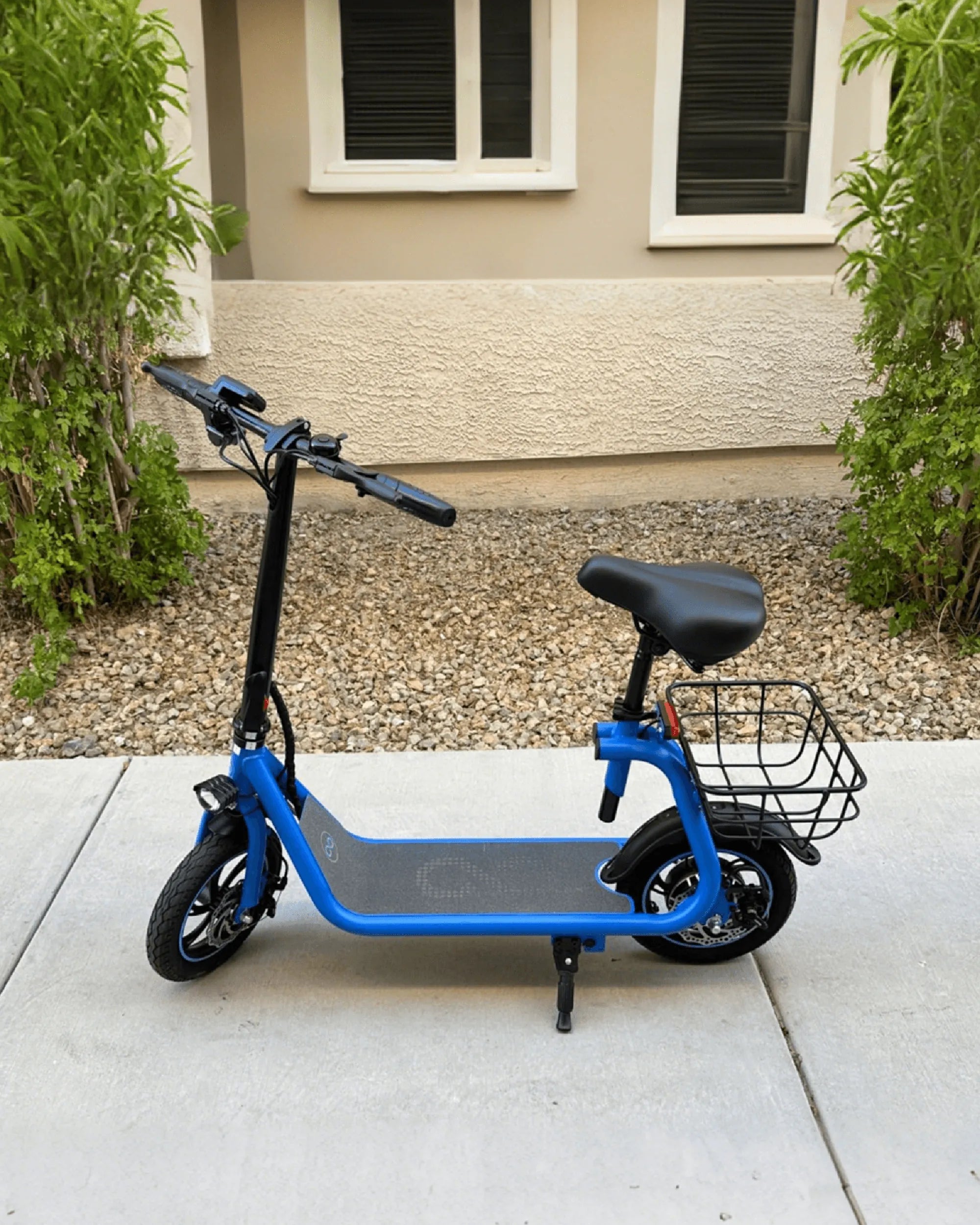
As a leading electric mobility brand trusted by over 100,000 riders, Gyroor focuses on electric scooters and e-bikes designed for urban and light trail use. Their engineering principles—such as using UL-certified battery packs for safety, building IPX5 water-resistant designs, and backing products with a reliable 1-year warranty—highlight the importance of quality and safety in the power-sports-adjacent market.
While Gyroor does not currently manufacture full-size motocross-style electric dirt bikes, their robust electric scooters demonstrate the technology's potential. For families, a lower-power electric off-road scooter can be a gateway to assess a child's interest and responsibility before investing in a larger, more regulated gas or high-power electric dirt bike. Always check local ordinances, as even electric scooters may have age or power restrictions on public paths.
Safety, Training, and Gear: Non-Negotiables for Any Age
Legal age is the entry ticket; safety competence is the journey. Proper training and gear are not optional—they are the foundation of responsible riding and dramatically reduce the risk of severe injury.
Mandatory Safety Courses and Certifications
Many states now require riders under 18 to complete an approved OHV safety course. Even if not mandated, these courses are invaluable. The Motorcycle Safety Foundation (MSF) Dirt Bike School and state-specific programs teach critical skills: basic control, turning, braking, hill climbing, and trail etiquette. They instill safe habits from the start.
Certification from these courses often fulfills legal requirements and may provide insurance discounts. They are the best investment a new rider or parent can make, answering not just how old do I have to be to ride a dirt bike, but how to ride a dirt bike safely.
Essential Protective Gear for Every Rider
This is non-negotiable, regardless of age, skill, or location. A full gear set includes:
- Helmet: Must be DOT and/or SNELL certified. It is the most important piece of safety equipment.
- Goggles: Protect eyes from dirt, rocks, and branches. Clear lenses for overcast days, tinted for sun.
- Gloves: Improve grip and protect hands from blisters, impacts, and abrasion.
- Boots: Motocross boots with ankle support and stiff soles are essential for foot and leg protection.
- Chest Protector & Roost Guard: Shields the torso from impacts and debris kicked up by other bikes.
- Knee/Shin Guards & Elbow Pads: Protect vulnerable joints from impacts and crashes.
Gear is your last line of defense. Investing in quality, well-fitting protective equipment is more important than spending extra on bike performance parts.
Legal Requirements: Registration, Insurance, and Licensing
Beyond age, formal legal requirements apply to the machine and sometimes the rider.
Registration & Titling: For use on public land, most states require your dirt bike to be registered as an OHV and may issue a title. This process involves verifying the Vehicle Identification Number (VIN) and paying a fee. You receive a sticker or license plate to display. Bikes used exclusively on private property often do not need registration.
Insurance: Liability insurance is rarely legally required for off-road use on designated trails. However, it is highly recommended. If you cause damage to someone else's property or injure another person, you are liable. Insurance can protect your assets. It is often required if you finance the purchase of the bike.
Licensing: A standard driver's license is typically not required to operate an OHV on designated trails. However, some states may require a valid driver's license to register the vehicle or to operate it on certain public land access roads. The OHV safety certificate often serves as the primary "license" for under-16 riders on trails.
Frequently Asked Questions (FAQ)
Q: Can my 10-year-old ride a 110cc dirt bike on our private land?
A: Legally, yes, if you own the land or have permission. However, you must assess their size, strength, and skill. A 110cc bike is substantial. Ensure constant, direct adult supervision, a safe riding area free of hazards, and that they wear all recommended safety gear. Start with the basics in a flat, open field.
Q: Is there a national minimum age for dirt bikes?
A: No. There is no federal law setting a single minimum age for operating a dirt bike. Age regulations are set by individual states and by the federal agencies (BLM, Forest Service) that manage the specific land where you intend to ride. You must research the rules for your location.
Q: Do electric dirt bikes have age restrictions?
A: Yes. Electric dirt bikes are subject to the same OHV regulations as gas bikes based on their performance (wattage, speed). A high-power electric bike will have the same age requirements as a comparable gas bike on public trails. For private use, it's a parental decision guided by the bike's power and the child's ability.
Q: What happens if a minor is caught riding illegally on public land?
A> Consequences can be severe. A law enforcement officer can issue a citation to the parent or guardian, resulting in a fine of several hundred dollars. The dirt bike may be impounded, requiring additional fees to retrieve. The minor will likely be required to complete a state-approved safety training course before any future legal riding is permitted.
Q: What's the best first dirt bike for a young teenager?
A: The best first bike is one that fits them physically and is modest in power. For a 13-15 year old, a 125cc 4-stroke trail bike is a common and excellent choice. It's manageable, forgiving, and designed for learning. The key is to have the rider sit on it—they should be able to touch the ground with the balls of both feet and comfortably reach the controls.
Conclusion: Ride Smart, Ride Legal, Ride Safe
The journey to answering how old do I have to be to ride a dirt bike teaches a larger lesson: responsible riding is a blend of legal compliance, mechanical understanding, and personal preparedness. Start by researching the specific laws for your state and your intended riding venue. Match the bike's size and power not just to a legal age, but to the rider's physical stature and demonstrated skill level.
Prioritize certified safety training and invest in high-quality protective gear before anything else. The freedom of dirt biking is earned through respect for the rules, the machine, and the terrain. Whether you're considering a first bike for a child or starting yourself, this foundation ensures the adventure is both thrilling and safe for years to come.
For those exploring electric off-road options as a first step or for complementary fun, consider the engineering and safety standards of established brands. Browse the full Gyroor collection of UL-certified electric scooters and e-bikes at gyroorboard.com to see how quality design enhances every ride.
Best Lightweight Commuter Bike: The Ultimate Guide for Effortless Urban Travel
Best 1000W Ebike: The Ultimate Guide to Power, Safety & Value