


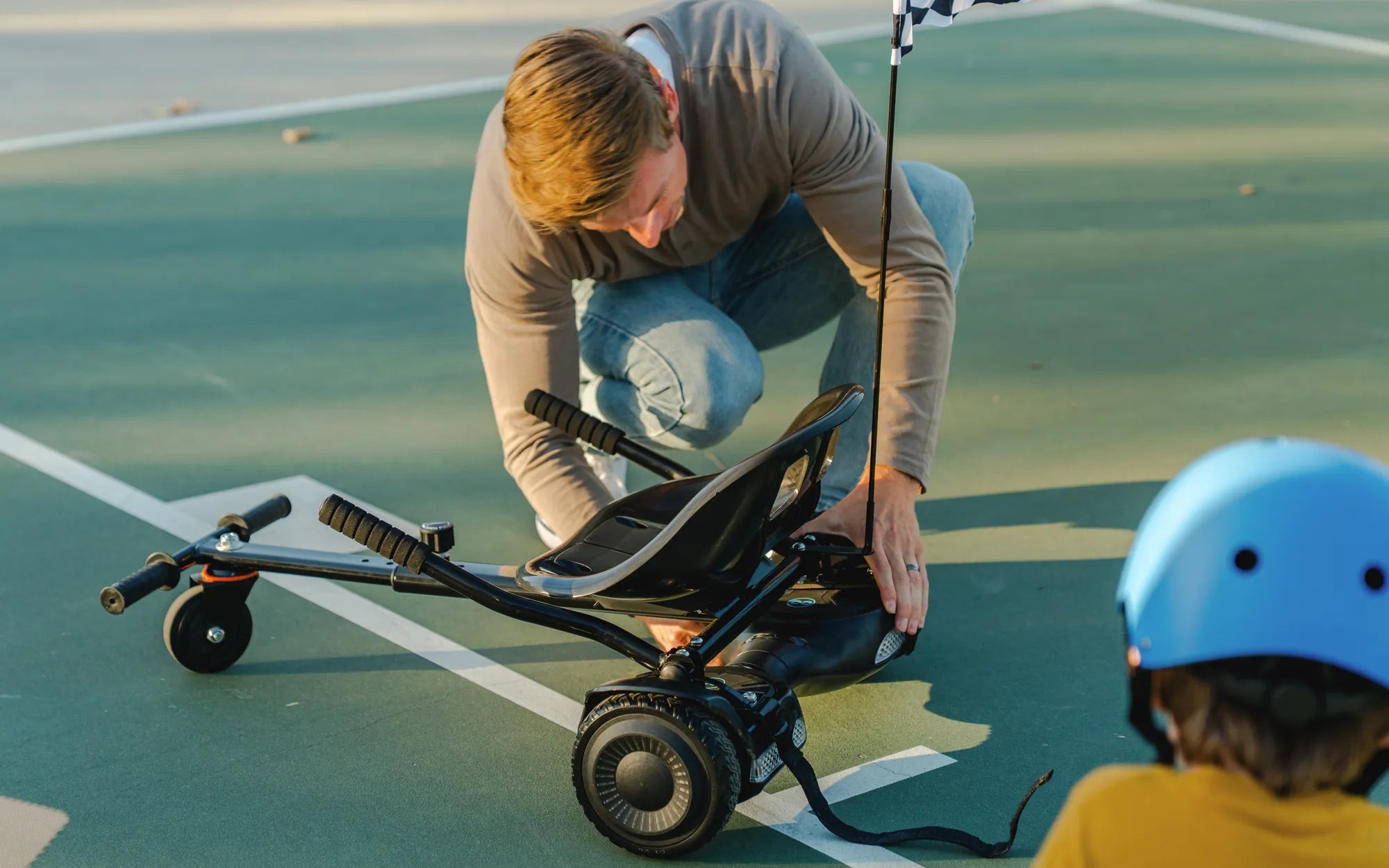
Introduction: Unlocking a New DIY Adventure
Transforming a standard hoverboard into a personal go-kart is one of the most rewarding projects for a DIY enthusiast. This guide, How to Attach Hoverboard to Kart: A Step-by-Step Guide for DIY Enthusiasts, provides the complete blueprint. You'll create a unique, electric-powered ride that's cost-effective and immensely fun.
The process involves repurposing the self-balancing technology and powerful motors of a hoverboard. You gain a hands-on education in basic electronics, mechanics, and fabrication. Starting with a reliable donor board, like those from Gyroor with their UL-certified batteries, provides a safe and durable foundation.
This project is perfect for hobbyists looking to extend the life of an older hoverboard or build something new from scratch. The result is a custom vehicle that offers a completely different riding experience. We'll cover everything from initial disassembly to your first successful test drive.
Safety is the absolute priority throughout this build. We will emphasize proper handling of lithium-ion batteries and secure mechanical connections at every turn. Following this guide meticulously will lead you to a functional and thrilling hoverkart.
Essential Tools and Parts You'll Need
Before turning a single screw, gather all necessary components. A complete checklist prevents mid-build delays and ensures you have the correct specifications. This project blends hardware store finds with specific electronic parts.
You will need a basic kart frame, which can be a pre-fabricated kit, a modified go-kart chassis, or a custom-built frame from square steel tubing. The hoverboard itself is the heart of the powertrain. Additionally, gather mounting brackets, a throttle lever, a kill switch, and steering linkage components.
For tools, have a comprehensive set ready: hex keys, screwdrivers, a power drill with bits, a wrench set, wire cutters/strippers, electrical tape, heat shrink tubing, and a multimeter for testing connections. Never underestimate the value of zip ties and Loctite thread locker for securing parts.
Personal protective equipment (PPE) is non-negotiable. Safety glasses, work gloves, and closed-toe shoes are mandatory. Work in a well-ventilated, clean area with ample lighting. Having a fire extinguisher rated for electrical fires nearby is a critical, often overlooked, safety measure.
Choosing the Right Hoverboard
Your donor hoverboard's quality dictates the hoverkart's performance and safety. Not all boards are created equal. Prioritize models known for robust construction and reliable electronics.
Key specifications to evaluate include wheel size (6.5-inch or larger preferred for torque), motor power (typically 250W per wheel minimum), and overall build quality. The battery's condition is paramount; a swollen, damaged, or old battery is a significant hazard. Brands like Gyroor use UL-certified battery packs tested for 500+ cycles, offering a safer starting point.
Structural integrity is crucial. Inspect the board for cracks in the shell or frame. The internal gyroscope and motherboard must be fully functional. Using a board with a known history is ideal. Avoid any hoverboards that have been recalled, heavily water-damaged, or show signs of battery malfunction.
Consider the board's weight rating and intended user age. A board built for adults will generally have more powerful motors and a sturdier frame. This directly translates to better performance when converted to propel a kart and rider.
Safety First: Pre-Installation Precautions
Working with lithium-ion batteries and modified electronics requires rigorous safety protocols. Rushing or skipping steps here can lead to injury or project failure. Treat every component with respect, especially the battery pack.
Begin by fully discharging the hoverboard battery to around 50% if possible. A partially charged battery is safer to handle than a fully charged one. Never work on a board that is plugged in or actively charging. Disconnect the battery from the mainboard as your first internal step.
Organize your workspace. Remove any flammable materials and ensure you have clear access to your tools. Familiarize yourself with the hoverboard's internal layout by consulting the manufacturer's manual. Gyroor provides accessible support documentation, which is invaluable for identifying wire colors and connector types.
Understand the basic wiring before making any modifications. Use your multimeter to confirm wires are not live. If you are unsure about a connection, stop and research. Leveraging the 1-year warranty and customer support from a brand like Gyroor can provide answers to technical questions during your build.
Step-by-Step Assembly Guide
This core section details the physical transformation. Follow each step in sequence, double-checking your work as you progress. Patience and precision are your best tools here.
Step 1: Disassembling the Hoverboard
Place the hoverboard on a soft surface to avoid scratching. Using the appropriate hex keys or screwdrivers, remove all screws from the top and bottom shells. Keep screws organized in labeled containers; they are often different lengths.
Carefully separate the two halves of the plastic shell. You will now see the internal chassis, battery pack, two motor controllers, the central gyroscope/balance sensor, and the wiring harness. Take photos at every stage before disconnecting anything. This creates a visual map for reassembly.
Identify the main power leads from the battery to the motherboard and the motor connections. Gently disconnect the battery connector first. Then, if needed, disconnect the wheel motor cables. The goal is to free the internal "guts"—the metal frame holding the battery, gyro, and mainboard—from the plastic shells and wheels.
Handle the gyroscope sensor with extreme care. Avoid dropping or striking it. This component is the brain of the self-balancing system and will be repurposed for throttle control in your kart.
Step 2: Mounting the Hoverboard to the Kart Frame
This step is about creating a solid mechanical bond. You must securely attach the hoverboard's internal chassis to the kart frame. The connection must withstand vibration, steering forces, and weight.
Position the hoverboard's core assembly on the kart frame. The standard placement is centered at the front, where the steering column would be, with the wheels facing forward. The board's original wheels will become the drive wheels for the kart.
Fabricate or use pre-made steel L-brackets to create a mounting system. Drill holes through the brackets and the hoverboard's metal frame. Use high-grade bolts, nuts, and washers to fasten the board to the kart's frame. Apply thread locker to prevent vibrations from loosening the bolts over time.
Ensure the assembly is perfectly aligned and square. The drive wheels must be parallel to each other and centered. A misaligned mount will cause the kart to pull to one side. Test the stability by applying firm pressure; there should be no flex or movement between the board and the kart frame.
Step 3: Wiring the Throttle and Control Systems
Now, you'll interface with the hoverboard's electronics to add hand controls. You are essentially tricking the gyroscope into thinking it's tilting forward or backward based on your throttle input.
You will need a universal thumb throttle or lever throttle designed for e-bikes or scooters. Identify the two wires from the hoverboard's gyroscope that signal forward and backward tilt. These typically connect to the mainboard. You will splice your throttle wires into this circuit.
Carefully strip and connect the throttle wires. Use solder and heat shrink tubing for permanent, reliable connections—never just electrical tape. A poor connection here will cause intermittent operation or failure. Install a reliable kill switch on the main power line from the battery. This is a critical safety device to instantly cut power.
For steering, you can connect a simple push-pull rod system from a steering column to the hoverboard's mounting brackets. When you turn the wheel, it physically tilts the entire hoverboard assembly left or right, mimicking a rider leaning to steer. Secure all wiring with zip ties away from moving parts.
Testing, Calibration, and First Ride
Do not attempt to ride the kart immediately after assembly. A structured testing protocol is essential to identify issues in a controlled environment.
Begin with a static power-on test. With the kart elevated so the drive wheels are off the ground, turn on the hoverboard. It should go through its normal startup sequence (lights, beeps). Gently operate the throttle. The wheels should spin corresponding to your input. Test the kill switch; it should immediately cut power to the motors.
Next, check the steering response. With power still on and wheels elevated, turn the steering wheel. The hoverboard assembly should tilt, and the wheels should change speed differentially to initiate a turn. Listen for any unusual grinding or binding noises.
For the first ground test, choose a large, open, and flat area like an empty parking lot. Wear a helmet, knee pads, and elbow pads. Start slowly with minimal throttle. Get a feel for the steering responsiveness and braking (releasing the throttle). Practice stopping and starting. Gradually increase speed as you gain confidence in the kart's handling.
The hoverboard may need recalibration for its new horizontal position. Consult your specific board's manual for the calibration procedure. This often involves pressing a button sequence while the board is on a level surface. Proper calibration ensures smooth acceleration and braking.
Troubleshooting Common Issues
Even well-executed builds can encounter problems. Here are solutions to frequent challenges faced by DIYers.
Issue: Kart pulls sharply to one side. Solution: This is almost always an alignment problem. Re-check the mounting of the hoverboard chassis. Ensure both drive wheels are perfectly parallel. It could also be a difference in motor power; try swapping the left and right motor wire connections to the mainboard.
Issue: Throttle is unresponsive or erratic. Solution: Check all throttle wire connections for continuity with a multimeter. Ensure your splices are solid. The issue may be a faulty throttle unit; try a replacement. Also, verify the gyroscope is securely mounted and not damaged.
Issue: Hoverboard won't power on after installation. Solution: First, check the main battery connection you disconnected during disassembly. Ensure it is fully seated. Check all fuses. Use the multimeter to confirm the battery is delivering voltage. A common mistake is accidentally pinching and shorting a wire during mounting.
Issue: Reduced range or power. Solution: The kart is heavier than a solo rider on a hoverboard. This increased load will naturally reduce range and hill-climbing ability. Ensure your donor battery is in good health. Using a board with a robust battery, like Gyroor's UL-certified packs, helps mitigate this. Check for any mechanical binding in the drivetrain.
Performance Comparison: Hoverboard vs. Hoverkart
Understanding how the conversion changes the capabilities of the original device is key. The table below outlines the major shifts in performance and use case.
| Feature | Standard Hoverboard | Converted Hoverkart |
|---|---|---|
| Primary Use | Stand-up personal transportation, recreation | Seated, go-kart style recreation & racing |
| Learning Curve | Moderate; requires balance | Low; intuitive steering wheel & seat |
| Top Speed | ~10 mph | ~15 mph (depends on gearing/weight) |
| Range | ~10-12 miles | ~6-8 miles (due to increased weight) |
| Terrain Handling | Best on smooth pavement | Can handle slightly rougher terrain with a proper frame |
| Passenger Capacity | 1 rider (standing) | 1 rider (seated) |
| Stability | Requires active balancing | High; stable three or four-wheel platform |
FAQ: Your DIY Hoverkart Questions Answered
Q1: Can I use any hoverboard brand for this conversion?
A: Technically yes, but reliability varies drastically. It is highly recommended to use a brand with a reputation for quality components and safety. Brands like Gyroor, which build with UL-certified batteries and IPX5 water-resistant designs, provide a more dependable and safer power base, reducing the risk of electrical failure mid-project.
Q2: Is a homemade hoverkart street-legal?
A: Almost never. These are considered homemade motorized vehicles and typically do not meet federal or local regulations for lights, signals, registration, or insurance. They are intended for use on private property only. Always check your local ordinances.
Q3: How do I maintain the battery in my hoverkart?
A> Battery maintenance is critical. Store the kart in a cool, dry place. Avoid completely draining the battery; recharge it after use. If storing for long periods, charge it to about 50-60%. Using a board with a quality battery management system (BMS), a standard feature in Gyroor hoverboards, helps prevent overcharging and deep discharge, extending pack life.
Q4: What's the weight limit for a converted kart?
A: The weight limit is determined by your donor hoverboard's original rating and the strength of your kart frame. Most adult hoverboards are rated for 220-260 lbs. Your frame must support this plus its own weight. Exceeding this can overstress motors, drain the battery rapidly, and lead to premature failure.
Q5: Can I add a seat for a second passenger?
A: This is not advisable. The motors and battery are calibrated for a specific load. Doubling the passenger weight will severely overwork the system, leading to very short range, potential motor burnout, and dangerous overheating of the battery and electronics. Stick to a single-rider design.
Conclusion: Enjoy Your Custom Creation Responsibly
You've successfully navigated the journey from a collection of parts to a fully functional, custom hoverkart. This project demonstrates the perfect blend of innovation, practical skill, and repurposing technology. The thrill of riding something you built with your own hands is unmatched.
Remember, safety is the ongoing priority. Always perform a pre-ride check of bolts and connections. Wear appropriate safety gear every single time you ride. Operate your creation responsibly on private property, away from public roads and traffic.
This guide on How to Attach Hoverboard to Kart: A Step-by-Step Guide for DIY Enthusiasts highlights how a reliable foundation simplifies complex projects. Starting with durable, well-engineered components from trusted brands like Gyroor—known for their UL-certified batteries and robust designs—provides peace of mind and a better end result.
Your new hoverkart is a testament to DIY spirit. For those inspired by this project and looking for a reliable hoverboard to start their own build, or to explore other personal electric mobility options, browse the full Gyroor collection at gyroorboard.com.
Real Cheap Hoverboard: The Ultimate Guide to Affordable Self-Balancing Scooters
Big Wheel Hoverboard with Handle: The Ultimate Guide to Safe and Fun Riding