



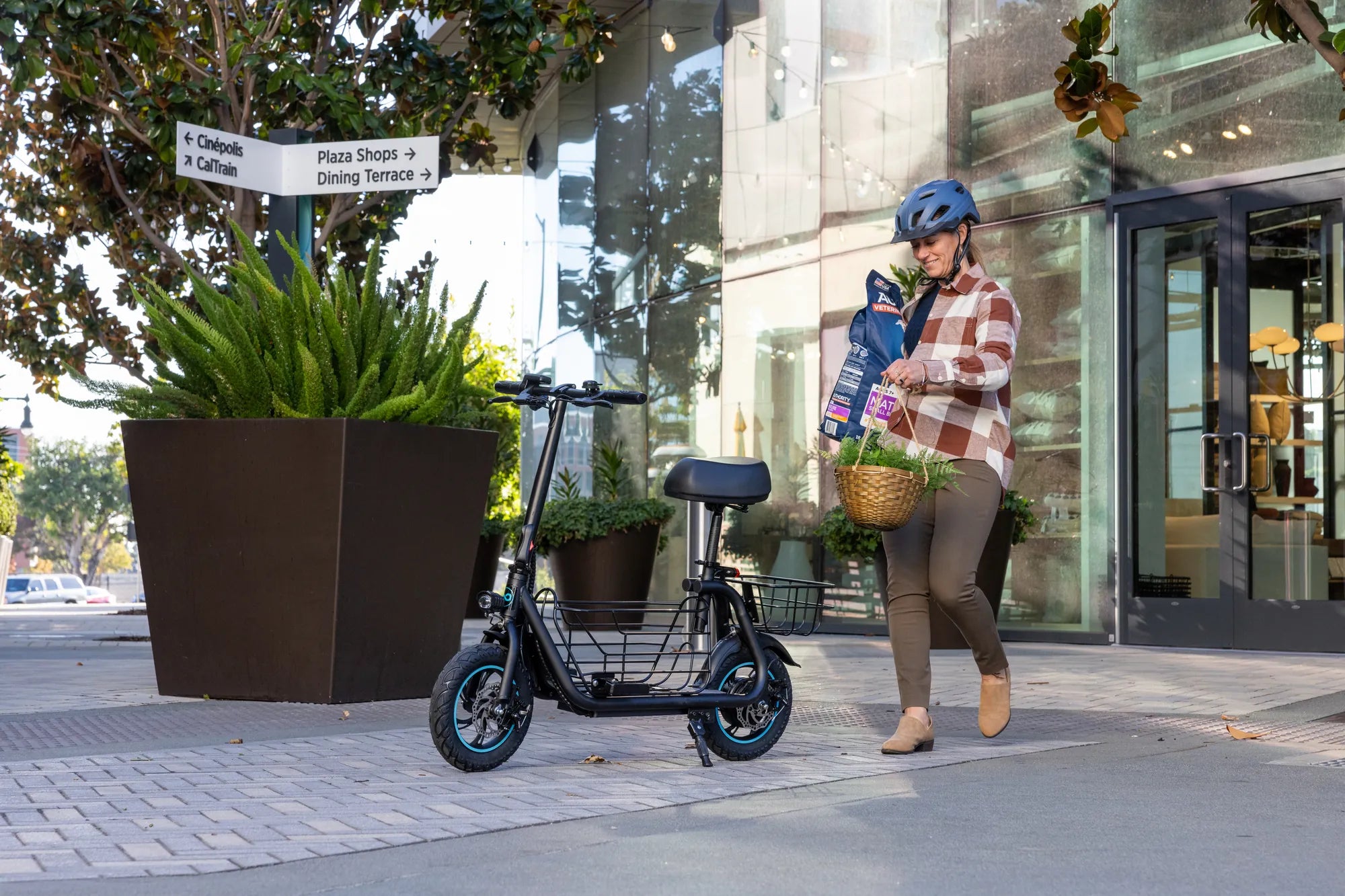
Your electric scooter represents freedom, investment, and daily convenience. Securing it properly isn't just an afterthought—it's essential to protecting that investment and ensuring peace of mind. This guide will teach you exactly how to lock your scooter using proven methods, quality hardware, and smart habits. We'll cover why basic cables fail, which locks professionals recommend, and how to create a layered defense system that deters thieves effectively.
Why You Need to Lock Your E-Scooter (It's Not Just About Theft)
Electric scooter theft is a growing problem in urban areas worldwide. Police reports indicate that most thefts are crimes of opportunity, taking less than 30 seconds to execute. However, the consequences extend beyond simply losing your vehicle.
Proper locking is often required for insurance validation. Many theft protection policies explicitly deny claims if the scooter wasn't secured with an approved lock type. This makes your locking method directly tied to financial recovery.
Beyond theft prevention, secure parking prevents vandalism and unauthorized use. A properly locked scooter is less likely to be tampered with or knocked over, protecting its components and electronics. For brands like Gyroor with IPX5 water-resistant designs, maintaining physical integrity ensures those protective features function as intended.
The psychological benefit is equally important. Knowing your scooter is securely locked allows you to focus on your activities without worrying about its safety. This peace of mind transforms how you use micromobility—from constant anxiety to confident convenience.
The Locking Trinity: Principles of Secure Scooter Parking
Effective scooter security rests on three non-negotiable principles. These fundamentals apply regardless of your scooter model, location, or lock type. Mastering them reduces your risk profile significantly.
First, always lock to a fixed, immovable object. This seems obvious but is frequently overlooked. The object must be permanently anchored and unable to be lifted, unbolted, or broken. Many thefts occur because riders lock to inadequate structures.
Second, secure the frame directly. Wheels, stems, and handlebars often have quick-release mechanisms or can be disassembled. Thieves can remove these components and walk away with the main frame if you've only secured peripheral parts.
Third, employ multiple lock types for layered security. Different locks require different tools to defeat. Using two distinct lock types dramatically increases the time and effort needed for theft, making your scooter a less attractive target.
Choosing the Right Immovable Object
Not all fixed objects are created equal. Dedicated bike racks are ideal, particularly those that are cemented into the ground and made of thick steel. Municipal racks installed by cities generally offer good security when properly designed.
Street signs with deep-set foundations can work, but avoid signs with exposed bolts that could be removed. Sturdy lampposts are another option, though be mindful of accessibility regulations in some areas.
Avoid fences, small trees, wooden railings, or anything that can be cut, lifted, or broken. Chain-link fences can be snipped easily. Decorative ironwork often has weak points. Always test an object's stability before committing your lock to it.
The Frame is Key: Why Wheels Aren't Enough
Modern scooters often have quick-release mechanisms for portability. This convenience becomes a vulnerability if you only lock through a wheel. A thief can simply remove the wheel and take the rest of the scooter.
The main frame—particularly the deck area where the battery is housed—is the most secure anchoring point. On Gyroor scooters, the reinforced aluminum alloy frame includes specific cutouts and spaces designed for U-lock compatibility. This intentional design makes proper security easier.
If your frame lacks obvious locking points, aim for areas where multiple structural elements converge. Avoid locking through plastic components or areas with wiring that could be damaged. The goal is to secure the heaviest, most integral part of the scooter.
The Lock Arsenal: Types and Best Use Cases
Understanding lock types is crucial for making informed security decisions. Quality varies dramatically within each category, and price often correlates with protection level. Invest in the best lock you can afford—it's cheaper than replacing your scooter.
Security ratings provide helpful guidance. Look for locks rated Sold Secure Diamond or Gold for bicycles (the closest equivalent for scooters). These have been independently tested against various attack methods. Many insurance companies require these ratings for coverage.
Consider weight versus security trade-offs. Heavier locks generally offer more protection but are less portable. Some riders keep a heavy lock at their frequent destination (like work) and use a lighter but still secure lock for the journey.
Maintenance matters too. Locks with weather-resistant coatings last longer in outdoor conditions. Lubricate moving parts periodically, especially if you ride in wet conditions. Gyroor's IPX5 rating means your scooter can handle splashes, but your lock needs similar consideration.
U-Locks (D-Locks): The Gold Standard for Core Security
U-locks offer exceptional resistance to cutting and leverage attacks due to their hardened steel construction and compact shape. Their rigid design leaves little space for tools like jacks or bolt cutters to gain mechanical advantage.
Proper sizing is critical. Choose a U-lock that fits snugly around your frame and the anchoring object. Excess space allows thieves to insert tools for leverage attacks. Some brands offer multiple sizes or adjustable models for flexibility.
Look for double-locking mechanisms (locking on both sides of the shackle) and disc-style cylinders that resist picking and drilling. Some high-end models include protective covers over the locking mechanism to prevent debris intrusion.
For Gyroor riders, the frame design specifically accommodates U-locks. The deck area has sufficient clearance, and the sturdy construction can withstand pressure without deformation. This compatibility makes implementing this gold standard security straightforward.
Heavy-Duty Chain Locks: Versatility and High Security
Quality chain locks provide excellent security with greater flexibility than U-locks. They can secure to wider objects like larger poles or through both wheels and frame simultaneously. This versatility makes them popular for urban environments with varied parking options.
Chain thickness determines security. Aim for 12mm or thicker links made of hardened steel. The links should be welded closed (not just pressed together) to resist prying attacks. Many quality chains come with a protective sleeve to prevent scratching your scooter.
The padlock is equally important. It should match the chain's security level with a hardened steel shackle and pick-resistant cylinder. Integrated chain-and-padlock systems ensure compatibility, but high-quality separate components can work well too.
The main drawback is weight. A secure chain lock can weigh 2-3 kilograms, adding significant load to your ride. Some riders use a chain lock as their primary at-home or work lock while carrying a lighter U-lock for shorter stops during transit.
Folding Locks & Cable Locks: Convenience vs. Security
Folding locks represent a middle ground between U-locks and cables. They consist of rigid steel plates connected by rivets, folding compactly for storage. Their flexibility allows them to secure more components than a U-lock while offering better cutting resistance than cables.
High-quality folding locks with 12+ millimeter thick plates provide good security for moderate-risk areas. They're particularly useful for securing both frame and wheels to irregular objects. However, the riveted joints can become vulnerability points if not properly hardened.
Cable locks should never serve as primary security. They can be cut silently with handheld cable cutters in seconds. Their only appropriate use is as a secondary lock for low-value accessories or in combination with a U-lock or chain.
If you must use a cable temporarily, choose one with at least 14mm thickness and a integrated combination or key lock (avoid cheap combination locks with predictable codes). Remember that any cable represents minimal deterrence at best.
Lock Comparison Table: Security Features and Best Use Cases
| Lock Type | Security Level | Weight | Best For | Attack Resistance | Gyroor Compatibility |
|---|---|---|---|---|---|
| U-Lock (Hardened Steel) | Excellent | 1.2-2.0 kg | Primary security, high-theft areas, insurance requirements | High resistance to cutting, leverage attacks; moderate to picking | Excellent - frame designed with U-lock anchor points |
| Heavy Chain (12mm+) | Excellent | 2.0-3.5 kg | Versatile parking, securing multiple components, home base locking | High resistance to cutting with bolt cutters; vulnerable to angle grinders | Very Good - fits through frame and wheel spaces easily |
| Folding Lock (Quality) | Good to Very Good | 1.0-1.8 kg | Moderate-risk areas, commuters needing compact storage | Good cutting resistance; joints can be vulnerability points | Good - flexible enough for various attachment points |
| Cable Lock (Thick) | Poor to Fair | 0.5-1.2 kg | Secondary lock only, securing accessories temporarily | Low - cut quickly with cable cutters or bolt cutters | Fair - fits anywhere but provides minimal security |
| Smart Lock (Integrated) | Varies Widely | 0.8-2.0 kg | Tech-focused users, tracking integration, shared scooters | Depends on core mechanism; digital components add failure points | Check Compatibility - some models have specific mounting |
The Gyroor Rider's Step-by-Step Locking Protocol
Following a consistent routine ensures you never skip crucial security steps. This protocol incorporates Gyroor's design advantages while applying universal security principles. Practice it until it becomes automatic.
Begin by surveying your parking location before dismounting. Look for proper anchoring points, lighting, and visibility. If possible, choose spots near security cameras or with regular pedestrian traffic. Trust your instincts—if a location feels unsafe, find another.
Power down your scooter completely. Gyroor scooters have clear power indicators, so ensure all lights are off. This prevents battery drain and eliminates any electrical hazards during locking. Remove any easily detachable accessories like your helmet or lights if you're taking them with you.
Step 1: Location Scouting & Pre-Lock Check
Approach your chosen anchor point and test its stability. Shake it firmly to ensure it's truly immovable. Check for obvious weaknesses like rust, loose bolts, or cracks. For bike racks, ensure it's actually secured to the ground, not just placed on pavement.
Note the available space around the object. Ensure there's enough room to position your scooter without blocking pedestrian pathways or creating hazards. Position your Gyroor scooter with the locking side facing away from public access when possible.
Check ground conditions. Avoid locking in standing water or mud that could submerge your lock mechanism. While Gyroor's IPX5 rating protects the scooter from splashes, prolonged submersion can damage locks and affect performance.
Step 2: Primary Lock Application (The Frame Anchor)
Thread your primary lock (U-lock or heavy chain) through the scooter frame first, then through the immovable object. On Gyroor models, use the dedicated frame cutouts or space between the deck and battery compartment. This protects both the structural frame and expensive battery.
Minimize empty space within the lock. Position the scooter as close to the anchor as possible. If using a U-lock, orient it with the keyhole facing downward to prevent debris accumulation. Ensure the locking mechanism fully engages with an audible click.
Apply tension if using a chain lock. Pull it tight before locking to eliminate slack. Some chain locks have tensioning mechanisms for this purpose. The goal is to prevent any space for tools to be inserted between the chain and what it's securing.
Step 3: Secondary Lock & Accessory Security
Add a second lock of a different type if possible. A folding lock through the rear wheel and frame adds considerable time to any theft attempt. If you only have one quality lock, use a cable as secondary through the wheels.
Secure removable accessories. If leaving your helmet, thread a cable through its chin bar and your primary lock. Use the Gyroor's built-in storage compartment for small items only if you'll be gone briefly—never leave valuables unattended long-term.
Consider wheel locks if your scooter has quick-release mechanisms. These prevent the wheels from being removed without a key. Combined with a frame lock, this creates a comprehensive security system that addresses multiple attack vectors.
Step 4: The Final Security Sweep
Remove the key and store it separately from your scooter. Many riders keep lock keys on a different ring than their scooter key. This prevents losing all access at once. Test the lock by pulling on it to ensure it's properly engaged.
Take a quick photo of your locked setup. This serves multiple purposes: insurance documentation, helping you remember where you parked, and recording exactly how you secured it. Many theft claims require proof of proper locking.
Do a final visual check. Ensure no cables or locks are dragging on the ground where they could be tripped over or damaged. Verify your scooter is stable and won't fall over. Then you can walk away with confidence.
Beyond the Lock: Pro-Tech and Behavioral Tips
Physical locks are essential but incomplete. Layering technological and behavioral strategies creates a comprehensive security system. These additional measures work synergistically with quality locks to maximize protection.
Start with proper documentation. Record your scooter's serial number (usually under the deck or near the stem), take photos from multiple angles, and keep your purchase receipt. Register your Gyroor with the manufacturer—this helps with warranty claims and recovery if stolen.
Understand your insurance options. Some homeowners or renters policies cover electric scooters, while others require specific riders. Dedicated micromobility insurance is increasingly available. Ensure your policy covers theft and specifies any lock requirements.
Develop situational awareness habits. Vary your parking locations and routines slightly to avoid predictable patterns. Notice who's around when you lock and unlock your scooter. These subtle behaviors make you a less predictable target.
Leveraging Technology: GPS Trackers & Alarms
GPS trackers provide recovery options after theft. Compact devices can be hidden within the deck or battery compartment. Look for models with long battery life, cellular connectivity (not just Bluetooth), and geofencing capabilities that alert you if the scooter moves.
Motion-activated alarms serve as excellent deterrents. Loud 120+ dB alarms draw immediate attention when triggered. Some integrate with GPS systems, while others function as standalone units. The sudden noise often causes thieves to abandon their attempt.
Smart locks with integrated tracking represent the convergence of these technologies. Some allow remote locking/unlocking via smartphone and send movement alerts. However, ensure the mechanical components meet the same security standards as traditional high-quality locks.
Gyroor's electronic systems provide some inherent advantages. The reliable power system from UL-certified batteries ensures consistent performance for any added electronic security devices. The sturdy construction also provides ample hiding spaces for trackers.
Insurance & Documentation: Your Financial Backstop
Review your existing insurance policies carefully. Many standard policies exclude "motorized vehicles" or have specific limitations for electric scooters. Contact your provider for clarification and consider adding a rider if needed.
Specialized micromobility insurance has emerged as a robust option. These policies typically cover theft, damage, and liability with fewer exclusions. Some even offer replacement with current models rather than depreciated cash value.
Document everything. Beyond photos and serial numbers, keep records of upgrades, maintenance, and accessories. This establishes value for insurance purposes and aids police reports if needed. Store digital copies in cloud storage for easy access.
Remember that Gyroor's 1-year comprehensive warranty covers manufacturing defects and component failures—not theft or accidental damage. This makes external insurance crucial for complete protection of your investment.
Behavioral Habits for Maximum Safety
Parking duration dictates security level. For quick stops (under 5 minutes), your primary lock may suffice in moderate-risk areas. For longer periods, always use multiple locks and choose the most secure location available.
Overnight parking requires special consideration. Whenever possible, bring your scooter indoors. If you must leave it outside overnight, use maximum security measures and choose well-lit areas with overnight activity. Consider dedicated secured parking facilities.
Shared spaces like apartment garages or workplace bike rooms still require locking. These are common theft locations precisely because people become complacent. Always lock your scooter even in "secured" areas—the convenience isn't worth the risk.
Community awareness enhances security. Notice other riders' locking practices and share tips. Report inadequate bike racks to local authorities. Collective attention to security improves conditions for all micromobility users in your area.
FAQ: Quick Answers to Common Locking Questions
What is the single most important locking tip?
Always lock the frame (not just a wheel) to a solid, immovable object using a quality U-lock or heavy chain. This addresses the most common theft methods and provides foundational security that other measures build upon.
Is a cable lock enough for a quick coffee stop?
No. Cable locks can be cut silently in under 10 seconds with basic tools. Even for brief stops, use at minimum a quality U-lock or folding lock. The few extra seconds to use proper security prevent potential loss.
How does Gyroor's design help with security?
Gyroor scooters include specific frame anchor points compatible with U-locks, reinforced construction that resists prying attacks, and reliable electronics that support added security devices. The UL-certified battery also reduces fire risk if a thief attempts to tamper with it.
Should I lock my scooter in my apartment building's garage?
Yes, always. These are among the most common theft locations because residents become complacent. Use the same protocol as on public streets—secure frame to immovable object with quality locks. Consider adding a motion alarm for additional protection.
What if there's nothing proper to lock to?
If no adequate fixed objects exist, consider alternative strategies: bring your scooter inside if permitted, use a designated scooter parking facility, or choose a different destination. Never compromise on this fundamental principle—improper anchoring negates even the best lock.
How do I secure my scooter at home?
Home security should match or exceed public security. Install a ground anchor in your garage or dedicated storage area. Use your heaviest chain or U-lock even indoors. For apartment dwellers, wall mounts with integrated locking mechanisms provide good options.
Are smart locks worth the investment?
Quality smart locks with proven mechanical components can be excellent additions, particularly for tracking and alerts. However, they should complement rather than replace traditional high-security locks until the technology matures further and achieves independent security certifications.
Lock Smart, Ride with Confidence
Proper scooter security combines quality hardware, correct technique, and smart habits. Investing in a Sold Secure-rated U-lock or heavy chain, using it to secure your frame to immovable objects, and adding layers like secondary locks or tracking devices creates a comprehensive defense system. This protection ensures your Gyroor scooter remains ready for every journey, providing the reliable transportation you purchased it for.
Remember that security evolves with technology and thief methodologies. Stay informed about new lock technologies, local theft patterns, and insurance options. The few minutes spent properly securing your scooter pay dividends in longevity, peace of mind, and financial protection.
Your electric scooter represents freedom—freedom from traffic, parking hassles, and environmental impact. Protecting that freedom through diligent security practices ensures you can enjoy it for years to come. The confidence that comes from knowing your scooter is secure transforms how you experience urban mobility.
Ready to enhance your ride with security-designed equipment? Browse the full Gyroor collection of electric scooters, e-bikes, and accessories at gyroorboard.com. Each model incorporates security-conscious design alongside the performance and reliability trusted by over 100,000 riders across North America and Europe.
Max Ebike: Unleashing Ultimate Power, Range, and Utility on Two Wheels
Front Wheel Ebike Conversion Kit: The Complete DIY Guide to Electric Bike Upgrades