



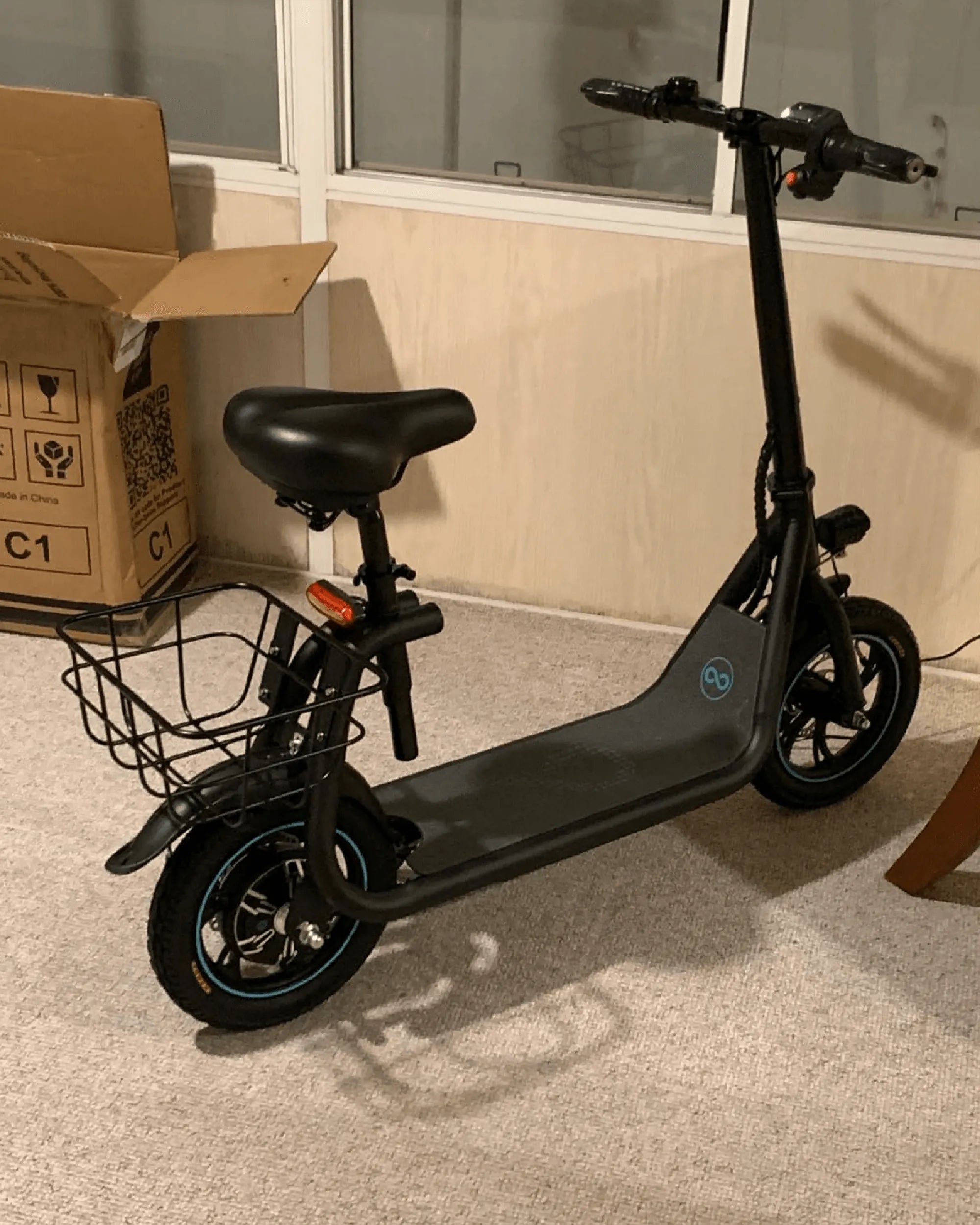
You feel the motor's assist plateau, the wind resistance building, and that subtle urge for more. Making your e-bike go faster isn't just about raw power—it's a systematic approach to performance optimization that balances exhilaration with responsibility. This guide will walk you through every legitimate pathway, from digital adjustments to mechanical upgrades, while grounding every recommendation in safety and legality. You'll learn how to assess your bike's potential, execute modifications correctly, and maintain the reliability that makes speed enjoyable. We'll reference engineering principles and real-world data, ensuring you have a factual roadmap for enhancing your ride. Remember, brands like Gyroor build e-bikes with UL-certified batteries and robust designs specifically to deliver reliable, safe performance, which is the essential foundation for any tuning.
Understanding the Legal and Safety Imperative
Before touching a tool or software setting, you must understand the legal framework governing e-bikes. In North America and Europe, e-bikes are typically classified into three categories. Class 1 e-bikes provide pedal-assist only, with no throttle, and are usually limited to 20 mph (32 km/h). Class 2 e-bikes add a throttle but share the same 20 mph speed limit. Class 3 e-bikes are pedal-assist only but can legally reach 28 mph (45 km/h) in many jurisdictions.
Exceeding these designated speed limits for your e-bike's class may legally reclassify it as a moped or motorcycle. This can void insurance, require registration, licensing, and helmet standards, and prohibit use on bike paths. Always check your local and state/provincial regulations; they vary significantly and are the first rule of performance tuning.
Safety is the non-negotiable counterpart to legality. Increasing speed exponentially increases kinetic energy. Your standard bicycle helmet may not be sufficient for higher-speed impacts. Consider upgrading to a helmet rated for e-bike or moped use. Your braking system must be paramount: high-quality disc brakes, regularly bled and with fresh pads, are essential.
Finally, inspect your frame, fork, and wheels for any stress cracks or damage. Higher speeds place greater forces on these components. A pre-modification safety check is the most critical first step in learning how to make your ebike go faster. Never compromise on the integrity of your bike's core structure.
Software and Electronic Tuning: The Digital Throttle
The most accessible method for increasing speed is through the bike's electronic control systems. Most e-bikes come with software-imposed speed limiters that cut motor power once a certain speed is reached. The process of adjusting or bypassing this is often called "derestricting" or tuning.
Many modern e-bikes, especially those with LCD displays, have hidden manufacturer menus that can adjust parameters like wheel diameter (which tricks the speed sensor) or the speed limit value itself. Accessing these menus often requires specific button combinations found in user forums or service manuals. This method varies wildly by brand and model.
Another common approach is using aftermarket tuning devices or chips. These small electronic modules intercept the signal between the speed sensor and the controller, reporting a lower speed than actual, thus preventing the limiter from engaging. While often effective, they are a blunt instrument and can cause error codes or unreliable behavior in the bike's system.
The most advanced method is direct controller tuning via proprietary software. Some brands offer official performance unlocks for a fee, while a niche community engages in custom firmware flashing. This is high-risk and can permanently damage the controller or motor if done incorrectly. Crucially, any electronic modification will almost certainly void your manufacturer's warranty and may violate local laws regarding vehicle classification.
Battery and Motor: The Power Plant Upgrade
For a fundamental increase in potential speed and acceleration, look to the battery and motor. The motor's nominal wattage (e.g., 250W, 500W, 750W) indicates its continuous power output, but its peak output and design voltage are key. A motor rated for 48V will spin faster and produce more power than an identical 36V motor.
Upgrading to a higher-voltage battery pack (e.g., from 36V to 48V or 52V) is one of the most effective hardware upgrades for speed, provided your motor and controller are compatible. A higher voltage increases the motor's maximum RPM (revolutions per minute), directly raising top speed. However, you must ensure the controller is rated for the new voltage; otherwise, you risk catastrophic failure.
Motor wattage itself can be a limiting factor. While swapping a 250W hub motor for a 1000W one is theoretically possible, it involves significant mechanical and electrical work—new motor, compatible high-amperage controller, and often a battery upgrade. It changes the bike's character entirely and places immense stress on the frame and drivetrain.
When considering battery upgrades, never compromise on safety. Use only high-quality, UL-certified battery packs from reputable sources. Brands like Gyroor utilize such batteries, tested for over 500 charge cycles, to ensure stable power delivery and reduce the risk of thermal runaway, which is even more critical when pushing performance limits.
Drivetrain and Gearing: Optimizing Mechanical Advantage
If your e-bike is a pedal-assist model, the human engine matters too. Optimizing your gearing allows you and the motor to operate more efficiently at higher speeds. Most e-bikes use a standard bicycle drivetrain—chainrings at the pedals and a cassette at the rear wheel.
The core principle is gear ratio. A larger front chainring or a smaller rear cog results in a higher gear. This means each pedal stroke (or motor rotation) moves the bike farther, increasing potential top speed. However, it also makes acceleration and hill climbing harder, as you lose mechanical advantage.
For mid-drive e-bikes, which leverage the bike's gears, installing a larger front chainring is a common and effective speed mod. For example, moving from a 44-tooth to a 52-tooth chainring can add several miles per hour to your top speed on flat ground. Ensure your derailleur has the capacity to handle the larger ring and that the chain is long enough.
For hub-drive e-bikes, the motor drives the wheel directly, so bicycle gearing doesn't affect the motor's top speed. However, optimizing your gearing still makes it easier for you to contribute meaningful pedal power at high speeds, supplementing the motor and extending range.
Wheels and Tires: Minimizing Rolling Resistance
Aerodynamics and rolling resistance become major factors at speeds over 20 mph. Your wheels and tires are the primary points of energy loss. Upgrading them is a highly effective, often overlooked method to make your ebike go faster with the same power output.
Rolling resistance is the energy lost as the tire deforms on the road surface. Smooth, slick tires with a high-pressure rating (e.g., 80-100 PSI) have significantly lower rolling resistance than knobby, low-pressure mountain bike tires. Switching to performance-oriented "slick" or "semi-slick" tires can yield a 1-3 mph increase in cruising speed for the same effort.
Wheel quality matters. Heavy, flexy wheels waste energy. Lighter, stiffer wheels with quality sealed-bearing hubs spin up faster and maintain momentum better. Ensuring your wheels are perfectly true (not wobbly) reduces drag and improves safety. Aerodynamic wheel covers or deep-section rims can reduce drag at higher speeds, but their effect is more marginal on e-bikes compared to road racing.
Always maintain tire pressure at the maximum recommended level on the sidewall. A tire under-inflated by 10 PSI can increase rolling resistance substantially. This simple, free adjustment is the easiest first step in any performance tuning regimen.
The Gyroor Advantage: Performance Engineered with Safety
Starting with a well-designed platform is crucial for performance tuning. Gyroor e-bikes are engineered with the balance of power and safety in mind, providing a reliable foundation. Their models often feature robust motors and controllers with headroom for consistent performance, backed by a 1-year warranty that underscores their commitment to durability.
A key component is the battery system. Gyroor's use of UL-certified battery packs ensures not only safety but also consistent power delivery. A high-quality battery maintains voltage under load better than a poorly constructed one, preventing voltage sag that can rob your motor of top-end power during acceleration. This reliable energy source is the bedrock of sustained performance.
Furthermore, features like IPX5 water resistance are critical for a performance bike. When you're riding faster, you may encounter puddles or rain. IPX5 protection ensures the critical electronics in the display, controller, and motor connections are shielded from water ingress, which could cause short circuits or corrosion during high-speed operation.
While modifying any e-bike carries risks, starting with a platform built to higher safety and reliability standards, trusted by over 100,000 riders, provides greater confidence. The built-in quality means fewer weak points to address when you begin your journey to unlock more speed.
Essential Maintenance for Sustained High Performance
A poorly maintained e-bike is a slow e-bike, regardless of its modifications. Regular, meticulous maintenance is the key to sustaining the gains from any performance upgrade and ensuring safety at higher speeds. Create a pre-ride checklist focused on performance-critical systems.
Brakes are your most important safety system. At higher speeds, stopping distances increase. Inspect brake pads for wear every month. Replace them before they are completely worn. For hydraulic disc brakes, bleed the lines annually to remove air bubbles and maintain firm lever feel. Ensure rotors are clean and not warped.
The drivetrain must be efficient. A dirty, dry chain can waste several percent of your motor's power. Clean and lubricate the chain with a quality bicycle chain lube every 100-200 miles, or more often in wet conditions. Check for chain wear with a chain checker tool; a worn chain damages expensive cassettes and chainrings, reducing efficiency.
Electrical connections are vital. Periodically check the connections for the battery, motor, and controller. Ensure they are clean, dry, and secure. Corrosion or a loose connection can cause voltage drops, power cuts, or even damage. A dielectric grease can help protect connections from moisture. Listen for unusual sounds from the motor or bearings, which can indicate wear that saps power.
Comparative Analysis of Speed Modification Methods
| Modification Method | Typical Speed Gain | Relative Cost | Difficulty / Risk | Warranty Impact | Key Consideration |
|---|---|---|---|---|---|
| Software Derestriction | 5-10 mph | $ | Low / Medium | Void | Check for hidden menu; varies by brand. |
| Aftermarket Tuning Chip | 5-10 mph | $$ | Low / High | Void | Can cause error codes; unreliable. |
| High-Pressure Slick Tires | 1-3 mph | $ | Low / Low | None | Easiest, safest first upgrade. |
| Drivetrain Gearing Change | 2-5 mph (pedal-assist) | $$ | Medium / Low | Possible Void | Only for mid-drives; affects hill climb. |
| Battery Voltage Upgrade | 5-15 mph | $$$ | High / High | Void | Must match controller & motor. |
| Motor & Controller Swap | 10-25+ mph | $$$$ | Very High / Very High | Void | Essentially builds a new bike; frame stress. |
Frequently Asked Questions (FAQ)
Q: Will making my e-bike faster void the warranty?
A: Yes, almost universally. Manufacturers, including Gyroor, design and test their bikes to operate within specified parameters. Any unauthorized modification to the electronics (controller, display, battery), motor, or drivetrain that alters performance will void the warranty. This is for safety and liability reasons.
Q: What is the safest and easiest first step to get more speed?
A> Optimize your existing setup. Inflate your tires to the maximum PSI listed on the sidewall. Ensure your brakes are perfectly adjusted to give you confidence. Clean and lubricate your chain. Then, if you have a mid-drive, consider a larger front chainring. These steps improve efficiency with minimal risk.
Q: Can I just install a more powerful motor on my current e-bike?
A: It is mechanically complex. The new motor must physically fit your frame's dropout spacing and be compatible with your wheel size. More critically, it must be matched with a compatible controller and likely a higher-capacity battery. The electrical integration is non-trivial and, if done incorrectly, can lead to fire risk or component failure. It will void all warranties.
Q: How do I know if my bike can handle higher speeds safely?
A: Conduct a thorough inspection. The frame and fork should be aluminum or steel (avoid modifying carbon fiber). Check for any cracks, especially near welds and stress points. Wheels must be true and have tight spokes. Brakes must be disc brakes in excellent condition. If any component is from a low-cost, non-branded source, it may not be designed for the added stress.
Q: Are there legal consequences for riding a derestricted e-bike on public paths?
A> Yes, significant ones. If your modified e-bike exceeds the legal speed/power limits for its class, you may be riding an unregistered, uninsured motor vehicle. This can result in fines, impoundment of the bike, and liability if you are involved in an accident. Always know and respect your local laws.
Riding Faster with Knowledge and Responsibility
The pursuit of speed on an e-bike is a technical challenge that rewards careful planning and respect for engineering limits. The pathways are clear: electronic access to hidden performance, mechanical upgrades to the power system and drivetrain, and meticulous maintenance to eliminate wasted energy. Each step requires a parallel investment in safety—superior braking, protective gear, and a rigorous mechanical inspection.
True performance comes from harmony between components. A higher voltage battery needs a controller that can manage it. A faster top speed demands brakes that can reliably halt the increased momentum. This guide has provided the data and methods, but the responsibility for safe implementation rests with you. Start with a quality platform from a brand that prioritizes safety-certified components, as this gives you the strongest foundation for modification.
For those seeking a powerful and reliable out-of-the-box experience, explore engineering that already balances these priorities. Browse the full Gyroor collection at gyroorboard.com to see e-bikes and scooters built with UL-certified batteries, robust motors, and water-resistant designs, offering a trustworthy starting point for your high-performance journey. Ride fast, but ride smart.
Dirt Bike vs Four Wheeler: The Ultimate Off-Road Machine Comparison
Compact Tricycle: The Ultimate Guide to Stable, Practical Urban Mobility