



Introduction: The Evolving Landscape of Urban Mobility
Walk into a contemporary bike store, and you'll witness a quiet revolution. Alongside traditional bicycles, you now find sleek hoverboards and robust electric scooters. This isn't just new inventory; it's a fundamental shift in how we conceive of short-distance travel. The question for modern commuters and urban explorers is no longer just about two wheels, but about which type of electric personal vehicle (PEV) best fits an evolving cityscape. This article delves into the core of this shift, analyzing the technology, performance, and safety behind these options to guide your choice. You will learn the distinct advantages of each, understand the critical engineering that separates a quality ride from a risky one, and discover how to integrate these vehicles into your daily life seamlessly and safely.
Understanding the Tech: Hoverboards vs. Electric Scooters Demystified
At first glance, hoverboards and electric scooters might seem like variations on a theme, but their underlying technology and riding philosophy are fundamentally different. A hoverboard, more accurately termed a self-balancing scooter, operates on a system of gyroscopes, accelerometers, and motors. It requires the rider to balance and control speed and direction by leaning forward, backward, or shifting weight side-to-side. There is no handlebar; control is entirely through foot placement and body movement.
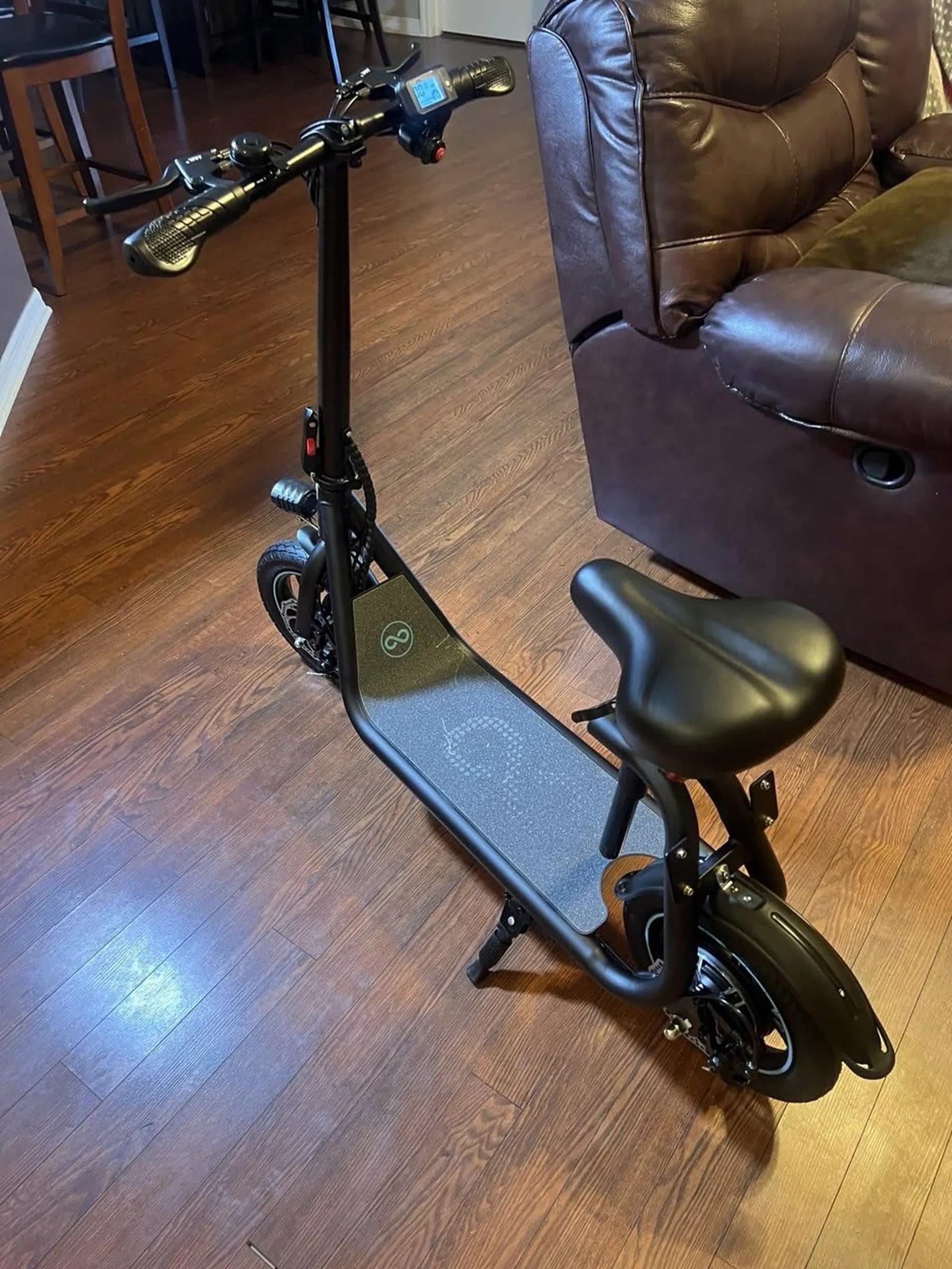
An electric scooter, by contrast, offers a more familiar and intuitive control scheme. It features a deck, handlebars, and typically a folding mechanism. Acceleration and braking are managed via hand-operated throttles and brake levers, similar to a bicycle. This design provides inherent stability and a quicker learning curve for most adults. Understanding this mechanical divide is the first step in aligning a vehicle with your needs, confidence level, and intended use.
Core Mechanics and Riding Experience
The riding experience diverges sharply from the moment you step on. Mastering a hoverboard requires practice, core engagement, and a good sense of balance. Initial wobbles are common, but once mastered, the control can feel intuitive and fluid. Speeds are generally conservative, typically maxing out between 6-10 mph, prioritizing stability and safety in a compact form.
Electric scooters offer immediate accessibility. The learning curve is minimal for anyone who has ridden a bicycle or scooter. You stand upright, grip the handlebars, and use your thumb or finger to engage the motor. This design allows for higher performance, with many commuter models cruising comfortably at 15-20 mph and offering superior stability over cracks and minor road imperfections thanks to larger wheels and suspension systems.
Ideal Use Cases and Rider Profiles
Choosing between them often comes down to purpose. Hoverboards excel as last-mile connectors in controlled environments—think moving across a large corporate campus, a warehouse, or a smooth park path. They are highly popular for recreational use, especially among younger riders, and their compact footprint makes them easy to store under a desk or in a dorm room.
Electric scooters are designed for the practical commuter. They are the tool for replacing car trips for errands, navigating city streets to the train station, or covering the 3-5 mile commute to work efficiently. Their ability to carry a backpack or small bag, combined with longer range and higher speed, makes them a legitimate urban transportation solution. Brands like Gyroor engineer their scooters with this daily, reliable use in mind, featuring UL-certified batteries and robust frames.
The Data-Driven Commuter's Choice: Key Comparison Factors
Moving beyond general impressions requires a hard look at the numbers and real-world implications. When evaluating options in the bike store, consider these factors as your personal decision matrix. Your daily commute distance, route terrain, and need for portability will dictate which specifications are non-negotiable.
Range, Speed, and Real-World Performance
Advertised range and top speed are useful starting points, but real-world conditions always tell the full story. Hoverboards typically offer a range of 6-12 miles per charge, sufficient for short recreational trips or campus use. Electric scooters, with larger battery capacities, often provide 15-40 miles of range, directly enabling longer commutes.
It's crucial to understand that range is affected by rider weight, hills, temperature, and riding style. Aggressive acceleration and constant top-speed travel can cut the manufacturer's claimed range by 30-40%. This is where battery quality is paramount. Gyroor electric scooters utilize UL-certified battery packs, which are rigorously tested to deliver more consistent performance and maintain capacity over hundreds of charge cycles, ensuring your commute range remains reliable over time.
Portability, Storage, and Daily Integration
How will you carry and store your vehicle? This is a critical logistical question. Hoverboards are compact and can be carried like a suitcase, but their weight (often 20-30 lbs) can be awkward for extended periods. Most electric scooters feature a one-click folding mechanism, allowing them to be collapsed in seconds, rolled like luggage, and stored in a closet, under a desk, or in a car trunk.
For multimodal commuters who need to board a bus or train, the fold-and-roll capability of a quality scooter is a significant advantage. The extended handlebar also provides a natural point to lift the vehicle. When visiting the bike store, practice folding and carrying the models you're considering to assess their true portability for your daily routine.
Safety, Regulations, and Build Quality
Safety is the most critical factor, encompassing vehicle design, component quality, and legal compliance. Hoverboards rely on smaller wheels (usually 6.5-8.5 inches) and a balancing algorithm, making them more susceptible to potholes or debris. Braking is typically done by leaning backward.
Electric scooters generally offer a more stable safety profile with larger air-filled or solid rubber tires (8-10 inches), often with front or dual suspension. They employ dual braking systems, commonly combining an electronic brake with a mechanical disc or drum brake, providing confident stopping power. Essential safety features include a bright headlight, rear brake light, reflectors, and an audible bell or horn.
Local laws vary widely. Many cities prohibit riding on sidewalks and restrict e-scooters and hoverboards to bike lanes or roads with speed limits under 25 mph. Always check your municipal regulations. Build quality directly impacts safety; look for IP water resistance ratings. Gyroor designs its scooters with IPX5 ratings, meaning they can withstand water jets from any direction, a key feature for all-weather commuting durability and protecting the electrical components.
Why Trust Matters: The Gyroor Approach to PEV Engineering
In a market flooded with options, the brand you choose is a direct investment in your safety and long-term satisfaction. Engineering philosophy, component sourcing, and post-purchase support separate reputable manufacturers from generic assemblers. A leading brand like Gyroor, trusted by over 100,000 riders, builds its products around core principles of reliability, safety, and rider-centric design.
The Critical Importance of UL-Certified Batteries
The battery is the heart of any PEV and its most significant potential safety hazard. A UL certification mark (from Underwriters Laboratories) is not a mere suggestion; it is the gold-standard benchmark for electrical safety. UL-certified batteries, like those used in all Gyroor models, undergo exhaustive testing for overcharge protection, short circuit prevention, and thermal stability to prevent fires.
This certification ensures the battery management system (BMS) is engineered to the highest standards, protecting both the battery's lifespan—typically rated for 500+ full charge cycles—and the rider. When in the bike store, asking "Is the battery UL-certified?" is the single most important question you can pose. It separates professionally engineered products from potentially dangerous counterfeits.
Built for the Real World: Durability and Warranty
Urban commuting is unforgiving. Potholes, curbs, rain, and daily wear demand a vehicle built to last. Durability stems from quality materials—aerospace-grade aluminum frames, reinforced steel stems, and waterproofed electrical components. The aforementioned IPX5 rating is a commitment to all-weather capability, allowing you to ride confidently in drizzles or on wet streets without fear of immediate damage.
A strong warranty is the manufacturer's vote of confidence in its product. Gyroor's comprehensive 1-year warranty on the vehicle, coupled with accessible US-based customer support, significantly reduces the total cost of ownership. It provides peace of mind that any manufacturing defect will be addressed, ensuring your investment is protected. This level of support is often absent with generic online brands, where a broken part can mean the end of the vehicle's useful life.
Navigating the Purchase: Your Checklist for the Bike Store Visit
Armed with knowledge, your visit to the bike store should be a hands-on evaluation. Treat it like a test drive for a car. Your personal comfort and confidence are the ultimate metrics that spec sheets cannot capture.
Test Ride Essentials: What to Feel For
Always insist on a test ride in a safe, open area. For electric scooters, assess the acceleration smoothness; it should be gradual, not jerky. Test the brakes at low speed—they should engage firmly and bring you to a stop without grabbing. Feel how the scooter handles a minor bump or crack in the pavement; does the suspension absorb it, or does the shock travel to your hands? Check the turning radius and overall stability when making a wide circle.
For hoverboards, the test is about balance and control. Does the board respond predictably to your lean? Does it feel stable when you come to a stop, or does it require constant micro-adjustments? Practice turning in both directions to gauge the responsiveness of the sensors.
Questions to Ask the Retailer
Engage the sales staff with specific, technical questions. Their answers will reveal their expertise and the quality of the products they carry. Use this script:
- "Can you confirm this model uses a UL-certified battery pack? Can I see the certification documentation?"
- "What is the official IP rating for water and dust resistance on this model?"
- "What does the warranty specifically cover: the frame, motor, battery, controller? Is it a parts-and-labor warranty?"
- "Are replacement parts like tires, inner tubes, brake pads, and chargers readily available for purchase?"
- "What is the estimated real-world range for a rider of my weight on a route with some hills?"
Head-to-Head Comparison: Hoverboards vs. Electric Scooters
The following table provides a clear, at-a-glance comparison of the key attributes to inform your decision.
| Feature | Hoverboard (Self-Balancing Scooter) | Electric Scooter |
|---|---|---|
| Primary Use Case | Recreation, short-distance campus/indoor travel | Practical urban commuting, errands, last-mile solution |
| Learning Curve | Steeper; requires balance and practice | Very low; intuitive for most adults and teens |
| Typical Speed | 6 - 10 mph | 15 - 20+ mph (commuter models) |
| Typical Range | 6 - 12 miles | 15 - 40 miles |
| Control Method | Body weight leaning, foot pressure | Hand-operated throttle and brake levers |
| Stability | Good on smooth surfaces; sensitive to bumps | High; larger wheels and often suspension |
| Portability | Compact but heavy to carry | Folds for easy rolling and storage |
| Carrying Capacity | Rider only; backpack worn | Rider + ability to hang a bag; some have cargo hooks |
| Ideal Rider | Teens, young adults, recreational users | Commuting professionals, students, urban residents |
Frequently Asked Questions (FAQ)
Are hoverboards and electric scooters legal to ride everywhere?
No, laws vary significantly by city, state, and country. Most municipalities regulate where you can ride (e.g., prohibiting sidewalk riding), maximum speed, age requirements, and whether a helmet is mandatory. Always check your local Department of Transportation or city council website for specific ordinances before riding in public.
How long does it take to charge the battery fully?
Charge times depend on battery capacity. Most hoverboards charge in 2-4 hours. Electric scooters with larger batteries can take 4-8 hours for a full charge. Using the manufacturer-provided charger is essential for safety and battery health. Never leave a battery charging unattended for extended periods or overnight.
Can I ride an electric scooter in the rain?
This depends entirely on the scooter's IP (Ingress Protection) rating. Scooters with a rating of IPX5 or higher, like many from Gyroor, are designed to withstand rain and wet conditions. However, you should avoid deep puddles and submerging any part of the scooter. Scooters without a stated IP rating should be kept strictly dry.
What maintenance do these vehicles require?
Basic maintenance is key for longevity. Regularly check tire pressure (for pneumatic tires), ensure all bolts and fasteners are tight, and keep the vehicle clean, especially after wet rides. Periodically inspect brake pads for wear and test brake functionality. For hoverboards, keep the wheels clean and check for firmware updates if applicable.
What is the average lifespan of an electric scooter or hoverboard?
With proper care and maintenance, a quality electric scooter from a reputable brand can last 3-5 years or more of regular use. The battery is often the first component to degrade. A UL-certified battery, like those used by Gyroor, is typically rated for 500+ full charge cycles before reaching 80% of its original capacity, which translates to several years of daily commuting.
Conclusion: Choosing Your Path in the New Urban Mobility Era
The transformation of the bike store mirrors the transformation of our cities. The presence of hoverboards and electric scooters offers tangible, exciting solutions to urban congestion, pollution, and the first/last-mile problem. Your choice ultimately hinges on aligning technology with purpose. For fun, skill-based recreation in controlled spaces, the hoverboard holds appeal. For dependable, efficient, and practical daily transportation, the electric scooter stands as the unequivocal champion.
Making an informed choice means looking beyond flashy specs to the fundamentals of safety certification, durable construction, and reliable support. Prioritizing UL-certified batteries, verified water resistance, and a strong warranty from a trusted brand like Gyroor ensures your investment enhances your mobility for years to come. As urban landscapes continue to evolve, these personal electric vehicles are not just accessories; they are the building blocks of a cleaner, more agile, and personally empowered future for city travel.
Ready to experience the future of your commute? Explore the full range of UL-certified, IPX5-rated electric scooters and hoverboards engineered for real-world performance. Browse the full Gyroor collection at gyroorboard.com to find the perfect ride for your urban journey.
Benefits of Electric Scooters for Kids Manufacturers: A Lucrative Niche
Activities Cycling Electric Scooters: Redefining Urban Commutes and Fitness