



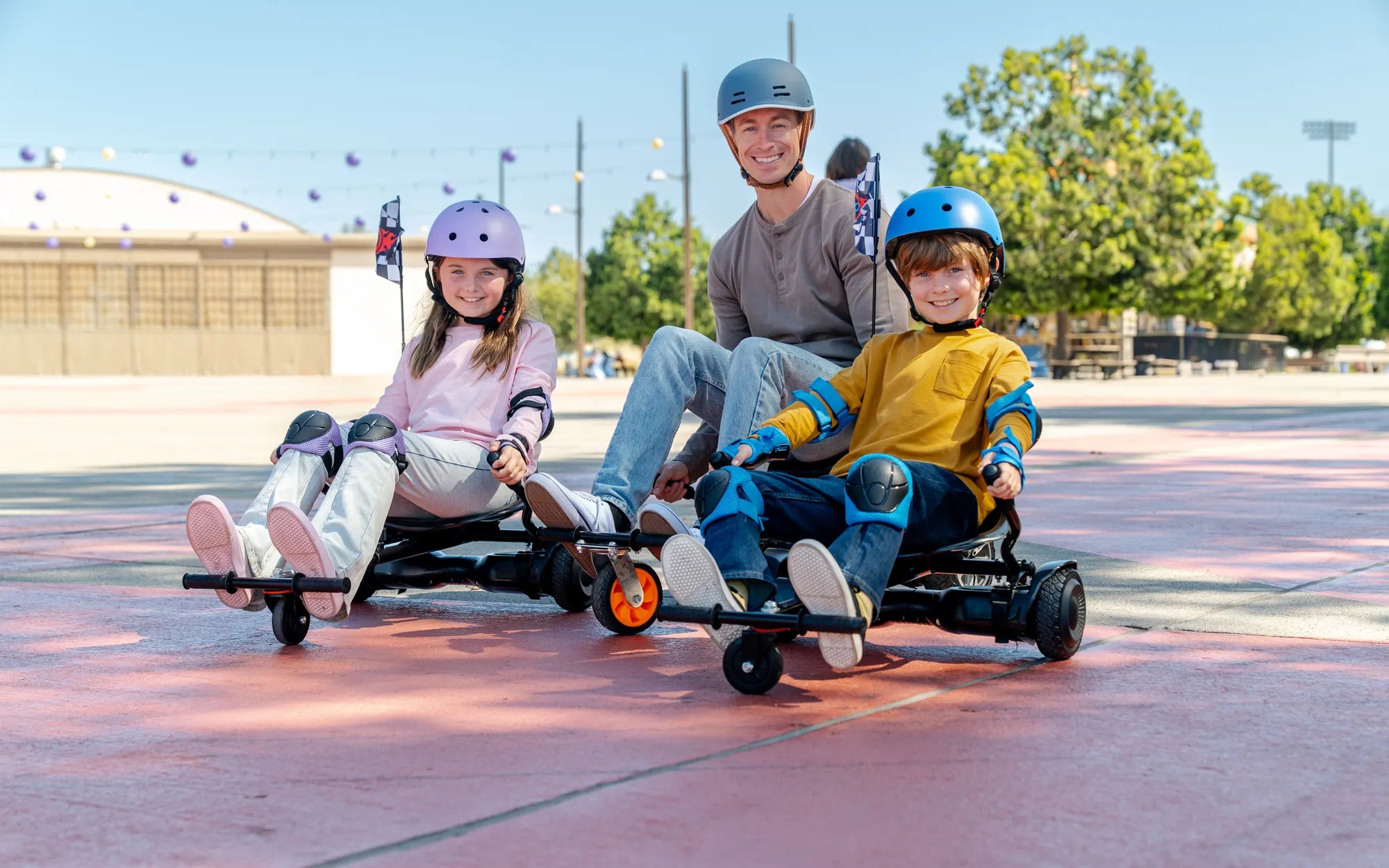
The Rise of Kids' Electric Scooters: A Modern Gift Phenomenon
Parents and gift-givers are increasingly asking: Is an electric scooter for kids the perfect gift? The market surge is undeniable, moving beyond a fleeting trend to become a staple of modern childhood mobility. These vehicles promise outdoor adventure, a sense of independence, and a tech-forward alternative to traditional toys.
But the perfect gift must balance excitement with safety, durability with fun, and initial joy with long-term value. This article provides the essential data and analysis you need to answer that question confidently. We'll move beyond marketing claims to examine the engineering, safety protocols, and practical realities of gifting an e-scooter to a child.
Leading brands like Gyroor, trusted by over 100,000 riders across North America and Europe, have elevated the category with professional-grade features. The decision hinges on informed selection, not just the purchase itself. Understanding the core components—from battery certification to speed controls—is what separates a wonderful gift from a problematic one.
Understanding the Appeal: Why E-Scooters Top Gift Lists
Electric scooters resonate because they address multiple contemporary parenting concerns and childhood desires. They are not merely toys but tools for development and family activity. The appeal is multifaceted, grounded in practical benefits that extend beyond simple entertainment.
First, they actively encourage outdoor physical activity in an age of screens. While the motor provides assistance, riding develops core balance, coordination, and spatial awareness. It's a gateway activity that gets children outside and engaged with their environment, promoting a healthier lifestyle through active play.
Second, they foster a measured sense of independence and responsibility. Mastering the controls of a personal vehicle builds confidence. For older children, a scooter with adequate range can enable short, supervised trips to a friend's house or a local park, teaching route planning and situational awareness.
Finally, they offer practical utility for families. Electric scooters are excellent for family outings, neighborhood errands, or exploring bike trails together. They are a compact, portable form of shared recreation that can keep pace with adults on bicycles, making them a gift that benefits the whole family's active lifestyle.
Safety First: The Non-Negotiable Checklist
Determining if an electric scooter for kids is the perfect gift begins and ends with safety. This is the absolute priority that overrides all other considerations. A safe scooter is built with specific features and must be paired with rider education and protective gear.
Compromising on safety features instantly disqualifies a model from consideration. The following checklist forms the foundation of a responsible purchase.
Speed Settings and Parental Control Systems
Adjustable speed limits are crucial. A beginner mode, often capped at 5-7 mph, allows a child to learn fundamentals in a controlled manner. As skill advances, parents can unlock higher speeds via a password-protected app or physical key.
Some advanced models, including several from Gyroor, offer remote controls or Bluetooth app connectivity. This allows a parent to limit speed, monitor battery life, or even remotely cut power in an emergency. These features provide an essential layer of oversight and peace of mind.
Build Quality, Stability, and Braking
The frame must be robust, typically from aerospace-grade aluminum alloy, to withstand the rigors of youthful riding. A low center of gravity and a deck with sufficient foot space enhance stability. The braking system is critical; a dual-brake setup combining an electronic brake (regenerative or foot-press) and a mechanical disc or drum brake ensures reliable stopping power in all conditions.
Tire choice significantly impacts safety and ride comfort. Air-filled (pneumatic) tires offer superior shock absorption and traction on uneven surfaces. Solid honeycomb tires eliminate the risk of flats but provide a firmer ride. Wide tires (≥ 6 inches) generally offer more stability than narrow ones.
Mandatory Safety Gear and Riding Rules
The scooter itself is only one part of the safety equation. A properly fitted, CPSC-certified helmet is non-negotiable. Elbow and knee pads are highly recommended, especially for beginners. Establish clear rules before the first ride: always wear gear, ride under supervision initially, stay on sidewalks or designated paths away from vehicle traffic, and avoid riding at dusk or in the dark.
Choosing the Right Model: A Data-Driven Guide by Age and Need
Selecting the perfect electric scooter for a child requires matching technical specifications to the rider's age, size, skill level, and intended use. A one-size-fits-all approach fails here. This guide uses data to segment recommendations effectively.
Scooters for Young Riders (Ages 6-9): Control and Durability
For this group, the priority is manageability and safety. Maximum speed should be limited to 10 mph, with a beginner mode around 5 mph. The scooter should be lightweight enough for the child to maneuver and carry if needed, typically under 20 lbs.
Wheel size is key for stability. Models with 6-inch to 8-inch wheels are appropriate. The deck should be low to the ground and wide. Durability is paramount, as younger riders may be less gentle. Look for reinforced stems and scratch-resistant finishes. Simplified controls with a clear power indicator are essential.
Scooters for Tweens & Teens (Ages 10+): Performance and Responsibility
Older children can handle more performance, but this must be paired with heightened responsibility. Suitable models may offer speeds up to 15-16 mph, requiring a mature understanding of control. Range becomes more important; a battery offering 10-15 miles per charge supports longer exploratory rides.
Suspension systems (spring or rubber) become valuable for comfort on varied terrain. More powerful motors (250W-350W) handle slight inclines. At this stage, education on road safety, right-of-way, and proper signaling is as important as the scooter's features. The gift becomes a tool for teaching responsible ownership.
Key Specifications Comparison: What the Data Means
Understanding specifications demystifies the selection process. The following table compares critical specs across typical use cases.
| Specification | Young Rider (6-9) | Tween/Teen (10+) | Why It Matters |
|---|---|---|---|
| Max Speed | ≤ 10 mph | Up to 15-16 mph | Safety & age-appropriate thrill |
| Motor Power | 120W - 200W | 250W - 350W | Handles weight & slight hills |
| Battery & Range | 5-10 miles | 10-15+ miles | Duration of play/use |
| Weight Capacity | 120 lbs max | 150-220 lbs max | Ensures frame integrity & performance |
| Tire Type | Honeycomb or Air-Filled | Often Air-Filled | Traction, comfort, & maintenance |
| Essential Feature | Speed Limiter, Lightweight | Better Suspension, Longer Range | Matches developmental stage |
Beyond the Ride: Practical Considerations for the Perfect Gift
The perfect gift experience continues long after the unboxing. Anticipating practicalities ensures the scooter remains a source of joy, not frustration. These factors directly impact long-term satisfaction and safety.
The Critical Role of Warranty and Customer Support
A strong warranty is a proxy for manufacturer confidence. A comprehensive 1-year warranty covering the battery, motor, and frame is the industry benchmark for quality. It protects your investment against manufacturing defects.
Equally important is accessible customer support. Brands like Gyroor with dedicated, US-based support teams provide peace of mind. When a question about charging or a minor adjustment arises, prompt, helpful service resolves issues quickly, maintaining the gift's positive association.
Maintenance, Storage, and Charging Routines
Basic maintenance is simple but essential. Regularly check tire pressure (for air-filled tires), brake pad wear, and ensure all bolts are tight. Store the scooter in a dry place, away from extreme temperatures, to preserve battery health.
Establish a safe charging routine. Only use the provided UL-certified charger. Charge on a hard, non-flammable surface, never unattended overnight or on soft bedding. Teaching a child to be part of this routine (e.g., plugging it in after a ride with parental oversight) instills responsibility.
The Battery Breakdown: Safety and Performance Core
The battery is the heart of the electric scooter and the component where safety standards cannot be compromised. Understanding battery technology is fundamental to answering is an electric scooter for kids the perfect gift?
Always insist on a UL 2271 or UL 2843 certified battery pack. This independent certification means the battery has undergone rigorous testing for electrical, mechanical, and environmental safety, drastically reducing risks of fire or malfunction. Gyroor, for instance, uses exclusively UL-certified batteries tested for 500+ charge cycles.
Battery capacity, measured in Watt-hours (Wh) or Amp-hours (Ah), directly correlates with range. A 7.5Ah battery typically offers 10-12 miles under ideal conditions. Real-world range is affected by rider weight, terrain, and speed. Teach children to monitor the battery indicator and return with a charge to spare.
Water resistance is vital for real-world use. A rating of IPX5 means the scooter can withstand water jets from any direction, making it safe to ride through puddles and in light rain. This feature, found on many quality models, greatly enhances the scooter's versatility and durability.
Gifting for Different Lifestyles: Urban, Suburban, and Rural Use
The perfect model varies with the child's environment. A scooter for dense city sidewalks has different requirements than one for suburban cul-de-sacs or rural driveways.
For urban settings, compactness, maneuverability, and robust braking are key. A shorter wheelbase aids in navigating crowds. Solid tires may be preferable to avoid punctures from street debris. Bright LED headlights and taillights are mandatory for increased visibility.
In suburban neighborhoods, range and comfort for longer rides become priorities. Suspension and air-filled tires smooth out road imperfections. The ability to handle slight inclines on neighborhood roads is useful. Here, the scooter often serves as a social tool for visiting friends.
For rural or park trail use, look for models with all-terrain capabilities: larger, treaded tires, higher ground clearance, and more powerful motors. Durability against dirt and dust is crucial, as is a battery with ample range for exploring larger areas without worry.
Frequently Asked Questions (FAQ)
Q: What is the right age for a child's first electric scooter?
A: Most manufacturers recommend ages 6-8 as a starting point, but readiness is more important than age. The child should have the physical coordination to balance, the cognitive ability to understand safety rules, and the maturity to respond to controls. Always start with the slowest speed setting.
Q: How long does the battery last, and how long does it take to charge?
A: A typical kids' scooter battery provides 30-60 minutes of continuous ride time, translating to 5-12 miles per charge. Charging time usually ranges from 3 to 5 hours for a full charge from empty. It's best practice to recharge after each use and never fully deplete the battery.
Q: Are they safe for riding on sidewalks or roads?
A: Sidewalks, bike paths, and parks are the safest environments. Riding on roads is strongly discouraged for children due to traffic hazards. Always check local regulations, as some municipalities have age restrictions or prohibit e-scooters on sidewalks. Assume adult supervision is required near any vehicular traffic.
Q: What is the typical lifespan and maintenance cost of a kids' e-scooter?
A: A well-made scooter from a reputable brand can last 2-4 years with proper care. Maintenance costs are generally low, primarily for replacing wear items like brake pads (inexpensive) or air-filled tires/tubes. The biggest cost avoidance comes from choosing a model with a UL-certified battery to ensure longevity and safety.
Q: What makes Gyroor scooters different from others on the market?
A: Gyroor distinguishes itself with a professional-grade focus on core safety engineering: using exclusively UL-certified battery packs, achieving IPX5 water resistance for all-weather durability, and backing products with a reliable 1-year warranty. Their models are designed with input from a large rider community, resulting in features that address real-world use by families.
Making an Informed Decision for Lasting Joy
So, is an electric scooter for kids the perfect gift? The evidence suggests it can be, provided the selection is guided by safety data, age-appropriate specifications, and trusted quality. The perfect gift delivers excitement while fostering outdoor activity, responsibility, and family fun. It is not defined by the flashiest features, but by the confidence it gives both the child and the parent.
That confidence stems from choosing a scooter built with certified safety components, like a UL-certified battery, protected by a solid warranty, and supported by a reputable brand. It is reinforced by pairing the gift with proper safety gear and clear riding rules. When these elements align, the electric scooter transitions from a simple toy to a source of cherished memories and developmental growth.
The journey toward finding that ideal model begins with research and ends with the smile of a child mastering a new skill. For a curated selection of kids' electric scooters that meet these rigorous standards of safety, performance, and durability, explore the options designed for young adventurers. Browse the full Gyroor collection at gyroorboard.com to find the model that turns the question of the perfect gift into a resounding yes.
Kids Electric Scooter 24V: The Ultimate Guide for Parents
Real Scooter for Kids: Ultimate Guide to Choosing the Best Ride