


Introduction: Why a Kick Scooter is a Milestone for Kids 8+
A kick scooter for kids ages 8+ represents a significant leap in independence, coordination, and outdoor adventure. This isn't just another toy; it's a vehicle for physical development, confidence-building, and exploration. For children in this age group, mastering a two-wheeled scooter provides a sense of autonomy and a fun, efficient way to travel around the neighborhood or park.
The right scooter fosters crucial motor skills like balance, coordination, and spatial awareness. It encourages outdoor play in an age dominated by screens, promoting cardiovascular health and muscle strength. Choosing a model built for this specific age and stage is paramount, as it must balance excitement with robust safety engineering.
Brands like Gyroor design with this balance in mind, creating scooters that are not only thrilling but are constructed to withstand rigorous use while protecting the rider. This guide will navigate you through every consideration, from frame materials to safety protocols, ensuring your child's journey on wheels is both joyful and secure. The focus is on empowering your young rider with the right tool for their growing capabilities.
Key Features to Look for in an Age 8+ Kick Scooter
Selecting a scooter for an older child requires moving beyond basic toy models. The key features directly impact safety, durability, and the overall riding experience. A well-chosen scooter can last for several years, adapting as your child grows and their skills advance.
Core components to scrutinize include the frame construction, wheel size and material, braking system, and handlebar adjustability. Each element plays a role in stability, control, and comfort. Compromising on quality in any of these areas can lead to a frustrating or unsafe experience for the rider.
Investing in a scooter with premium features from a reputable brand ensures value over time. It reduces the likelihood of premature failure and provides a consistently smooth, reliable ride that encourages continued use and outdoor activity.
Durability and Build Quality: Withstanding the Rigors of Play
The frame is the scooter's backbone. For kids ages 8+, who ride with more speed and force, aircraft-grade aluminum is the gold standard. It offers an exceptional strength-to-weight ratio, being both lightweight for easy carrying and incredibly resilient against impacts and stress.
Reinforced steel frames are also common and provide excellent durability, though they may add slight weight. The deck should be wide enough for a stable footing and made from a slip-resistant material. High-abec rated bearings (e.g., ABEC-7 or ABEC-9) are essential for smooth, fast, and quiet wheel rotation with minimal maintenance.
Gyroor utilizes robust materials and precision engineering in its youth models, ensuring critical stress points like the folding mechanism, stem clamp, and brake mounts are reinforced. This construction is designed to handle jumps off curbs, frequent braking, and the general wear-and-tear of daily adventure.
Adjustability: Growing with Your Child
A scooter with a non-adjustable handlebar will be outgrown in a single season. For a child aged 8+, look for a model with a wide and easy height adjustment range, typically from about 30 inches to 40 inches from the deck. This allows the scooter to accommodate a child from roughly 48 to 60 inches tall.
Proper handlebar height is ergonomically critical. When standing on the deck, the handlebars should come approximately to the child's waist. This position prevents hunching, allows for optimal control during steering and braking, and reduces fatigue. A quick-release clamp mechanism makes adjustments tool-free and simple.
This feature transforms the scooter from a one-year purchase into a 3-4 year investment. It ensures the rider maintains a comfortable, controlled posture as they grow, which is fundamental to both safety and enjoyment.
Safety Systems: Brakes and Stability
The braking system is the most critical safety feature. Most kick scooters use a rear fender brake, where the rider presses down on the rear fender to engage a brake pad against the wheel. This should provide strong, progressive stopping power without locking the wheel and causing a skid.
Some advanced models for older kids may incorporate a handbrake on the handlebar, similar to a bicycle. This offers more precise modulation and control, especially at higher speeds or on inclines. Regardless of type, brakes must be responsive and regularly checked for wear.
Stability is governed by wheel size and deck design. Larger wheels (200mm/8 inches or more) roll over cracks, pebbles, and uneven pavement more smoothly than smaller wheels, providing a stable ride. A wider deck offers a more confident platform for both feet. A low deck height lowers the center of gravity, further enhancing stability, especially during turns.
The Gyroor Advantage: Engineered for Confident Riders
When selecting a platform for your child's independence, the brand's engineering philosophy matters. Gyroor designs its rideables with a core principle: unlock adventure without compromising on safety or durability. This approach is particularly relevant for the 8+ age group, where exploration boundaries are expanding.
The brand's commitment is reflected in tangible, industry-recognized standards applied to its products. These are not just marketing claims but verifiable benchmarks that provide parents with genuine peace of mind. From power systems to water resistance, every aspect is considered.
With a community of over 100,000 riders and a 4.5/5 average rating, Gyroor's focus on reliable performance and customer support builds trust. For a child's kick scooter—whether pure kick or electric-assist—this translates to a product that is as dependable as it is fun.
UL-Certified Peace of Mind: The Battery Safety Standard
For any electric-assist scooter model suitable for this age group, battery safety is paramount. Gyroor equips its electric scooters exclusively with UL-certified lithium-ion battery packs. This certification is the leading safety standard in North America, indicating the battery has undergone rigorous testing for electrical, mechanical, and environmental safety.
A UL-certified battery is engineered to prevent overcharging, short-circuiting, and thermal runaway—a critical factor in preventing overheating. These batteries are built for longevity, tested for 500+ charge cycles while maintaining performance. This certification is a non-negotiable safeguard, ensuring the power source of your child's scooter meets the highest benchmarks for safe operation.
Built for Real-World Adventures: IPX5 Water Resistance
Kids don't check the weather forecast. An IPX5 water-resistance rating means the scooter's electrical components (if present) are protected against low-pressure water jets from any direction. In practical terms, this makes the scooter resilient against riding on damp pavement, through accidental puddles, or in light rain.
This feature significantly enhances the scooter's durability and versatility. It prevents water damage from ending a ride prematurely or causing internal corrosion. For parents, it reduces worry about accidental splashes or unexpected drizzle, knowing the scooter is built to handle real-world conditions.
Investment Protection: The 1-Year Comprehensive Warranty
Gyroor backs its scooters with a 1-year comprehensive warranty on the frame, electronics, and battery. This warranty is a direct reflection of the confidence in their manufacturing quality and material selection. It protects your investment against defects in materials or workmanship.
Coupled with responsive, US-based customer support, this warranty ensures that should any issue arise, it can be resolved quickly and without hassle. It transforms the purchase from a transactional buy into a supported long-term investment in your child's fun and mobility.
Kick Scooter vs. Other Ride-Ons: A Practical Comparison for Parents
Parents have many options for wheeled recreation. Understanding the unique position of the kick scooter helps in making an informed choice that matches a child's age, skill, and your family's lifestyle. The following table provides a clear, data-driven comparison.
| Ride-On Type | Key Advantages | Considerations for Ages 8+ | Best For |
|---|---|---|---|
| Kick Scooter | Excellent for balance & coordination; highly portable; low storage footprint; low maintenance; usable on sidewalks/paths. | Requires some initial balance practice. Speed is self-limited by kicking. | Daily neighborhood fun, active commuting to friends' houses, developing fundamental coordination skills. |
| Bicycle | Great for endurance & longer distances; familiar and social activity. | Less portable, requires more storage; higher learning curve; greater risk of higher-speed falls. | Family bike rides, longer trail explorations, children who have already mastered balancing. |
| Electric Scooter | Thrill of motorized speed; less physical effort for longer ranges. | Higher cost; weight; local age/safety regulations apply; requires charging and battery safety knowledge. | Older, responsible kids (often 12+) in areas where permitted, for efficient longer-distance travel. |
| Skateboard | High skill development; creative expression through tricks. | Steep learning curve; higher inherent risk of falls; less practical for point-A-to-B transport. | Kids dedicated to learning a technical skill, use in designated skate parks. |
The kick scooter emerges as the ideal middle ground. It offers more active engagement and easier portability than an electric scooter, a gentler learning curve and more practical transport than a skateboard, and greater convenience for short trips than a bicycle. It uniquely combines fun, fitness, and fundamental skill development.
Essential Safety Gear and Riding Rules Every Kid Should Know
The safest scooter is only one part of the equation. Establishing a culture of safety from day one is essential. This involves equipping your child with the right protective gear and instilling smart riding habits that become second nature.
Safety gear is non-negotiable, every single time. Similarly, clear rules about where and how to ride set boundaries that protect your child and others. Taking the time to coach these practices ensures the scooter remains a source of joy, not accidents.
The Non-Negotiable Safety Kit
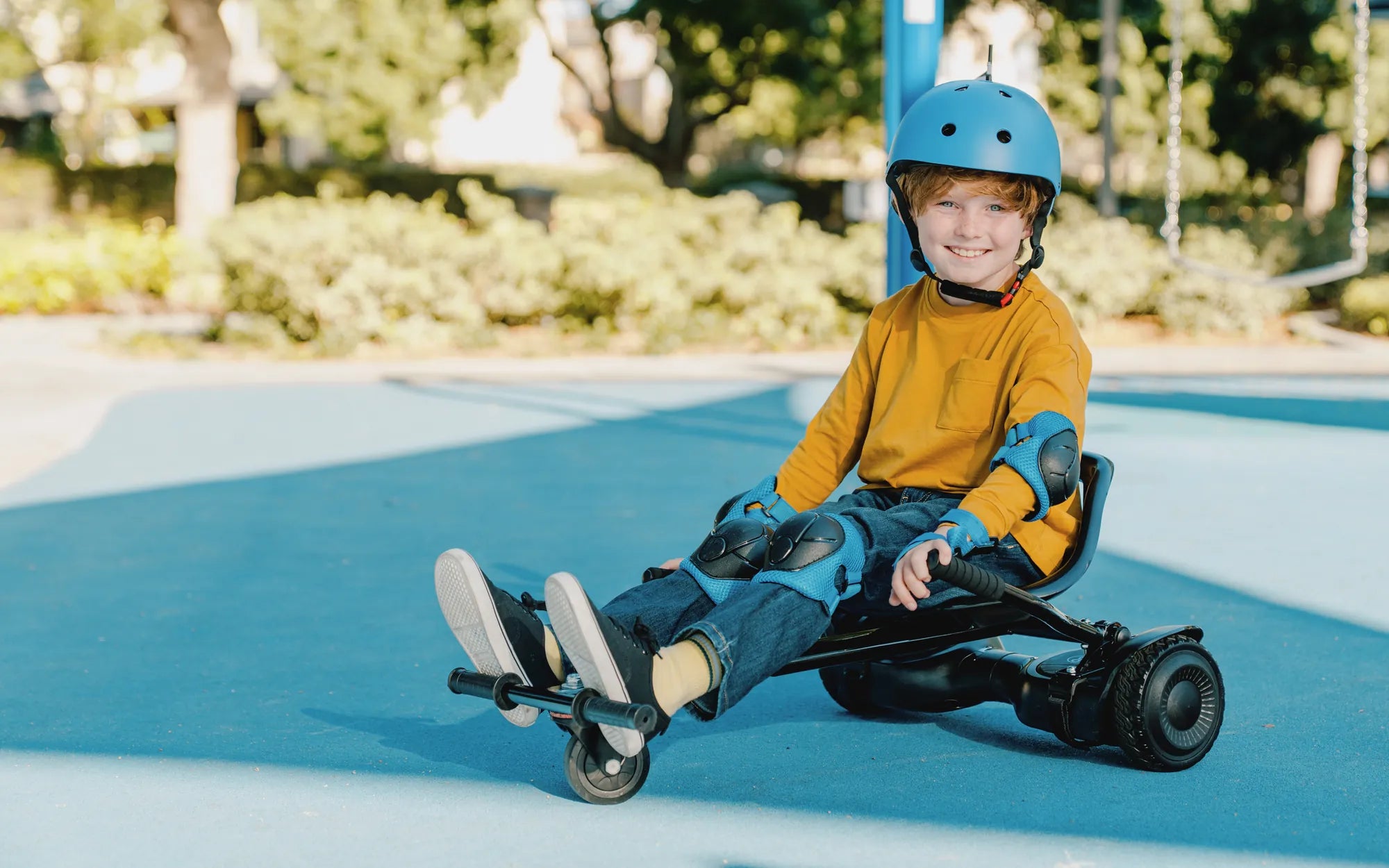
Helmet: This is the most critical piece. It must be CPSC certified, fit snugly (not rocking side-to-side or front-to-back), and be worn level on the head, covering the forehead. Replace it after any significant impact, even if no damage is visible.
Knee and Elbow Pads: Falls are inevitable, especially during the learning phase. Pads absorb impact and prevent painful scrapes, cuts, and more serious joint injuries. Ensure they fit securely without restricting movement.
Closed-Toe, Sturdy Shoes: Sandals or flip-flops are a severe hazard. Shoes with grippy, rubber soles (like sneakers) are essential for secure footing on the deck and effective kicking. They also protect toes during a mishap.
Smart Riding Habits: The Parent's Guide to Coaching
Start in a Controlled Environment: Begin practice in a flat, smooth, car-free area like an empty parking lot, driveway, or quiet cul-de-sac. Master starting, stopping, steering, and braking before venturing further.
Pre-Ride Safety Check: Teach your child to perform a quick check: ensure the handlebars and stem are tight, the brakes work, and the wheels spin freely. This builds responsibility and prevents accidents from mechanical failure.
Surface Awareness: Coach them to avoid wet, sandy, oily, or gravelly surfaces, which drastically reduce traction. Be extra cautious at driveways, intersections, and alleys—always stop, look, and listen for cars.
Sidewalk Etiquette: On sidewalks, riders must yield to pedestrians. Use a bell or verbal cue (“On your left!”) when passing. Dismount and walk the scooter in crowded areas. Never ride at night without proper lights and reflective gear, which is generally discouraged for this age group.
Maintenance 101: Keeping the Scooter Rolling Smoothly
Regular, simple maintenance extends the life of the scooter and keeps it safe. A monthly check-up is a good habit that can be done in just a few minutes. This proactive approach catches small issues before they become big problems.
Focus on key moving parts and connections. Most maintenance for a kick scooter is visual and tactile, requiring few or no tools. Involving your child in this process teaches them respect for their equipment and basic mechanical awareness.
Fastener Check: Regularly check that all bolts and nuts—especially on the folding mechanism, handlebar clamp, and wheel axles—are tight. Vibration from riding can loosen them over time. Use the appropriate wrench or Allen key to snug them up.
Brake Inspection: Examine the rear fender brake or handbrake pads for wear. If the rubber pad is worn thin or smooth, it needs replacement. Test the brake lever or fender for firm engagement; adjust or service if it feels spongy or loose.
Wheel and Bearing Care: Spin each wheel. It should spin freely and quietly for several seconds. If it wobbles, the axle may be loose. If it grinds or stops quickly, the bearings may be dirty or damaged and may need cleaning or replacement. Keep tires inflated to the recommended PSI if they are air-filled.
General Cleanup: Wipe down the scooter with a damp cloth to remove dirt and grime. Avoid spraying water directly onto bearings or the folding mechanism. For electric models, follow the manufacturer's guidelines for cleaning, ensuring no water enters charging ports.
Frequently Asked Questions (FAQs) About Kids' Kick Scooters
Q: What is the right weight limit for a scooter for an 8-year-old?
A: Always choose a scooter with a maximum weight limit that exceeds your child's current weight. For this age group, look for limits of 150 to 220 pounds. This provides a significant safety margin, ensures durability, and often indicates a more robust frame and components.
Q: Are two wheels or three wheels better for an 8+ year old?
A: Two wheels are standard and recommended. By age 8, most children have the balance and coordination to handle a two-wheeled scooter, which offers greater agility, speed, and a more challenging, rewarding ride. Three-wheeled models are typically for younger toddlers learning initial balance.
Q: My child wants an electric scooter. Are they suitable for age 8?
A> This depends heavily on maturity, local laws, and parental supervision. Many jurisdictions have minimum age laws of 12 or 14 for public electric scooter use. For private property use, a very low-speed, beginner electric model could be considered for a mature 10+ year old with strict supervision and full safety gear. A traditional kick scooter is almost always the more appropriate and safer choice for an 8-year-old.
Q: How do I know if the handlebar height is correct?
A: With the child standing comfortably on the deck, the handlebars should reach approximately between their hip and waist. Their arms should be slightly bent when holding the grips, not fully extended or overly cramped. This position allows for optimal control and steering leverage.
Q: Can my child ride their kick scooter to school?
A> This depends on school rules, route safety, and your child's competence. Many schools allow scooters if they are walked on school grounds and stored securely. Assess the route for traffic, sidewalk availability, and intersection complexity. Ensure your child has mastered the safety habits outlined in this guide before considering a school commute.
Conclusion: Choosing the Path to Fun and Freedom
Selecting the right kick scooter for kids ages 8+ is an investment in active childhood memories, physical development, and independent exploration. By prioritizing durable construction, proper adjustability, and integrated safety systems, you provide a platform for confidence to flourish. The fun and freedom a scooter offers are unparalleled, but they must be built on a foundation of security and smart habits.
Brands that commit to verified safety standards, like UL-certification for batteries and comprehensive warranties, offer more than a product—they offer partnership in your child's adventure. The kick scooter stands out as the perfect tool for this age, blending exercise, skill, and practical mobility in a way other ride-ons cannot match.
Equip your young rider with knowledge and gear, establish clear rules, and perform simple maintenance. This holistic approach ensures every ride is a step toward greater independence and joy. Ready to find the perfect scooter to kickstart your child's next adventure? Browse the full Gyroor collection at gyroorboard.com to explore durable, safety-engineered options designed for growing riders.
Kids Scooter Multiple Choices of Color Styles: The Ultimate Parent's Guide
Kids Scooter Multiple Choices of Color Styles: The Ultimate Parent's Guide