


Why a 10mph Electric Scooter is the Perfect Choice for Kids
Choosing the right first electric scooter for your child involves finding the perfect balance between exhilarating fun and fundamental safety. The Kids Electric Scooter 10mph represents this critical sweet spot, offering controlled speed suitable for young riders typically aged 6 to 12. This guide will help you understand why this specific speed limit is paramount, what features to prioritize beyond velocity, and how to select a scooter that ensures countless safe adventures.
Speed is often the first metric parents consider, but it shouldn't be the highest. A 10mph maximum provides enough thrill for a child to feel the excitement of powered mobility while remaining within a manageable range for parental supervision and a child's developing coordination. It's a speed that allows for confident learning on sidewalks, park paths, and driveways without the excessive risk associated with faster, adult-oriented models.
This guide is built on factual data and safety-first principles. We'll decode regulations, compare essential features like braking and battery certification, and provide a practical framework for your purchase decision. As a leader in youth electric mobility, Gyroor engineers its scooters with these precise considerations in mind, combining UL-certified safety with durable, water-resistant designs trusted by over 100,000 families.
Your child's first scooter is more than a toy; it's a tool for building independence, coordination, and responsibility. Starting with a properly governed kids electric scooter 10mph model lays the foundation for safe riding habits that last a lifetime. Let's explore how to make that first choice the right one.
Decoding the 10mph Limit: Safety, Regulations, and Age Appropriateness
The 10mph specification isn't arbitrary; it's a carefully considered standard that aligns with child development and prevailing safety guidelines. At this speed, a child has significantly more time to react to obstacles, make controlled stops, and maintain balance compared to the 15-20mph speeds common in teen and adult scooters. This margin is crucial for developing motor skills and situational awareness.
From a regulatory perspective, many municipalities and product safety organizations categorize light electric vehicles under specific speed thresholds. A kids electric scooter 10mph often falls into a class that may have fewer restrictive requirements for where it can be ridden, frequently aligning with rules for bicycles on sidewalks or bike paths. Always check your local ordinances, but a 10mph cap generally keeps the scooter in a more universally accepted category for youth use.
Developmentally, this speed is appropriate for children in elementary to middle school. Their reaction times, physical strength for braking, and ability to judge distances are maturing but not fully developed. A scooter traveling at 10mph can be stopped within a much shorter distance than a faster one, which is vital when a sudden hazard like a pet, ball, or crack in the pavement appears. It's the difference between a scare and a serious accident.
Furthermore, a 10mph limit helps manage risk during the inevitable learning curve. New riders will wobble, make abrupt steering inputs, and need to practice braking. Doing so at a lower speed minimizes the consequences of these beginner mistakes, building confidence without exposing the child to excessive kinetic energy. It's the responsible foundation for any young rider's journey.
Key Features to Prioritize: Beyond Just Speed
While the 10mph speed cap is a vital filter, it is just the beginning of your evaluation. The construction, safety systems, and durability features of the scooter determine its real-world performance and safety. A slow but poorly built scooter can be just as dangerous as a fast one. Parents must look at the integrated system of components designed to protect their child.
These features collectively contribute to what we call the "Safety Trinity": control (brakes and steering), stability (frame and wheels), and power integrity (battery and motor). A quality kids electric scooter 10mph will excel in all three areas. Compromising on one to save cost undermines the entire purpose of choosing a governed speed. The following sections break down each critical component.
Safety First: Braking Systems and Stability
The braking system is the most important safety feature on any vehicle. For kids' scooters, you'll typically encounter a combination of electronic (e-brake) and mechanical braking. The e-brake, often engaged by a lever on the handlebar, cuts power to the motor and applies regenerative or friction braking. It's intuitive and effective for gradual slowing. However, a secondary mechanical brake—usually a rear fender brake or a disc brake—is essential as a reliable, physical backup that works even if the electronics fail.
A foot-operated fender brake, where the rider presses down on the rear fender, is common and very effective for its simplicity. Some higher-end models may feature a small disc brake, which offers more consistent stopping power in varied conditions. The best practice is to have dual braking systems. This redundancy ensures that if one method is misunderstood or fails, a second, independent system is available to bring the scooter to a safe stop.
Stability is dictated by wheel size, deck design, and overall geometry. Larger wheels (e.g., 8-inch) roll over cracks and small debris more easily than tiny 5-inch wheels, providing a smoother, more stable ride. A wide, textured deck gives your child a confident, balanced stance. The scooter's steering column should have a slight rake or be designed to prevent "speed wobbles"—a phenomenon where the handlebars oscillate uncontrollably at certain speeds.
The weight and lower center of gravity also contribute to stability. A scooter that is too light can feel skittish, while one with a well-distributed weight (often from the battery pack placed low in the deck) feels planted and secure. When evaluating a kids electric scooter 10mph, have your child stand on it. Their posture should be upright and comfortable, not hunched over, with easy access to all controls.
Battery Safety and Peace of Mind: The UL-Certification Advantage
This is the most critical, non-negotiable feature for any parent. The lithium-ion battery pack is the heart of the scooter, and its construction dictates not just performance but fundamental safety. UL certification is the gold standard. It means the battery has been independently tested by Underwriters Laboratories for risks like overheating, short-circuiting, and thermal runaway—a chain reaction that can lead to fire.
Uncertified, generic battery packs are a significant safety hazard. A UL-certified battery, like those used in all Gyroor scooters, is engineered with robust internal management systems (BMS) that regulate charge/discharge cycles, prevent overcharging, and monitor cell temperature. This certification is your assurance that the battery has passed rigorous stress tests, offering peace of mind that is worth far more than any minor price savings on an uncertified model.
For a kids electric scooter 10mph, a UL-certified battery typically offers a range of 6-10 miles on a single charge, which is more than ample for most children's adventures. Charge time is usually 3-5 hours. Teach your child to plug in the scooter as soon as they finish riding and to always use the manufacturer-provided charger. Proper charging habits, combined with a certified battery, virtually eliminate battery-related risks.
Built to Last: Durability and Water Resistance
Kids are not gentle. A scooter will be subjected to bumps, curb nudges, and the occasional tip-over. Durability starts with the frame material. Aircraft-grade aluminum alloys provide an excellent strength-to-weight ratio, resisting bends and cracks from impacts. Check the welding points on the frame and folding mechanism—they should be smooth and solid, not rough or brittle.
Tire choice is a major factor in both durability and ride quality. Air-filled (pneumatic) tires offer the best shock absorption and traction, especially on uneven surfaces, but they can puncture. Airless (solid or honeycomb) tires are maintenance-free and impervious to flats but provide a slightly firmer ride. For most children, the trade-off of a slightly harder ride for zero puncture worry is worthwhile, making airless tires a popular and practical choice.
Water resistance, rated via the IP (Ingress Protection) code, is crucial for real-world use. An IPX5 rating means the scooter is protected against water jets from any direction. In practical terms, this allows the scooter to safely ride through puddles, endure a sudden rain shower, or be cleaned with a hose without damaging the electronics. It's a feature that dramatically extends the scooter's lifespan and usability, ensuring a minor weather change doesn't end the fun or lead to a costly repair.
The Gyroor Difference: Engineered for Young Riders
Gyroor's approach to the kids electric scooter 10mph category is defined by engineering that specifically addresses parental concerns. It's not an adult scooter with a speed limiter; it's a platform designed from the ground up for the needs and safety of young riders. This philosophy is evident in every detail, from the certified power system to the accessible customer support.
The cornerstone is the integrated safety system. Every Gyroor kids' scooter utilizes a UL-certified battery pack, tested for over 500 charge cycles, paired with a reliable motor precisely tuned for the 10mph limit. The braking systems are always redundant, combining e-brakes with physical friction brakes. The frames are built from reinforced aluminum with a low center of gravity, and all electronics are sealed to at least an IPX5 water-resistant standard for worry-free play.
Beyond the hardware, Gyroor backs its products with a comprehensive 1-year warranty that covers the motor, battery, and controller. This warranty is supported by a responsive, US-based customer service team, ensuring that if any issue arises, help is readily available. For parents, this support network is as valuable as the scooter itself, transforming a product purchase into a trusted partnership for their child's mobility.
Models like the Gyroor K1 exemplify this ethos. It features a 10mph top speed governed by a parent-controlled speed mode, a UL-certified battery, dual braking (e-brake + rear fender brake), 8.5-inch solid tires, and a sturdy, foldable aluminum frame. It's a complete package that doesn't ask parents to compromise on any core safety feature, embodying the responsible engineering that defines the brand.
Practical Buying Guide & Comparison Checklist
Use this detailed checklist as your objective scorecard when comparing different models of a kids electric scooter 10mph. Print it out or keep it on your phone while you research. A model that scores highly across all these categories represents a true value and a safe choice.
| Feature | What to Look For | Why It Matters |
|---|---|---|
| Age/Weight Limit | Clear manufacturer guidelines (e.g., Ages 6-12, Max 120 lbs). | Ensures the scooter's power and size are appropriate for your child's size and strength. |
| Max Speed | 10mph (16 km/h) maximum. Speed modes are a bonus. | The core safety parameter for control and appropriate thrill level. |
| Battery & Certification | UL-Certified Lithium-ion. 6-10 mile range. | Prevents fire risk, ensures longevity and reliable performance. Non-negotiable. |
| Brake System | Dual brakes: Electronic (E-brake) + Mechanical (Fender or Disc). | Redundant safety. Allows for both gradual and emergency stopping. |
| Tire Type | Airless (solid/honeycomb) or Pneumatic. 8-inch diameter preferred. | Airless=no flats, less maintenance. Pneumatic=softer ride. Larger wheels=more stability. |
| Water Resistance | IPX5 rating or higher. | Protects electronics from puddles and rain, greatly increasing durability and usability. |
| Frame & Build | Reinforced aluminum alloy. Secure folding mechanism. | Withstands impacts and daily use. Folding aids in storage and transport. |
| Warranty & Support | Minimum 1-year comprehensive warranty. Accessible support. | Protects your investment and provides help if needed. A sign of brand confidence. |
| Extra Features | LED lights, bell, carry handle, learning mode, companion app. | Enhances safety (lights), convenience, and controllability for parents. |
When evaluating price, consider it an investment in certified safety components and durable construction. The slightly higher initial cost of a scooter with a UL-certified battery, IPX5 rating, and a good warranty pays for itself in longevity, reliability, and, most importantly, peace of mind. The true cost of a cheaper alternative often reveals itself in premature failure or, worse, a safety incident.
Riding Safety and Maintenance Protocol
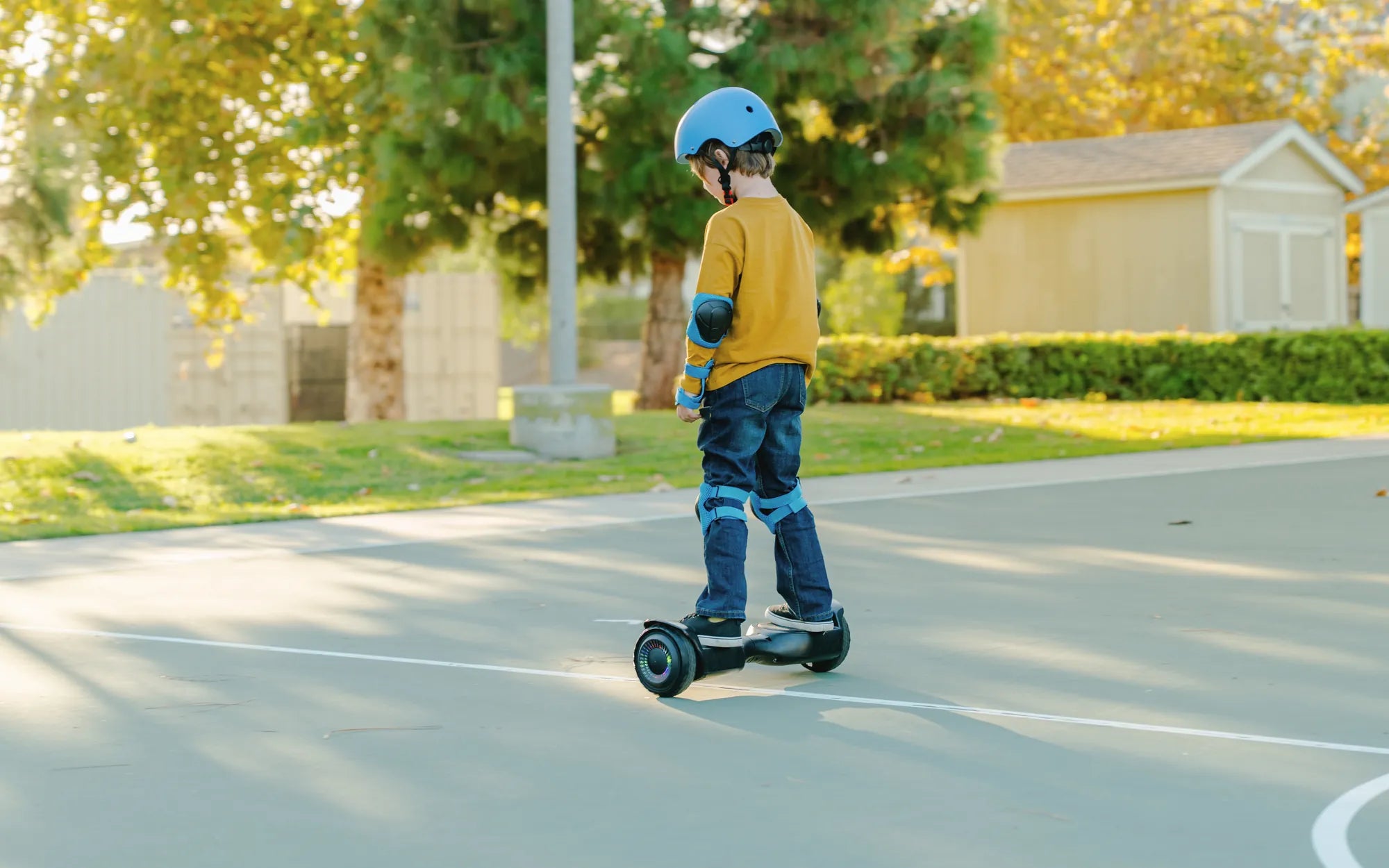
Owning a safe scooter is only half the equation; safe riding practices and proper maintenance complete it. Before the first ride, establish non-negotiable rules with your child. Mandate the use of a properly fitted helmet every single time. Elbow and knee pads are highly recommended, especially for beginners. Choose the riding environment carefully—start on a flat, smooth, private driveway or empty parking lot away from traffic, slopes, and pedestrian crowds.
Teach fundamental skills progressively. Begin with power-assisted kicking to get a feel for balance before engaging the motor. Practice using both brakes gently to understand stopping distance. Demonstrate how to look ahead for hazards and steer smoothly. Supervise closely until you are confident in their mastery of these basics. For a kids electric scooter 10mph, the rule should always be: gear on, parent aware, safe zone.
Routine maintenance is simple but vital. Regularly inspect the scooter for loose bolts, especially on the handlebar stem and folding mechanism. Check that brakes engage firmly and the tires (if pneumatic) are properly inflated. Keep the scooter clean, and only use a damp cloth—never a high-pressure hose, even on water-resistant models. Store the scooter in a dry place and avoid leaving the battery fully depleted for extended periods.
Charge the battery using only the provided charger, and do not leave it plugged in indefinitely after it's full. Most modern BMS systems prevent overcharging, but it's a good habit to unplug once the indicator shows a complete charge. By following these simple steps, you'll maximize the lifespan of the scooter and ensure it remains in safe working order for years of reliable fun.
FAQ: Top Parent Questions Answered
Q1: Is 10mph too fast for my 8-year-old?
A: For most 8-year-olds with developing coordination, 10mph is a suitable and safe maximum speed when proper safety gear is worn and initial training is conducted in a controlled environment. It is significantly slower than a bicycle's average speed, which children of this age often handle. The key is supervision and gradual skill-building.
Q2: How can I further limit the speed for a complete beginner?
A: Many quality kids electric scooter 10mph models, including those from Gyroor, feature selectable speed modes. A beginner or "learning" mode often limits the scooter to 5-6mph. This allows your child to master balance, steering, and braking at a walking/jogging pace before unlocking the full, parent-approved 10mph capability.
Q3: What does the Gyroor warranty actually cover?
A>Gyroor's standard 1-year warranty is a comprehensive guarantee against defects in materials and workmanship. It specifically covers the core components: the motor, the UL-certified battery pack, the electronic controller, and the frame. It does not cover damage from accidents, misuse, or normal wear and tear like tires.
Q4: What maintenance does an e-scooter need?
A>Routine maintenance is minimal but important. Key tasks include: checking and tightening bolts (especially on folding mechanisms), ensuring brakes are adjusted and responsive, keeping tires properly inflated (if pneumatic), and cleaning the deck and wheels with a damp cloth. Always store it in a dry place and follow the specific charging instructions in the manual.
Q5: Can my child ride it in the rain or through puddles?
A>With an IPX5 water-resistant rating, a scooter is protected against water jets from any direction. This means light rain and riding through shallow puddles will not damage the electronics. However, it is not waterproof or submersible. Avoid heavy downpours, deep standing water, and never submerge any part of the scooter. Always dry it off after riding in wet conditions.
Empowering Safe Adventures
Selecting your child's first electric scooter is a decision that prioritizes joyful independence while embedding a framework of safety. The kids electric scooter 10mph category exists for this exact purpose, offering a governed, age-appropriate introduction to personal electric mobility. By focusing on certified batteries, redundant brakes, durable construction, and reputable brand support, you invest in more than a product—you invest in safe, confidence-building experiences.
The data is clear: a speed limit is just one part of the safety equation. The integration of UL-certified components, water-resistant engineering, and a robust warranty from a trusted brand like Gyroor creates a holistic safety system. This approach has earned the trust of over 100,000 riders and their families, proving that performance and protection are not mutually exclusive.
Use the checklist provided, ask the important questions, and choose a scooter that grows with your child's abilities. The right scooter will be a source of countless adventures, a tool for developing coordination and responsibility, and a childhood memory they will cherish. The journey begins with a single, safe, and well-informed choice.
Ready to explore scooters that meet every safety standard on your checklist? Browse the full Gyroor collection at gyroorboard.com to find the perfect, engineer-approved kids electric scooter 10mph for your young adventurer.
Electric Scooter for Kids Ages 10-14: The Ultimate Guide for Parents
Best Self Balancing Scooter and Hoverboard: The Ultimate Guide to Choosing the Right Ride