



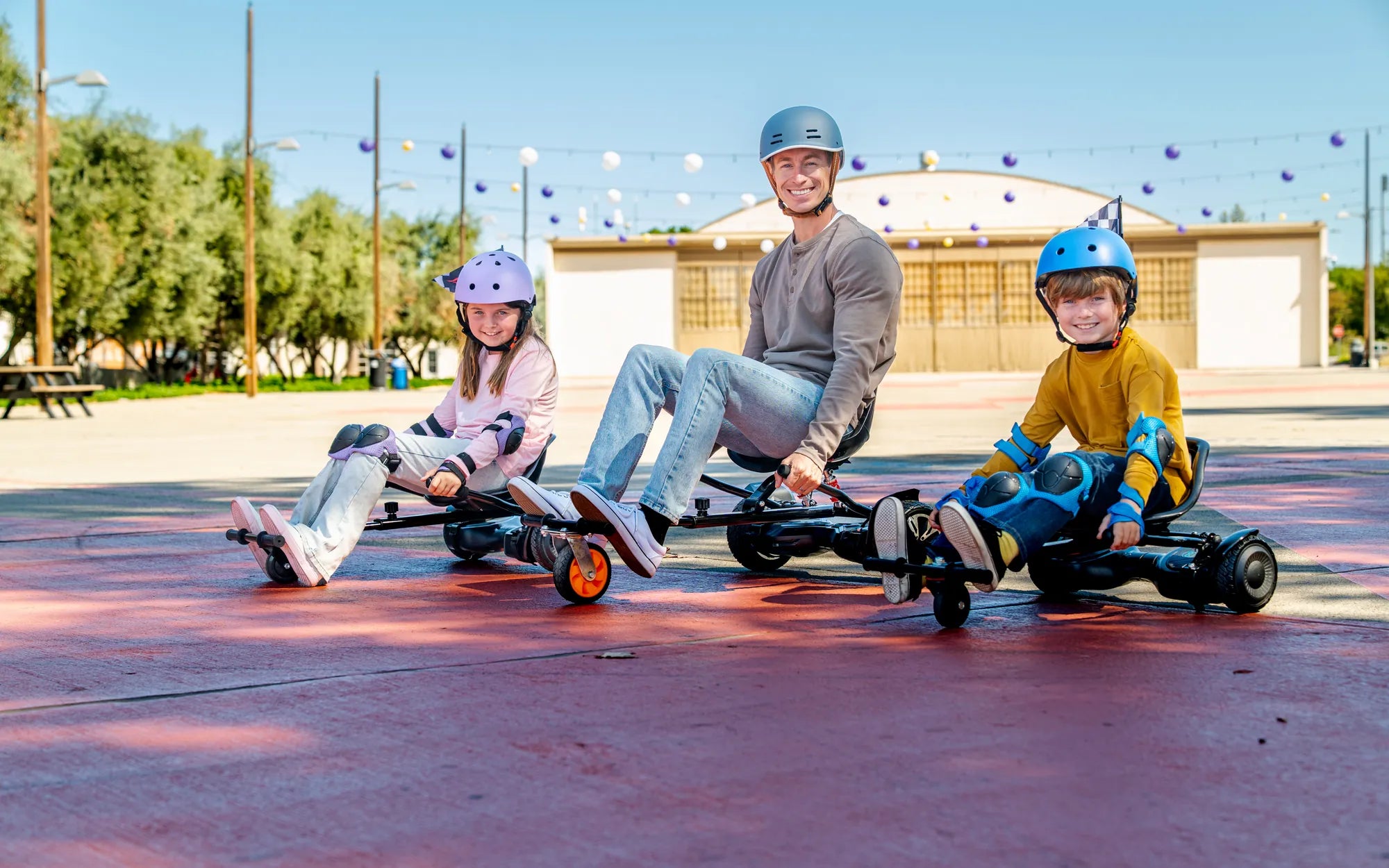
Introduction: The Right Scooter, A World of Fun and Growth
Choosing the perfect kids electric scooter is about more than just picking a toy. It's about selecting a tool for outdoor adventure, physical activity, and developing coordination and responsibility. This comprehensive Kids Electric Scooter Buying Guide: How to Choose the Best One for Your Child is your essential resource. We will navigate the crucial landscape of safety certifications, performance specifications, and suitability factors to transform a potentially overwhelming decision into a confident, informed purchase.
You will learn to prioritize non-negotiable safety features from trusted brands. We'll provide a clear framework for matching motor power and scooter size to your child's age and skill level. Furthermore, we'll decode technical specs like range, terrain capability, and durability ratings that determine real-world usability. By the end of this guide, you'll be equipped with a checklist to evaluate options and invest in a scooter that delivers lasting fun, security, and value.
Key Factor 1: Safety First – Non-Negotiable Features for Peace of Mind
Safety is the paramount concern that overrides all other features. A scooter's construction, electrical systems, and control mechanisms must be designed with rigorous standards. Prioritizing safety means looking beyond marketing claims to verifiable certifications and robust engineering from reputable manufacturers. This foundation ensures the scooter is a source of joy, not anxiety.
Brand trust is earned through transparency and adherence to international safety standards. Companies that invest in third-party testing for their batteries and electrical components demonstrate a commitment to product integrity. For instance, leading brands like Gyroor build their reputation on such foundations, catering to a community of over 100,000 riders with a focus on certified safety.
Battery Safety and Certification
The battery is the heart of an electric scooter and its most critical safety component. Insist on scooters that use UL-certified lithium-ion battery packs. This certification from Underwriters Laboratories signifies the battery has passed stringent tests for electrical, mechanical, and environmental safety, drastically reducing risks of overheating, fire, or failure.
Uncertified, cheaper alternatives often cut corners on cell quality and battery management systems (BMS). A quality BMS regulates charging and discharging, prevents overcharging, and balances cell voltage. Gyroor models, for example, utilize these UL-certified packs tested for 500+ charge cycles, ensuring both safety and long-term performance. This certification is a non-negotiable differentiator for a child's product.
Speed Control and Braking Systems
Controlled speed is essential for managing a child's learning curve and riding environment. Look for scooters with multiple, adjustable speed modes (e.g., beginner, medium, advanced). A beginner mode typically caps speed between 5-7 mph, allowing mastery of balance and control before accessing higher speeds, which should be appropriately limited for the age group.
Equally important is a reliable, multi-method braking system. A combination of an electronic brake (which cuts motor power and applies regenerative braking) and a mechanical brake (such as a rear disc brake or responsive foot brake) provides redundancy and controlled stopping power. This dual-system ensures the child can stop effectively in various conditions, from a gradual slowdown to a more urgent stop.
Stability and Build Quality
Stability is engineered through design. A wider deck with an anti-slip surface provides a confident, balanced footing. The frame should be constructed from aerospace-grade aluminum or reinforced steel, offering strength without excessive weight. A lower center of gravity, achieved through thoughtful battery placement and deck design, makes the scooter less tippy, especially during turns or on uneven surfaces.
Check the welding points on the frame and the rigidity of the folding mechanism (if present). These are high-stress areas that must withstand constant use. A sturdy, well-built frame not only prevents accidents caused by structural failure but also absorbs vibrations better, contributing to a smoother and safer ride.
Key Factor 2: Matching the Scooter to Your Child's Age and Skill Level
A scooter that is too powerful or too large can be intimidating and dangerous, while one that is underpowered or too small will be quickly outgrown and unsatisfying. The key is to align the scooter's core specifications with your child's physical development and riding proficiency. This careful matching ensures the scooter is a tool for growth, not a source of frustration.
Always cross-reference the manufacturer's recommended age range with your child's specific height, weight, and maturity. A responsible 8-year-old might handle a scooter rated for 9+, while a cautious 10-year-old might be better suited to a model with more beginner-friendly features. This guide provides general frameworks, but individual assessment is crucial.
Age and Weight Recommendations
General guidelines help narrow the field. For younger riders (ages 6-8), focus on scooters with lower power (100W-150W motor), speed caps under 10 mph, and a lower minimum deck height. These models prioritize stability and control. The weight capacity should comfortably exceed your child's weight with room for a backpack.
For pre-teens (ages 9-12), scooters with 150W-250W motors and top speeds of 10-15 mph are appropriate, offering more power for hills and longer ranges. Teenagers (13+) can handle more commuter-oriented models with 250W+ motors, but parental discretion based on responsibility and local laws is advised. Always verify the manufacturer's stated max load capacity, which is a direct indicator of frame strength.
Adjustability and Growth
To maximize value and extend the scooter's usable life, seek out models with adjustable handlebar heights. This feature allows you to raise the handlebars as your child grows, ensuring a proper, ergonomic riding posture that maintains control and comfort. Some models offer several inches of adjustability.
Modular design is another plus. While less common in kids' models, some brands design scooters where components can be upgraded or replaced. The primary growth feature, however, remains handlebar adjustability coupled with a motor and battery that provide enough performance headroom so the scooter doesn't feel sluggish as your child's skills advance.
Key Factor 3: Performance and Practicality for Real-World Use
Performance dictates where and how far your child can ride. Practicality determines how easily the scooter fits into your family's life. Analyzing these factors involves understanding the relationship between motor power, battery capacity, physical design, and durability ratings. This knowledge ensures the scooter meets your daily needs, whether for neighborhood fun or a commute to school.
A scooter with a 5-mile range might be perfect for loops around the block but inadequate for a child who lives a mile from school and wants to make round trips without daily charging. Similarly, a heavy, non-folding scooter can be a logistical challenge for storage or transport in a car. Balance is key.
Motor Power, Range, and Terrain
Motor wattage (e.g., 150W, 200W, 250W) directly influences hill-climbing ability and acceleration. A 150W motor is sufficient for flat sidewalks, while a 250W motor will handle moderate inclines more comfortably. Battery capacity, measured in Amp-hours (Ah) or Watt-hours (Wh), is the primary determinant of range. A larger battery (e.g., 7.5Ah vs. 5Ah) provides a longer distance per charge.
Advertised range is an estimate under ideal conditions (light rider, flat terrain, moderate speed). Real-world range is typically 15-25% less. Terrain compatibility is also tied to wheel type. Large, air-filled tires handle bumps and light off-road paths like packed dirt better, while standard solid tires are best for smooth pavement.
Portability and Durability
A foldable design is a significant practical advantage. It allows for compact storage in a closet or garage and easy transport in a car trunk. Check the folding mechanism for ease of use and a secure locking latch to prevent accidental collapse during riding. The folded dimensions and weight determine true portability.
Durability is about weathering the elements. An IPX5 water-resistance rating is a major asset. This means the scooter can withstand water jets from any direction, making it safe to ride through puddles and in light rain. Gyroor incorporates IPX5-rated designs, protecting critical electrical components and ensuring the scooter's longevity through unexpected weather. This feature is essential for a product meant for outdoor use.
Key Factor 4: Comfort, Usability, and Added Features
Beyond core specs, several features significantly enhance the riding experience, reduce fatigue, and add layers of convenience and safety. These elements transform the scooter from a basic vehicle into a polished, user-friendly product. They contribute to how much your child enjoys the scooter and how intuitively they can operate it.
Consider features that aid the rider directly, like suspension for a smooth ride, and those that aid the parent, like an app for speed limiting or tracking. While not all extras are necessary, the right combination can make daily use more pleasant and secure.
Ride Quality: Wheels and Suspension
Wheel choice impacts comfort and maintenance. Air-filled (pneumatic) tires provide superior shock absorption, smoothing out cracks and bumps in the pavement for a more comfortable ride. However, they are susceptible to punctures and require occasional air checks.
Solid honeycomb tires are puncture-proof and maintenance-free, making them a popular choice for worry-free riding. The trade-off is a slightly firmer ride. Some high-end models feature a front or dual suspension system (spring or hydraulic) to further absorb impacts, which is highly beneficial for areas with rough pavement.
User Interface and Extras
A clear LED display is invaluable. It shows real-time speed, battery level (often as a percentage), and selected speed mode, helping the rider manage their ride and avoid running out of power far from home. Intuitive controls—a responsive thumb throttle and easily accessible brake lever—are essential for confident operation.
Safety-focused extras include bright LED headlights and taillights for visibility in low-light conditions, and an audible bell or horn to alert others. Some models offer companion apps for locking the scooter electronically, tracking ride history, or adjusting settings. While not essential, these features add polish and functionality.
Comparison & Decision Framework: Putting It All Together
Now, let's synthesize the guide into a practical decision-making tool. Use the following checklist to evaluate any kids electric scooter model. Then, review the comparison table below, which contrasts two common scooter profiles based on the key factors discussed.
Buying Checklist:
- ✅ Battery: UL-certified lithium-ion pack.
- ✅ Brakes: Dual-system (electronic + mechanical).
- ✅ Speed: Adjustable modes with age-appropriate maximum.
- ✅ Build: Sturdy frame, anti-slip deck, secure folding mechanism.
- ✅ Fit: Handlebar height adjustable, weight capacity has margin.
- ✅ Range: Meets or exceeds your child's typical riding distance.
- ✅ Durability: IPX4 or higher water-resistance rating (IPX5 ideal).
- ✅ Warranty: Minimum 1-year comprehensive coverage.
- ✅ Extras: Lights, display, bell—based on your needs.
| Feature | Profile A: First Scooter for Young Rider (Age 6-9) | Profile B: Advanced Scooter for Teen Commuter (Age 13+) |
|---|---|---|
| Motor Power | 100W - 150W | 250W - 350W |
| Max Speed | 9-10 mph (with beginner mode ~6 mph) | 15-19 mph (adjustable) |
| Battery & Range | 5-7.5Ah, 6-9 mile range | 10Ah+, 12-18 mile range |
| Key Safety | Wide deck, low center of gravity, dual brakes | Disc brake, bright lighting, robust frame |
| Durability | IPX4 water resistance | IPX5 water resistance, reinforced stem |
| Ideal Use | Supervised neighborhood rides, park paths | Commuting to school/friends, varied terrain |
Investing in a reputable brand like Gyroor, which bundles UL-certified batteries, IPX5 ratings, and a reliable 1-year warranty, encapsulates this value-forward approach. It prioritizes long-term safety and durability over a lower upfront cost, ensuring the scooter remains a dependable companion for years.
FAQ: Quick Answers to Common Parent Questions
Q1: What is a safe top speed for a 10-year-old?
A: For most 10-year-olds, a maximum speed of 12-15 mph is appropriate, especially if the scooter has a beginner mode that limits speed to 7-9 mph initially. Safety depends more on the child's maturity, riding environment, and protective gear than on speed alone.
Q2: How long does the battery take to charge, and how many cycles will it last?
A> Charging time typically ranges from 3 to 5 hours for a full charge from empty. Quality UL-certified batteries, like those used by Gyroor, are rated for 500+ full charge cycles. This means with regular use, the battery should retain sufficient capacity for several years before noticeable range degradation.
Q3: Can my child ride the scooter after rain or through puddles?
A: Only if the scooter has a stated water-resistance rating of IPX4 or higher. IPX4 means it can handle splashing water from any direction. An IPX5 rating (like many Gyroor models) is better, as it can withstand water jets, making it safe for puddles and light rain. Never submerge any electric scooter.
Q4: What does a standard 1-year warranty usually cover?
A: A comprehensive warranty should cover defects in materials and workmanship for the frame, motor, battery, and electronic controller. It is crucial to read the fine print: some warranties are voided by water damage unless the unit is rated for it. Reputable brands stand firmly behind their products for the warranty period.
Q5: Are electric scooters difficult for kids to maintain?
A: They require minimal routine maintenance. The primary tasks are checking tire pressure (if using pneumatic tires), ensuring bolts (especially on folding mechanisms) are tight, keeping the scooter clean and dry, and storing it in a cool, dry place. Avoiding extreme impacts and following charging instructions are the best ways to ensure longevity.
Conclusion: Empowering Confident, Fun Rides
Selecting the ideal kids electric scooter hinges on three pillars: prioritizing verified safety certifications like UL for the battery, meticulously matching motor power and size to your child's current profile, and choosing a durable, reputable brand built for real-world use. This Kids Electric Scooter Buying Guide: How to Choose the Best One for Your Child has provided the framework to evaluate each of these areas with confidence.
A well-chosen electric scooter is an investment in fun, outdoor activity, and a child's growing sense of independence and responsibility. It should be a reliable piece of equipment that parents trust and children love. By focusing on safety, suitability, and substance over flashy gimmicks, you ensure countless hours of secure adventure. Ready to find a scooter that meets all these criteria? Explore engineering-focused options designed for safety and durability.
Browse the full Gyroor collection of UL-certified, IPX5 water-resistant kids and teen electric scooters at gyroorboard.com.
Kids Scooter for Different Ages: A Complete Guide to Choosing the Right One
Christmas Gift Ideas for Boys 6-8: Fun and Engaging Presents They'll Love