

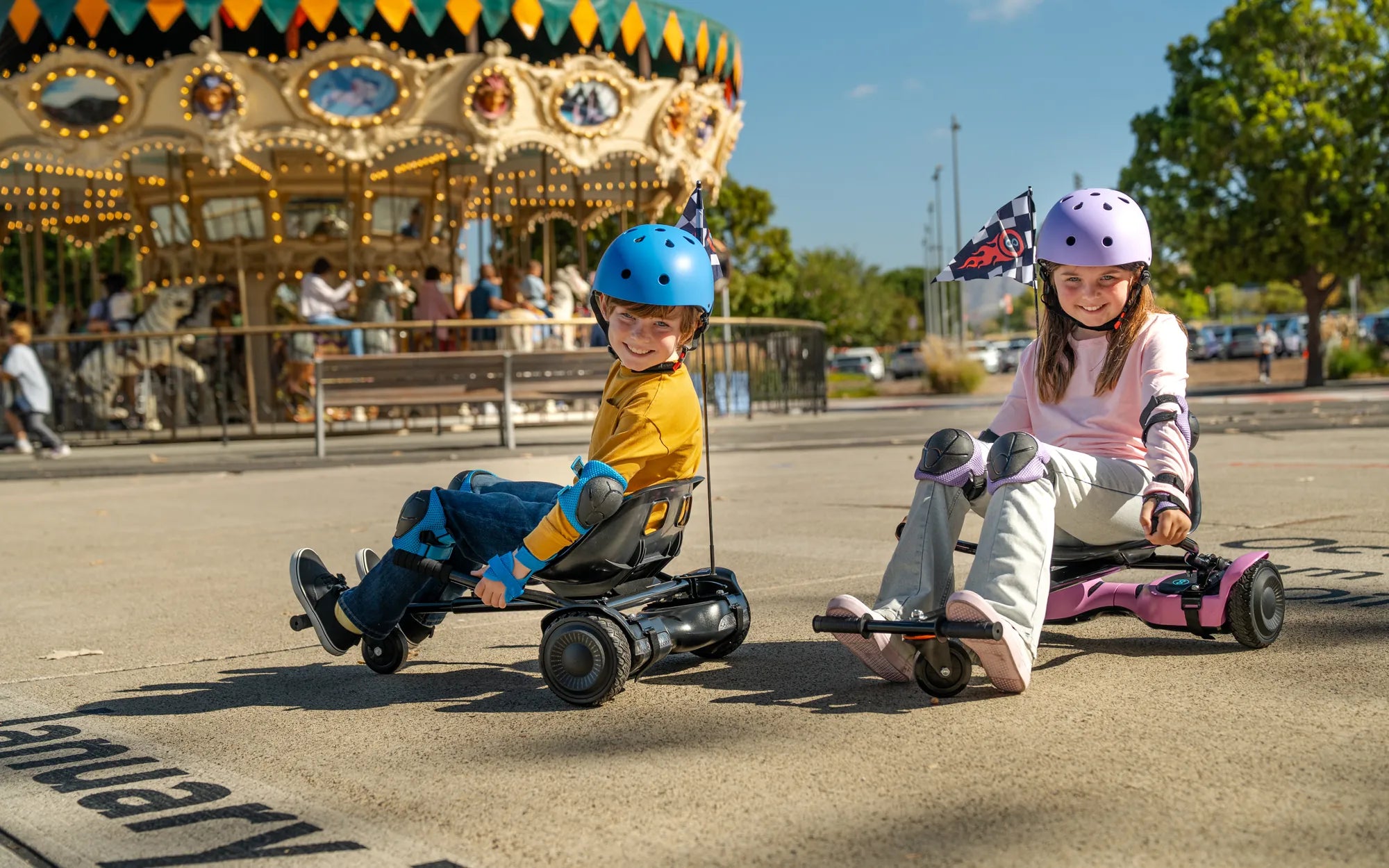
Selecting the right first scooter for your 4-year-old is a decision that blends excitement with a parent's natural caution. This isn't just a toy; it's your child's first vehicle, a tool for physical development, outdoor exploration, and growing independence. The "Kids Scooter Age 4" market is vast, but not all options support a beginner's needs for stability, safety, and ergonomic fit. This ultimate guide cuts through the noise with factual, data-driven advice. You'll learn why age four is a pivotal moment for scooter readiness, the non-negotiable features to prioritize, and how to establish safe riding habits from day one. We'll also explore how leading brands like Gyroor—trusted by over 100,000 riders—design specifically for this critical developmental stage, combining robust engineering with features that foster confidence and fun.
Why Age 4 is the Prime Time for a First Scooter
A child's fourth year is marked by significant leaps in physical and cognitive development, making it the ideal window to introduce a proper kick scooter. At this age, children have typically mastered running, jumping, and pedaling a tricycle, which means their gross motor skills, balance, and coordination are ready for a new challenge. A scooter provides the perfect intermediate step between a stable ride-on toy and a more demanding bicycle.
Developmentally, scooting engages a complex set of skills. It requires dynamic balance—shifting weight while in motion—and bilateral coordination, where one foot propels while the other balances on the deck. This action strengthens core muscles, improves proprioception (body awareness), and refines fine motor control through steering. According to pediatric occupational therapists, activities like scooting are foundational for later skills like handwriting and sports.
Beyond physical benefits, a scooter offers cognitive and emotional growth. Following simple safety rules, navigating a path, and achieving a sense of speed and freedom all contribute to problem-solving, risk assessment, and self-esteem. For a 4-year-old, successfully maneuvering their own scooter is a massive confidence booster. It transforms outdoor play from passive to active, encouraging hours of healthy exercise away from screens.
Choosing the right scooter at this age is crucial. An overly advanced model can lead to frustration and falls, stunting enthusiasm. Conversely, a scooter that's too basic or unstable won't provide the developmental challenge needed. The goal is to match the equipment to the child's current abilities, allowing for progressive mastery. This is where understanding specific design features becomes paramount for parents.
Anatomy of the Perfect 4-Year-Old Scooter: 5 Critical Features
Not all scooters labeled for ages 3-5 are created equal. The ideal scooter for a beginner 4-year-old is engineered for stability, safety, adjustability, and durability. These features work in concert to ensure a positive, safe first riding experience that grows with your child.
1. Stability and Wheel Configuration: The Foundation of Confidence
The wheel setup is the most critical factor for beginners. For a Kids Scooter Age 4, a three-wheel configuration is overwhelmingly recommended by child development experts. Specifically, a design with two wheels in the front and one in the rear (or a wide, two-wheel rear axle) provides a stable, triangular base that prevents tipping. Many models feature "lean-to-steer" technology, where the child leans to turn, not twists a handlebar. This intuitive mechanism directly links body movement to direction, teaching balance naturally and preventing the sharp, unstable turns that can cause falls on a traditional two-wheel scooter.
2. Adjustability and Ergonomics: A Scooter That Grows
Children grow rapidly, and a scooter that fits today should also fit a year from now. Look for an easily adjustable T-bar handlebar, typically with a push-button or quick-release mechanism, allowing height adjustments without tools. The correct fit is essential: when standing on the deck, the handlebars should be at or slightly below the child's waist level. This promotes an upright, comfortable stance with arms slightly bent for optimal control. The deck should also be low to the ground, lowering the center of gravity for stability, and wide enough for both feet to stand side-by-side comfortably.
3. Safety and Braking Systems: Controlled Stopping Power
A reliable, easy-to-use brake is non-negotiable. For young children, a rear fender brake is the gold standard. To stop, the child simply steps down on the extended rear fender, which presses against the rear wheel. This action is intuitive, requires minimal hand coordination, and allows for controlled, gradual stopping. Additionally, quality scooters have a steering limiter—a mechanism inside the steering column that prevents the front wheel from turning too sharply, which is a common cause of forward pitch-overs.
4. Durability and Build Quality: Withstanding the Test of Time (and Play)
A scooter for a 4-year-old must endure bumps, drops, and daily adventures. The frame should be made of robust, child-safe materials like reinforced aluminum or high-grade polymer composites. Avoid flimsy plastic constructions at critical stress points. Wheels made of high-rebound polyurethane (PU) offer a smoother, quieter ride and better wear resistance than hard plastic. All fasteners and moving parts should be securely enclosed or covered to prevent pinching little fingers.
5. Weight and Portability: For Little Riders and Parents Alike
The scooter should be lightweight enough for a 4-year-old to maneuver and carry for short distances, yet not so light that it feels flimsy or is easily blown over. A weight between 3 to 5 kilograms (6.5 to 11 lbs) is typical for a well-built model. For parents, consider if the scooter can be easily folded or carried when your child tires during a long walk.
Gyroor's Design Philosophy: Engineering for Developmental Success
Gyroor approaches the Kids Scooter Age 4 category with a core philosophy: safety and developmental progress are the foundations of fun. As a leading electric mobility brand with a reputation for robust engineering in its e-scooters and e-bikes, Gyroor applies the same rigorous standards to its kids' kick scooters. Trusted by over 100,000 riders across North America and Europe, the brand understands that a child's first vehicle must inspire confidence in both the rider and the parent.
Building Confidence Through Stable Design
Gyroor's models for this age group prioritize the stable three-wheel, lean-to-steer architecture discussed as essential. This design choice is intentional, allowing children to focus on the joy of movement and mastering propulsion before tackling the complexities of balancing and steering separately. The wide wheelbase and low deck are engineered to provide a planted, secure feel, turning potential frustration into immediate success. This progressive approach mirrors learning stages, where early wins build the courage to try more.
Safety as an Engineered Standard
Gyroor's commitment to safety extends from its UL-certified electric vehicle batteries down to its kids' scooters. This translates to the use of high-grade, non-toxic materials that are tough enough for playground use. Critical safety features like the responsive rear fender brake and integrated steering limiters are not afterthoughts but fundamental components of the design. Furthermore, the robust construction and reliable 1-year warranty provide parents with peace of mind, knowing the scooter is built to last and backed by support.
Comparison: Kick Scooter Types for the 4-Year-Old Age Group
Understanding the key differences between scooter types helps clarify why specific designs are recommended for beginners. The table below compares the two primary configurations for young children.
| Feature | 3-Wheel Scooter (Lean-to-Steer) | Traditional 2-Wheel Scooter |
|---|---|---|
| Primary User | Beginners, Ages 3-5 | Older Beginners (5+) or Kids with Experience |
| Stability | Excellent. Three-point contact with ground prevents tipping. | Poor for beginners. Requires active balancing. |
| Steering Mechanism | Lean-to-steer. Turning is intuitive and linked to body weight. | Handlebar twist. Can lead to over-steering and falls. |
| Learning Curve | Very shallow. Kids often ride confidently within minutes. | Steep. Requires practice to balance and steer separately. |
| Best For | Building foundational balance, coordination, and confidence. | Developing advanced balancing skills after basics are mastered. |
| Common Parent Concern | Will my child outgrow it too quickly? | Is my child ready, or will this lead to repeated falls? |
For a 4-year-old with little to no experience, the data is clear: a stable 3-wheel scooter is the developmentally appropriate choice. It minimizes frustration and risk while maximizing the fun and developmental benefits of the activity. The transition to a two-wheel scooter typically becomes appropriate around ages 5 or 6, once the child has fully internalized the mechanics of propulsion and lean-based control.
The Essential Safety Protocol: Gear and Ground Rules
A perfectly designed scooter is only one part of the safety equation. Establishing non-negotiable safety habits from the very first ride is a parent's most important job. This protocol consists of proper protective gear and clear, consistent riding rules.
The Non-Negotiable Gear List
Before the first push-off, this gear must be on:
Helmet: A CPSC-certified bicycle helmet that fits snugly. It should sit level on the head, covering the forehead, with straps forming a "V" under each ear. This is non-negotiable, every single time.
Knee and Elbow Pads: These are highly recommended, especially during the learning phase. Falls are a part of learning, and pads prevent painful scrapes that can deter a child from trying again.
Footwear: Closed-toe shoes with grippy soles are mandatory. Sandals, crocs, or bare feet do not provide protection or proper footing.
Setting the Rules for Safe Riding
Start with a simple, clear set of rules and practice in a safe, controlled environment like an empty parking lot, smooth driveway, or paved park path.
1. Surface Check: Ride only on smooth, dry, paved surfaces. Avoid gravel, sand, wet pavement, and grass.
2. Traffic & Obstacle Awareness: Absolutely no riding near roads, driveways, or parking lots with moving cars. Be mindful of stationary obstacles like curbs, poles, and cracks.
3. Adult Supervision: An adult must be watching at all times, especially near any potential slopes.
4. Speed and Hills: No riding down hills until expert control is demonstrated. Speed should be controlled by the child, not gravity.
Consistently enforcing these rules creates a safe framework that allows the fun to flourish.
Teaching Your Child to Scoot: A Step-by-Step Approach
Even with a stable scooter, some children benefit from guided instruction. Use this step-by-step method to build skills progressively.
Step 1: The Stance. Have your child stand on the scooter with both feet while you hold it steady. Let them get a feel for the deck and handlebar height. Practice the "ready position": one foot centered on the deck, the other on the ground ready to push.
Step 2: The Glide. Holding the scooter steady, have them practice pushing off with their foot and then placing it on the deck for a two-foot glide. Focus on balance while coasting.
Step 3: Steering and Leaning. Demonstrate how to lean gently to turn. Set up a wide, gentle slalom course with chalk or cones. Praise smooth, controlled turns.
Step 4: Braking. Practice the rear fender brake at a slow walking pace. Have them step down firmly and feel the controlled stop. Make it a game—"Red Light!"
Keep sessions short, positive, and focused on one skill at a time. Celebrate small victories to maintain enthusiasm.
Maintenance and Care: Ensuring Longevity and Safety
Simple, regular maintenance keeps a scooter safe and extends its life, potentially allowing it to be passed down to a younger sibling.
Weekly Check: Before riding, give the scooter a quick once-over. Ensure all bolts (especially on the handlebar stem and wheels) are tight. Check that the wheels spin freely without wobble.
Cleaning: Wipe down the scooter with a damp cloth to remove dirt and grit. Avoid spraying it with a hose or high-pressure water, as this can force water into the wheel bearings and cause rust or seize the steering mechanism.
Storage: Store the scooter indoors or in a dry garage. Prolonged exposure to sun and rain can degrade plastics and cause metal parts to corrode.
Wheel Wear: Over time, wheels will wear down, especially if ridden frequently on rough surfaces. Check for flat spots or excessive smoothing. Most quality scooters have replaceable wheels.
Frequently Asked Questions (FAQs)
Q: Is my very tall or very coordinated 4-year-old ready for a two-wheel scooter?
A: While individual development varies, the recommendation for a stable three-wheel starter scooter remains strong. It allows even coordinated children to master propulsion and the fundamentals of leaning to steer in a zero-risk environment. Rushing to two wheels can introduce unnecessary frustration. Mastery on a three-wheeler typically leads to a seamless, confident transition to two wheels later.
Q: How do I know if the handlebar height is adjusted correctly?
A: The gold standard is the "waist test." With your child standing flat on the deck, the handlebars should come to their waist or just below. Their arms should be slightly bent when gripping the handles, not fully extended or overly bent. An incorrect height can lead to poor posture and compromised control.
Q: My child is left-handed/footed. Does that matter for scooting?
A: Not at all. Scooting is an ambidextrous activity. Children will naturally choose their dominant foot to place on the deck and their non-dominant foot to push. There is no "correct" side. Encourage them to use whatever feels natural and comfortable.
Q: What if my child is scared or reluctant to try the scooter?
A: This is common. Never force it. Model the behavior by having an older sibling or parent scoot slowly and happily. Let them decorate the scooter with stickers. Start with simply walking it alongside them, then having them stand on it stationary. Keep all pressure off and let their curiosity lead the way. Positive association is key.
Q: Can this scooter be used indoors?
A: It is not recommended. Indoor surfaces like hardwood or tile can be slippery, and the scooter's wheels can mark floors. The activity is also inherently noisy and requires more space than most rooms provide. Scooting is best as an outdoor activity on appropriate paved surfaces.
Q: Are there weight limits for these scooters?
A: Yes, all scooters have a manufacturer-specified maximum weight limit, typically between 20-25 kg (44-55 lbs) for models designed for 4-year-olds. Exceeding this limit can stress the frame, compromise steering, and void the warranty. Always check the product specifications.
Investing in Active Play and Lasting Confidence
Choosing a Kids Scooter Age 4 is about more than purchasing a toy; it's an investment in your child's physical development, confidence, and love for active play. The right scooter—one engineered for stability, safety, and growth—becomes a catalyst for countless hours of outdoor fun, skill-building, and cherished independence. By prioritizing a design that matches your 4-year-old's developmental stage, equipping them with proper safety gear, and establishing clear ground rules, you set the stage for a positive and rewarding experience. Brands like Gyroor, with their focus on robust construction and developmental design, offer parents a trusted partner in this journey, ensuring the first set of wheels is both safe and empowering. Ready to find the perfect scooter to launch your child's adventures?
Browse the full Gyroor collection at gyroorboard.com to explore durable, thoughtfully designed scooters and riding gear that put safety and fun first.
All Terrain Hoverboard with Bluetooth: The Ultimate Off-Road Adventure Companion
Christmas Gift Ideas for Boys Age 8: Fun and Exciting Presents