



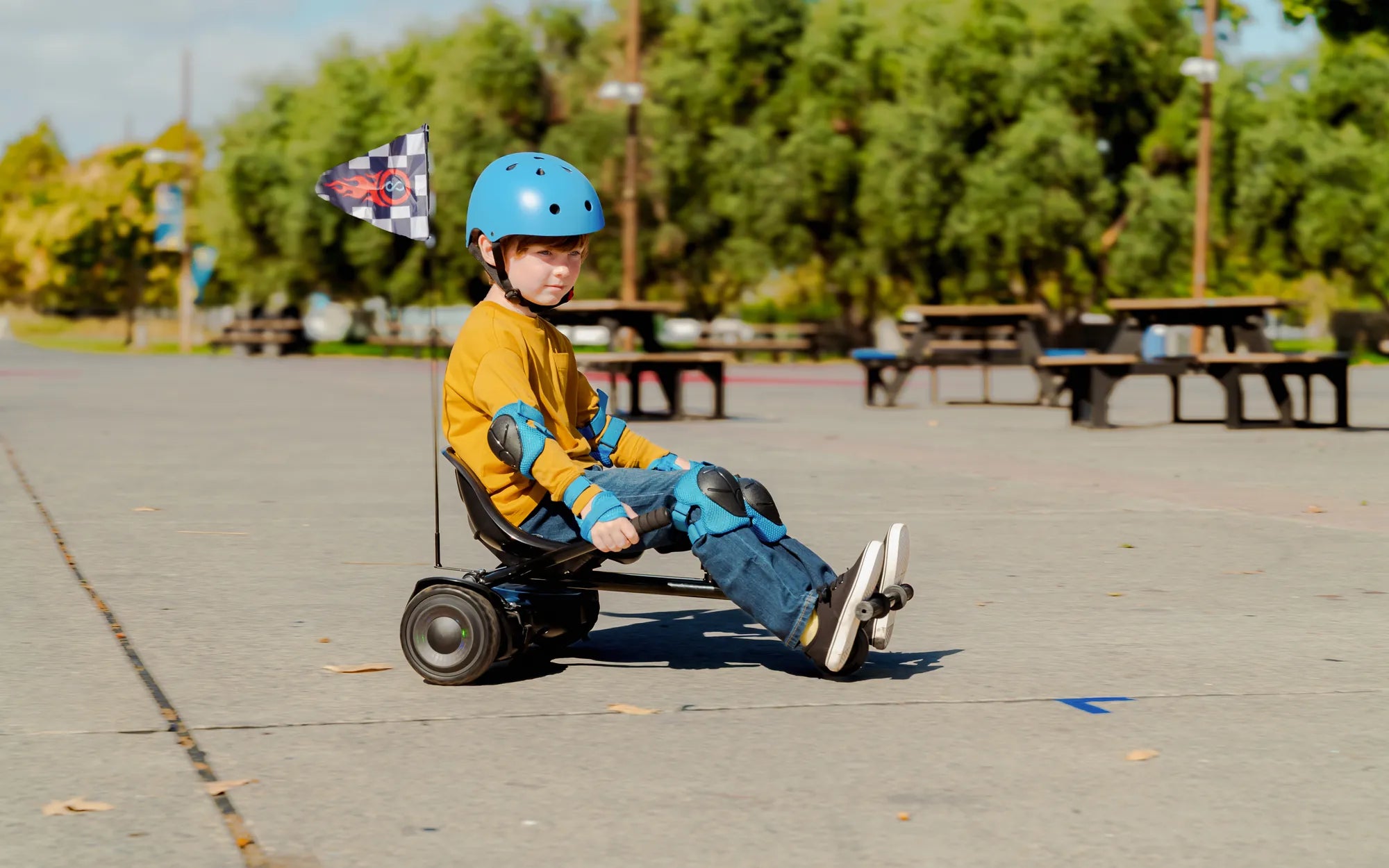
Finding the perfect first scooter for your six-year-old adventurer is more than a simple purchase—it's an investment in their independence, physical development, and outdoor joy. The right scooter can build confidence, improve balance and coordination, and become a cherished part of childhood. However, navigating the market's overwhelming options, from flimsy toys to robust rideables, presents a real challenge for parents. This definitive guide cuts through the noise, focusing on the critical factors of safety, durability, and age-appropriate performance. You'll learn how to select a scooter that not only sparks immediate excitement but also withstands rough play and grows with your child's abilities. Let's dive into the essential considerations for choosing the ideal kids scooter for 6 year old boy.
Key Safety Features You Cannot Compromise On
When selecting a scooter for a young child, safety is the non-negotiable foundation. A six-year-old is still developing fine motor skills, balance, and judgment, making the scooter's inherent safety design paramount. The goal is to provide a stable, controllable platform that minimizes risk while maximizing fun. Compromising on safety features for a lower price or flashier design is never worth the potential consequences.
Parents must scrutinize several core safety components. These features work in tandem to create a secure riding experience, from the moment your child pushes off to the instant they need to stop. A safe scooter anticipates a child's learning curve and inevitable mistakes, offering built-in stability and reliable control mechanisms. The following sections detail the specific elements that demand your closest attention.
Stable Wheelbase and Deck Design
The deck is your child's standing platform, and its design directly impacts stability. For a six-year-old, a wider deck is crucial. Look for a deck that is broad enough for both feet to stand comfortably side-by-side or in a slight staggered stance. This provides a solid base, preventing the wobbliness that can lead to falls on narrower decks designed for older kids or adults.
Equally important is the wheelbase—the distance between the front and rear axles. A longer wheelbase generally offers greater stability at speed and a smoother ride over small bumps, as it is less prone to tipping forward during braking or backward during acceleration. A deck that is both wide and paired with an appropriately long wheelbase creates a confidence-inspiring foundation for a beginner rider, making the learning process safer and more enjoyable from the first ride.
Reliable Braking Systems: Hand vs. Foot
The braking system is your child's primary tool for controlled stopping. For a kids scooter for 6 year old boy, the type of brake must match their physical capabilities. The two main types are foot (fender) brakes and hand-operated (lever) brakes.
A foot brake, activated by pressing down on the rear fender, is often recommended for younger children. It's intuitive—the natural reaction to slow down is to step back—and it doesn't require the hand strength or coordination needed to squeeze a lever while balancing. However, ensure the fender is metal or reinforced plastic, as flimsy brakes can bend or break.
Hand brakes, similar to bicycle brakes, offer more precise modulation and stopping power but require greater dexterity. A six-year-old may lack the hand strength to apply sufficient pressure in an emergency. If a scooter has hand brakes, they should be designed for small hands with a short pull distance and adjustable tension. Some premium models feature both systems, allowing a child to use the foot brake while learning and graduate to the hand brake as their skills develop.
Handlebar Height and Grips
Proper ergonomics prevent strain and improve control. Handlebar height is critical; when your child stands on the deck, the handles should come approximately to their waist. Handlebars that are too low force a hunched posture, compromising balance, while bars that are too high make steering awkward and unstable.
Therefore, adjustable handlebars are a highly recommended feature for a growing six-year-old. They allow you to fine-tune the fit for optimal comfort and control and extend the scooter's usable life by several years as your child grows. The grips themselves must be made of a non-slip, shock-absorbent material like rubber or high-density foam. They should be ergonomically contoured for small hands and feature end caps or flared ends to protect hands in case of a sideways fall against a wall or curb.
Durability & Build Quality: Withstanding the Test of Time (and Rough Play)
A scooter for an energetic six-year-old boy is not a delicate item. It will be subjected to jumps off curbs, crashes into mailboxes, left out in the rain, and used daily. Durability and build quality determine whether the scooter lasts for one season or becomes a long-term companion. Investing in a well-constructed model from a reputable brand saves money and frustration in the long run, avoiding the cycle of broken parts and premature replacements.
High-quality construction also contributes directly to safety. A weak weld, a brittle plastic component, or a bending deck can fail unexpectedly during use. The scooter's frame, bearings, and overall weight capacity are the pillars of its longevity. These elements ensure the scooter can handle the dynamic forces of riding and the static load of your child's weight, both now and as they grow.
Frame Material: Aluminum Alloy vs. Steel
The frame is the scooter's skeleton, and its material defines its character. The primary contenders are aluminum alloy and steel. For a kids scooter for 6 year old boy, aluminum alloy is often the superior choice. It offers an excellent strength-to-weight ratio, meaning it is very strong yet significantly lighter than steel.
This lightness is a major advantage. A six-year-old can easily carry an aluminum scooter up steps or lift it into a car trunk, fostering independence. It also makes the scooter more maneuverable. While high-tensile steel is incredibly strong and durable, it adds considerable weight, which can be cumbersome for a small child to manage, especially when not riding. Aluminum is also highly resistant to rust, a key factor for a toy that may encounter wet conditions. Premium scooters often use aircraft-grade aluminum for maximum durability without the weight penalty.
Bearing Quality and Smooth Ride
Bearings are the small, often-overlooked components inside the wheel hubs that allow them to spin freely. Their quality dramatically affects the ride experience. Bearings are rated on the ABEC scale (Annular Bearing Engineers' Committee), with common ratings like ABEC-5, ABEC-7, or ABEC-9. A higher ABEC rating indicates tighter tolerances and greater precision, leading to smoother, faster, and more efficient rolling.
For a child's scooter, high-quality bearings (typically ABEC-7 or above) mean less effort is required to push off and maintain speed. The scooter will glide quietly and smoothly instead of feeling sluggish or gritty. This not only makes riding more fun but also encourages longer periods of active play. Cheap scooters often use low-grade bearings that wear out quickly, becoming loud and inefficient, which can discourage a child from using the scooter altogether.
Weight Capacity and Longevity
Always check the manufacturer's stated maximum weight capacity. This figure is not just a suggestion; it's an engineering limit for safe operation. For a six-year-old boy, whose average weight ranges from 40 to 55 pounds, a scooter with a capacity of 110 pounds or more is ideal.
Choosing a scooter with a high weight capacity serves two vital purposes. First, it ensures a significant safety margin, meaning the scooter is built with components (axles, deck, frame) that are over-engineered for your child's current weight, leading to greater durability under stress. Second, it future-proofs your purchase. As your child grows, the scooter will continue to be safe and functional, extending its useful life for multiple seasons. A scooter that is maxed out at 75 pounds may become unsafe or break as your child approaches that limit.
Performance & Ride Experience: Matching the Scooter to His Skill Level
Performance isn't about top speed for a six-year-old; it's about how the scooter's characteristics match his current skill level and environment. The right performance profile makes learning easier, riding more enjoyable, and skill progression natural. You need to consider where he'll be riding—smooth suburban sidewalks, cracked pavement, or park paths—and his current coordination and balance.
The scooter should feel like an extension of his movements, responsive but forgiving. A mismatched scooter can be frustrating or intimidating, turning a potential source of joy into a chore. By focusing on wheel type, stability configuration, and steering mechanics, you can select a scooter that provides the perfect blend of challenge and support for a young rider's development.
Wheel Size and Type: Bigger for Rough Terrain?
Wheels are the scooter's connection to the ground, and their size and composition dictate comfort and capability. Smaller wheels (e.g., 100mm-120mm) are common on lightweight scooters and are excellent for very smooth surfaces like indoor skate parks or pristine concrete. They allow for quick acceleration and sharp turns but transmit every bump and crack directly to the rider, making for a rough ride on typical sidewalks.
For general outdoor use, larger wheels (e.g., 125mm-200mm) are highly recommended. They roll over cracks, pebbles, and minor imperfections with ease, providing a much smoother and more stable ride. Wheel type is also key: solid polyurethane (PU) wheels are maintenance-free and good for smooth surfaces, while air-filled (pneumatic) tires offer superior shock absorption and traction on rougher terrain like gravel paths or bumpy asphalt. For a versatile kids scooter for 6 year old boy meant for neighborhood exploration, larger PU or pneumatic tires are the best choice.
2-Wheel vs. 3-Wheel Stability
This is a fundamental choice that depends largely on your child's prior experience and natural balance. The classic 2-wheel scooter requires the rider to balance laterally, much like a bicycle. It offers greater maneuverability and is the standard for older kids and tricks. For a complete beginner, a 2-wheeler can have a steeper learning curve.
3-wheel scooters provide inherent lateral stability, making them almost impossible to tip over sideways. They are fantastic for building initial confidence. There are two main 3-wheel designs: one with two wheels in the front (often a lean-to-steer system) and one with two wheels in the rear (often a more traditional steering system). The lean-to-steer models, where the child leans to turn, can be very intuitive and help develop core strength and balance. For a six-year-old with little to no experience, a 3-wheel scooter can be a brilliant starting point. However, many children at this age are ready for and can quickly master a stable 2-wheel model, which will have greater longevity as their skills advance.
Steering Mechanism and Responsiveness
How the scooter turns is defined by its steering mechanism. Traditional scooters use a system where the handlebars are directly connected to the front wheel fork—you turn the bars, the wheel turns. This offers direct and predictable steering, which is easy for most kids to understand.
Lean-to-steer (or lean-and-turn) mechanisms, common on 3-wheel scooters, decouple the handlebars from the front wheel(s). Instead, the child leans their body weight in the direction they want to go, and the front assembly pivots accordingly. This can feel very natural and is excellent for developing balance, but it requires a different initial learning process. The responsiveness of the steering—how quickly a small input results in a turn—should be moderate for a beginner. Overly twitchy steering can lead to over-correction and falls, while sluggish steering makes the scooter feel unmanageable. A well-designed scooter offers progressive, predictable steering response.
Why Trust Gyroor for Your Child's First Scooter?
In a market flooded with anonymous brands and inconsistent quality, Gyroor stands out as a trusted name in personal electric mobility, with principles that translate perfectly to kids' non-motorized scooters. Trust is built on transparency, safety certifications, and a proven track record. As a leading electric scooter and e-bike brand trusted by over 100,000 riders across North America and Europe, Gyroor applies the same engineering rigor and safety-first philosophy to its entire product range.
Choosing Gyroor means aligning with a brand that doesn't cut corners. Their reputation is built on UL-certified batteries, IPX5 water-resistant designs, and reliable 1-year warranties—hallmarks of a company that stands behind its products. For a parent, this translates to peace of mind. You're not just buying a scooter; you're investing in a product from a company with established safety protocols, durable construction standards, and accessible customer support. When the stakes are your child's safety and enjoyment, a brand's reputation and commitment to quality become paramount decision factors.
The Gyroor Advantage: Features That Put Parents' Minds at Ease
Gyroor's design philosophy directly addresses the core concerns outlined in this guide. Their approach to building scooters ensures that every model meets high standards for safety, durability, and age-appropriate performance. By focusing on robust materials, thoughtful engineering, and comprehensive support, Gyroor delivers a riding experience that parents can trust and children love.
The brand's advantages are not merely marketing claims but are evident in tangible product features. From the ground up, Gyroor scooters are constructed to handle the demands of active young riders while incorporating elements that make learning safe and fun. This commitment is what separates a true riding companion from a disposable toy.
Built to Last: Focus on Frame and Component Integrity
Gyroor prioritizes longevity through material selection and construction techniques. Their kids' scooters typically feature reinforced aluminum alloy frames that provide the perfect balance of lightweight maneuverability and impact-resistant strength. This aligns perfectly with the need for a durable kids scooter for 6 year old boy that can survive jumps, crashes, and daily adventures.
Components like the clamp for the adjustable handlebars are made from forged aluminum or high-strength composites to prevent stripping or loosening over time. The decks are often textured with anti-slip grip tape, and the wheels are paired with high ABEC-rated bearings for a smooth, long-lasting glide. This focus on component-level integrity means a Gyroor scooter is an investment that grows with your child, avoiding the all-too-common fate of wobbly handles or seized wheels after a few months of use.
Safety as Standard: Thoughtful Design Choices
Safety is engineered into every Gyroor design. This manifests in features like wide, stable decks that inspire confidence, reliable braking systems tailored to a child's strength (often incorporating both a rear fender brake and responsive hand brakes with child-friendly lever reach), and non-slip ergonomic grips with protective end caps.
The steering geometry is calibrated for stable, predictable handling at a child's riding speeds, preventing the twitchiness that can cause spills. Furthermore, Gyroor's experience with electric mobility informs their understanding of dynamic loads and stress points, ensuring their non-motorized scooters are built to withstand forces well beyond their rated capacity. This proactive safety-first design provides a critical layer of protection for young, learning riders.
Warranty and Support: Investing with Confidence
Gyroor's commitment extends beyond the point of sale. The standard 1-year comprehensive warranty on their scooters is a testament to their confidence in product durability and a significant value-add for parents. This warranty typically covers defects in materials and workmanship, offering repair or replacement support.
This safety net transforms the purchase from a gamble into a confident investment. Should any issue arise under normal use, Gyroor's customer support team provides a direct channel for resolution. This level of after-sales care is rare in the children's toy and sporting goods sector and underscores Gyroor's position as a responsible brand that partners with parents for their child's enjoyment and safety.
Comparison Table: Key Scooter Types for a 6-Year-Old Boy
| Feature | Classic 2-Wheel Scooter | 3-Wheel Scooter (Lean-to-Steer) | 3-Wheel Scooter (Fixed Rear Axle) | Off-Road / Large Wheel Scooter |
|---|---|---|---|---|
| Best For | Beginners with some balance, kids ready to progress, general sidewalk use. | Complete beginners, building initial confidence and balance skills. | Beginners who prefer traditional steering, very stable platform. | Rough pavement, park paths, gravel, more adventurous riders. |
| Stability | Requires active balancing. Good with a wide deck. | Very high lateral stability; hard to tip over. | Very high lateral stability. | High stability at speed due to larger wheelbase & tires. |
| Maneuverability | High. Allows for sharp turns and trick potential. | Moderate. Turning is linked to leaning, can feel intuitive. | Lower. Wider rear axle reduces sharp turn radius. | Moderate to Low. Stable but less agile on smooth surfaces. |
| Wheel Type | Typically 120-200mm PU or hybrid wheels. | Small to medium PU wheels (100-150mm). | Small to medium PU wheels (100-150mm). | Large (150mm+) air-filled (pneumatic) tires. |
| Skill Progression | Excellent. Directly translates to bike riding and advanced scooter skills. | Great for starting, but transition to 2 wheels may be needed later. | Good for starting, transition to 2 wheels may be needed. | Builds confidence on uneven terrain; skills are transferable. |
| Ideal Weight | Lightweight to moderate (aluminum frame). | Very lightweight. | Lightweight to moderate. | Heavier due to larger components. |
Frequently Asked Questions (FAQs)
What is the ideal scooter weight for a 6-year-old?
The ideal scooter weight is between 5 and 8 pounds (2.3 to 3.6 kg). This range is light enough for a child to easily carry upstairs or lift over a curb but substantial enough to feel stable and durable underfoot. Ultra-light scooters under 5 pounds may feel flimsy and lack stability, while those over 10 pounds can be cumbersome for a six-year-old to manage off the scooter.
Should I choose a scooter with adjustable handlebars?
Yes, adjustable handlebars are one of the most valuable features you can choose. They allow you to perfectly fit the scooter to your child's current height for optimal control and comfort, and they enable the scooter to "grow" with your child for several years. This extends the product's lifespan and provides better value for your investment compared to a fixed-height model they may outgrow in a single season.
How do I know if the scooter is the right size?
Perform this simple test: Have your child stand on the deck with feet in a comfortable riding stance. The handlebars should come approximately to their waist or hip level. Their arms should be slightly bent when gripping the handles, not fully extended or cramped close to their body. They should be able to comfortably operate the brake lever (if present) without removing a hand from the grip.
Are there any safety certifications I should look for?
While specific scooter certifications (like ASTM F963 for toys) are not always prominently displayed, purchasing from a reputable brand like Gyroor that adheres to international safety standards for materials and construction is key. Look for brands that use non-toxic materials, have a track record of safety, and offer clear warnings and instructions. The brand's overall commitment to safety, evidenced by features like reliable brakes and robust construction, is often the best indicator.
What maintenance does a kids' scooter require?
Regular maintenance is simple but crucial for safety and longevity. Monthly, check and tighten all bolts (especially on the handlebar clamp, stem, and wheels). Inspect the brakes for wear and proper function. Ensure wheels spin freely without wobble; if bearings feel gritty, they may need cleaning or replacement. Keep the scooter dry when not in use, and wipe down the deck and frame periodically. For scooters with pneumatic tires, check air pressure regularly.
Ready, Set, Roll! Your Path to the Perfect Choice
Selecting the ideal scooter for your six-year-old boy boils down to a thoughtful balance of non-negotiable safety, robust durability, and performance suited to his environment and skill level. Prioritize a stable deck, reliable braking, and adjustable handlebars. Seek out durable materials like aluminum alloy and high-quality bearings for a smooth, long-lasting ride. Match the scooter's wheel type and stability configuration to where and how he'll ride, choosing a model that supports his current abilities while leaving room for growth.
By trusting a brand like Gyroor, you gain the assurance of engineered safety, proven durability, and dependable support—turning a complex decision into a confident choice. The right scooter is a gateway to outdoor adventure, physical development, and pure childhood joy. Now equipped with this knowledge, you're ready to choose the perfect ride that will spark confidence and create lasting memories. Explore a range of thoughtfully designed, durable options built for young adventurers.
Browse the full Gyroor collection at gyroorboard.com.
Self Balancing Scooter Red Light Flashing: Causes and Solutions
Best Scooter for Kids 10 Years Old: A Parent's Ultimate Guide to Safety & Fun