

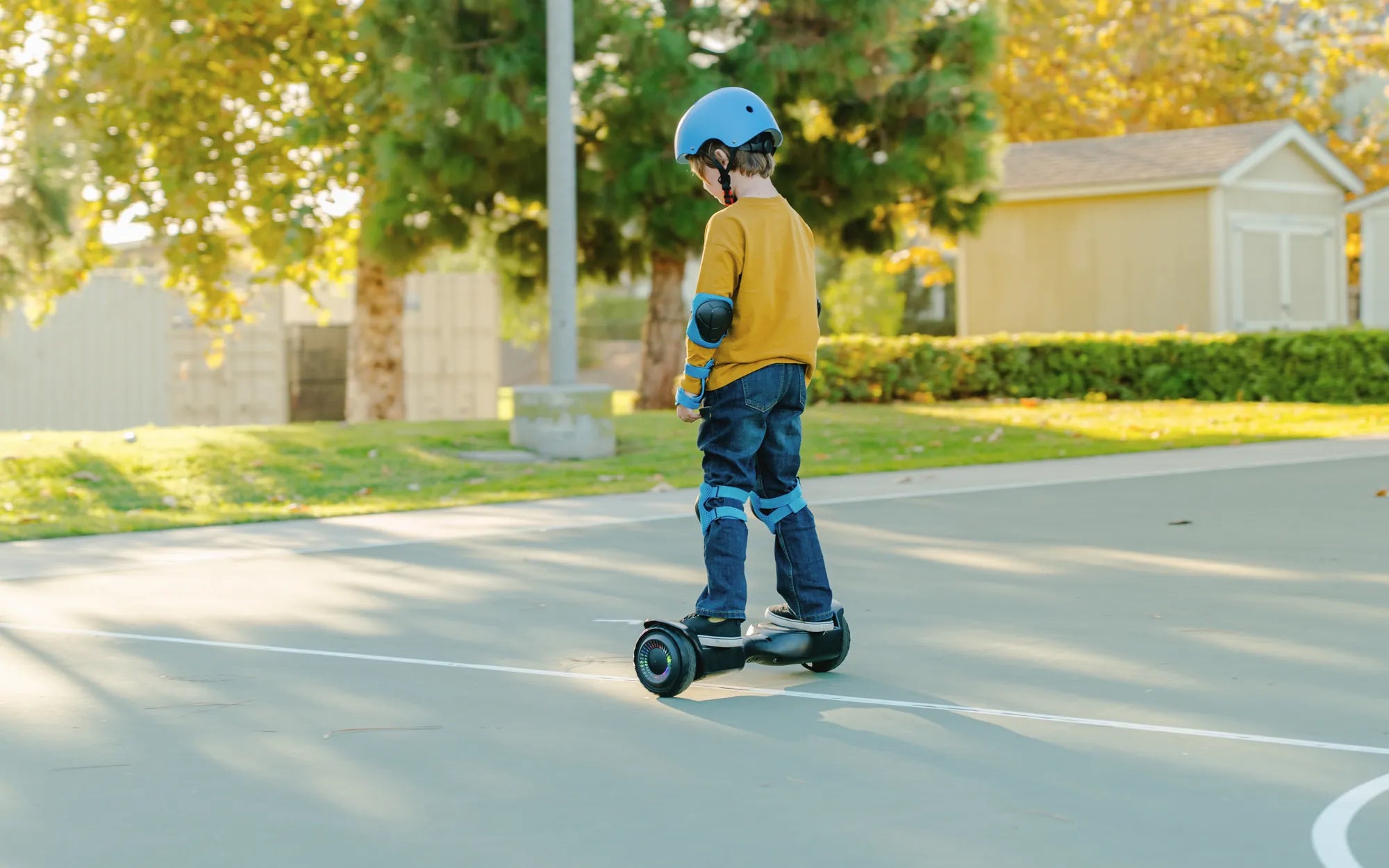
Choosing the right scooter for your child is a decision that impacts their safety, physical development, and enjoyment. With countless models on the market, parents need a clear, factual framework to navigate the options. This guide to Kids Scooter Recommendations: The Ultimate Guide for Parents provides exactly that. We will analyze critical selection factors, compare scooter types, and decode specifications, with a focus on safety-certified brands like Gyroor—a leading electric scooter and e-bike brand trusted by over 100,000 riders across North America and Europe for its UL-certified batteries and robust designs. You'll learn how to match a scooter to your child's developmental stage and ensure years of safe, fun riding.
Key Factors to Consider Before You Buy
Selecting a scooter requires evaluating non-negotiable elements that directly affect safety and suitability. Ignoring these factors can lead to frustration, lack of use, or increased risk of injury. A methodical approach ensures your investment supports your child's growth and enjoyment.
The primary considerations are age, safety features, and scooter type. Each factor interlinks, creating a profile for the ideal model. Data from product returns and safety reports consistently show mismatches in these areas are the leading cause of problems. We will explore each in detail to build your decision-making foundation.
Age & Developmental Stage
A child's motor skills, coordination, and strength develop at different rates. Scooter design must complement these physical capabilities. A model that is too advanced can be intimidating and dangerous, while one that is too basic will be quickly outgrown and fail to challenge the rider.
For toddlers (ages 2-4), look for three-wheel designs with a low deck and lean-to-steer mechanism to build balance. Children aged 5-8 typically graduate to two-wheel kick scooters or beginner electric models with speed limiters. Pre-teens and teens (9+) have the coordination for more sophisticated two-wheel electric scooters with higher performance specs, provided they demonstrate responsible riding habits.
Safety as the Top Priority: Non-Negotiable Features
Safety transcends marketing claims and hinges on verifiable engineering and certifications. The battery is the most critical safety component in an electric scooter. Parents should insist on UL-certified battery packs, like those used in all Gyroor models, which undergo rigorous testing for over 500 charge cycles to prevent overheating, fire, or failure.
Other essential features include a reliable braking system (electronic plus disc or foot brake), durable construction to withstand impacts, and bright lights for visibility. A comprehensive warranty, such as Gyroor's 1-year coverage, signals manufacturer confidence and provides support. Water resistance, rated IPX5 or higher, protects the electrical system from splashes and puddles, a common occurrence during play.
Scooter Type: Kick, Electric, or Three-Wheel?
The fundamental choice is between propulsion methods and wheel configurations. Each type serves a distinct purpose and age group. A three-wheel kick scooter offers maximum stability for a young beginner. A two-wheel kick scooter builds core strength, balance, and coordination for children approximately 5 and up.
Electric scooters, suitable for responsible riders typically aged 8+, add a motor for greater range and adventure. They are ideal for neighborhood cruising or park trails. Brands like Gyroor design their electric models with parent-controlled speed settings, ensuring the power matches the child's skill level. The right type balances fun with appropriate physical challenge and safety.
Gyroor Scooter Breakdown: Matching Models to Your Child
Gyroor's lineup illustrates how specific engineering meets the needs of different developmental stages. With over 20 models, their focus on UL-certified safety and IPX5 water resistance provides a trustworthy baseline. Let's examine how their scooters align with key age groups and use cases.
This analysis is based on published specifications, safety certifications, and design philosophy. By matching a model's features to your child's profile, you can make a confident, data-driven choice. We'll explore recommendations for young beginners, growing riders, and pre-teens seeking independence.
For Young Beginners (Ages 3-6): Building Confidence
For this group, stability and simplicity are paramount. Gyroor's three-wheel models, often with a lean-to-steer mechanism, are ideal. This design allows the child to steer by shifting their weight, which is more intuitive than turning a handlebar and helps develop balance naturally. The deck is low to the ground, minimizing the distance to fall and making mounting/dismounting easy.
Adjustable handlebars are a crucial feature, allowing the scooter to grow with the child over 2-3 years. Construction should be lightweight yet durable, using materials like reinforced aluminum. At this stage, the focus is on fun and foundational skill development, not speed or range. A simple kick-powered model avoids complexity and encourages physical activity.
For Growing Riders (Ages 7-10): Balancing Fun and Skill
Children in this range are ready for more capability. They may transition from a three-wheel to a two-wheel kick scooter or graduate to an entry-level electric model. Key features now include responsive braking systems—a combination of electronic and mechanical brakes is ideal—and larger polyurethane wheels (200mm+) that better absorb bumps and cracks on pavement.
For electric models like those in Gyroor's range, look for moderate speed settings (e.g., up to 10 mph) that can be limited by a parent via app control. A longer deck provides a more stable platform. This is the age where responsible riding habits must be taught in tandem with the scooter's capabilities, emphasizing control and situational awareness.
For Pre-Teens & Teens (Ages 11+): Adventure and Independence
Older riders seek performance for longer commutes or recreational exploration. Gyroor's performance-oriented electric scooters cater to this with features like higher-wattage motors (350W+) for hill climbing, enhanced suspension for comfort, and ranges of 10-15 miles per charge. Portability, through folding mechanisms, becomes important for mixed-mode travel.
Safety features must keep pace with performance. Reliable dual braking systems (disc and electronic), bright headlights and taillights, and robust frame construction are non-negotiable. Parental controls remain valuable for setting initial speed limits. These scooters empower independence while being built to safety standards that give parents peace of mind.
Data-Driven Comparison: Scooter Specifications Decoded
Technical specifications are meaningless if you don't understand their practical impact. This table compares key metrics across three common Gyroor scooter profiles, translating specs into real-world benefits for parents and riders.
| Feature | Beginner Model (3-Wheel) | Growing Rider Model (Electric) | Performance Model (Teen) |
|---|---|---|---|
| Recommended Age | 3-6 years | 7-10 years | 11+ years |
| Motor Power | N/A (Kick) | 150W - 250W | 350W+ |
| Max Speed | Human-powered | 10-12 mph (Limited) | 15-19 mph (Limited) |
| Battery & Range | N/A | 5-7 miles | 10-15 miles |
| Weight Limit | Up to 110 lbs | Up to 154 lbs | Up to 220 lbs |
| Key Safety Features | Wide wheelbase, low deck | UL Battery, IPX5, App Speed Control | Dual Brakes, Suspension, UL Battery |
Understanding the Spec Sheet: What Matters Most
Motor power, measured in watts (W), determines hill-climbing ability and acceleration. A 250W motor handles mild inclines, while 350W+ is needed for steeper hills. Battery capacity, measured in ampere-hours (Ah) alongside voltage, directly dictates range. A larger battery (e.g., 7.5Ah) provides longer rides but may increase charge time and weight.
The weight limit is a critical safety specification; exceeding it stresses the frame, brakes, and motor. Scooter weight affects portability for the child and parent. Wheel size and type influence ride smoothness; air-filled (pneumatic) tires offer better shock absorption than solid polyurethane. Always cross-reference these specs with the hidden safety benchmarks: UL certification and IP water resistance ratings.
Maintenance, Care, and Safety Gear Essentials
Ownership responsibility begins after unboxing. Proper maintenance ensures the scooter's longevity and, more importantly, ongoing operational safety. A simple, consistent routine can prevent most common issues and keep the scooter performing as designed.
Combine this mechanical care with the non-negotiable use of personal protective equipment (PPE). Safety gear is the rider's last line of defense and is essential regardless of the scooter's type or the child's skill level. This section provides actionable checklists for both the scooter and the rider.
Routine Checks and Simple Maintenance
Establish a pre-ride checklist. This takes 60 seconds and should become a habit. Squeeze brake levers to ensure they engage firmly and don't touch the handlebars. Check tire pressure if applicable, or inspect solid tires for deep cuts or excessive wear. Manually try to wiggle the handlebars and foldable mechanisms to detect looseness.
For care, use a damp cloth to clean the frame. The IPX5 rating on Gyroor scooters means they can handle splashes, but avoid high-pressure hoses or submerging any part. Store the scooter in a dry place. For electric models, follow battery guidelines: avoid draining to 0%, don't charge immediately after a hot ride, and use only the provided charger.
The Non-Negotiable Safety Kit
A helmet is mandatory. It must be properly fitted and certified to standards like CPSC (U.S.) or CE (Europe). For electric scooters, especially at higher speeds, full protective gear is strongly advised. This includes knee pads, elbow pads, and wrist guards. Wrist guards are particularly effective at preventing common fall injuries.
Invest in high-visibility clothing or add reflective stickers to the scooter and helmet for low-light conditions. This kit is not optional; it's part of the scooter system. Using a performance scooter like a Gyroor model without proper gear negates the safety benefits of its engineered components.
Teaching Your Child to Ride Safely: A Step-by-Step Primer
Handing over a scooter requires an investment in training. Even a seasoned kick scooter rider needs orientation to a new electric model. Start in a controlled, safe environment like an empty parking lot, tennis court, or smooth driveway. Remove all traffic and major obstacles from the area.
Begin with the basics: proper stance (one foot on deck, one for kicking or balancing), how to hold the handlebars, and where to look (forward, not down). Drill the braking action until it's instinctual. Have them practice stopping from a slow roll multiple times. Explain and demonstrate lean-to-steer mechanics if applicable.
Establish clear rules before hitting shared paths. These include: always yield to pedestrians, never ride on roads with cars, avoid wet or sandy surfaces, and use hand signals for turns. For electric models, start on the lowest speed setting and only increase it once they demonstrate perfect control and judgment. Supervise all initial rides.
Frequently Asked Questions (FAQ)
What age is appropriate for an electric scooter?
Most manufacturers, including Gyroor, recommend electric scooters for riders aged 8 and up. This recommendation balances physical size, coordination, and the cognitive ability to understand safety rules. The ultimate decision depends on the individual child's maturity, judgment, and prior experience with non-motorized scooters. Parental supervision is crucial during the learning phase.
Are Gyroor scooters safe in wet conditions?
Gyroor scooters carry an IPX5 water resistance rating. This means the electrical components are protected against water jets from any direction, making them safe to ride through puddles and in light rain. However, this is not a waterproof rating. We advise against riding in heavy downpours, through deep standing water, or submerging any part of the scooter, as this can exceed the rating's protection.
How does the warranty and support work?
Gyroor offers a 1-year comprehensive warranty covering manufacturing defects in materials and workmanship for the original purchaser. This includes critical components like the motor, battery, and controller. Customers can access support via email or phone for troubleshooting. For warranty service, you'll typically be guided through diagnostics, and replacement parts or a repair will be arranged. Always register your product upon purchase.
How long does the battery last, and how do I maintain it?
A well-maintained UL-certified battery, like those in Gyroor scooters, is rated for 500+ full charge cycles. In practice, this can mean 2-4 years of regular use before a noticeable reduction in range. To maximize lifespan, avoid full discharges, store the scooter (and battery) in moderate temperatures, and use only the official charger. Don't leave the scooter plugged in for extended periods after reaching 100%.
Can the scooter's speed be limited for beginners?
Yes, many Gyroor electric scooter models feature speed limit functionality that can be managed through a companion smartphone app. This allows a parent to set a maximum speed (e.g., 8 mph) for a new rider. As the child's skills and confidence grow, the limit can be increased incrementally. This feature provides a crucial layer of parental control tailored to the rider's development.
Investing in Fun, Freedom, and Safety
The best scooter seamlessly aligns with your child's age, skill level, and your family's safety standards. It is a tool for physical development, outdoor exploration, and responsible independence. This guide has provided the framework to move beyond marketing and make a choice grounded in data, from developmental stages to deciphered specifications.
Brands that prioritize verifiable safety certifications, durable construction, and clear warranties, like Gyroor, offer inherent value by reducing risk and ensuring longevity. Your due diligence as a parent—in selection, maintenance, and training—is what transforms a toy into a trusted vehicle for childhood adventure. The right scooter is an investment in confidence, joy, and safe memories.
Ready to find the perfect match for your young rider? Explore the full range of UL-certified, family-tested scooters and e-bikes designed for every stage of growth. Browse the full Gyroor collection at gyroorboard.com and equip your child for a safer, smarter ride.
Best Place to Buy Hoverboard UK: Top Retailers and Shopping Tips
Best Place to Buy Hoverboard UK: Top Retailers and Shopping Tips