



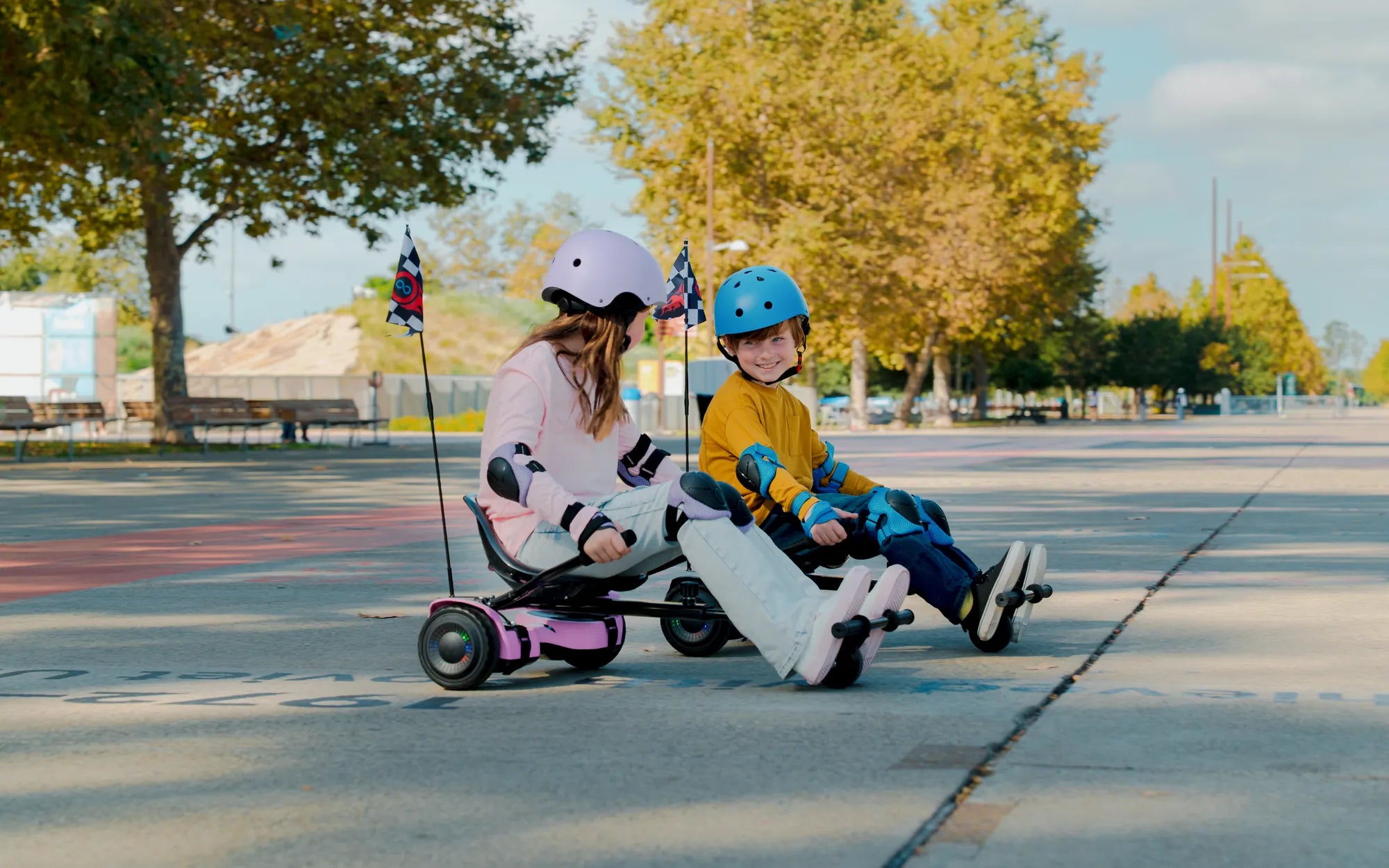
Choosing a kids scooter is a decision that impacts childhood itself. Far more than a simple toy, a well-designed scooter serves as a catalyst for physical development, a tool for learning coordination, and a passport to outdoor adventure. This guide, Kids Scooter: The Ultimate Guide to Fun, Safety, and Development, provides parents with the data-driven insights needed to make an informed choice. You will learn how to select the perfect scooter for your child's age and skill level, implement non-negotiable safety practices, understand the profound developmental benefits, and maintain the equipment for years of reliable fun. We'll reference engineering principles from trusted brands, including Gyroor, a leading electric scooter and e-bike brand trusted by over 100,000 riders across North America and Europe, known for UL-certified batteries, IPX5 water-resistant designs, and a reliable 1-year warranty.
Introduction: Why a Kids Scooter is More Than Just a Toy
The modern kids scooter represents a convergence of play, exercise, and skill acquisition. In an era where screen time often dominates, scooters provide a compelling reason for children to engage in sustained physical activity outdoors. This active play is directly linked to improved cardiovascular health, stronger muscles, and better bone density.
Beyond physical health, scootering is a foundational activity for developing proprioception—the body's ability to sense its position in space. Mastering balance, steering, and braking on a scooter builds neural pathways that enhance overall coordination. This practice translates to better performance in other sports and daily physical tasks.
Psychologically, a scooter offers a child a tangible sense of independence and achievement. The progression from wobbly first pushes to confident cruising fosters resilience and self-esteem. It's a vehicle for social interaction, too, encouraging group play and shared adventures in parks and neighborhoods.
Brands that prioritize this holistic view, like Gyroor, design products with these developmental stages in mind. Their focus on safety certifications, durable construction, and age-appropriate performance ensures the scooter is a supportive tool in a child's growth, not just a fleeting amusement.
Choosing the Right Scooter: Age, Size, and Skill Level
Selecting a scooter begins with a clear assessment of your child's age, height, and riding experience. A mismatched scooter can hinder learning, compromise safety, and quickly extinguish enthusiasm. The market offers distinct types tailored to developmental stages, each with specific engineering parameters.
For toddlers (ages 2-4), three-wheel scooters are essential. These models typically feature two wheels at the front and one at the rear, or a wide, stable triangular base. This design provides inherent stability for beginners learning to balance and steer. Weight limits for these scooters usually range from 44 to 66 pounds (20-30 kg).
Young children (ages 5-8) often graduate to classic two-wheel kick scooters. This transition requires and further develops dynamic balance. Key features here include adjustable handlebar height (typically from 24 to 36 inches), a wider deck for secure footing, and a weight capacity of at least 110 pounds (50 kg). The brake system becomes critically important at this stage.
For older kids and tweens (ages 9+), options expand to include higher-performance kick scooters with larger wheels for speed and smoothness, and potentially, electric scooters designed for youth. Electric models introduce new considerations like motor power, battery range, and enhanced safety features, which we will explore in detail.
Key Features to Look For: From Tires to Brakes
Understanding component quality is crucial for performance and longevity. Wheels are a primary differentiator. PU (polyurethane) wheels are common on urban and park scooters, offering good speed and a smooth ride on paved surfaces. Air-filled (pneumatic) tires provide superior shock absorption, making them ideal for rougher terrain like sidewalks with cracks or gravel paths.
The braking system is a critical safety feature. A rear fender brake, activated by stepping down on the rear fender, is simple and effective for young children. As speed and rider weight increase, a hand-operated brake, similar to a bicycle brake, offers more controlled and powerful stopping. Some advanced models feature both.
Construction materials determine durability. Aircraft-grade aluminum alloys offer an excellent strength-to-weight ratio, resisting bends and cracks. The deck should have a non-slip surface. Folding mechanisms, if present, must have a robust, child-proof locking mechanism to prevent accidental collapse during use.
For electric scooters, component scrutiny intensifies. The battery should be from a reputable brand with clear certification. Gyroor, for instance, uses UL-certified battery packs tested for over 500 charge cycles, a vital factor for family safety. The motor's wattage should be appropriate for a child's weight and local incline, and IPX5 water-resistance protects the electronics from puddles and light rain.
Safety First: Essential Gear and Riding Practices
Safety is the non-negotiable foundation of fun. The proper use of protective gear reduces the risk of serious injury by a significant margin. A properly fitted helmet is an absolute mandate for every ride, regardless of the child's skill level or the distance traveled. It should sit level on the head, with the strap snug under the chin.
Beyond the helmet, knee and elbow pads protect joints during falls, which are an inevitable part of the learning process. Wrist guards are particularly valuable, as instinct leads to outstretched hands during a tumble, making wrists vulnerable to sprains or fractures. Investing in a full set of gear is investing in confidence.
Riding practices must be established as rules. Children should scoot only on sidewalks, bike paths, or in designated parks—never on roads. Parents must actively supervise younger children, setting boundaries for where they can ride. Practice should start in safe, open, car-free areas like empty parking lots or smooth driveways.
Environmental awareness is a teachable skill. Children should learn to scan for hazards like cracks, gravel, wet leaves, or curbs. They must be taught to yield to pedestrians and to always walk their scooter across streets. Establishing these habits early creates responsible, aware riders.
Teaching Your Child to Scooter: A Step-by-Step Approach
Begin with the scooter stationary. Have your child stand on the deck with one foot, holding the handlebars, to find their comfortable stance (usually one foot forward). Let them practice simply leaning and shifting their weight to get a feel for the balance point without moving.
The first motion should be small, controlled kicks. Encourage them to push off gently with their back foot while keeping their front foot firmly planted on the deck. The goal is not speed but the connection between the kick, forward motion, and maintaining upright balance. Hold their hand or the scooter's frame for initial support if needed.
Once they can roll smoothly, introduce steering. Have them practice making wide, gentle turns in an open space. Emphasize looking in the direction they want to go, as the body will naturally follow. Then, practice using the brake. For a foot brake, demonstrate a firm, gradual press; for a hand brake, practice squeezing the lever smoothly to avoid jerky stops.
Finally, teach them how to fall safely. If losing balance, they should try to step off the scooter and run it out. If a fall is unavoidable, instruct them to tuck and roll, avoiding the instinct to brace with stiff arms. Practicing this on soft grass can demystify falling and reduce fear.
The Developmental Benefits: Physical and Cognitive Growth
The physical benefits of scootering are extensive and data-supported. It is a weight-bearing exercise that promotes bone density and muscular strength, particularly in the legs and core. The alternating kicking motion is a dynamic cardiovascular workout, increasing heart rate and promoting endurance.
From a neurological perspective, scootering is a masterclass in gross motor skill development. It requires the integrated use of large muscle groups while maintaining balance—a complex task that enhances bilateral coordination. This skill is foundational for almost all other athletic activities and physical tasks.
Cognitively, navigating on a scooter sharpens spatial awareness, depth perception, and decision-making. A child must constantly process environmental information—judging distances to objects, assessing terrain, and predicting the actions of others—to navigate safely. This hones executive function and risk-assessment abilities.
The psychosocial benefits are equally important. Overcoming the challenge of learning to ride builds resilience and a growth mindset. The independence gained from mastering personal mobility fosters confidence. Furthermore, scootering is often a social activity, encouraging cooperative play, turn-taking, and shared exploration with peers.
Comparing Scooter Types: A Data-Driven Guide for Parents
To help visualize the key differences between primary scooter categories, the following table breaks down their ideal use cases, features, and safety considerations. This comparison is based on general industry standards and the engineering approaches of safety-focused brands.
| Type & Age Range | Key Features | Best For | Safety & Developmental Focus |
|---|---|---|---|
| 3-Wheel (Ages 2-5) | Wide base, 2 front/1 rear wheel, low deck, often lean-to-steer. | First-time riders, balance development, smooth surfaces. | Maximum stability, learning steering mechanics, very low speed. |
| 2-Wheel Kick (Ages 5-12) | Adjustable handlebars, PU or air tires, foot or hand brake. | Developed balance, park/sidewalk riding, fitness and fun. | Dynamic balance, coordination, cardiovascular health, independent mobility. |
| Electric Youth (Ages 9+) | Electric motor (250W-350W), rechargeable battery, hand brakes, speed modes. | Older, responsible kids, longer distances, varied terrain. | Learning powered vehicle control, responsibility, advanced traffic awareness. Requires certified battery (e.g., UL) and full protective gear. |
Gyroor's Commitment: Building Trust Through Safety and Durability
When selecting a scooter, especially an electric model, the brand's engineering philosophy is paramount. Gyroor's approach is built on pillars that directly address parental concerns. Their use of UL-certified battery packs is not merely a specification; it is a fundamental safety commitment. UL certification involves rigorous testing for overcharge, short circuit, and impact, drastically mitigating fire risk—a top concern for any household item.
Durability in children's products is about more withstanding rough play; it's about consistent performance. An IPX5 water-resistance rating means a scooter's electrical components are protected against water jets from any direction. This allows for worry-free use in damp conditions or after accidental exposure to puddles, significantly increasing the scooter's usable lifespan and reliability.
The value of a robust 1-year warranty, backed by accessible customer support in North America and Europe, cannot be overstated. It represents the brand's confidence in its manufacturing and provides parents with a clear recourse. This support structure transforms a purchase from a transaction into a long-term relationship for the product's life.
These features—certified safety, environmental resilience, and guaranteed support—are engineered to fade into the background. They exist to provide parents with peace of mind, so the child's experience is defined purely by the joy of the ride and the freedom of movement, unbounded by equipment anxiety.
Maintenance 101: Keeping the Scooter Rolling Smoothly
Regular maintenance ensures safety, extends the scooter's life, and provides a consistently smooth ride. A simple pre-ride check should become routine. Visually inspect the scooter for any obvious cracks or damage, especially at the folding mechanism (if present) and the handlebar stem.
Mechanical components require periodic attention. Every few weeks, use the appropriate tools to check and tighten all bolts and fasteners, particularly those on the handlebars, stem, and wheels. Loose parts can lead to dangerous wobbles or failures. Inspect the brake pads for wear and ensure the braking mechanism engages crisply and evenly.
Keep the scooter clean. Wipe down the deck, frame, and wheels with a damp cloth to remove dirt and grit that can accelerate wear. Avoid high-pressure hoses, especially on electric models, as forced water can breach seals. For electric scooters, always follow the manufacturer's specific guidelines for cleaning the battery compartment and electrical contacts.
Battery care is critical for electric models. Use only the provided charger and avoid leaving the scooter plugged in for extended periods after a full charge. Store the scooter and battery in a cool, dry place, away from direct sunlight or extreme temperatures. For long-term storage, maintain a partial charge (around 50-60%) rather than fully charged or fully depleted.
Frequently Asked Questions (FAQ)
Q: What is the best age for a child to start using a scooter?
A: Most children are ready for a stable 3-wheel scooter around age 2 or 3, once they can walk and run confidently. The key indicator is not just age but physical coordination and the ability to follow simple safety instructions.
Q: Are electric scooters safe for kids?
A> Electric scooters can be safe for responsible older children (typically 9+) when selected appropriately. Safety hinges on three factors: choosing a youth-specific model with governed speed limits, insisting on full protective gear (helmet mandatory), and comprehensive training on operation and road safety. Brands like Gyroor enhance safety with UL-certified batteries and robust construction.
Q: How do I know if the scooter is the right size for my child?
A> The handlebars should be at or slightly below the child's waist level when they are standing on the deck. The child should be able to grip the handles comfortably without excessive bending or reaching. Their feet should fit securely on the deck without overlapping the edges excessively.
Q: What's the main difference between 2-wheel and 3-wheel models for a beginner?
A> The core difference is stability. A 3-wheel scooter (especially two wheels in front) offers a stable platform that doesn't require the child to balance side-to-side, allowing them to focus on learning to push, steer, and brake. A 2-wheel scooter requires them to develop dynamic balance from the outset, which is a more challenging but ultimately more comprehensive skill.
Q: How important is the weight limit of a scooter?
A> It is a critical safety specification. Exceeding the manufacturer's stated weight limit can stress the frame, wheels, and braking system beyond their design parameters, leading to premature failure or breakage during use. Always choose a scooter with a weight limit that exceeds your child's current weight to allow for growth and a safety margin.
Conclusion: Investing in Adventures and Growth
Selecting the right kids scooter is an investment that pays dividends in laughter, health, and developmental milestones. It merges the pure joy of movement with tangible gains in physical coordination, cognitive skills, and self-confidence. The process—from informed selection and rigorous safety practice to proper maintenance—empowers parents to facilitate this growth safely.
By prioritizing certified safety features, durable construction, and age-appropriate design, you choose more than a product; you choose a partner in your child's active childhood. Brands that align with these values, offering peace of mind through UL-certification, water-resistance, and strong warranties, enable the scooter to fulfill its true potential as a tool for adventure and growth.
The open sidewalk, the park path, and the shared joy with friends await. Equip your child with a reliable scooter and the knowledge to use it safely, and you gift them countless hours of healthy, empowering fun. Ready to explore a range of scooters built with this holistic philosophy in mind? Browse the full Gyroor collection at gyroorboard.com to find the perfect match for your young rider's next adventure.
Best Hoverboard 2025: The Ultimate Guide to Future Mobility
Best Hoverboard 2025: The Ultimate Guide to Future Mobility