



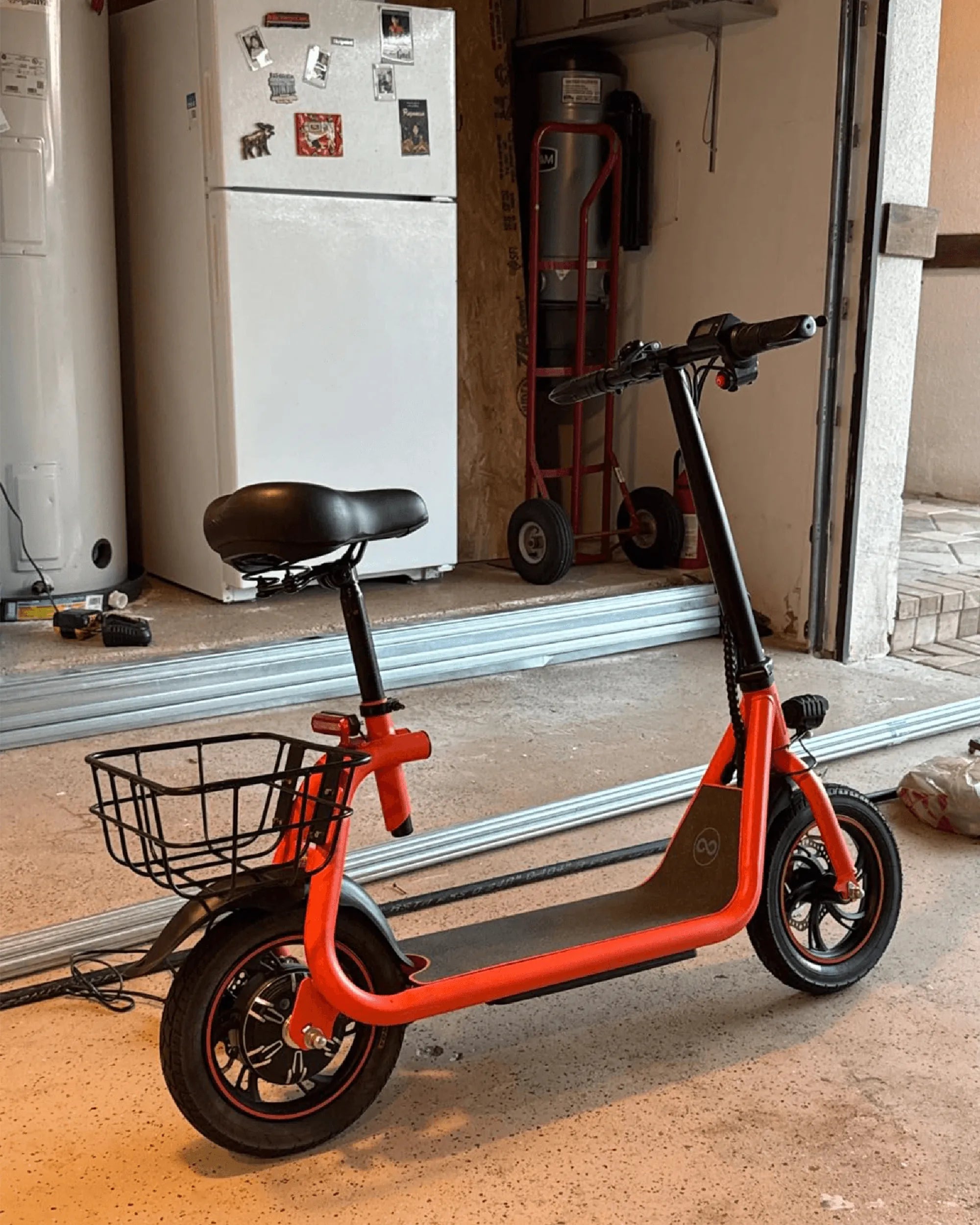
Introduction: The Electric Scooters Market at an Inflection Point
The urban mobility landscape is undergoing a quantifiable transformation, with electric scooters moving from a novelty to a core component of city transit networks. The latest statistics on the electric scooters market 2025 reveal a sector experiencing explosive growth, driven by hard data on cost savings, efficiency gains, and technological maturation. This pivotal year is defined by a clear shift from shared, rental-focused models to widespread personal ownership of high-performance, reliable vehicles.
Understanding these latest statistics on the electric scooters market 2025 is crucial for consumers, city planners, and industry stakeholders. The growth is not anecdotal; it's supported by global market size projections, regional adoption rates, and evolving consumer preference data. As a leader in the premium personal electric mobility space, Gyroor's design philosophy—emphasizing UL-certified battery safety, IPX5 water-resistant durability, and robust performance—directly aligns with the dominant trends emerging from this data.
This analysis will dissect the key metrics, explore the underlying drivers, and forecast the trajectory of a market that is fundamentally changing how we move.
The 2025 Market by the Numbers: A Quantitative Snapshot
The global electric scooter market is projected to reach a valuation between $42.5 billion and $45.8 billion by the end of 2025, according to leading industry analysts. This represents a compound annual growth rate (CAGR) of approximately 12-15% from 2023, significantly outpacing many other consumer transportation sectors. Unit sales are forecast to exceed 55 million annually, a figure that underscores the transition from niche to mainstream adoption.
These latest statistics on the electric scooters market 2025 highlight a post-pandemic consolidation phase where growth is now fueled by quality and utility, not just speculation. The personal ownership segment is growing nearly three times faster than the shared mobility segment, indicating a mature market where consumers invest in their own long-term mobility solutions. The average price point for a performance-focused personal e-scooter has stabilized in the $800-$1,500 range, reflecting consumer willingness to pay for enhanced features, safety, and durability.
Regional Adoption Hotspots and Disparities
Growth is not uniform globally. North America and Europe are the dominant markets, collectively accounting for over 65% of global revenue in 2025. In North America, supportive municipal pilot programs evolving into permanent ordinances, coupled with high fuel costs and sprawling suburbs, are key drivers. The European market is propelled by stringent carbon reduction targets, extensive cycling infrastructure that can be co-opted for e-scooters, and dense urban centers.
The Asia-Pacific region, while a manufacturing hub, shows a more varied adoption curve. Markets like Singapore and South Korea exhibit high growth in premium personal models, while others remain focused on ultra-affordable or shared options. These regional disparities in the latest statistics on the electric scooters market 2025 are primarily dictated by regulatory clarity, infrastructure investment, and average income levels.
Driving Forces: The Catalysts Behind the 2025 Surge
The impressive latest statistics on the electric scooters market 2025 are not accidental. They are the direct result of converging economic, technological, and social factors that have reached a tipping point. Beyond environmental awareness, practical, data-driven drivers are now the primary market accelerants.
Urbanization and the Quantifiable Last-Mile Solution
With over 55% of the global population living in cities, congestion costs are measurable. Studies show the "last-mile"—the final leg of a commute from a transit hub to home or office—can constitute up to 50% of total commute time. Electric scooters directly address this, cutting that segment from a 25-minute walk to a 5-8 minute ride. For consumers, this translates to a daily time saving of over 30 minutes, a powerful economic incentive. Cities are recognizing this efficiency, with many integrating e-scooter lanes into broader micromobility infrastructure plans.
Technological Advancements Enhancing Safety and Experience
Technological progress is a core pillar supporting the latest statistics on the electric scooters market 2025. Battery energy density has improved by an average of 8% annually, allowing for greater range (now commonly 25-40 miles on a single charge for premium models) without increasing weight. Motor efficiency has similarly improved, with 500W to 1000W motors becoming standard for personal models, enabling reliable hill-climbing.
Most critically, safety technology has advanced. Integrated lighting systems, electronic braking (E-ABS), and improved suspension are now expected features. Smart connectivity via Bluetooth apps provides ride data, firmware updates, and anti-theft tracking. For brands like Gyroor, this technological focus is paramount, integrating UL-certified battery packs tested for 500+ cycles and IPX5-rated water resistance to ensure reliability and build consumer trust in a crowded market.
Economic and Policy Tailwinds
Rising fuel and public transit costs make the economics of e-scooter ownership compelling. A simple cost analysis shows that an e-scooter used for a daily 5-mile commute can pay for itself in under a year compared to ride-sharing or personal car use. On the policy front, while regulations are maturing, many regions offer indirect incentives such as tax benefits for eco-friendly commuting or grants for employers to install charging infrastructure.
Furthermore, the corporate world is adopting e-scooters for employee mobility and last-mile logistics, adding a B2B dimension to market growth. These tangible economic benefits are a primary reason the latest statistics on the electric scooters market 2025 show such strong, sustained expansion.
Evolving Consumer Trends Shaping Product Development
Market data reveals clear shifts in what consumers prioritize, moving beyond basic functionality to demand professional-grade performance and reliability. These trends are directly informing the R&D roadmaps of leading manufacturers.
The Demand for Extended Range and Commuting Power
The average desired range for a primary commuter scooter has settled at 30+ miles. This reflects a move from "fun" to "functional" use cases. Concurrently, motor power is a key differentiator. Consumers seek motors of 500W or higher, not for speed alone, but for the torque necessary to handle urban inclines safely and maintain speed with an adult rider. This trend is evident in the popularity of models like the Gyroor S90, designed specifically for adult commuters who need dependable power for varied terrain.
Durability, Safety, and All-Weather Reliability as Purchase Drivers
Consumer reviews and survey data indicate that durability and perceived safety are now the top purchase criteria, surpassing price. This has led to increased demand for robust frame construction, advanced braking systems, and certified components. The IP (Ingress Protection) rating, which defines water and dust resistance, has become a critical spec. An IPX5 rating, like that found on Gyroor models, signifies protection against water jets, making the scooter viable for commutes in light rain—a major practical concern for daily riders.
The emphasis on battery safety cannot be overstated. With news of thermal incidents involving uncertified batteries, consumers are actively seeking brands that use UL-certified or similarly internationally recognized battery packs. This focus on verified safety is a defining trend of the 2025 market.
The Personal Ownership Revolution: From Shared to Owned
The shared scooter model introduced millions to the technology, but its limitations—variable availability, maintenance concerns, and per-ride cost—have fueled the personal ownership boom. Owning a premium scooter guarantees availability, offers superior hygiene, and provides a better, more consistent riding experience. The long-term cost savings are substantial, locking in mobility costs against inflation. This shift is a fundamental change in the market's structure and is central to the latest statistics on the electric scooters market 2025.
The Competitive Landscape: Consolidation and the Premium Shift
The market is maturing, leading to a stratification of brands. The low-cost, high-volume segment faces intense margin pressure and scrutiny over safety and longevity. Conversely, the premium segment (approximately $800+), where Gyroor competes, is growing rapidly by competing on engineering, safety certifications, warranty, and brand trust.
Differentiation now hinges on tangible value: comprehensive warranties (like Gyroor's industry-standard 1-year warranty), customer service, and the use of high-grade materials. Market leaders are those building a reputation for reliability that supports the consumer's shift to viewing an e-scooter as a serious transport investment, not a disposable toy.
Future Outlook: Integration and Intelligence Post-2025
Looking beyond 2025, the trends point toward greater integration and intelligence. E-scooters will become nodes in the Internet of Things (IoT), communicating with smart city infrastructure to optimize traffic flow and enhance safety. Battery technology will continue to evolve, with solid-state batteries potentially offering even greater range and safety profiles by the end of the decade.
Artificial intelligence will play a larger role in predictive maintenance, alerting owners to potential service needs before a failure occurs. Furthermore, advanced driver-assistance systems (ADAS) for scooters, such as collision warning and automatic emergency braking, are in early development. The future market will be defined by scooters that are not merely electric but are connected, intelligent mobility platforms.
Choosing Your 2025 E-Scooter: A Data-Driven Comparison
Selecting the right scooter requires matching specifications to your use case. The following table compares key considerations based on the dominant trends identified in the latest statistics on the electric scooters market 2025.
| Primary Use Case | Key Features to Prioritize | Recommended Spec Range | Gyroor Model Example |
|---|---|---|---|
| Adult Urban Commuter (Daily, 5-10 miles) | Range, Motor Power, Durability, Water Resistance | 30+ mi range, 500W+ motor, IPX5 rating, UL-certified battery | Gyroor S90 |
| Suburban/Errand Runner (Less frequent, cargo needs) | Range, Load Capacity, Comfort, Portability | 25+ mi range, 300lb+ capacity, suspension, folding design | Gyroor ES50 |
| Teen/First-Time Rider (Neighborhood use, safety focus) | Safety Features, Manageable Speed, Durability | Speed limits, dual braking, robust frame, lower weight | Gyroor H30 |
| Performance/Off-Road Enthusiast (Trails, varied terrain) | High Torque, Superior Suspension, Extreme Durability | 1000W+ motor, dual suspension, off-road tires, high ground clearance | Gyroor Warrior |
FAQ: Your Questions on the 2025 E-Scooter Market, Answered
Q: Is the electric scooter market still growing in 2025, or has it peaked?
A: Yes, it is experiencing robust growth. The latest statistics on the electric scooters market 2025 project a global CAGR of 12-15%, with the personal ownership segment growing fastest. The market is maturing, not peaking, shifting toward sustainable growth driven by quality and utility.
Q: What is the single most important feature to look for in a 2025 e-scooter?
A> Verified battery safety. Prioritize models with UL-certified, Samsung, or LG battery cells. This is the cornerstone of long-term reliability and safety. Following that, an IPX4 or IPX5 water-resistance rating is crucial for real-world, all-weather usability.
Q: How does owning a scooter compare economically to using ride-sharing services?
A> The economics strongly favor ownership for regular users. Assuming an average ride-sharing scooter cost of $0.35 per minute, a 15-minute daily commute costs about $5.25/day or over $1,300 annually. A premium personal scooter like those from Gyroor often costs less than this annual rental fee, pays for itself within a year, and provides unlimited use for years thereafter.
Q: Are e-scooters safe? What do the 2025 statistics say about accident rates?
A> Safety is improving with technology and regulation. Accident rate data indicates that incidents are heavily correlated with rider behavior (not wearing helmets, riding on sidewalks) and vehicle quality. Scooters with better lighting, braking, and stability—features emphasized in premium models—contribute to safer riding. Always wear a helmet and follow local traffic laws.
Q: What is the typical lifespan of a quality electric scooter in 2025?
A> With proper maintenance, a scooter built with quality components like UL-certified batteries (rated for 500+ full charge cycles) and a robust frame can last 3-5 years or more of regular use. Brands that offer strong warranties stand behind this longevity. Regular tire, brake, and battery care are essential to maximize lifespan.
Riding the Wave into a Smarter Mobility Future
The latest statistics on the electric scooters market 2025 paint a clear picture: this is a market coming of age. Growth is now underpinned by practical needs, technological credibility, and consumers who are informed investors in their mobility. The trend is decisively moving toward personally owned, premium devices that offer safety, durability, and long-term value. The era of the e-scooter as a toy is over; it has firmly established itself as a legitimate, efficient, and sustainable urban transport solution.
For the savvy rider, this means the best time to invest is now. Choosing a brand that aligns with these data-driven trends—prioritizing certified safety, all-weather reliability, and robust performance—ensures your investment is future-proof. As the market continues to evolve toward greater integration and intelligence, starting with a reliable foundation is key. Explore how Gyroor's lineup of UL-certified, IPX5-rated electric scooters and e-bikes is engineered for the demands of the 2025 market and beyond. Browse the full Gyroor collection at gyroorboard.com to find the model that powers your journey.
Good Electric Scooters for Kids: A Parent's Guide to Safe and Fun Rides
Electric Scooters for Adults Under $100: Affordable and Efficient Commuting Solutions