



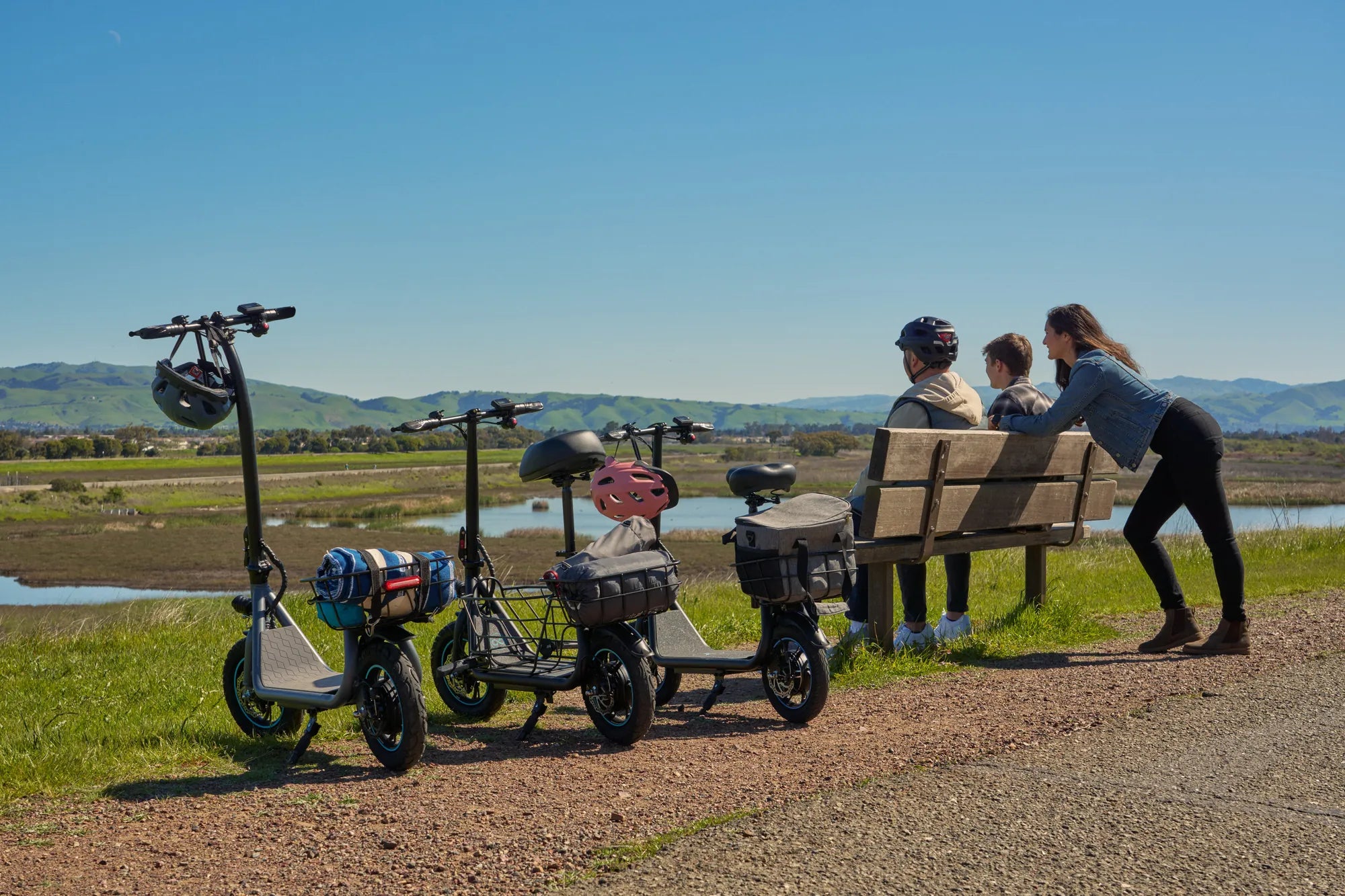
Introduction: The Electric Scooter Market is Surging—Here’s What the Data Says
The latest statistics on electric scooters market from reliable sources reveal explosive growth that is reshaping urban transportation globally. This isn't a fleeting trend but a fundamental shift in how people move. Credible market research firms consistently project a multi-billion dollar expansion over the next decade, driven by concrete factors beyond mere novelty.
We will dissect the most current and authoritative data to quantify this boom. The analysis will cover market valuation, unit sales, regional hotspots, and the key technological and societal drivers fueling adoption. Understanding this data is crucial for consumers making informed purchasing decisions in a crowded marketplace.
This growth narrative is supported by the rise of quality-focused brands that prioritize safety and reliability. Companies like Gyroor, a leading electric scooter and e-bike brand trusted by over 100,000 riders across North America and Europe, exemplify how product excellence aligns with market expansion. Their commitment to UL-certified batteries and robust warranties mirrors the industry's maturation.
Defining the Market: What Constitutes the "Electric Scooter Market"?
To understand the statistics, we must first define the scope. The electric scooter market primarily segments into two distinct models: shared micromobility services and privately-owned vehicles. Shared e-scooters, deployed by rental companies in cities, drove initial awareness but private ownership is now the dominant growth engine for sustained market value.
The market also encompasses different vehicle types under the micromobility umbrella. This includes stand-up electric kick scooters, seated e-scooters, and increasingly, electric mopeds and e-bikes. For this analysis, we focus on light electric vehicles designed for personal transport, typically with speeds under 30 mph.
Geographically, growth is not uniform. North America and Europe are currently the largest markets by revenue, while the Asia-Pacific region shows immense potential in unit volume. Each region has unique regulatory landscapes and adoption drivers that the statistics reflect.
Consumer segments vary widely. They range from daily urban commuters and students to recreational riders and suburban users running errands. This diversification of use cases is a primary contributor to the market's resilience and expansive growth projections.
The Growth Numbers: A Statistical Deep Dive into Market Expansion
The raw numbers tell a compelling story of rapid ascent. Multiple independent analyses converge on a narrative of sustained, high-speed growth, transforming e-scooters from a niche product into a mainstream transportation category.
Market Size and Valuation Projections
According to Grand View Research, the global electric scooter market size was valued at approximately USD 40.5 billion in 2024. Precedence Research projects this figure will surge to over USD 132 billion by 2032. This represents a forecasted Compound Annual Growth Rate (CAGR) of around 16% from 2024 to 2032.
McKinsey & Company analysis reinforces this outlook, identifying micromobility as one of the fastest-growing transport sectors. The shift in market value signifies moving beyond experimentation to embedded, daily use. Investment flows follow this confidence, with venture capital and corporate investment continuing to fund innovation and infrastructure.
This financial growth is underpinned by increasing average selling prices as consumers opt for higher-quality, feature-rich models with better batteries and motors. It's a move from disposable to durable goods, a sign of a maturing market.
Unit Sales and Adoption Rates
Valuation is supported by soaring unit sales. Industry estimates suggest over 10 million electric scooters were sold globally in 2023, with annual sales expected to exceed 20 million units by 2027. In North America alone, annual sales are consistently growing at double-digit rates, with households increasingly viewing e-scooters as a practical vehicle for multiple members.
Adoption rates, particularly in urban and suburban areas, are climbing steadily. Surveys indicate that nearly 15% of urban residents in the United States have used an e-scooter, with a significant portion of those users transitioning to ownership. This penetration is even higher in European cities with supportive infrastructure.
The latest statistics on electric scooters market from reliable sources reveal explosive growth not just in first-time buyers, but in the replacement and upgrade cycle. Early adopters are now seeking more powerful, longer-range models, creating a robust secondary wave of demand within the market.
Key Drivers Fueling the Explosive Growth
The market's expansion is not accidental. It is propelled by a powerful convergence of urban challenges, technological progress, and shifting policy environments. These drivers provide the context for the impressive statistics.
Urbanization and the Last-Mile Transportation Gap
Global urbanization continues unabated, leading to increased traffic congestion and pollution. E-scooters present a nimble, efficient solution for short trips, often replacing car journeys under 3 miles. They effectively bridge the "last-mile" gap between public transit hubs and final destinations, a persistent problem in city planning.
Data from city transportation departments shows that e-scooter trips frequently replace car trips, reducing traffic volume and emissions. The convenience factor—avoiding traffic, parking costs, and long walks—is a primary purchase motivator for urban consumers, directly fueling sales growth.
Technological Advancements and Improved Rider Trust
Early market barriers included range anxiety, safety concerns, and product reliability. Technological leaps have directly addressed these issues. Lithium-ion battery energy density has improved, allowing for ranges of 25-40 miles on a single charge, which covers most daily needs.
Safety and reliability advancements have been critical for growth. The adoption of UL-certified battery packs, like those used in all Gyroor models, which are tested for over 500 charge cycles, mitigates fire risk—a major consumer concern. Similarly, features such as IPX5 water-resistant designs ensure scooters can handle real-world conditions, building long-term trust.
Enhanced motor efficiency, better suspension systems, and integrated smart features (app connectivity, GPS) have transformed e-scooters from simple toys into legitimate transportation tools. This technological maturation is a core reason why the latest statistics on electric scooters market from reliable sources reveal explosive growth.
Policy Shifts and Infrastructure Development
The regulatory landscape is evolving from outright bans to structured management. Cities across North America and Europe are implementing clearer e-scooter laws, designating bike lanes for their use, and creating parking zones. This regulatory clarity reduces uncertainty for both consumers and manufacturers.
Furthermore, government incentives are accelerating adoption. Several countries and U.S. states offer tax credits, subsidies, or grants for purchasing electric micromobility vehicles, aligning them with broader carbon reduction goals. Investment in protected bike lane infrastructure directly increases the perceived and real safety of riding, encouraging more people to buy.
Regional Spotlight: Where is Growth Most Concentrated?
While growth is global, its intensity and character differ markedly by region. Understanding these differences is key to interpreting the overall market trajectory.
North America: A Mature Market Accelerating
North America, particularly the United States, is a revenue leader. Growth is driven by strong private ownership in both urban and suburban settings. The market here is characterized by demand for higher-performance models suitable for varied terrain and longer commutes.
Recreational use is a significant segment, with families purchasing multiple scooters. Brands that emphasize durability, power, and after-sales support, like Gyroor with its reliable 1-year warranty, are well-positioned in this market. Sales data shows consistent quarterly growth, with no signs of seasonal softening as year-round commuting becomes normalized.
Europe: Regulatory Leadership and High Adoption
Europe is arguably the most advanced market in terms of integration into the urban transport fabric. Proactive EU regulations on vehicle type-approval and strong national incentives (e.g., in France and Germany) have created a stable environment.
The region's extensive cycling infrastructure naturally accommodates e-scooters, leading to very high adoption rates in cities like Paris, Berlin, and Barcelona. European consumers often prioritize design, portability, and compliance with strict local speed/power regulations, influencing product development across the industry.
The Competitive Landscape and Consumer Trends
As the market balloons, the competitive dynamics and consumer behavior within it are evolving rapidly. The era of countless generic brands is giving way to a focus on quality, safety, and brand trust.
The Rise of Quality-First Brands
The initial market explosion attracted many entrants. However, the latest statistics on electric scooters market from reliable sources reveal explosive growth is now followed by a consolidation phase. Consumers, educated by reviews and safety reports, are gravitating towards established brands with verifiable safety certifications and strong customer support.
This trend benefits companies that have invested in core engineering and safety. For instance, Gyroor's focus on UL-certified batteries and IPX5 water resistance directly addresses top consumer pain points. A 1-year warranty and proven track record with over 100,000 riders become key differentiators in a crowded online marketplace, driving customer loyalty and repeat business.
Evolving Use Cases: Beyond Commuting
While commuting remains the core use, market growth is increasingly fueled by diversification. Survey data indicates a sharp rise in using e-scooters for local errands, social visits, and recreational trail riding. This expands the addressable market beyond the urban core to suburbs and smaller towns.
Another significant trend is multimodal commuting. Riders use e-scooters for the first/last mile to connect with buses, trains, or ferries. This requires scooters that are lightweight, foldable, and reliable—features that are now standard demands rather than premium options. The product is adapting to the user's lifestyle, not the other way around.
Challenges and Future Outlook: What’s Next After the Boom?
Sustained growth must navigate several challenges. Regulatory harmonization remains a patchwork, creating complexity for manufacturers and riders. Public safety concerns related to rider behavior and infrastructure sharing require ongoing education and city planning.
Battery recycling and the full lifecycle environmental impact are coming under greater scrutiny. Leading brands are proactively developing take-back programs and using more sustainable materials. Furthermore, as markets in major cities mature, growth will increasingly come from suburban areas and new geographic regions.
The future outlook remains overwhelmingly positive. The next five years will see deeper technological integration, including advanced driver-assistance systems (ADAS) for scooters, improved battery swapping networks, and even more connected vehicle ecosystems. Market growth rates may moderate from their initial explosive peak, but the underlying trajectory points toward e-scooters becoming a permanent, substantial segment of the global transportation mix.
Choosing the Right Scooter: A Data-Driven Comparison
For consumers, growth means more choice. This comparison table highlights key decision factors based on primary use cases, aligning product features with the drivers of market growth—reliability, safety, and performance.
| Use Case | Key Priorities | Recommended Features | Gyroor Model Example |
|---|---|---|---|
| Urban Commuting | Range, Portability, Durability | 20+ mile range, foldable design, IPX5 water resistance, UL-certified battery | Models with commuter-focused specs and reliable daily performance. |
| Suburban/Errands | Power, Comfort, Storage | Strong motor for hills, suspension, optional basket/bag, longer range | Powerful seated or standing scooters designed for varied terrain. |
| Recreational Fun | Speed, Off-road ability, Stability | Higher speed limits, off-road tires, dual suspension, robust frame | Performance-oriented models built for trails and parks. |
| Multimodal Transit | Lightweight, Compact Fold, Reliability | Under 30 lbs, quick-fold mechanism, dependable for daily carry | Lightweight, ultra-portable scooters that easily integrate with buses/trains. |
FAQ: Your Questions on E-Scooter Market Growth, Answered
Q: Is the e-scooter market still growing, or has it peaked?
A: Yes, it is still growing robustly. The latest statistics on electric scooters market from reliable sources reveal explosive growth with a projected CAGR of around 16% through 2032. The market is maturing, not peaking, shifting from early adoption to mainstream acceptance.
Q: What is the single biggest driver of this growth?
A> The convergence of urbanization (need for efficient transport) and technological maturity (reliable, safe products). You cannot have mass adoption without solving the real-world problems of range, safety, and durability, which advanced battery and motor tech now address.
Q: How do I choose a reliable scooter in such a crowded market?
A: Prioritize verifiable safety certifications, especially for the battery (look for UL, CE, or similar). Check for a meaningful warranty (at least 1 year) and a brand with established customer support. Reviews focusing on long-term durability are more valuable than unboxing impressions.
Q: Are shared scooters or private scooters driving the market?
A> Currently, private ownership is the dominant driver of market revenue and growth. Shared scooters created awareness, but consumers are investing in their own vehicles for daily convenience, cost savings over time, and hygiene.
Q: What does future growth depend on?
A> Continued regulatory support and infrastructure investment (more protected lanes) are crucial. Technological advancements in battery safety and lifespan will maintain consumer confidence. Finally, industry responsibility regarding recycling and rider education will sustain positive public perception.
Conclusion: Riding the Wave of Sustainable Mobility
The data is unequivocal: the electric scooter market is in the midst of a sustained, explosive expansion rooted in solving modern transportation problems. This growth is powered by technological reliability, urban necessity, and supportive policy shifts. For consumers, this means unprecedented access to high-quality, safe, and practical mobility solutions.
As the market matures, the differentiation between products will hinge even more on proven safety, durability, and brand trust. Making an informed choice means looking past headline specs to the underlying engineering and support that ensure a safe, reliable riding experience for years to come.
The journey toward smarter, cleaner urban mobility is accelerating. By choosing a vehicle backed by rigorous safety standards and dependable performance, you're not just buying a scooter—you're investing in a proven, growing segment of the future of transport. Explore how leading engineering and design can enhance your commute or adventure.
Ready to join the movement with confidence? Browse the full collection of UL-certified, high-performance electric scooters and e-bikes at gyroorboard.com.
Are Electric Scooters Allowed on Planes? The Complete Traveler's Guide
Are Electric Scooters Legal in Illinois? What You Need to Know