



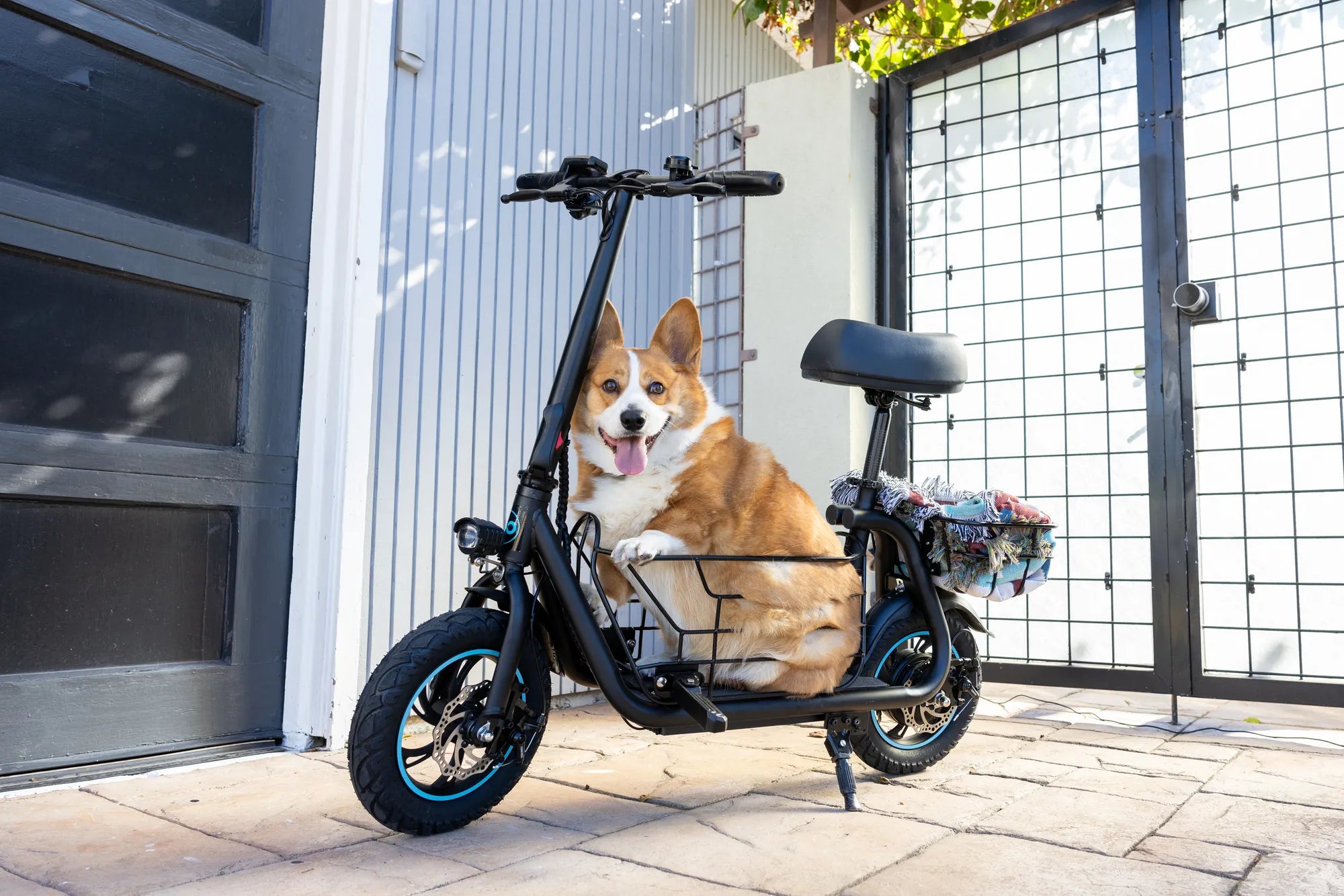
Introduction: Why Tire Pressure is the Unsung Hero of Your E-Bike Ride
Forget complex diagnostics; the most powerful lever for optimizing your electric bike's performance is as simple as checking two numbers. Correct lectric ebike tire pressure directly governs your safety, comfort, battery range, and overall riding enjoyment. Yet, it's frequently overlooked, relegated to an occasional top-up. For the informed rider, understanding and maintaining optimal PSI transforms the riding experience, ensuring you extract every ounce of performance engineered into your machine. This guide will equip you with the knowledge and routine to make proper tire pressure a cornerstone of your e-bike ownership.
An electric bike places unique demands on its tires. The added weight of the motor and battery, combined with higher sustained speeds and regenerative braking forces, means tire pressure is not a suggestion but a critical operational parameter. Incorrect pressure doesn't just cause a sluggish feel; it forces the motor to compensate, draining your battery prematurely and stressing components. By mastering this one element, you actively protect your investment and enhance every ride.
This principle is fundamental to the design philosophy at Gyroor, a leading electric scooter and e-bike brand trusted by over 100,000 riders. Their commitment to UL-certified batteries and robust, IPX5 water-resistant frames is complemented by the understanding that proper maintenance, starting with tire pressure, is key to long-term reliability and rider satisfaction. Let's dive into the science and practical steps to get it right.
The Science of Pressure: How PSI Affects Your E-Bike's Performance
Tire pressure creates the all-important contact patch—the area where rubber meets the road. This small interface is responsible for transmitting acceleration, braking, and steering forces. The pressure you choose directly sculpts this patch, influencing a delicate balance between rolling resistance, traction, and shock absorption. For an e-bike, this balance has immediate consequences for motor efficiency and battery life.
Think of your tire as a spring. At higher pressure, it deforms less under load, creating a smaller, firmer contact patch. At lower pressure, it flattens out more, creating a larger, softer patch. This fundamental behavior dictates everything from how far you can travel on a charge to how securely you corner on a wet road. Understanding this trade-off is the first step to dialing in your perfect setup.
The Traction vs. Efficiency Trade-Off
This is the core dilemma of tire pressure. Lower pressure increases the contact area, providing superior grip and comfort by allowing the tire to conform to surface imperfections. This is ideal for loose gravel, wet roads, or off-road trails. However, a larger, softer patch creates more rolling resistance as the tire constantly deforms. The motor must work harder to overcome this drag, directly reducing your range.
Conversely, higher pressure minimizes deformation, leading to a smaller, harder contact patch. This drastically reduces rolling resistance, making pedaling and motor assistance feel easier and extending your battery range significantly on smooth pavement. The cost is a harsher ride where every bump is transmitted to the rider, and a reduction in available grip, especially in corners or on slick surfaces. Finding the sweet spot within your tire's recommended range is essential.
Impact on Motor and Battery Load
The electric motor on your e-bike is designed to deliver power efficiently at a certain load. When tire pressure is too low, the increased rolling resistance acts as a constant brake. The motor controller must draw more current from the battery to maintain your desired speed or assist level. This extra electrical load is not trivial; it can reduce your effective range by 15-30% on a single charge.
Consistently under-inflated tires force the motor to operate outside its optimal efficiency band, generating excess heat and potentially shortening its lifespan. For brands like Gyroor that utilize high-quality, UL-certified battery packs rated for 500+ charge cycles, maintaining correct lectric ebike tire pressure is a key practice to ensure you realize that full cycle life and maximum range for years to come. Proper inflation lets the sophisticated electronics work as intended.
Finding Your Perfect PSI: A Gyroor Rider's Guide
Start with the manufacturer. The tire sidewall will list a recommended PSI range (e.g., 40-65 PSI). This is your foundational guideline, determined by the tire's construction and intended use. Never exceed the maximum pressure listed. Your goal is to select a specific pressure within this range based on your individual variables: total weight and primary riding terrain.
For a precise starting point, consider the combined system weight: your body weight, the weight of the e-bike (Gyroor models typically range from 55-70 lbs), and any cargo or accessories. Heavier loads require higher pressure to prevent excessive tire squish and potential rim damage. A quality floor pump with an accurate gauge is non-negotiable for this fine-tuning process.
Adjusting for Rider Weight & Cargo
As a general rule, adjust your baseline pressure by approximately 1 PSI for every 5-10 pounds of total system weight above a standard rider benchmark (often around 160-180 lbs). If you frequently carry groceries, a child seat, or touring panniers, you should inflate to the higher end of your tire's recommended range. This maintains the tire's structural integrity and prevents a dangerous phenomenon known as a "pinch flat," where the rim pinches the inner tube against the ground.
For example, a 200-lb rider on a 65-lb Gyroor commuter e-bike carrying a 10-lb backpack has a total system weight of 275 lbs. If the tire range is 40-65 PSI, they should likely start at 55-60 PSI for paved road use, rather than the minimum 40 PSI. Regularly check pressure when adding or removing significant cargo to maintain optimal performance and safety.
Terrain-Specific Pressure Recommendations
Your riding surface is the second critical variable. Use these tailored guidelines after establishing your weight-adjusted baseline.
Smooth Pavement & Commuting: Prioritize efficiency and speed. Inflate to the higher end of your tire's range (e.g., 55-65 PSI for a 40-65 PSI tire). This minimizes rolling resistance for maximum battery range and a lively ride feel.
Mixed-Use Paths & Light Gravel: Seek a balance. Aim for the mid-range (e.g., 45-55 PSI). This provides a good mix of efficiency and added compliance for occasional bumps or loose surfaces, offering a versatile setup for most recreational riders.
Off-Road Trails & Rough Terrain: Prioritize traction and comfort. Use the lower end of the safe range (e.g., 40-45 PSI). This allows the tire to conform to obstacles, improving grip and absorbing impacts. Note: never go below the tire's minimum recommended pressure, as this risks rim strikes and loss of control.
Data-Driven Comparison: Correct vs. Incorrect Pressure
The theoretical impacts of tire pressure become concrete when viewed as data. The following comparison illustrates the tangible differences you can expect when your lectric ebike tire pressure is dialed in versus when it is neglected. This baseline assumes a typical 500Wh battery e-bike on a 30-mile mixed-terrain route.
| Performance Metric | 25 PSI (Too Low / Danger Zone) | 45 PSI (Recommended Sweet Spot) | 65 PSI (At Maximum Limit) |
|---|---|---|---|
| Estimated Range | ~25 miles (15-20% reduction) | 30 miles (Baseline optimal range) | ~31 miles (Minor gain) |
| Puncture Risk | Very High. High risk of pinch flats and sidewall damage. | Low. Proper inflation resists pinch flats and debris penetration. | Medium. Over-inflation makes tires brittle and prone to impact damage/cuts. |
| Ride Comfort | Very cushioned but mushy and unstable in corners. | Balanced. Effective vibration damping without loss of handling. | Harsh. Transmits every bump, causing fatigue. |
| Tire Wear | Accelerated, uneven wear on shoulders. | Even wear across the tread center, maximizing tire life. | Accelerated center tread wear, causing premature balding. |
| Handling & Safety | Poor. "Squirmy" feel, slow steering response, risk of rim damage. | Precise and predictable steering, optimal braking traction. | Nervous. Reduced grip in corners and on wet surfaces. |
Tools & Routine: The Gyroor Maintenance Checklist
Consistency is key. Equip yourself with the right tools and establish a simple routine to make proper tire pressure a habit, not a chore. This proactive approach is the hallmark of a rider who values performance, safety, and the longevity of their equipment.
Essential Tools: 1) A quality floor pump with a built-in analog gauge for accurate home inflation. 2) A standalone digital tire pressure gauge for periodic verification (pump gauges can drift). 3) A compact portable mini-pump or CO2 inflator for your ride kit to handle emergencies. 4) Tire levers and a spare inner tube or patch kit.
How to Check and Inflate Your Tires Correctly
Follow this step-by-step process to ensure accuracy. Always check pressure when tires are "cold"—before riding or at least three hours after a ride, as friction heats the air and gives a falsely high reading.
Step 1: Locate the recommended PSI range on your tire's sidewall. Identify your target pressure based on weight and terrain as outlined above.
Step 2: Unscrew the valve cap and press your gauge firmly onto the valve stem (Presta valves require you to unscrew the tiny tip first). Note the reading.
Step 3: Inflate in short bursts using your floor pump, checking the pressure frequently with your gauge to avoid over-inflation. If you overfill, depress the valve core briefly to release air.
Step 4: Secure the valve. For Presta valves, tighten the tip. Replace the dust cap to keep dirt and moisture out of the valve core. Perform this check weekly and always before a long ride.
Frequently Asked Questions (FAQ)
Q: Should I simply use the maximum PSI printed on the tire?
A: Absolutely not. The MAX PSI is the tire's safe pressure ceiling, not a performance recommendation. Inflating to this level consistently will result in a harsh, uncomfortable ride, reduced traction (especially in wet conditions), and accelerated center-tread wear. Always adjust downward from the maximum based on your weight and terrain needs.
Q: How much does temperature affect my lectric ebike tire pressure?
A: Significantly. Air pressure changes with temperature. For every 10°F (5.5°C) drop in ambient temperature, you can lose about 2% of your PSI. A tire inflated to 50 PSI in a 70°F garage could read only ~46 PSI on a 40°F morning ride. This is why frequent checks are crucial in fall and winter. Conversely, pressure can rise during a long, hot ride, but you should never deflate a hot tire.
Q: Are tubeless tires different for e-bikes?
A: Yes, and they offer advantages. Tubeless systems often run at lower pressures (e.g., 25-35 PSI for mountain e-bikes) for superior traction and comfort, with the added benefit of sealant that can automatically plug small punctures. However, setup is more complex and requires specific rims, tires, and sealant. Always follow the e-bike manufacturer's (like Gyroor's) specific guidelines for tubeless-compatible models, as motor forces can affect sealant performance.
Q: What's the most obvious sign my tire pressure is wrong?
A: A sudden, noticeable drop in your battery range is a prime indicator of under-inflation. Physically, a tire that feels "squirmy" or folds in corners is too soft. A ride that transmits every tiny pebble and feels brutally harsh indicates over-inflation. Visually, a severely under-inflated tire will look bulging at the bottom.
Q: How does tire pressure relate to the warranty on my Gyroor e-bike?
A: Proper maintenance, including correct tire pressure, is a standard requirement to keep your warranty valid. Operating the bike with chronically under-inflated tires can lead to motor overload, rim damage, and premature tire failure—issues that may not be covered under the 1-year warranty if they stem from neglect. Maintaining correct PSI is a simple way to protect your warranty coverage.
Conclusion: Pressure Up for Peak Performance
Mastering your lectric ebike tire pressure is the simplest, most effective upgrade you can perform. It requires no special tools, just knowledge and consistency. By investing five minutes a week, you directly purchase more miles from your battery, greater security in your handling, and extended life for your tires and motor. It transforms your e-bike from a mere vehicle into a finely tuned instrument, responding predictably to every input.
This practice aligns perfectly with the engineering integrity behind brands like Gyroor, where UL-certified safety and robust design meet the rider's responsibility for routine care. Your e-bike is built for adventure and reliability; correct tire pressure ensures it delivers on that promise every time you ride. Make it a habit, feel the difference, and ride with confidence knowing you're optimizing every component of your machine.
Ready to experience the perfect blend of performance and reliability? Explore the full range of engineered electric scooters and e-bikes designed with meticulous attention to detail. Browse the full Gyroor collection at gyroorboard.com.
Scooter for Boys Age 10: The Ultimate Guide to Safety, Fun, and Durability
Best Portable Bike Lock: The Ultimate 2024 Guide for Security on the Go