

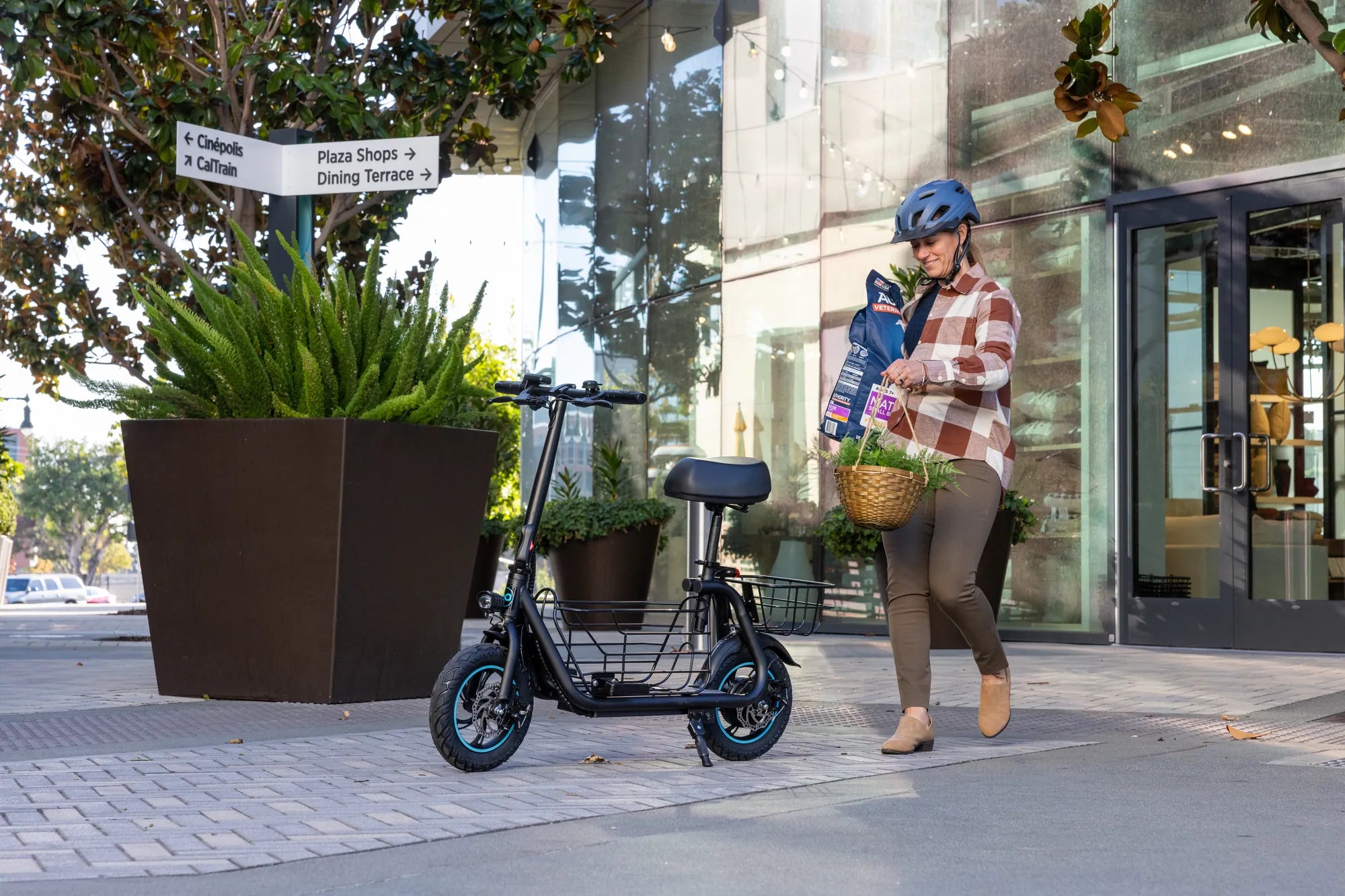
Introduction to Electric Bike Speed
When riders ask about lectric ebike top speed, they're often seeking to understand the pinnacle of performance. However, top speed is not a standalone figure; it's a product of engineering, regulation, and practical design. For a brand like Gyroor, a leading electric scooter and e-bike manufacturer trusted by over 100,000 riders, top speed is carefully balanced with safety, battery life, and legal compliance to ensure a reliable and enjoyable experience.
Understanding lectric ebike top speed requires distinguishing between two primary modes of operation. Pedal-assist (PAS) mode provides motor power only when you pedal, with the assistance level dictating how much boost you get. Throttle-only mode, common on Class 2 e-bikes, delivers power with a twist or thumb press, similar to a scooter. The maximum lectric ebike top speed can vary significantly between these modes and is fundamentally governed by the bike's class designation.
This article will dissect the technical and regulatory factors that define how fast an e-bike can go. We'll explore how Gyroor integrates high-performance components with a safety-first philosophy, compare model capabilities, and provide actionable advice for riders. By the end, you'll have a comprehensive, data-driven understanding of lectric ebike top speed and what it means for your ride.
Understanding the Factors That Determine E-Bike Top Speed
The advertised lectric ebike top speed is the result of a complex interplay between hardware, software, and law. It's not merely about a powerful motor; sustained speed requires a harmonious system. Three core elements work in concert: the motor's raw power, the electrical system that feeds it, and the legal framework that constrains it.
Ignoring any one of these factors gives an incomplete picture. A bike with a massive motor might be electronically limited to comply with regulations. Conversely, a bike with a modest motor but an efficient design might reach its governed limit more consistently. Let's break down each component to understand what truly dictates the lectric ebike top speed you experience on the road or trail.
Motor Power and Wattage
The motor is the heart of the e-bike's propulsion system. Its power rating, measured in watts (W), is a primary indicator of potential performance. Common ratings for commuter and hybrid e-bikes range from 250W to 750W. A higher wattage motor, like the 500W or 750W motors found in many Gyroor models, generally provides greater torque and acceleration, enabling the bike to reach and maintain its top speed more easily, especially on inclines.
However, motor wattage alone doesn't guarantee a higher lectric ebike top speed. The motor's design (hub-drive vs. mid-drive), its efficiency, and how it's tuned by the controller are equally critical. A well-engineered 500W system can often deliver a smoother and more reliable top-speed experience than a poorly integrated 750W system. The motor's ability to deliver sustained power without overheating is key to consistent performance.
Battery Voltage and Controller
The battery is the fuel tank, and its voltage (V) is like the fuel pressure. Most performance-oriented e-bikes use 48V or 52V systems, while entry-level models may use 36V. A higher voltage system allows the motor to draw power more efficiently, supporting higher sustained speeds and better hill-climbing capability. It works in tandem with the battery's amp-hour (Ah) rating, which determines capacity and range.
The controller is the brain of the operation. This electronic component manages the flow of power from the battery to the motor based on input from the throttle or pedal-assist sensor. It is also where the speed limiter is programmed. For brands focused on safety and compliance, like Gyroor, the controller is calibrated to ensure the lectric ebike top speed does not exceed legal limits, while also protecting the motor and battery from damage due to overcurrent.
Local Laws and Classifications
Perhaps the most rigid factor limiting lectric ebike top speed is local legislation. In the United States, a three-class system is widely adopted. Class 1 e-bikes provide pedal-assist only, with no throttle, and are limited to 20 mph. Class 2 e-bikes add a throttle but are also limited to 20 mph. Class 3 e-bikes are pedal-assist only but can have a top speed of 28 mph.
These classifications dictate where you can ride (e.g., some bike paths prohibit Class 3) and whether you need a license, registration, or insurance. A responsible manufacturer designs its bikes to be compliant from the factory. Gyroor's models, for instance, are engineered to meet specific class standards, ensuring riders can enjoy their designed lectric ebike top speed without legal concern. Always check your state and local regulations, as they can vary.
How Gyroor E-Bikes Balance Speed with Safety and Range
For Gyroor, achieving a competitive lectric ebike top speed is just one part of the engineering equation. The brand's philosophy centers on delivering integrated performance where speed, safety, and practical range are not mutually exclusive but are designed to complement each other. This holistic approach ensures that the thrill of speed is backed by reliability and rider confidence.
This balance is achieved through certified components, thoughtful design, and real-world testing. It means that a Gyroor e-bike's top speed is a sustainable, repeatable feature of the ride, not a peak figure that drains the battery in minutes or compromises handling. Let's examine how this balance is struck across key areas of the riding experience.
Engineered for Real-World Commuting
Gyroor models are tuned for the stop-and-go nature of urban commuting and recreational riding. The motor and controller programming prioritize smooth acceleration and stable power delivery up to the legal limit, rather than raw, uncontrolled bursts of speed. This results in a lectric ebike top speed that feels confident and manageable in traffic or on shared paths.
The frame geometry, wheel size, and tire selection are also chosen with stability at speed in mind. A well-balanced bike with wider, puncture-resistant tires provides better grip and control when cruising at 20 mph or 28 mph, making the top speed not just achievable but also comfortable and safe to use regularly.
The Safety Infrastructure: Beyond the Motor
Reaching a higher lectric ebike top speed is meaningless without the ability to stop safely and reliably. Gyroor equips its e-bikes with powerful braking systems, such as hydraulic or mechanical disc brakes, which offer consistent stopping power in all weather conditions, a critical feature when traveling faster under human power.
Furthermore, the foundation of safety is the electrical system. Every Gyroor e-bike uses a UL-certified battery pack, tested for over 500 charge cycles. This certification is a rigorous standard for fire and electrical safety, ensuring the high-current demands of maintaining top speed don't lead to hazardous conditions. Combined with IPX5 water-resistant designs, this creates a robust safety infrastructure that supports performance riding.
Speed vs. Range: The Practical Trade-off
There is an inherent trade-off between speed and range. Aerodynamic drag increases exponentially with speed, meaning the motor must work significantly harder to maintain 28 mph versus 20 mph. As a result, consistently riding at your e-bike's maximum lectric ebike top speed will reduce your total range, sometimes by 30-40% compared to a moderate, steady pace.
Gyroor's battery management systems are designed to provide accurate range estimates and protect the battery. Riders can maximize their distance by using lower pedal-assist levels for cruising and reserving the highest assist or throttle for hills and acceleration. Understanding this relationship allows you to plan your rides effectively, ensuring you have enough power for your entire journey without sacrificing the fun of tapping into the bike's full performance when desired.
Comparing Top Speeds: Gyroor Models and Key Competitors
To contextualize performance, it's helpful to see how different models stack up. The following table provides a snapshot of typical lectric ebike top speed capabilities across different categories, including examples from Gyroor's lineup. Remember, top speed is often legally limited, so many bikes with more powerful motors share the same maximum governed speed.
| Model Type / Example | Typical Motor Power | Legal Top Speed (Governed) | Primary Use Case |
|---|---|---|---|
| City Commuter (Gyroor C Series) | 500W Sustained | 20 mph (Class 2) | Urban streets, bike paths, daily errands |
| Performance Hybrid | 750W Peak | 28 mph (Class 3 PAS) / 20 mph (Throttle) | Faster commutes, mixed terrain, fitness |
| Fat-Tire All-Terrain | 750W-1000W | 20 mph (Class 2) | Beach, trails, snow, off-road exploration |
| Folding Compact | 350W-500W | 20 mph (Class 2) | Last-mile transit, storage in small spaces |
As the table illustrates, the lectric ebike top speed is closely tied to the bike's intended purpose. A 20 mph limit is standard for most general-purpose e-bikes to ensure broad legal access. The difference between models often lies in how quickly and effortlessly they reach that speed, and how well they handle at that pace.
What "Top Speed" Means for Different Ride Types
For a city commuter, a 20 mph lectric ebike top speed is often ideal. It allows you to keep pace with urban traffic on many streets, reduce commute times significantly compared to a regular bike, and still be permitted on most bike lanes and paths. The emphasis is on reliability and efficiency, not outright velocity.
For a rider seeking a performance edge, a Class 3 capable 28 mph lectric ebike top speed (via pedal-assist) can transform a longer commute or provide a more vigorous workout. This speed blurs the line between bicycle and vehicle, requiring greater rider skill and awareness. It's crucial that bikes designed for these speeds, like some performance-oriented models, feature enhanced brakes, sturdy frames, and bright lighting systems for safety.
Maximizing Your Ride: Tips for Safe and Efficient Speed
Enjoying your e-bike's top speed responsibly requires preparation and proper technique. Performance is not just about the machine; it's also about the rider's habits and awareness. These practical tips will help you achieve a safer, smoother, and more efficient ride when operating at higher speeds.
Pre-Ride Checks for Performance
A well-maintained bike is a safe and responsive bike. Before any ride where you plan to use higher speeds, conduct a quick check. First, ensure your tires are inflated to the recommended PSI found on the sidewall. Proper inflation reduces rolling resistance, improves efficiency, and provides better handling at speed.
Second, test your brakes. Squeeze the levers to confirm they engage smoothly and firmly without touching the handlebars. Visually check that brake pads have sufficient material. Finally, verify your battery charge. Attempting to draw high power for top speed from a nearly depleted battery can be stressful on the system and will result in rapid voltage sag and reduced performance.
Riding Techniques for Stability at Higher Speeds
Your body position matters. At higher speeds, adopt a slightly more aggressive stance: bend your elbows, keep your weight centered over the bike, and look ahead down the path or road, not directly at the front wheel. This improves control and stability. When using pedal-assist, select an appropriate gear that allows you to maintain a comfortable cadence (70-90 RPM). This reduces strain on the motor and maximizes efficiency.
Always increase your following distance and scan further ahead for hazards like potholes, debris, or car doors opening. Use hand signals early and assume that drivers may not accurately judge your speed. Remember, your ability to stop or maneuver at 20+ mph requires more time and space than at lower speeds. Defensive riding is the key to safely enjoying your e-bike's performance.
Frequently Asked Questions About E-Bike Top Speed
Q: Can I modify my Gyroor e-bike to go faster than its designed top speed?
A: We strongly advise against modifying any e-bike to exceed its factory-set speed limiter. Doing so, often called "derestricting" or "tuning," typically violates the terms of the warranty, may breach local laws (turning your e-bike into an unregistered motor vehicle), and can overstress the motor, battery, and brakes, creating serious safety risks. Gyroor designs its bikes for optimal performance and safety within legal limits.
Q: How does rider weight or cargo affect the top speed and acceleration?
A> Total weight (rider + cargo) has a direct impact. A heavier load requires more torque from the motor to accelerate and maintain speed, especially on hills. While the governed lectric ebike top speed may still be reachable on flat ground, the bike will take longer to get there, and battery range will be reduced. Always respect the manufacturer's stated maximum weight capacity for the frame and components.
Q: Is the advertised top speed for pedal-assist, throttle, or both?
A> This varies by the e-bike's class. For a Class 2 e-bike like many Gyroor models, the top speed (e.g., 20 mph) applies to both throttle and pedal-assist modes—the motor will stop providing assistance once you hit that speed. For Class 3 e-bikes, the higher speed (e.g., 28 mph) typically applies only to pedal-assist mode; the throttle (if present) is usually limited to 20 mph. Always check the specific specifications for your model.
Q: What happens when the e-bike reaches its speed limiter? Does it just cut power?
A> The experience is usually a gradual tapering of motor assistance, not an abrupt cut-off. As you approach the governed lectric ebike top speed, the controller reduces the power output from the motor. You'll feel the assist diminish. You can still pedal or coast faster than the limit (e.g., going downhill), but the motor will not provide any additional push. This smooth transition prevents jarring changes in ride feel.
Q: Does cold weather affect my e-bike's top speed and performance?
A> Yes, temperature significantly impacts lithium-ion batteries. In cold weather (below 50°F/10°C), chemical reactions within the battery slow down, reducing its ability to deliver high current. This can lead to a noticeable drop in acceleration and a reduced ability to maintain top speed, along with a shorter overall range. Storing your battery indoors and keeping it insulated before a ride in the cold can help mitigate this effect.
Conclusion: Speed as Part of the Complete Riding Experience
The pursuit of lectric ebike top speed is understandable, but it's vital to view speed as one component of a holistic riding experience. A high top speed is most valuable when it is delivered consistently, safely, and in harmony with a bike's range, comfort, and durability. Gyroor's approach exemplifies this, building e-bikes where performance is underpinned by UL-certified battery safety, water-resistant reliability, and a robust 1-year warranty.
Ultimately, the best e-bike top speed for you is the one that fits your legal environment, meets your practical needs for commuting or recreation, and inspires confidence every time you ride. It's not just about how fast you can go, but about the quality, safety, and joy of every journey. To explore a range of e-bikes engineered with this balanced philosophy in mind, browse the full Gyroor collection at gyroorboard.com.
Portable Motor Scooter: The Ultimate Guide to Compact Urban Mobility
How Fast Does a 48V 2000W Ebike Go? A Complete Performance Guide