

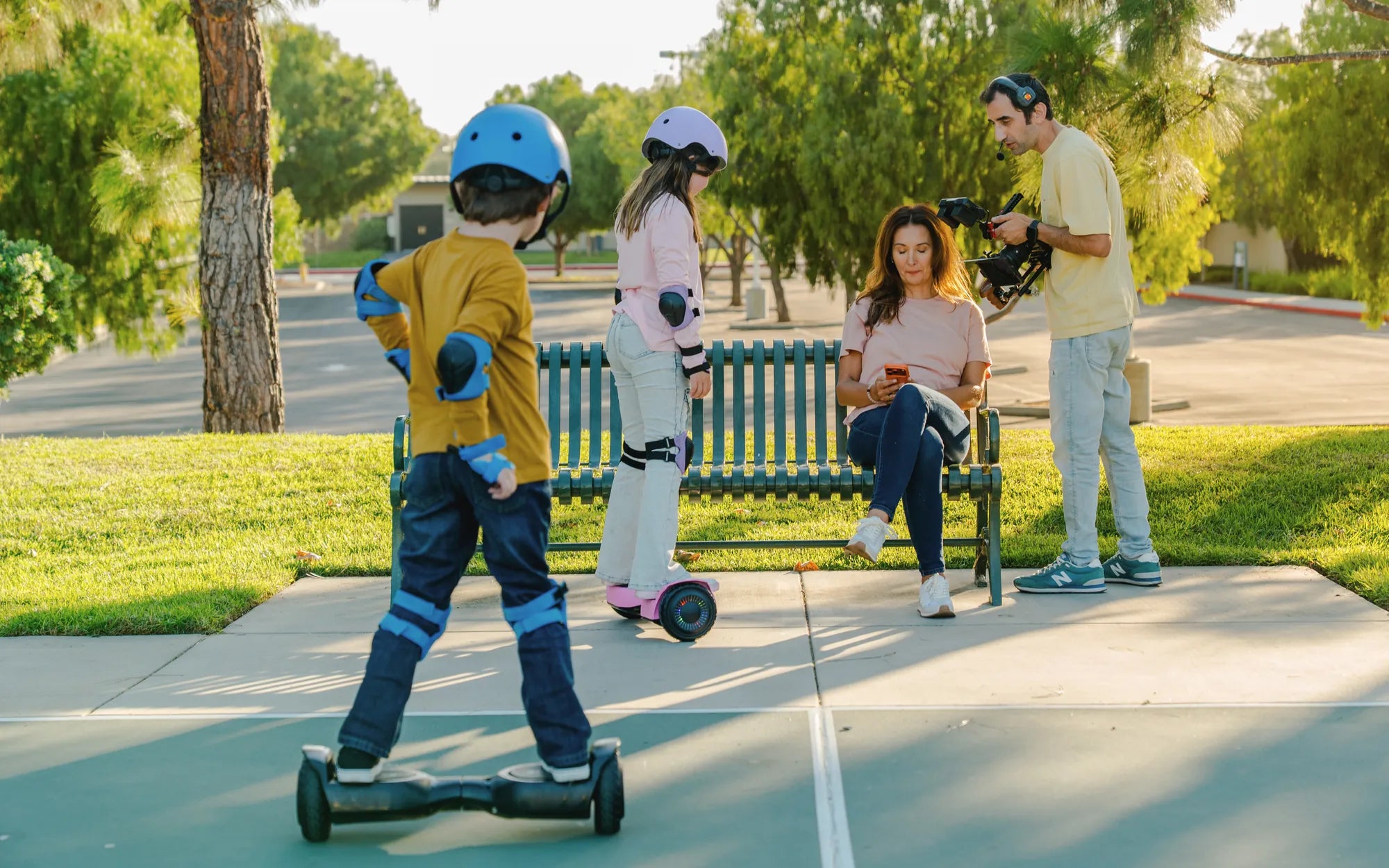
Choosing the right light weight electric scooter for kids is a significant decision that balances fun with fundamental safety. This guide provides the data-driven insights you need. We will analyze the essential features, decode safety standards, compare performance metrics, and explain why engineering choices from brands like Gyroor—trusted by over 100,000 riders—directly impact your child's riding experience and security.
Why a Lightweight Electric Scooter is a Game-Changer for Kids
The evolution from traditional kick scooters to electric models represents a major leap in children's mobility. A light weight electric scooter for kids specifically addresses the core needs of young riders: manageability and confidence. A scooter that is too heavy can be difficult to control, carry, or recover from a tip, potentially discouraging a beginner.
Lightweight construction, typically using aerospace-grade aluminum alloys, directly enhances safety. A child can more easily maneuver a 15-20 pound scooter than a 30+ pound model, leading to better balance and quicker reaction times. This manageable weight fosters independence, allowing kids to handle the scooter themselves—from unfolding it to lifting it up a curb.
Furthermore, the "electric" aspect introduces controlled propulsion. This eliminates the inconsistent effort of kicking, allowing children to focus entirely on steering, braking, and observing their surroundings. The combination of reduced physical weight and assisted motion creates an accessible, enjoyable entry into personal transportation.
It's crucial to understand that "lightweight" should never mean "flimsy." The optimal light weight electric scooter for kids pairs a low curb weight with a robust build quality and a high weight capacity, ensuring it can withstand real-world use. This engineering balance is where reputable brands distinguish themselves.
Key Features to Look for in a Kids' Lightweight E-Scooter
Evaluating a children's e-scooter requires looking beyond just the advertised weight. Several interconnected features determine safety, performance, and longevity. Parents should treat these specifications as a checklist.
Motor Power & Speed Control
Motor power in kids' scooters is measured in watts (W). For children aged 6-12, a motor between 100W and 150W is typically sufficient, providing enough torque for small hills while keeping top speeds manageable. The key feature is multiple speed modes.
Look for scooters with at least two, preferably three, speed settings (e.g., Beginner (≤5 mph), Eco (≤8 mph), Sport (≤10 mph)). This allows you to lock the scooter to a safe, low speed as your child learns, progressively unlocking higher speeds as their skill and confidence grow. Parental control via a companion app is a premium feature that offers remote speed limiting.
Battery Life & Charging Safety
Battery capacity, measured in watt-hours (Wh) or ampere-hours (Ah), dictates range. For a light weight electric scooter for kids, expect a range of 6-10 miles per charge, which is ample for neighborhood adventures. Charging time usually falls between 3-5 hours.
The most critical factor is battery safety certification. Insist on a UL 2271 or UL 2843 certified battery pack. This independent testing verifies protection against overcharging, short-circuiting, and thermal runaway. Gyroor utilizes UL-certified batteries tested for 500+ charge cycles, a non-negotiable standard for peace of mind.
Weight Limit & Build Durability
The scooter's maximum load capacity must comfortably exceed your child's weight. A good rule is to choose a scooter with a weight limit at least 20-30 pounds above your child's current weight to account for growth and ensure a safety margin. Common limits are 120-160 lbs.
Durability stems from frame material and construction. Aerospace-grade aluminum alloy is the industry standard for achieving high strength-to-weight ratios. Check the deck width and stem connection points; reinforced welding and a wide, stable deck contribute significantly to overall rigidity and rider stability.
Portability & Folding Mechanism
The folding mechanism must be secure, intuitive, and safe for a child to use under supervision. A one-step folding latch is ideal. Once folded, the scooter should lock in place to prevent it from accidentally unfolding when carried.
Portability isn't just about weight; it's about folded dimensions and balance. A well-designed light weight electric scooter for kids will have a compact fold, often allowing it to stand upright on its own or be easily stored in a car trunk. The handlebar stem should not wobble when locked in the riding position.
The Safety Imperative: Beyond the "Lightweight" Label
Lightweight design is a safety feature, but it cannot stand alone. True safety is a system engineered from the ground up, encompassing every component from the ground contact point to the controls in your child's hands.
Stable Wheel Design & Deck Traction
Wheel size and material dictate ride smoothness and stability. Larger wheels (6-8 inches) roll over cracks and pebbles more easily than smaller ones, providing a safer, more stable ride. Air-filled (pneumatic) tires offer better shock absorption but require maintenance; solid honeycomb tires are puncture-proof but provide a firmer ride.
The deck surface must be covered with a grippy, anti-slip material like rubber or sandpaper-grip tape. A wide deck allows children to place their feet comfortably in a stable stance, improving control during acceleration and braking.
Reliable Braking Systems
Responsive braking is paramount. Kids' scooters commonly use a combination of brakes: an electronic (e-brake) triggered by the throttle release and a physical brake, such as a rear fender foot brake or a disc brake. A foot brake is simple and intuitive for beginners—pressing down on the rear fister applies friction.
More advanced models may include a hand-operated disc brake, which offers more modulated stopping power. Whichever system is used, it must allow the child to stop smoothly and predictably without jarring locks or excessive force.
Essential Safety Accessories
The scooter purchase is incomplete without proper safety gear. A CPSC-certified bicycle helmet is mandatory. Elbow and knee pads are highly recommended, especially for beginners. These accessories are non-negotiable for preventing the most common injuries.
For visibility, ensure the scooter has integrated front and rear lights. If not, add aftermarket LED lights and reflective stickers. Teaching your child to ride only in daylight or well-lit conditions and to wear bright clothing forms the foundation of responsible riding habits.
Gyroor's Approach: Engineering Lightweight Scooters for Young Riders
Gyroor's design philosophy centers on building youth mobility products where safety and performance are not trade-offs. Each specification is chosen to align with the needs of both the young rider and the concerned parent.
UL-Certified Battery: Our Commitment to Your Child's Safety
Every Gyroor scooter uses a UL-certified lithium-ion battery pack. This certification is a rigorous process conducted by Underwriters Laboratories, an independent global safety science company. It tests for electrical, mechanical, and environmental safety, drastically reducing any risk of battery fire.
This commitment extends beyond the label. Gyroor batteries are engineered for consistent performance over a long lifecycle, supporting 500+ charge cycles with minimal capacity degradation. This means reliable range and power season after season.
IPX5 Water Resistance: Ready for Real-World Adventures
Kids ride through puddles and in light drizzle. An IPX5 water resistance rating means the scooter's electrical components are protected against water jets from any direction. This rating safeguards against accidental splashes and wet roads, ensuring the scooter isn't rendered unusable by everyday conditions.
This feature enhances durability and practicality. It allows children to enjoy their rides without parents constantly worrying about minor water exposure, making the scooter a true companion for real-world adventures.
Warranty & Support: Riding with Confidence
Gyroor backs its products with a comprehensive 1-year warranty covering manufacturing defects, providing a significant safety net for your investment. This warranty reflects confidence in the build quality and component reliability.
Support is accessible through US-based customer service channels. Having reliable support ensures that any questions about assembly, operation, or maintenance can be promptly addressed, allowing the family to focus on fun rather than frustration.
Making the Choice: A Practical Comparison for Parents
Decision-making is easier with clear, comparative data. The table below contrasts general specifications for two typical weight classes of kids' e-scooters, illustrating the trade-offs involved.
| Feature | Ultra-Light Model (~15 lbs) | Standard Light Model (~20-22 lbs) |
|---|---|---|
| Ideal Age Range | 6-9 years (beginner) | 9-12+ years (intermediate) |
| Typical Motor | 100W | 150W |
| Max Speed | 9 mph (with modes) | 11 mph (with modes) |
| Weight Capacity | 120 lbs | 160 lbs |
| Range (Est.) | 6-7 miles | 8-10 miles |
| Key Advantage | Maximum portability, easiest for small kids to handle | Greater stability, longer range, more power for hills |
| Consideration | May feel less stable for taller/heavier kids | Slightly less convenient to carry for extended times |
Age & Skill Level: Matching the Scooter to Your Rider
For children aged 6-9 or absolute beginners, prioritize scooters with lower top speeds (capped at 9-10 mph), lower minimum speeds (a 3-4 mph "beginner" mode), and a lighter frame. The focus should be on mastering balance and control in a low-risk environment.
For pre-teens and teens (10-14) or those with prior riding experience, models with slightly more power (150W), higher weight limits, and longer range become appropriate. They can handle a bit more weight for the benefits of increased stability and extended adventure range.
Pre-Purchase Checklist
Use this actionable list when evaluating any light weight electric scooter for kids:
- Verify Safety Certs: Confirm UL certification for the battery (e.g., UL 2271).
- Check Weight Limits: Ensure the max load is ≥ child's weight + 30 lbs.
- Test Speed Modes: Confirm the presence of adjustable, parent-controlled speed settings.
- Inspect Build Quality: Look for solid construction, a grippy deck, and a secure folding latch.
- Review Warranty: Opt for a brand offering at least a 1-year comprehensive warranty.
- Plan for Gear: Budget for a CPSC helmet and pads as part of the total cost.
Maintenance and Care for Longevity
Proper maintenance ensures your child's scooter remains safe and functional for years. A simple weekly check can prevent most issues. Start by inspecting the tires for wear or damage, and ensure they are properly inflated if pneumatic.
Regularly check all bolts and fasteners, especially on the folding mechanism and handlebar stem, for tightness. Vibration from riding can loosen them over time. Use the provided tools to snug them up as needed.
Keep the scooter clean. Wipe down the deck, frame, and wheels with a damp cloth to remove dirt and debris. Avoid high-pressure water sprays, as they can force water into electrical components despite water resistance ratings.
Battery care is crucial for longevity. Avoid leaving the scooter fully discharged for extended periods. If storing for more than a month, charge the battery to about 50-60% and store in a cool, dry place. Use only the manufacturer-provided charger.
Teaching Your Child to Ride Safely
Before the first ride, establish ground rules. Designate safe riding areas: sidewalks, bike paths, or empty parking lots—never streets with traffic. Emphasize that helmets are non-negotiable every single time.
Start in a flat, open area. Have your child practice standing on the scooter with it powered off, getting a feel for the deck and balance. Then, power it on in the slowest speed mode. Practice gentle acceleration and using the brake to come to a complete stop.
Drill core skills: looking ahead (not at their feet), scanning for obstacles, and signaling intentions. Teach them to avoid wet leaves, sand, and gravel, which can cause slips. Supervise closely until they demonstrate consistent control and judgment.
Finally, set boundaries. Define the geographical area where they are allowed to ride and establish a check-in routine. This fosters independence within a framework of safety, which is the ultimate goal of a light weight electric scooter for kids.
FAQ: Parents' Top Questions Answered
Q: What is a good weight for a kids' electric scooter?
A: A good weight range is between 15 and 22 pounds. This is light enough for most children aged 6+ to carry and maneuver, yet substantial enough to house a safe battery and durable frame. The exact ideal weight depends on your child's size and strength.
Q: At what age is an electric scooter appropriate?
A> Most manufacturers recommend ages 6 and up. Appropriateness depends less on age and more on the child's coordination, maturity, and ability to follow safety rules. An 8-year-old beginner might use the same scooter as a 6-year-old, just in a lower speed mode.
Q: How do I teach my child to ride safely?
A> Start with full safety gear in a controlled, car-free environment. Use the slowest speed mode. Practice starting, stopping, and gentle turning before allowing more speed. Consistently reinforce rules about terrain hazards, traffic awareness, and helmet use.
Q: Are Gyroor scooters easy to assemble?
A> Yes. Gyroor scooters typically require minimal assembly, often just attaching the handlebar to the stem and securing it with provided bolts. The process usually takes under 10 minutes with the included tools and instructions.
Q: What maintenance does a lightweight e-scooter need?
A> Regular maintenance includes checking tire pressure (if applicable), tightening bolts (especially on folding parts), keeping the scooter clean and dry, and proper battery care (avoiding full discharges during storage). A monthly check-over is sufficient for casual use.
Q: How important is water resistance?
A> An IPX5 rating is highly valuable for a child's scooter. It protects against puddles, wet pavement, and light rain, greatly increasing the scooter's durability and practicality for everyday play without risk of immediate water damage to electrical systems.
Empowering Safe, Fun Adventures
The journey to finding the right light weight electric scooter for kids culminates in a simple truth: the best model is one that safely unlocks joy and independence. It merges a manageable frame with uncompromising safety features—UL-certified batteries, responsive brakes, and stable construction. This careful engineering, as seen in brands like Gyroor, transforms a toy into a reliable vehicle for childhood exploration.
By prioritizing verified safety standards and matching the scooter's capabilities to your child's evolving skills, you make an investment in outdoor activity and responsible mobility. The right scooter becomes a tool for building confidence, encouraging physical activity, and creating lasting memories. The ultimate goal is to hear the hum of the motor paired with laughter, knowing it's backed by thoughtful design and rigorous safety protocols.
Ready to explore models that put safety and performance first? Browse the full Gyroor collection, featuring UL-certified, IPX5 water-resistant scooters designed for young riders, at gyroorboard.com.
Customized Hoverboard for Kids: Ultimate Fun & Safety Guide
How to Open Kids Scooter: A Step-by-Step Guide for Parents