



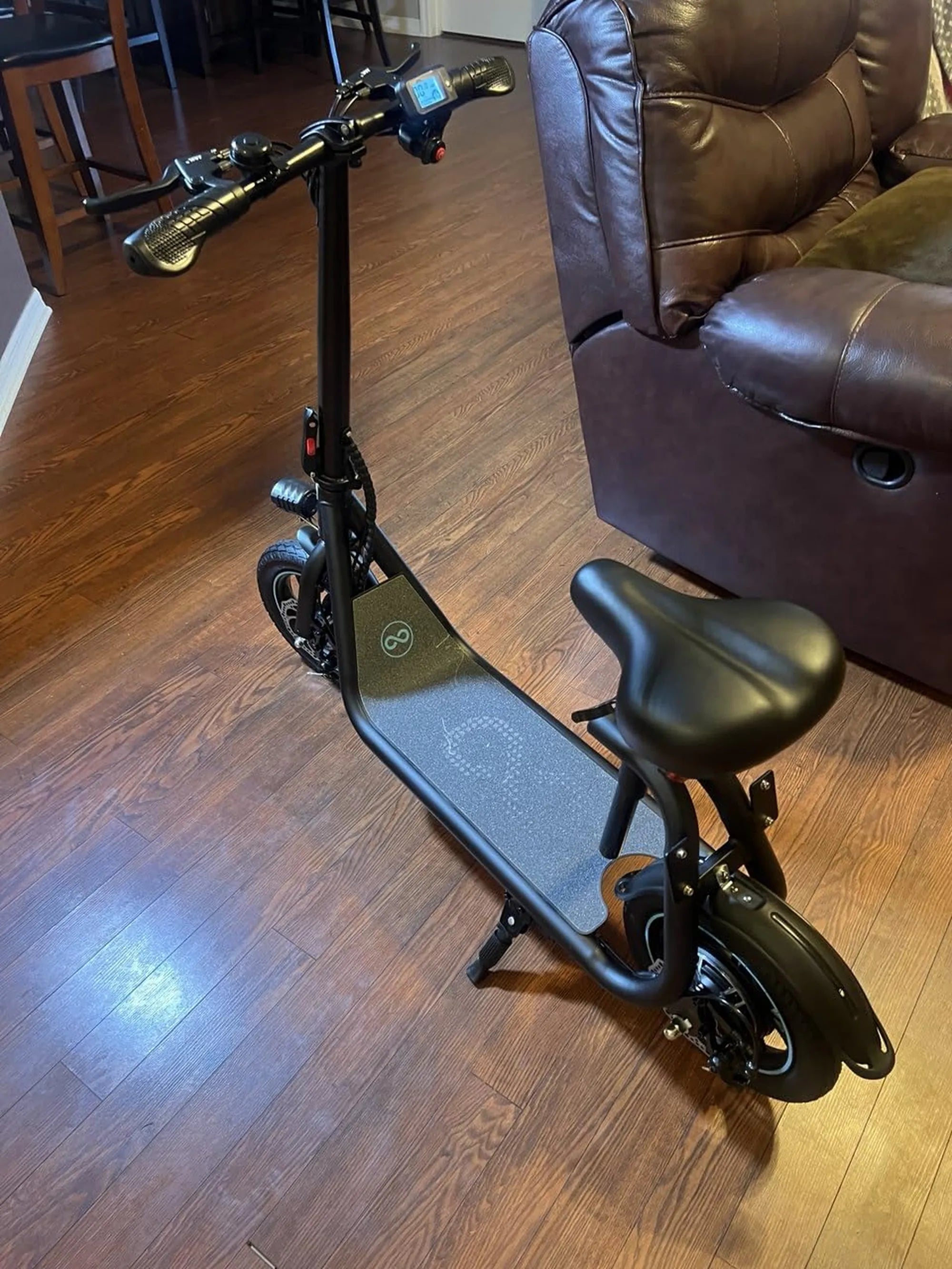
Introduction to Lightweight 3 Wheeled Mobility Scooters
A lightweight 3 wheeled mobility scooter is a specialized personal electric vehicle designed to provide stability, agility, and ease of transport for individuals with mobility challenges. These scooters bridge the gap between bulky, traditional power chairs and manual wheelchairs, offering a unique blend of independence and practicality. The core design philosophy prioritizes a compact footprint, a tight turning radius, and a manageable weight for lifting and transport.
This guide will provide a detailed, data-driven analysis of this category. You will learn the distinct advantages of the three-wheel configuration, the critical features that define a quality model, and how to compare options effectively. We will also integrate essential safety and maintenance advice, referencing industry-leading standards to ensure your investment is sound and reliable.
Key Advantages of a 3-Wheel Design for Enhanced Mobility
The choice of a three-wheel configuration over four wheels is a deliberate engineering decision that offers specific, measurable benefits for users. The primary advantage is a significantly reduced turning radius, which directly translates to superior maneuverability. This design allows the front wheel to pivot sharply, enabling navigation through tight spaces that would be challenging or impossible for a four-wheel base.
Furthermore, the three-point stance of a lightweight 3 wheeled mobility scooter often results in a more compact overall frame. This compactness is not just about footprint; it reduces the scooter's weight by eliminating components and structural members required for a four-wheel chassis. The outcome is a device that is easier to handle both during use and when loading into a vehicle.
The agility provided by this design directly impacts user confidence and independence. Navigating crowded supermarket aisles, making U-turns in residential hallways, or maneuvering through a busy café becomes a fluid, intuitive process. This design is particularly advantageous for active seniors and individuals who value spontaneity and social engagement without the anxiety of getting stuck.
Superior Maneuverability in Tight Spaces
The mechanics of a three-wheel scooter's steering system are central to its agility. With a single front wheel responsible for direction, the scooter can pivot around a central point, much like a tricycle. This allows for turning circles that can be as tight as 30 to 40 inches, depending on the model. In practical terms, this means navigating a standard 36-inch doorway or a narrow store aisle is typically effortless.
This capability is transformative for indoor use. Whether it's moving around furniture at home, visiting a doctor's office, or enjoying a day at a museum, the scooter's design keeps the user in control. The reduced risk of clipping corners or requiring multi-point turns reduces physical and mental strain, making outings more enjoyable and less taxing.
Lightweight Construction for Transport and Storage
The term "lightweight" in this context is relative but crucial. A typical lightweight 3 wheeled mobility scooter may weigh between 50 to 100 pounds, with the lightest models often featuring disassembly or folding mechanisms. Manufacturers achieve this through the use of high-strength aluminum alloys for the frame, which provide durability without excessive weight.
Portability is a multi-faceted feature. It encompasses the scooter's own weight, the ease of its disassembly process (often tool-free), and the dimensions of its largest component when broken down. A scooter that quickly separates into 2-4 pieces, each under 30 pounds, can be managed by most individuals or caregivers for loading into a car trunk or SUV. This feature is non-negotiable for users who travel or who do not have a dedicated, ground-level storage space.
Essential Features to Look for in a Lightweight Model
Selecting the right scooter requires moving beyond basic specifications to understand the features that impact daily life, safety, and long-term satisfaction. A high-quality lightweight 3 wheeled mobility scooter is defined by a synergy of performance, durability, and user-centric design. The following checklist highlights the critical components that separate adequate models from exceptional ones.
First, consider the drivetrain and controls. A smooth, responsive electronic throttle and brake system is essential for precise speed control. Look for adjustable speed settings and a simple, intuitive control panel. The seat should offer adequate padding, armrests, and easy height and swivel adjustments to ensure proper posture and comfortable transfers.
Second, evaluate the physical construction. A welded aluminum frame is standard for balancing strength and weight. Check the quality of the upholstery, the sturdiness of the tiller, and the overall fit and finish. These details are strong indicators of the manufacturer's commitment to quality and the scooter's potential longevity.
Battery Life, Range, and Charging (Emphasizing Safety)
The battery is the heart of any electric mobility device. Key metrics are voltage (V), amp-hour (Ah) capacity, and the resulting watt-hour (Wh) rating, which directly correlates to range. A typical lightweight 3 wheeled mobility scooter might feature a 12Ah or 15Ah battery, offering a real-world range of 10 to 15 miles per charge on average terrain. Always verify the "estimated" range against user reviews for real-world conditions.
Charging time is equally important. A standard charger should replenish the battery from empty to full in 4 to 8 hours. However, the most critical factor is battery safety. Insist on models that use UL-certified lithium-ion battery packs. This independent certification, a standard upheld by brands like Gyroor across their personal electric vehicle lineup, verifies that the battery has passed rigorous tests for electrical, mechanical, and environmental safety, drastically reducing risks of overheating or failure.
Portability: Weight Limits, Disassembly, and Folding Mechanisms
Portability hinges on three data points: the scooter's weight capacity, its own weight, and the disassembly process. The weight capacity must comfortably support the user plus any carried items (like a shopping bag); common limits are 250 to 300 pounds. The scooter's curb weight should be clearly listed; the lightest frames start around 50 pounds.
The disassembly mechanism is a key differentiator. The best systems are tool-free, using quick-release levers or pins to separate the scooter into the seat, battery, and front/rear sections in under a minute. Some models offer a folding frame, where the main body folds in half, which can be even faster but may trade off some structural rigidity. Always check the weight of the heaviest individual piece to ensure it can be safely lifted.
Durability and All-Terrain Readiness
While designed for paved surfaces, a robust lightweight 3 wheeled mobility scooter should handle common urban obstacles like curb cuts, driveway inclines, and slightly uneven pavement. Ground clearance of 2-3 inches is standard. Tire choice is vital: pneumatic (air-filled) tires provide a smoother ride by absorbing bumps but require maintenance; solid (airless) tires eliminate flats but can transmit more vibration.
For long-term reliability, protection from the elements is crucial. An IPX5 water-resistant rating signifies the scooter can withstand low-pressure water jets from any direction. This means it is protected against rain, puddles, and accidental splashes, a feature that significantly enhances the scooter's versatility and durability for everyday use. This level of protection is a core design principle for Gyroor's electric scooters and e-bikes, ensuring reliability for over 100,000 riders.
Comparing Your Options: Lightweight 3-Wheelers vs. Other Scooter Types
Choosing the right mobility aid requires understanding the landscape. A lightweight 3 wheeled mobility scooter occupies a specific niche, and comparing it to other common options clarifies its ideal use case. The table below provides a high-level comparison based on key attributes.
| Feature | Lightweight 3-Wheel Scooter | Heavy-Duty 4-Wheel Scooter | Power Wheelchair |
|---|---|---|---|
| Primary Use | Indoor/Urban Errands, Social Outings | Outdoor/Rough Terrain, Long Distances | Full-Time Indoor/Outdoor Mobility |
| Maneuverability | Excellent (Tightest Turning) | Good (Stable, Wider Turn) | Excellent (Zero-Turn Possible) |
| Portability | Very Good (Often Disassemblable) | Poor (Heavy, Rarely Portable) | Fair to Poor (Heavy, Complex) |
| Stability | Good on Pavement | Excellent on Uneven Ground | Excellent (Low Center of Gravity) |
| User Profile | User can transfer, seeks agility | User needs outdoor stability & range | User requires full-time seated support |
Lightweight 3-Wheel vs. Heavy-Duty 4-Wheel Scooters
The fundamental trade-off is agility versus stability. A four-wheel scooter, with its wider base, offers superior stability on uneven ground, slopes, and outdoor terrain. It often has a higher weight capacity and a larger battery for extended range, making it suitable for all-day use in parks or large properties. However, this comes at the cost of size, weight, and a much larger turning radius.
Conversely, a lightweight 3 wheeled mobility scooter excels in environments where space is at a premium. Its value is proven in trips to the mall, the grocery store, or visiting friends in apartments. If your primary activities involve navigating built environments and you need to transport the scooter regularly, the three-wheel model is almost always the superior, more practical choice.
Lightweight 3-Wheel Scooters vs. Power Wheelchairs
This comparison often centers on user ability and intended use. Power wheelchairs are designed for individuals who spend most or all of their day seated in the device. They offer advanced seating options (like tilt or recline), are controlled via a joystick often mounted on the armrest, and can have a zero turning radius. They are medical devices, often prescribed and covered by insurance.
A lightweight 3 wheeled mobility scooter is typically a consumer product for individuals who can walk short distances and transfer on and off the seat independently. It uses a tiller for steering, which requires upper body mobility. The scooter is ideal for intermittent use—running errands, attending events—where the user values a more open, vehicle-like riding position and the ease of disassembly for transport. It is a tool for expanding mobility, not necessarily replacing all ambulation.
Making the Right Choice: A Buyer's Checklist
Armed with knowledge, the final step is a systematic evaluation. Use this actionable checklist to assess your needs against available models, ensuring no critical detail is overlooked. This process will help you identify the lightweight 3 wheeled mobility scooter that truly fits your lifestyle.
Start by documenting your physical requirements and daily goals. Then, match those needs to the technical specifications and design features of potential scooters. Always prioritize verified safety certifications and warranty support over marginal price differences, as these factors protect your investment and well-being in the long term.
Assessing Your Primary Use Case and Environment
Be specific. Will 80% of use be indoors on smooth flooring? Or will it involve daily trips on sidewalk pavement with occasional grassy park paths? For indoor/urban use, a model with solid tires and minimal ground clearance is sufficient. If you encounter cracked sidewalks or slight inclines, look for models with enhanced suspension or pneumatic tires. Measure your doorways, trunk space, and any tight turns in your home to establish minimum requirements for width and turning radius.
Consider frequency and distance. How many miles do you plan to travel between charges? Add a 20-30% buffer to your estimated daily distance to find the minimum required range, accounting for battery performance degradation over time. This ensures you won't be stranded and reduces daily charging anxiety.
Prioritizing Safety, Support, and Warranty
Safety is non-negotiable. Confirm the UL-certification for the battery pack. Check that the scooter has essential safety features like automatic electromagnetic brakes (which engage when the throttle is released), anti-tip wheels, and bright LED lighting for visibility. The electrical system should have built-in protection against over-current, short-circuit, and over-discharge.
Support is your long-term safety net. A strong warranty reflects manufacturer confidence. Look for a comprehensive 1-year warranty that covers the frame, electronics, and drive train. The value of accessible, knowledgeable customer service—like the US-based support offered by established brands—cannot be overstated when you need troubleshooting help or a replacement part. This support network is a critical component of the product's overall value.
Test Ride and Final Considerations
Whenever possible, arrange a test ride. This is the only way to assess real-world comfort, control sensitivity, and stability. Pay attention to seat comfort during a 15-minute sit, the ease of adjusting the tiller angle, and the smoothness of acceleration and braking. Ensure the controls are within easy reach and legible.
Finally, review accessory compatibility. Do you need a storage basket, a cup holder, a oxygen tank holder, or a weather canopy? Verify that the model has mounting points or compatible accessories available. Check the availability of replacement parts like batteries, tires, and seats to ensure the scooter can be maintained for years to come.
Frequently Asked Questions (FAQ)
Q1: How far can a typical lightweight 3 wheeled mobility scooter travel on a single charge?
A: The range varies by model, battery capacity, user weight, and terrain. On average, you can expect between 10 and 15 miles per charge. Always check the manufacturer's watt-hour (Wh) rating and look for real-world user reviews for the most accurate estimate. Models with larger, UL-certified batteries may reach the higher end of this range.
Q2: Is a lightweight 3 wheeled mobility scooter stable enough for outdoor use?
A> Yes, for typical outdoor paved environments like sidewalks, park paths, and parking lots, they are very stable. Their three-wheel design provides good stability on level and slightly uneven surfaces. For frequent use on gravel, grass, or steep hills, a four-wheel scooter with all-terrain tires might be a more stable choice.
Q3: How do I transport a lightweight 3 wheeled mobility scooter?
A> Most quality models are designed for transport via a car. They feature tool-free disassembly into 3-4 main components (seat, battery, front section, rear section). The heaviest piece is usually under 35 pounds. These pieces can then be placed in a car trunk or back seat. Some ultra-portable models feature a folding frame that does not require disassembly.
Q4: What maintenance does a lightweight 3 wheeled mobility scooter require?
A> Maintenance is minimal but important. Key tasks include: keeping the battery charged (avoid fully draining it), checking tire pressure if using pneumatic tires, keeping the scooter clean and dry, and periodically checking for loose bolts or connections. Always refer to the user manual for specific maintenance schedules and instructions.
Q5: Are these scooters covered by insurance or Medicare?
A> Medicare Part B may cover a mobility scooter if it is deemed medically necessary by a doctor to move around your home, and you have a face-to-face examination and a written prescription. Coverage often has specific criteria and may require using a Medicare-approved supplier. Most consumer purchases of lightweight models for primary outdoor/errand use are typically out-of-pocket. Always consult with your insurance provider and physician for definitive guidance.
Your Path to Confident Mobility
A lightweight 3 wheeled mobility scooter represents a powerful tool for reclaiming independence and engaging with the world on your terms. The key to a successful purchase lies in meticulous research, aligning the scooter's capabilities with your specific daily patterns and physical needs. By prioritizing verified safety features like UL-certified batteries, robust construction with water resistance, and strong warranty support, you invest in more than a device—you invest in reliable, long-term freedom.
Remember, the best scooter is the one you will use confidently and comfortably every day. It should feel like an extension of your will, not a cumbersome piece of equipment. For those seeking a blend of innovation, safety, and proven reliability, exploring a brand with a track record of engineering excellence is a logical next step. Discover a range of personal electric vehicles designed with these principles at their core. Browse the full Gyroor collection at gyroorboard.com to find the solution that moves you forward.
2 Wheel Drive Scooter: Ultimate Guide to Dual-Motor Power & Traction
Best Cheap Pro Scooter: The 2024 Guide to Value & Performance