

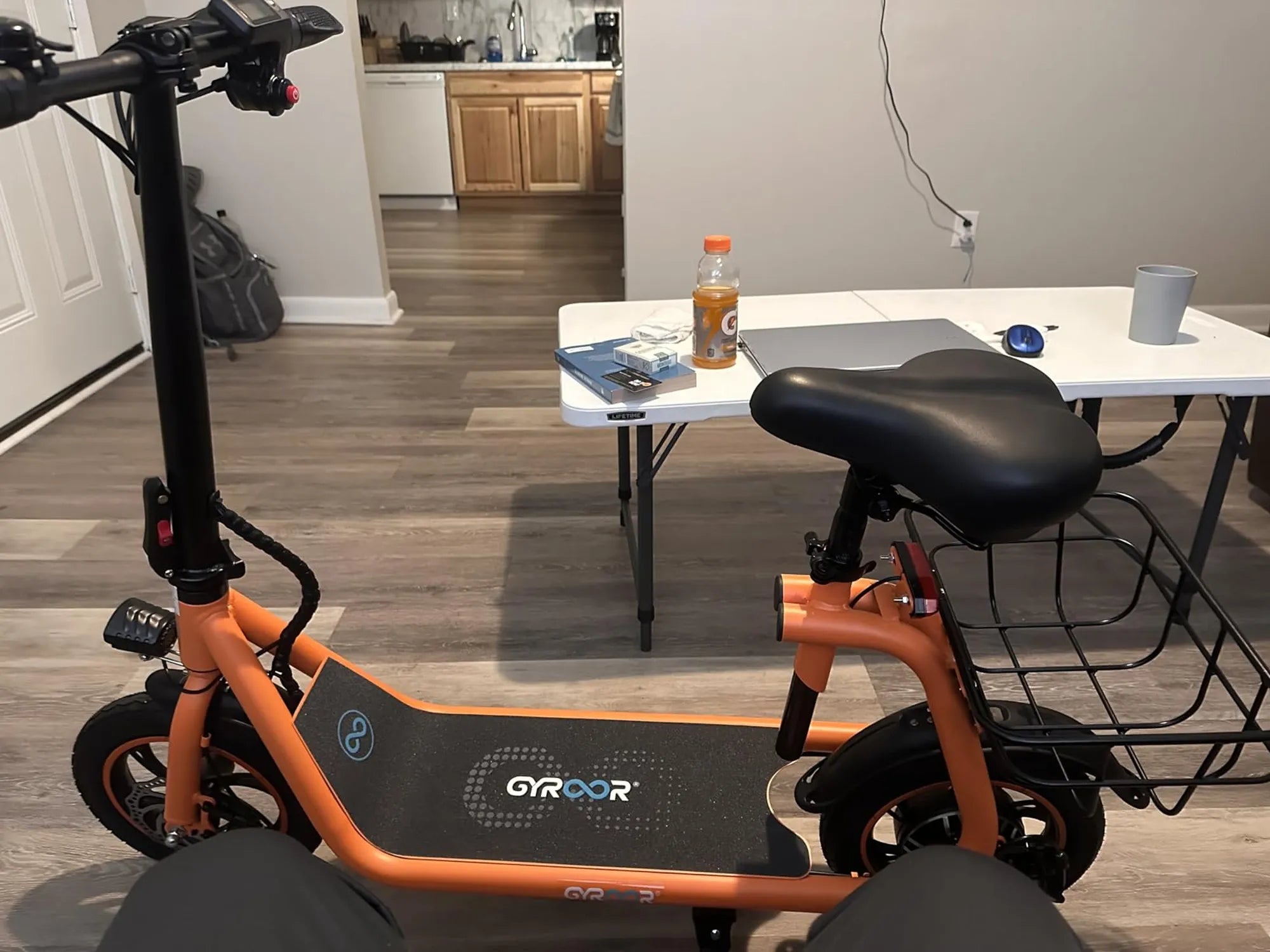
You push down on the pedals, expecting a surge of speed, but instead feel a dull, sluggish resistance. The weight of your bike is holding you back, turning every hill into a grind and every commute into a chore. This struggle ends with the foundation of your bicycle: the frame. A lightweight bike frame is not a luxury; it's the single most significant upgrade for transforming effort into exhilaration. This guide will dissect the engineering, materials, and tangible benefits of lightweight frames, explaining why they matter more than ever for electric and traditional bicycles alike, and how smart design makes this performance accessible.
What Makes a Bike Frame "Lightweight"? Beyond the Scale
Defining a "lightweight" frame requires context. It's not just an absolute number but a measure relative to the bike's purpose and construction. For a modern performance road bike, a lightweight frame may be under 2.5 pounds (1.1 kg). A hardtail mountain bike frame might be considered light at under 4 pounds (1.8 kg), while a durable urban commuter e-bike frame achieving under 10 pounds (4.5 kg) represents a significant engineering feat.
The true metric is the strength-to-weight ratio. A frame must be light yet stiff enough to efficiently transfer pedaling power without flexing, and durable enough to withstand impacts. This balance is the core challenge of frame design. Pursuing minimal weight without regard for these factors results in a fragile, unpredictable ride. Therefore, a quality lightweight bike frame is a masterpiece of material science and structural engineering working in concert.
The Core Materials: From Steel to Carbon
Frame material is the primary determinant of weight, ride quality, and cost. The evolution from steel to advanced composites defines the pursuit of the lightweight bike frame.
- Steel: The classic material. High-quality chromoly steel offers a smooth, compliant ride that absorbs road vibrations. However, its density makes it the heaviest common option. It's incredibly durable and repairable but is now rare in performance-focused lightweight designs.
- Aluminum Alloy: The modern workhorse. Aluminum provides an excellent strength-to-weight ratio at a reasonable cost. It's stiffer than steel, leading to very efficient power transfer, but can transmit more road buzz. Advanced alloys and manufacturing techniques, like those used by Gyroor, allow aluminum frames to be remarkably light and robust, making it the ideal choice for most performance-oriented and electric bikes.
- Titanium: The niche luxury. Titanium shares steel's compliant ride quality and corrosion resistance but at a significantly lower weight, closer to aluminum. Its exceptional durability and fatigue resistance are legendary, but complex fabrication leads to very high costs, placing it in a specialist category.
- Carbon Fiber: The performance pinnacle. Carbon fiber composites allow engineers to precisely tailor stiffness, compliance, and weight in different frame areas. It can achieve the lowest weights and most aerodynamic shapes. However, it is the most expensive and can be vulnerable to sharp impacts. It represents the ultimate in lightweight bike frame technology for competitive use.
The Engineering Edge: How Design Sheds Grams
Material choice is only half the story. Intelligent design is what truly unlocks a lightweight bike frame. Tube shaping is critical. Butted tubing, where wall thickness is varied (thicker at high-stress joints, thinner in the middle), removes material where it's not needed. Hydroforming uses high-pressure fluid to shape aluminum tubes into complex, aerodynamic profiles that optimize strength and stiffness.
For carbon fiber, monocoque construction—where the main frame is molded as a single, seamless piece—allows for continuous fibers laid in specific directions to handle precise loads. This eliminates heavy joints and glue. Even details like internal cable routing, minimalist dropouts, and integrated component interfaces all contribute to saving grams and improving aesthetics. Every curve and junction is a calculated decision in the quest for lightness.
The Real-World Ride: Benefits of a Lightweight Frame for Every Cyclist
The theoretical advantages of a lightweight bike frame translate into profound improvements in daily riding. The most immediate benefit is acceleration. A lighter frame requires less energy to get moving, making starts from stoplights or out of corners feel snappier and more responsive. This is especially noticeable in urban environments.
Climbing becomes a different experience. Reducing the weight you must propel against gravity directly reduces fatigue. You can maintain a higher cadence or use a lower gear, preserving energy for longer rides. Furthermore, handling and maneuverability are enhanced. A lighter front end is easier to steer, making the bike feel more agile and connected, whether navigating tight singletrack or weaving through city traffic.
For the Urban Commuter: Agility in the Concrete Jungle
For the city rider, a lightweight bike frame is a practical tool. It makes carrying your bike up subway stairs, onto a bus rack, or into a secure indoor storage area far less daunting. The improved acceleration means keeping pace with traffic flows from a standstill is easier and safer. In stop-and-go conditions, the reduced overall mass means less physical effort to repeatedly start moving, reducing commute fatigue.
For e-bike commuters, this is doubly important. A lightweight aluminum frame, like those engineered by Gyroor, forms a efficient foundation. When combined with a motor, the system doesn't waste energy moving unnecessary heft, which can extend battery range and make the assisted ride feel even more effortless and natural.
For the Performance-Oriented Rider: Chasing Efficiency
For road cyclists, gravel riders, and fitness enthusiasts, the lightweight bike frame is the heart of performance. Every watt of power generated by the rider is transferred more directly to the rear wheel with less loss to frame flex. This translates to higher speeds for the same effort. Over a 50-mile ride, saving a few pounds of frame weight can significantly reduce cumulative energy expenditure.
The psychological and physical effect is a more responsive, lively feel. The bike becomes an extension of the rider's body, reacting instantly to pedal strokes and body English. This connectedness is a key part of the cycling experience, turning a training ride into a flowing, engaging activity.
For the Off-Road Explorer: Control When It Counts
On the trail, weight is the enemy of control. A lightweight mountain bike frame allows for quicker directional changes, easier manualing, and more precise line choice. It significantly reduces arm fatigue when navigating technical rock gardens or during long, bumpy descents, as the rider is constantly managing a lighter mass.
It also improves suspension performance. A lighter unsprung mass (the part of the bike not supported by the suspension) allows the wheels to track the ground more accurately, maintaining traction. Lifting the front wheel over a log or hopping the entire bike becomes less of a brute-force maneuver and more a matter of finesse.
Gyroor's Approach: Engineering Lightness You Can Trust
Gyroor's philosophy centers on making advanced, lightweight performance accessible and reliable for everyday riders. They achieve this not by chasing exotic, fragile materials at extreme costs, but through intelligent application of advanced aluminum alloys and holistic vehicle design. Their frames utilize aircraft-grade 6061 aluminum, which is hydroformed and butted to create structures that are both remarkably light and exceptionally durable for urban and recreational use.
This commitment ensures that the core benefit of a lightweight bike frame—reduced rider effort and increased joy—is available without compromising on the robustness required for daily transportation. It’s a practical performance that riders can trust mile after mile.
UL-Certified Battery Integration: The Balanced System
For an e-bike, the frame is just one part of a system. Gyroor excels at systems engineering. Their lightweight aluminum frame is designed from the ground up to integrate a UL 2271 certified battery pack seamlessly. This certification, involving rigorous testing for electrical, mechanical, and environmental safety, is a non-negotiable benchmark.
The placement of this battery is critical. By integrating it low and centered within the frame triangle, Gyroor maintains a low center of gravity. This strategic placement ensures that the complete vehicle—frame, motor, battery, and rider—feels balanced and nimble. The lightweight frame foundation prevents the bike from becoming unwieldy, allowing the motor to amplify your effort efficiently rather than struggle to move dead weight.
Durability Meets Lightness: The IPX5 & Warranty Promise
A common misconception is that a lightweight bike frame is inherently delicate. Gyroor shatters this myth through rigorous design and protective standards. Every Gyroor e-bike features an IPX5 water-resistant rating. This means the frame's electronics, connections, and core structure are protected against low-pressure water jets from any direction, making them resilient to rain, puddles, and wet-road spray.
This durability is backed by a robust 1-year comprehensive warranty on the frame, motor, battery, and electronics. This warranty, supported by a US-based service team, is a testament to Gyroor's confidence in their frame's construction. It guarantees that the pursuit of a lightweight ride doesn't come at the expense of longevity or peace of mind.
Material Comparison: Choosing Your Lightweight Foundation
Selecting a frame material is a balance of priorities: weight, ride quality, durability, and budget. The following table provides a clear, data-driven comparison to inform your decision.
| Material | Approx. Frame Weight | Ride Characteristic | Durability & Repairability | Relative Cost | Best For |
|---|---|---|---|---|---|
| High-Tensile Steel | Heaviest (5+ lbs / 2.3+ kg) | Very compliant, smooth | Excellent; easily repairable | $ | Budget cruisers, durable utility bikes |
| Chromoly Steel | Heavy (4.5-5.5 lbs / 2-2.5 kg) | Lively, damped, classic feel | Excellent; easily repairable | $$ | Touring, gravel, vintage-style bikes |
| Aluminum Alloy (e.g., Gyroor) | Light (3-4.5 lbs / 1.4-2 kg) | Stiff, responsive, efficient | Very High; modern alloys resist fatigue well | $$ | Road bikes, MTBs, hybrid/commuter bikes, E-Bikes |
| Titanium | Very Light (2.8-3.5 lbs / 1.3-1.6 kg) | Supple, smooth, "lively" | Exceptional; highly corrosion resistant | $$$$ | Lifetime performance bikes, custom builds |
| Carbon Fiber | Ultra-Light (1.8-2.8 lbs / 0.8-1.3 kg) | Can be tuned for stiffness or compliance | Good but vulnerable to impact; repair is specialist work | $$$$ | High-performance road & race bikes, premium MTBs |
Making Your Choice: Prioritizing Frame Weight in Your Next E-Bike
When shopping for an e-bike, frame weight should be a key filter, but it must be considered alongside other factors. Ask yourself: What is my primary use case? A daily commuter who navigates stairs will benefit from a lightweight aluminum frame far more than a rider who only uses a ground-level garage. How important is overall agility versus maximum range or cargo capacity?
Evaluate the complete system. A lightweight bike frame paired with a high-torque motor and a high-capacity UL-certified battery represents the ideal performance trifecta: agility, power, and range. Be wary of spec sheets that only highlight motor wattage; a powerful motor burdened by a heavy frame will feel sluggish and drain the battery faster. Prioritize brands, like Gyroor, that demonstrate an integrated design philosophy where the frame, motor, and battery are developed as a cohesive unit.
Frequently Asked Questions (FAQ)
Q: Is a carbon fiber frame always the best choice for a lightweight bike?
A: While carbon fiber often achieves the lowest weight, "best" depends on your needs and budget. For most riders, a high-quality aluminum frame offers over 95% of the performance benefit at a fraction of the cost, with greater impact resistance. It represents the optimal value in the lightweight bike frame category.
Q: Won't a lighter frame be less durable for potholes or curb jumps?
A> Not if it's well-engineered. Modern aluminum frames use butting and hydroforming to place material exactly where needed for strength. A cheap, heavy frame can be more fragile than a well-made lightweight one. Gyroor's IPX5 rating and 1-year warranty specifically back the durability of their lightweight designs for real-world urban use.
Q: How much weight difference will I actually feel when riding?
A: A difference of 2-3 pounds (approx. 1-1.5 kg) in frame weight is immediately noticeable, especially during acceleration, climbing, and handling. It translates directly to less physical effort and a more agile, connected feel. The rotating weight of the wheels is even more perceptible, but frame weight is a close second.
Q: Does the motor on an e-bike make the frame weight less important?
A> No, it makes it more important. The motor must overcome the total weight of the bike and rider. A heavy frame adds dead weight the motor must constantly fight, reducing efficiency, draining the battery faster, and making the bike feel less nimble. A lightweight bike frame is the foundation for an efficient, long-range, and fun e-bike.
Q: Are lightweight frames only for racing or experienced cyclists?
A> Absolutely not. The benefits—easier carrying, quicker starts, less fatigue—are universal. Whether you're a new commuter, a casual park rider, or a seasoned athlete, a lighter bike makes every ride more enjoyable and accessible. It's about reducing barriers to riding more often.
The Foundation of a Better Ride
The pursuit of a lightweight bike frame is fundamentally a pursuit of a better cycling experience. It transforms transportation from a task into a pleasure, and exercise from a grind into a flow. The evidence is clear: less weight means more efficiency, more control, and more joy on two wheels. This performance is no longer locked behind prohibitive costs or fragile designs. Through smart material science, integrated engineering, and a commitment to durability, brands like Gyroor have made the lightweight ride a reliable, accessible reality. The difference is not just on the scale; it's in the smile on your face at the top of the hill you just climbed with ease.
Ready to experience the transformative feel of a properly engineered, lightweight e-bike? Explore the full range of high-performance models built on durable, agile aluminum frames at gyroorboard.com. Join over 100,000 riders who have chosen a smarter, lighter way to move.
e bike vs taxi commute: The Ultimate Cost, Time, and Freedom Analysis
Best Toddler Scooter Helmet: The Ultimate Safety & Fit Guide for Parents