



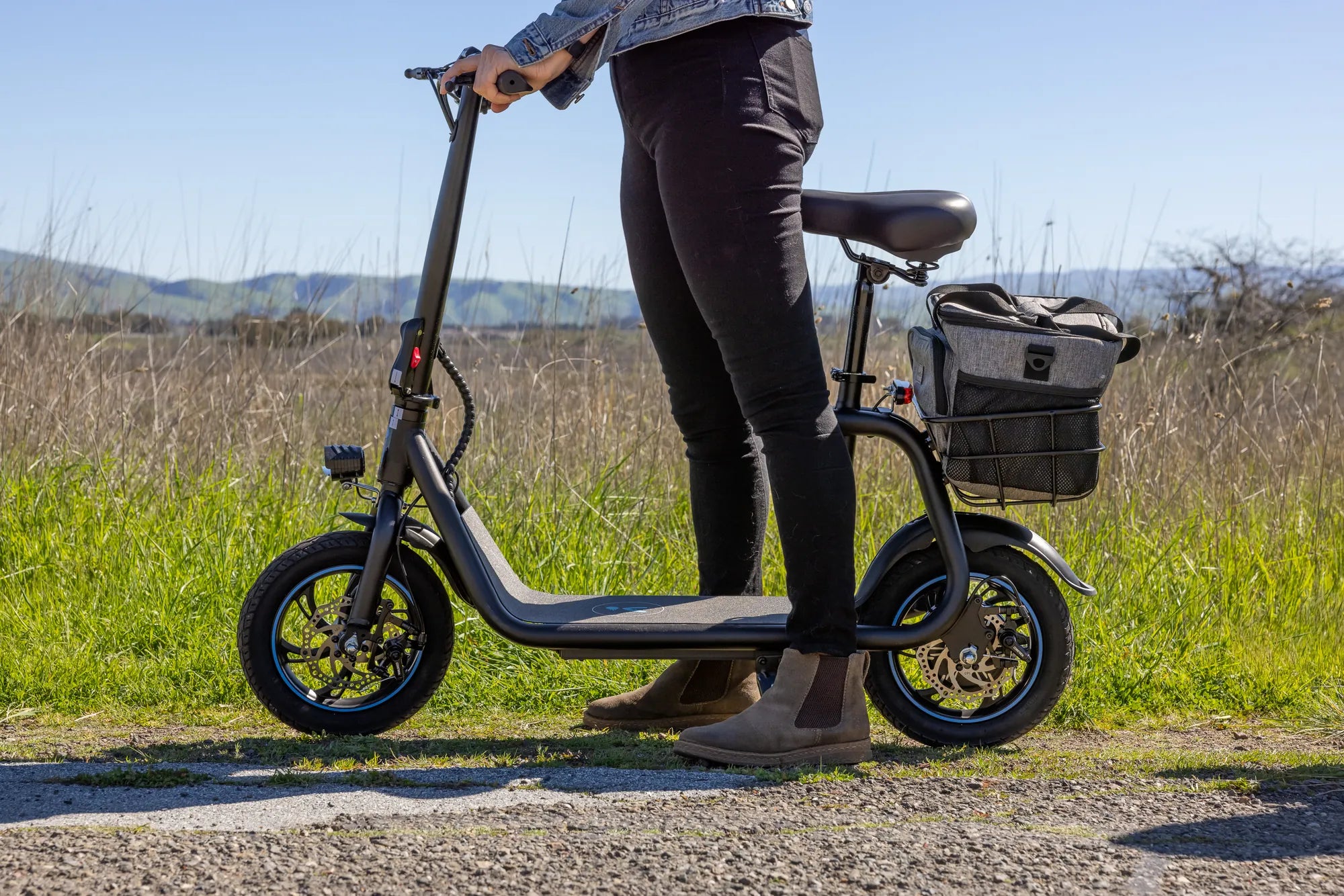
Introduction to Lightweight Electric Scooters for Women
For the modern urban commuter, efficiency and convenience are paramount. Lightweight electric scooters for women have emerged as a definitive solution, specifically engineered to address the unique logistical challenges faced in city environments. These vehicles are not merely scaled-down versions of standard scooters; they represent a focused category prioritizing portability, manageability, and integrated safety. The ultimate urban commuting solution elegantly bridges the gap between personal transportation needs and the practical realities of navigating crowded streets, public transit, and limited storage.
This article will explore the multifaceted advantages of choosing a lightweight model. We will analyze the critical design features that make these scooters a game-changer, from frame materials to battery technology. Furthermore, we will provide a detailed, data-driven guide for selecting a scooter that aligns with individual commute patterns and lifestyle requirements. Leading brands like Gyroor, trusted by over 100,000 riders, demonstrate how advanced engineering can deliver a lightweight scooter without sacrificing the range, durability, or safety that commuters depend on.
Why Lightweight Design is a Game-Changer for Female Riders
The primary advantage of a lightweight electric scooter is its transformative impact on daily logistics. A scooter weighing under 30 pounds, as opposed to models exceeding 40 or 50 pounds, fundamentally changes the user experience. This reduced mass translates directly to enhanced practicality, making the scooter a truly seamless part of a multi-modal commute. The physical effort required to carry, lift, or maneuver the scooter is drastically reduced, increasing both accessibility and frequency of use.
Beyond simple portability, a lighter frame contributes significantly to rider confidence and control. At lower speeds, during tight turns, or when navigating pedestrian-heavy areas, a manageable weight allows for quicker corrections and more intuitive handling. This is crucial for urban environments where obstacles can appear suddenly. The psychological barrier of handling a heavy, cumbersome device is eliminated, encouraging more riders to adopt this efficient mode of transport.
Data from user behavior studies indicates that commuters are far more likely to utilize a portable scooter for "last-mile" journeys if it can be easily carried onto a bus, train, or into an office. A lightweight design ensures the scooter is an asset, not a burden. This practicality extends to home storage, where a lighter scooter can be effortlessly stored in a closet, under a desk, or in a small apartment without requiring dedicated heavy-lift storage solutions.
The Portability Factor: From Subway to Office
Consider a typical multi-modal commute: a rider travels from home to a subway station, rides the train, and then covers the final distance to the office. A lightweight, foldable electric scooter excels in this scenario. The rider can effortlessly unfold the scooter for the initial leg, fold it compactly to carry onto the train without obstructing other passengers, and quickly deploy it again for the final segment. This fluid integration is only possible with a design that prioritizes both low weight and a fast, secure folding mechanism.
The combined metric of folded dimensions and weight is critical. A scooter that folds into a compact footprint but remains heavy loses its practical advantage. Leading models achieve a balance, using high-strength aluminum alloys to keep weight down while maintaining structural integrity. This allows the commuter to maintain a steady pace without the fatigue associated with carrying a heavy load, making the scooter a sustainable daily choice rather than an occasional option.
Enhanced Safety Through Manageable Weight
Safety in personal mobility is multifaceted, and vehicle weight plays a surprisingly direct role. A scooter that a rider can comfortably control both on and off the road is inherently safer. In emergency situations—such as needing to quickly step off, avoid a collision, or navigate up a curb—a manageable weight allows for swift, decisive action. A rider is less likely to lose balance or struggle with a scooter that becomes an uncooperative mass.
Furthermore, at stops, intersections, or in crowded areas, a lighter scooter is easier to stabilize with one foot on the ground. This improves low-speed control and reduces the risk of tipping. The confidence that comes from knowing you can physically manage your vehicle in all situations reduces rider anxiety and promotes a more alert, defensive riding posture. It transforms the scooter from a machine that dictates terms to a tool that responds intuitively to the rider's input.
Key Features to Look for in a Women’s Lightweight E-Scooter
Selecting the right lightweight electric scooter requires looking beyond the spec sheet weight. A holistic evaluation of key features ensures the scooter meets real-world demands. The core checklist should include a robust motor capable of handling mild inclines, a reliable battery with sufficient range, effective braking systems, durable construction with water resistance, and intuitive controls. Each component must be optimized to contribute to the overall lightweight philosophy without becoming a point of failure.
The motor is the heart of performance. A 300W to 500W motor is typically sufficient for urban flats and gentle hills, providing a balance of power and energy efficiency that preserves battery life. Brushless hub motors are preferred for their reliability and low maintenance. Paired with this, the braking system is non-negotiable; a combination of electronic (e-brake) and mechanical (disc or drum) braking offers redundancy and confident stopping power in all conditions.
Deck size and texture are often overlooked but vital for comfort and safety. A deck wide enough for a natural stance, covered with a non-slip surface, ensures stability during rides. Additionally, features like integrated lighting (front and rear), a clear display for speed and battery level, and a loud bell or horn are essential for safe urban navigation. These features should be integrated cleanly into the design, not added as bulky afterthoughts that compromise the sleek, portable form factor.
The Critical Balance: Weight vs. Performance (Range & Speed)
The most common concern regarding lightweight scooters is the potential sacrifice of performance, particularly range and speed. However, modern engineering has largely decoupled these factors. The key lies in advanced lithium-ion battery cells with high energy density, such as the UL-certified packs used by Gyroor. These batteries store more power in a smaller, lighter package, enabling a scooter under 30 pounds to achieve a real-world range of 15-22 miles on a single charge.
Speed is similarly optimized for urban contexts. A top speed of 15-20 mph is ideal, providing a pace that is faster than cycling in traffic but manageable and safe for bike lanes and shared paths. Attempting to achieve motorcycle-like speeds in a ultra-lightweight frame is often counterproductive, compromising stability and safety. The goal is efficient, reliable transit, not high-speed thrill riding. Therefore, the performance profile of a well-designed lightweight scooter is tailored precisely for the urban commute, maximizing utility within the weight constraint.
Built for Real Life: Water Resistance and Durability
A lightweight scooter must not be a delicate one. Urban commuting exposes a vehicle to puddles, wet streets, dust, and vibrations from imperfect pavement. An IPX5 water resistance rating, which indicates protection against water jets from any direction, is a critical benchmark. This rating, found on Gyroor models, means the scooter can safely handle wet conditions and light rain, a necessity for reliable daily use.
Durability is achieved through intelligent material selection and construction. Aerospace-grade aluminum alloys provide an excellent strength-to-weight ratio for the frame and stem. Reinforced folding mechanisms and locking points prevent wobble and wear over time. Solid or air-filled tires with some degree of suspension (either in the deck or stem) absorb shocks, protecting both the scooter's components and the rider's comfort. This combination ensures the scooter is resilient enough for daily use while maintaining its lightweight advantage.
Gyroor’s Approach: Engineering Lightweight Scooters Without Compromise
Gyroor has established its position in the market by applying a philosophy of no-compromise engineering to the lightweight scooter category. Recognizing that commuters need reliability above all, Gyroor integrates its core brand promises—UL-certified battery safety, IPX5 water resistance, and robust construction—into models designed for exceptional portability. This approach ensures that the pursuit of a lower weight does not come at the expense of performance or peace of mind.
The use of UL-certified battery packs is a cornerstone of this strategy. These batteries undergo rigorous testing for over 500 charge cycles, ensuring long-term reliability and safety, which are paramount concerns for a device used daily. By sourcing high-energy-density cells from reputable suppliers and packaging them with advanced battery management systems (BMS), Gyroor delivers consistent range without resorting to heavier, bulkier battery packs. This technical proficiency directly enables the lightweight design.
Furthermore, Gyroor’s design process focuses on holistic integration. Components are not merely assembled; they are co-engineered to save weight and space. The motor, controller, and wiring harness are optimized for efficiency, reducing heat and energy waste. The frame is designed with strategic reinforcement only where needed, eliminating unnecessary material. The result is a product line where each model feels solid and capable, defying the expectation that "lightweight" equates to "flimsy."
A Closer Look at Warranty and Support: Peace of Mind Matters
For a commuter who relies on their scooter for daily transportation, the warranty and customer support are as critical as the scooter's physical specifications. Gyroor’s standard 1-year comprehensive warranty on the scooter, including the battery and motor, provides a significant safety net. This warranty period reflects confidence in the product's durability and covers defects in materials and workmanship, ensuring the rider is not stranded by a premature component failure.
Accessible, knowledgeable customer support transforms a product purchase into a long-term relationship. The availability of clear documentation, tutorial videos, and responsive service channels means that maintenance questions or minor issues can be resolved quickly, minimizing downtime. This ecosystem of support is a key differentiator for a brand like Gyroor, which serves over 100,000 riders across North America and Europe. It underscores the commitment to the rider's experience beyond the initial sale, making the lightweight scooter a truly dependable commuting partner.
Making the Choice: Practical Considerations Before You Buy
Armed with an understanding of features and brand philosophy, the final selection should be guided by a personal, practical assessment. This involves a honest evaluation of your specific commute, physical comfort, and lifestyle. A data-driven approach will lead to a scooter that feels tailor-made, rather than a compromise. Start by mapping your most frequent routes and identifying the constraints and requirements they present.
Calculate the total round-trip distance of your typical commute and add a 25-30% buffer. This buffer accounts for factors like battery degradation over time, colder weather reducing efficiency, and occasional detours. If your round-trip is 10 miles, look for a scooter with a manufacturer-stated range of at least 13-15 miles to ensure you never face a drained battery mid-commute. This realistic planning prevents "range anxiety" and ensures consistent reliability.
Also, consider the terrain. Are there steep hills? If so, prioritize motor power (350W minimum) and torque over top speed. What is the pavement quality? Larger, air-filled tires (8.5 to 10 inches) with some suspension will provide a smoother ride on rough surfaces compared to smaller, solid tires. Finally, visualize where the scooter will be stored at both ends of your journey—under a desk, in a locker, or at home. Verify that the folded dimensions fit those spaces comfortably.
Assessing Your Commute: Distance, Terrain, and Storage
Break down your commute into measurable segments. Use mapping tools to get precise distances for the segments you plan to scoot. Note the maximum incline you'll encounter; a 10% grade requires significantly more power than a flat road. Identify whether your route uses bike lanes, shared paths, or requires sidewalk riding (where local laws permit), as this affects desired maneuverability and speed settings.
Storage is a two-part consideration: portability during the commute and security at your destination. A lightweight, foldable scooter should be easy to carry briefly and tuck away. At your destination, will you need to carry it up flights of stairs? Is there a secure, dry place to store it? Answering these questions will clarify the importance of the scooter's folded weight and dimensions. For those using public transit, a scooter that stands upright when folded or has a carry strap can be immensely helpful.
Safety Gear and Riding Etiquette: Completing Your Commute Kit
The scooter itself is only one component of a safe commuting system. Investing in proper safety gear is non-negotiable. A certified bicycle or multi-impact helmet is the most important item. Additionally, consider high-visibility clothing or reflective accessories, especially for evening commutes. While many scooters have built-in lights, adding extra rear-facing LEDs increases your visibility to traffic.
Riding etiquette ensures harmony with other road and path users. Always yield to pedestrians, signal your intentions clearly with hand signals, and avoid sudden movements. Use a bell or polite verbal warning when passing. Obey local traffic laws regarding where scooters are permitted to ride (e.g., bike lanes vs. roads vs. sidewalks). Park your scooter considerately, ensuring it does not block pathways, ramps, or building entrances. Being a responsible rider promotes safety for everyone and fosters positive perceptions of micro-mobility.
Comparison of Lightweight Scooter Considerations
| Feature | Priority for Urban Commute | Ideal Specification | Trade-off to Consider |
|---|---|---|---|
| Weight | Very High | Under 30 lbs (13.6 kg) | Lower weight can limit battery size/motor power if not well-engineered. |
| Range | High | 15-22 miles real-world | Larger range requires bigger battery, increasing weight and cost. |
| Motor Power | Medium-High | 300W - 500W | Higher power aids hills but consumes battery faster. |
| Water Resistance | High | IPX5 Rating or higher | Essential for all-weather readiness; lacking it severely limits usability. |
| Tire Type | Medium | 8.5"-10" Air-Filled (Pneumatic) | Better comfort & traction but risk of flats vs. maintenance-free solid tires. |
| Braking System | Very High | Dual Braking (Electronic + Mechanical) | Redundant systems are safest; single braking systems are a risk. |
| Folding Mechanism | High | Quick, Secure, One-Step Lock | Complex mechanisms can fail; simple, robust designs are preferable. |
| Warranty & Support | Very High | 1-Year Comprehensive, Responsive Support | A long warranty indicates manufacturer confidence and protects your investment. |
Frequently Asked Questions (FAQ)
Q: Are lightweight electric scooters for women stable at higher speeds?
A: Stability is a function of design, not just weight. A well-engineered lightweight scooter achieves stability through a longer wheelbase, a wide, textured deck for secure footing, and properly sized tires. At typical urban speeds of 15-20 mph, a quality lightweight model from a reputable brand like Gyroor can be exceptionally stable. The key is that the frame geometry and component placement are designed to work harmoniously at its intended operating speeds.
Q: How do I maintain the battery of my lightweight scooter for maximum lifespan?
A: Proper battery care is crucial. For UL-certified lithium-ion packs (like those from Gyroor), avoid regularly draining the battery to 0%. Try to recharge when it drops to 20-30%. Store the scooter in a cool, dry place, avoiding extreme heat or cold, especially when storing for extended periods. Use only the manufacturer-provided charger and follow the recommended charging times. These practices help achieve the 500+ charge cycles the battery is rated for, ensuring years of reliable service.
Q: Can I safely ride a lightweight scooter in light rain or on wet roads?
A: Yes, if the scooter has an adequate water resistance rating. An IPX5 rating, common in quality models, means the scooter is protected against water jets from any direction. This makes it perfectly safe for riding in light rain, through puddles, and on wet streets. However, it is not designed to be submerged or ridden through heavy flooding. Always dry the scooter after a wet ride, particularly around the brakes and folding mechanisms, to prevent corrosion.
Q: Is a 1-year warranty standard for electric scooters, and what does it typically cover?
A: A 1-year comprehensive warranty is a sign of a reputable brand but is not universal across the industry. Many lower-tier brands offer shorter or limited warranties. A strong warranty, like Gyroor's, typically covers defects in materials and workmanship for the entire scooter, including the frame, motor, battery, and electronic components. It is a direct reflection of the manufacturer's confidence in their product's durability and a critical factor for a device used in daily transportation.
Q: What is the real difference between a "lightweight" scooter and a standard one, besides weight?
A: The difference is a fundamental design philosophy. A true lightweight scooter is engineered from the ground up to minimize mass while retaining core functionality. This involves using premium materials (e.g., aircraft aluminum), integrating components efficiently, and selecting high-energy-density batteries. A standard scooter may simply be built to a price point or for maximum power/range, with less regard for portability. The lightweight model prioritizes the carry-and-store experience as much as the ride experience, making it uniquely suited for complex urban commutes.
Embracing a Smarter, Lighter Commute
The shift towards lightweight electric scooters for women represents more than a trend; it is a logical evolution in urban personal transport. By solving the core challenges of portability, control, and integration into daily life, these vehicles offer a uniquely efficient and empowering solution. The data is clear: a scooter that is easy to carry is a scooter that will be used consistently, replacing car trips, reducing congestion, and contributing to a more sustainable cityscape.
The ultimate urban commuting solution is not the scooter with the highest top speed or the longest range on paper. It is the one that fits seamlessly into your life, removing friction from your journey. It is the reliable machine you don't hesitate to take because it’s never a burden. This requires choosing a brand that understands the balance—a brand like Gyroor, which commits to safety-certified components, weather-ready durability, and dependable support.
Your commute should be a time of efficiency, not stress. By selecting a thoughtfully designed lightweight electric scooter, you reclaim that time and transform your daily travel into a smooth, enjoyable, and sustainable routine. Explore the engineering and design that makes this possible. Browse the full Gyroor collection, featuring UL-certified, IPX5-rated lightweight models, at gyroorboard.com and discover the scooter built for your city life.
New Electric Model Scooters: The Future of Urban Mobility
Electric Scooters India Models 2025: The Future of Urban Mobility